HR Checklist for Startups: Step-by-Step List + Free Template
An HR checklist for startups, from first hire to 25 people: registration, contracts, onboarding, leave, reviews and exits, with Nigeria, UK and US notes.

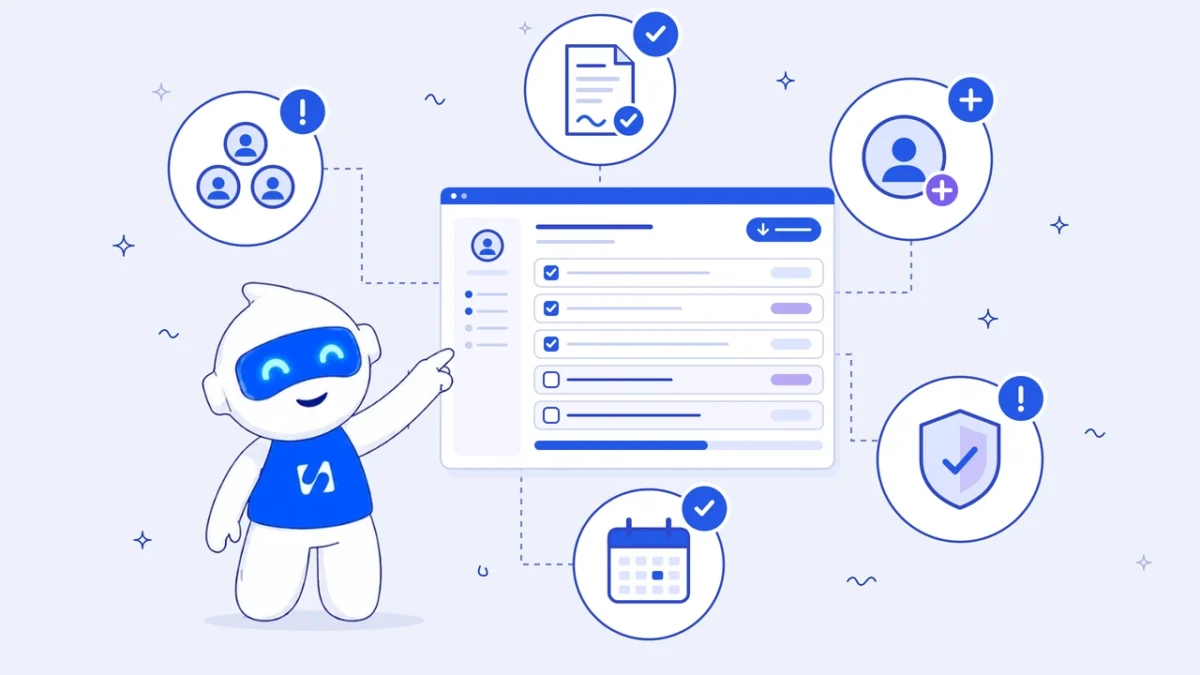
An HR checklist for startups lists everything a young company must set up to employ people properly: register as an employer, put contracts and right-to-work checks in place, run onboarding, write a few core policies, track leave, review performance and handle exits. Do the legal items before the first hire and add the rest as you grow.
Key takeaways
- The legal basics come before day one: employer registration, tax, pension and insurance where your country requires them.
- Every employee needs a written contract or statement of terms, signed before they start.
- Four policies cover most early problems: leave, working hours, expenses and conduct.
- Onboarding and offboarding are checklists in their own right. Write them once and reuse them.
- Your HR needs change at about 5, 10 and 25 people, so revisit the list at each step.
Why startups need an HR checklist
Most founders don’t hire an HR person until there are 20 or 30 people on the team. Until then, HR is whoever has time, usually the founder at 11pm, the week before someone starts.
That’s where things slip. A contract never gets signed. Pension registration waits until a staff member asks about it. Two people take the same week off and nobody notices until Monday. None of these is hard on its own; they go wrong because there’s no list.
This checklist is that list. It’s grouped in the order you’ll meet each task. For the thinking behind it, such as who should own HR and what changes at each size, read our guide to HR for small business.
The complete HR checklist for startups
Copy the list into a doc or your task tool and tick it off. Skip anything that doesn’t apply where you employ people, and check local rules with an accountant or employment lawyer before your first hire.
1. Before your first hire
2. Register as an employer
3. Hiring
4. Contracts and records
5. Onboarding
6. Policies and handbook
7. Time off and attendance
8. Performance and pay
9. Leaving the company
10. As you grow
What the legal basics look like in Nigeria, the UK and the US
Section 2 depends on where your people work. Here are the headline items in three common places. This isn’t legal advice, and the official pages carry the full detail.
| Nigeria | United Kingdom | United States | |
|---|---|---|---|
| Pension | Contributory Pension Scheme for private organisations with 3 or more employees: minimum 18% of monthly emoluments, 10% from the employer and 8% from the employee | Workplace pension responsibilities for employers | Benefits rules vary by state; check with your state labour department |
| Insurance | Group life insurance for employees under the pension scheme | Employers’ Liability insurance before you employ anyone | Workers’ compensation cover, with rules that vary by state |
| Tax registration | Deduct and pay employees’ income tax under PAYE; agree registration with your accountant | Register as an employer and set up PAYE with HMRC | Get an Employer Identification Number (EIN); new employees complete a W-4 |
| Right to work | Check identity and any work permits for foreign staff | Check every employee’s right to work in the UK | Every new hire completes Form I-9 |
Sources, checked on 1 October 2026: PenCom’s frequently asked questions on the Contributory Pension Scheme, which also covers the employer’s group life insurance cover of at least three times an employee’s annual total emolument; GOV.UK’s employing staff for the first time; GOV.UK’s right to work check (“You must check that a job applicant is allowed to work for you in the UK before you employ them”); and the US Small Business Administration’s hire and manage employees.
Worked example: a five-person startup in Lagos
Here’s how the list plays out for an illustrative software startup with two founders and three new employees, each on ₦400,000 a month in pensionable pay (basic, housing and transport).
- Pension. With three employees, the company now falls under the Contributory Pension Scheme. The minimum monthly contribution per employee is 18% of ₦400,000, which is ₦72,000: ₦40,000 from the company (10%) and ₦32,000 deducted from the employee (8%). For three employees, the company adds ₦120,000 a month.
- Contracts. Each person signs a contract with a three-month probation period before day one.
- Policies. The founders write four short policies (leave, hours, expenses, conduct) in an afternoon and ask everyone to confirm they’ve read them.
- Onboarding. One checklist covers the laptop, accounts, a buddy, first-week tasks and a 30-day check-in, reused for each hire.
- Leave. Requests go through one place, so the founders can see that two developers asked for the same week in December before approving either.
The pension sum is the one founders most often forget to budget. Put the employer’s 10% into your pay budget from the start.
Common HR mistakes in startups
- Hiring “contractors” who are really employees. If someone works your hours, uses your tools and only works for you, many countries treat them as employees, with back taxes to match.
- Contracts signed after the start date. Get the signature first. It’s much harder to agree terms once someone has started.
- Policies in someone’s head. If the leave rule isn’t written down, every request becomes a negotiation.
- No offboarding. Former staff with access to your email, code or bank is a real risk. Switch access off on the last day.
- Treating HR as a one-off. Revisit this list at 5, 10 and 25 people.
If you’d rather have help, our post on HR consulting for startups covers when an outside specialist is worth it, and HR tools for small business compares software options.
How to run this HR checklist in startbuddi
startbuddi’s People module covers most of this list for a small team. It doesn’t run payroll, pensions or tax filing, so keep those with your accountant or payroll provider.
- Add your team. In People → Team, add each person with their job title, department, manager and start date. The overview shows who’s on leave and what needs attention.
- Onboard each hire. In People → Onboarding, click Start onboarding, enter the new hire’s details and pick the built-in “Company onboarding” template or your own. Each step has an owner (the new hire, their manager, HR or IT) who is notified when it’s assigned. Chip can draft a 30/60/90-day plan. Read more about employee onboarding.
- Publish your policies. In Policies & knowledge, start from a template, publish it and choose who it applies to. Policies that need sign-off show employees an “I acknowledge this” banner, and you can see who hasn’t read them yet.
- Track leave and requests. Set your leave types, then let people request time off and other approvals in Requests, so every decision is in one place.
- Run reviews and exits. Use Performance for reviews and Offboarding for the leaving checklist, covered in more detail under employee offboarding.
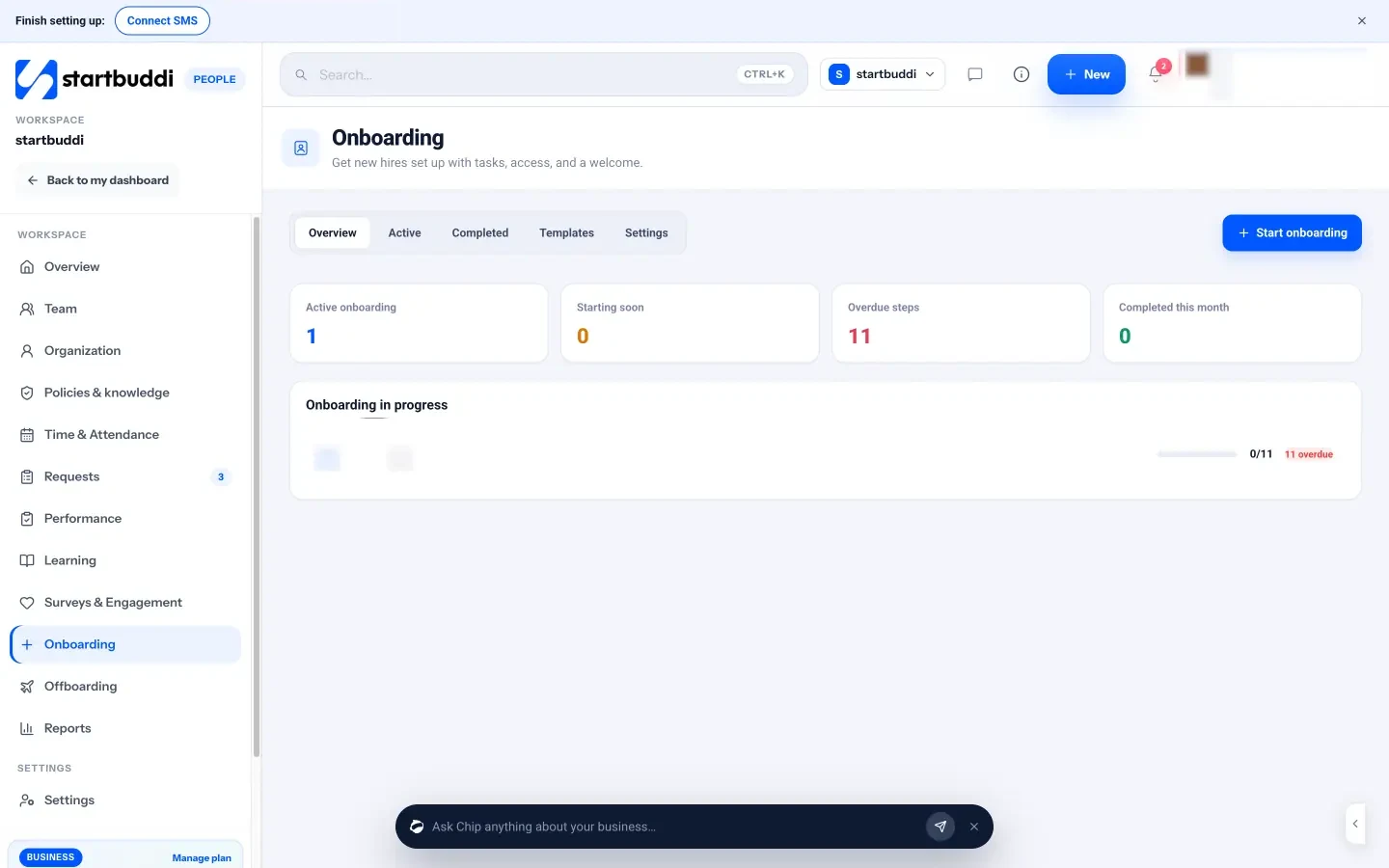
Anyone you invite to sign in needs a seat on a paid plan; records for people who don’t log in don’t need one. See the People page, or how startbuddi works for startups.
Free templates to go with this checklist
- Offer letter: the free offer letter template covers start date, pay, probation and conditions.
- Handbook: the employee handbook template gives you a structure for the policies in section 6.
- First day to first 90 days: our guide to how to onboard a new employee has a day-one schedule and a 30/60/90 plan.
- Building the team itself: how to build your first team covers who to hire first and when.
Turn this checklist into your HR system
Copy the list, then set up onboarding, policies and leave in startbuddi People so the next hire takes minutes, not a weekend. Start free; a free plan is available.
Frequently asked questions
What HR does a startup need before its first employee?
A startup needs employer registration with the tax authority, any required pension and insurance cover, a written contract and right-to-work checks. It also helps to have a leave policy and a simple onboarding plan ready. The exact legal list depends on the country where the employee works.
When should a startup hire an HR person?
Most startups manage HR themselves, with outside advice, until they reach roughly 20 to 30 people. Before that, a founder or operations lead can run this checklist with help from an accountant and an employment lawyer. A part-time HR consultant is a good middle step at around 10 to 25 people.
Do startups need an employee handbook?
Yes, once you have more than two or three employees. A short handbook with your leave, hours, expenses and conduct rules stops the same questions coming up again and again, and gives you something to point to when there's a disagreement. It can start as four pages and grow.
Does the Nigerian pension scheme apply to a small startup?
It applies to private organisations with 3 or more employees, according to PenCom. The minimum contribution is 18% of monthly emoluments: 10% from the employer and 8% from the employee. Organisations with fewer than 3 employees can join voluntarily under the Micro Pension Plan.
What should be in a startup onboarding checklist?
Equipment and accounts ready before day one, a planned first day, a buddy, the handbook, goals for the first 30, 60 and 90 days, and check-ins at the end of week one and probation. Write it once and reuse it for every hire.
Tiwalade Joanna Okedara-Kalu is the founder, CEO and CTO of startbuddi, the business system that brings clients, bookings, invoices, projects, marketing and the Chip AI assistant into one place. Tiwalade builds software around how service businesses really work day to day, and writes about client management, getting paid on time and why small businesses outgrow the tools they start with.
Founded startbuddi and leads its product and engineering