What is a performance review?
Also called: Performance appraisal, annual review, employee evaluation, performance evaluation, appraisal
A performance review is a regular, structured conversation between an employee and their manager about how their work has gone over a set period, backed by a written record, feedback and goals for the next period.
A performance review is a regular, structured conversation between an employee and their manager about how the employee’s work has gone over a set period, what they did well, where they can improve, and what they should focus on next. It is usually backed by a short written record: the employee’s own reflections, the manager’s view, and often a rating and agreed goals.
You will also hear it called an appraisal, an annual review or a performance evaluation. Many businesses now run lighter reviews more often, every quarter or six months, instead of one big review a year.
Why a performance review matters for a small business
In a small team, feedback often happens in passing, or not at all. People are left guessing whether they are doing well, and problems simmer until they become resignations.
- Clarity. Everyone knows what is expected and how they are measured.
- Growth. A review is the natural moment to talk about skills, training and next steps.
- Fair decisions. Pay rises, promotions and difficult conversations are easier when there is a written record over time.
- Retention. People who feel noticed and supported are more likely to stay.
- Two-way feedback. A good review is also where you hear what gets in your team’s way.
How a performance review works: an example
Grace runs a small property management company in Cape Town with four staff. Every six months she runs a review for each person.
- Two weeks before: she tells each person the date and shares the three questions.
- Self review: each person writes a short answer to “What went well?”, “What was hard?” and “What do you want to focus on next?”
- Manager review: Grace writes her own view, with examples, and a rating from 1 to 5 against the goals agreed last time.
- The conversation: a relaxed hour. They compare notes, talk through any gaps and agree two or three goals for the next six months.
- Follow-up: goals go into the task list, and Grace checks in monthly so the next review holds no surprises.
Types of performance review
| Type | How it works | Good for |
|---|---|---|
| Annual review | One detailed review a year | Pay decisions, long-term goals |
| Quarterly or half-yearly check-in | Shorter, more frequent reviews | Fast-changing roles, small teams |
| Probation review | At the end of a trial period | Confirming a new hire |
| Self and manager review | Both sides write, then meet | Balanced, two-way conversations |
| 360-degree review | Feedback from colleagues too | Leadership roles, larger teams |
Questions to use in a performance review
You do not need a long form. Five good questions cover most of what matters:
- What are you most proud of from this period?
- Which goals did you hit, and which did you miss? What got in the way?
- What is one skill you would like to build next?
- What could I, or the business, do to make your job easier?
- What should your top two or three goals be for the next period?
Ask the same questions every time, so you can compare answers across periods and see how each person is growing.
Best practices and common mistakes
- No surprises. Anything serious should have been raised when it happened, not saved for the review.
- Use examples, not labels. “You handled the Mokoena complaint calmly and kept the client” beats “good attitude”.
- Review against agreed goals. Judge people on what you asked for, measured with clear KPIs where possible.
- Keep it forward-looking. Spend at least half the time on what comes next.
- Do not rely only on memory. Managers tend to remember the last month. Keep brief notes and feedback through the period.
- Follow through. Promised training or support that never arrives makes the next review harder.
Our free performance review template gives you the questions and rating scale to start with, and the guide on how to train employees helps you act on development goals.
Related terms
OKRs and KPIs give reviews something objective to measure against. Employee onboarding often ends with a probation review. A 360-degree review adds feedback from peers, not just the manager.
Performance reviews in startbuddi
Performance in People keeps reviews simple. You start a review for a team member, name the cycle (for example “H1 2026”) and set a due date. The employee writes a self review, the manager writes theirs and picks a rating from 1 to 5, then the review is marked complete. Anyone can also give written feedback to a colleague at any time, so there is a record to draw on when review time comes.
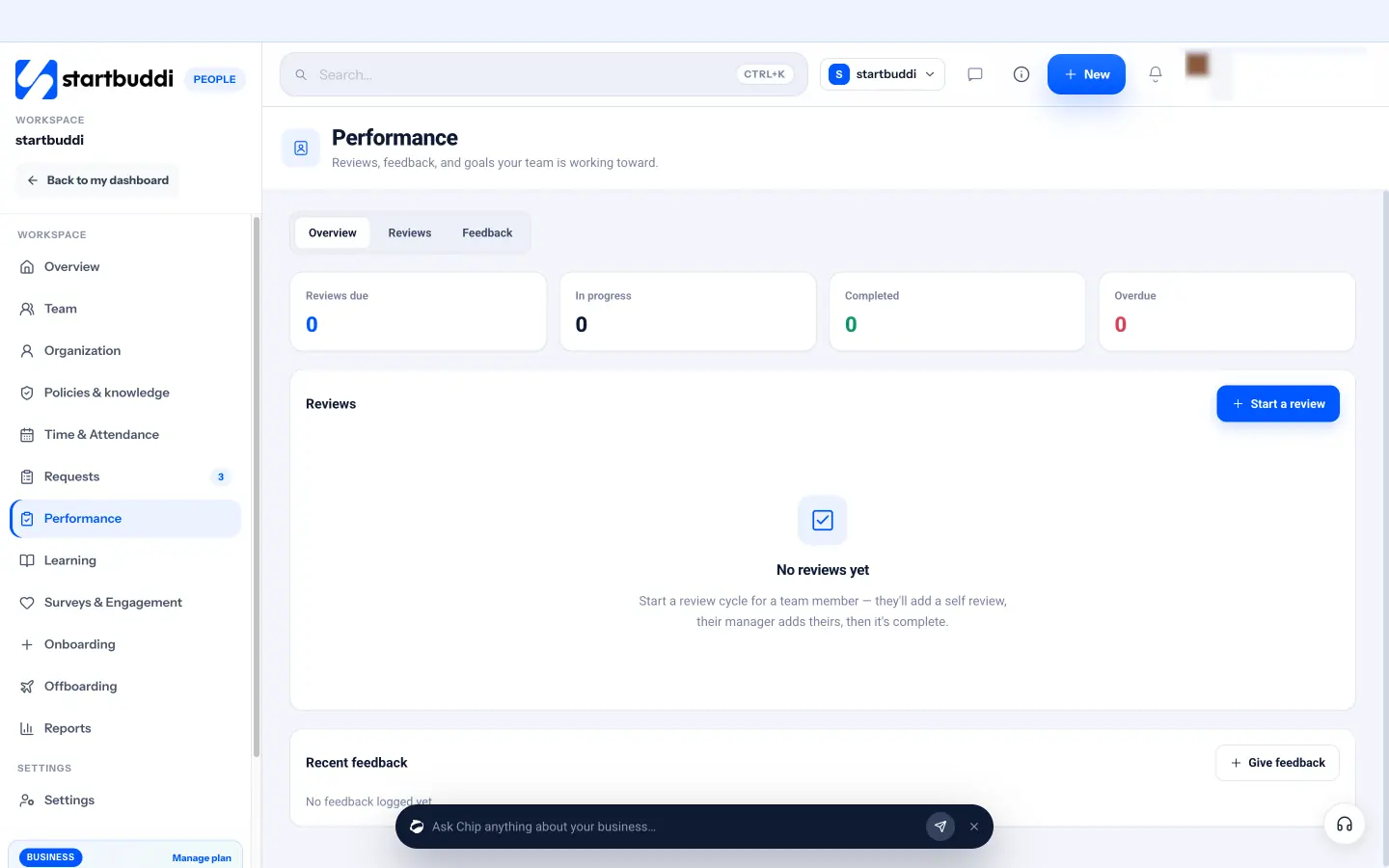
Chip can gather a person’s reviews, feedback, goals, training and onboarding and draft a short, balanced summary for the manager, but a person always decides the rating. Reviews are started one person at a time, and there is no 360-degree or peer review workflow today. Your next step: agree three goals with each person on your team, and put a review date in the diary for six months from now.
Related terms
FAQ
How often should I do performance reviews?
Many small businesses review every six months, with short monthly check-ins in between. Once a year is the minimum most people find useful.
What should a performance review include?
A look back at goals and results, specific examples of good work and areas to improve, the employee's own view, and agreed goals for the next period.
What is the difference between a performance review and an appraisal?
They usually mean the same thing. Appraisal is more common in British English.
Should performance reviews include ratings?
Ratings help compare over time and support pay decisions, but the conversation and examples matter more. If you use them, explain what each number means.
Tiwalade Joanna Okedara-Kalu is the founder, CEO and CTO of startbuddi, the business system that brings clients, bookings, invoices, projects, marketing and the Chip AI assistant into one place. Tiwalade builds software around how service businesses really work day to day, and writes about client management, getting paid on time and why small businesses outgrow the tools they start with.
Founded startbuddi and leads its product and engineering