What is a KPI (key performance indicator)?
Also called: Key performance indicator, key metric, performance measure, business metric
A KPI (key performance indicator) is a number a business tracks regularly because it shows whether an important goal or activity is on course, such as monthly revenue or new enquiries per week.
So, what is a KPI? A KPI, or key performance indicator, is a number you track regularly because it tells you whether an important part of your business is heading in the right direction. Monthly revenue, the number of new enquiries each week, the share of invoices paid on time and how many customers come back are all common KPIs. The word that matters is key: out of all the numbers you could watch, these are the few that really show how you are doing.
A KPI is different from a goal. The goal is where you want to get (“50 new clients this year”); the KPI is the gauge you read along the way (“new clients per month”).
Why KPIs matter for a small business
Most owners run on feel: busy weeks feel good, quiet weeks feel bad. Feel is often wrong. A handful of KPIs replaces guesswork with facts you can act on.
- You spot problems early. A drop in enquiries shows up in your KPI weeks before it shows up in your bank balance.
- You focus your time. If the KPI that matters is repeat customers, you stop spending all your energy on new ones.
- Your team pulls in one direction. A shared number is easier to rally around than a vague aim to “do better”.
- You make calmer decisions. When you know your numbers, a slow week is information, not panic.
What is a KPI in practice? An example
Priya runs a small web design studio in Pune. She picks four KPIs and checks them every Monday:
| KPI | How it is measured | Target |
|---|---|---|
| New enquiries | Form submissions and messages per week | 8 a week |
| Proposal win rate | Proposals accepted ÷ proposals sent | 40% |
| Money coming in | Payments received per month | ₹6,00,000 (about $7,000) |
| Days to get paid | Average days from invoice to payment | Under 21 days |
In March, enquiries stayed at eight a week but the win rate fell to 25%. That told her the problem was not marketing but her proposals. She shortened them, added prices up front, and the win rate recovered the next month.
Types of KPIs
- Leading and lagging. A lagging KPI tells you what already happened (last month’s revenue). A leading KPI hints at what is coming (enquiries this week). Track at least one of each.
- Financial. Revenue, profit margin, cash in the bank, unpaid invoices.
- Customer. New customers, repeat customers, churn rate, reviews.
- Marketing and sales. Enquiries, conversion rate, email opens and clicks.
- Operations and team. Jobs completed, on-time delivery, hours worked against estimate.
How to choose good KPIs
- Start from what you want. Write down your top one or two business goals, then ask which numbers would show progress towards them.
- Keep the list short. Three to five KPIs is plenty for a small business. Twenty numbers is a report, not a dashboard.
- Make each one measurable without effort. If collecting the number takes an afternoon, you will stop doing it.
- Set a target and a rhythm. Decide what good looks like and when you will check it: weekly for fast-moving numbers, monthly for the rest.
- Give each KPI an owner. Someone should notice when it moves and suggest what to do.
Common mistakes
- Vanity metrics. Follower counts and page views feel good but often have little to do with sales. Prefer numbers close to money or customers.
- Too many KPIs. When everything is key, nothing is.
- Measuring and never acting. A KPI earns its place only if someone does something when it moves.
- Changing the definition. If “new customer” means something different each month, the trend is meaningless.
- Chasing the number, not the result. Rewarding “calls made” can produce lots of short, useless calls. Watch for side effects.
- Never reviewing the list. The right KPIs change as the business grows. A new business might watch enquiries; a year later, repeat customers or profit per job may matter more. Look at the list again every six months and swap out any number that no longer drives a decision.
Related terms
OKRs (objectives and key results) set an ambitious goal with a few measurable results, and often use KPIs to measure them. Our glossary entry on OKR vs KPI explains the difference, and OKRs covers the method in full. A goal tracking system is the tool that keeps goals, KPIs and progress in one place.
KPIs in startbuddi
In startbuddi, KPIs live in Goals under Work. The Numbers view is a month-by-month board where you add a number to track, set a target, choose a unit and pick who watches it. Several numbers can fill themselves in from the rest of startbuddi: money coming in and money going out from Money Manager, new contacts, form submissions, social posts published and emails opened. For anything else, you enter the value yourself.
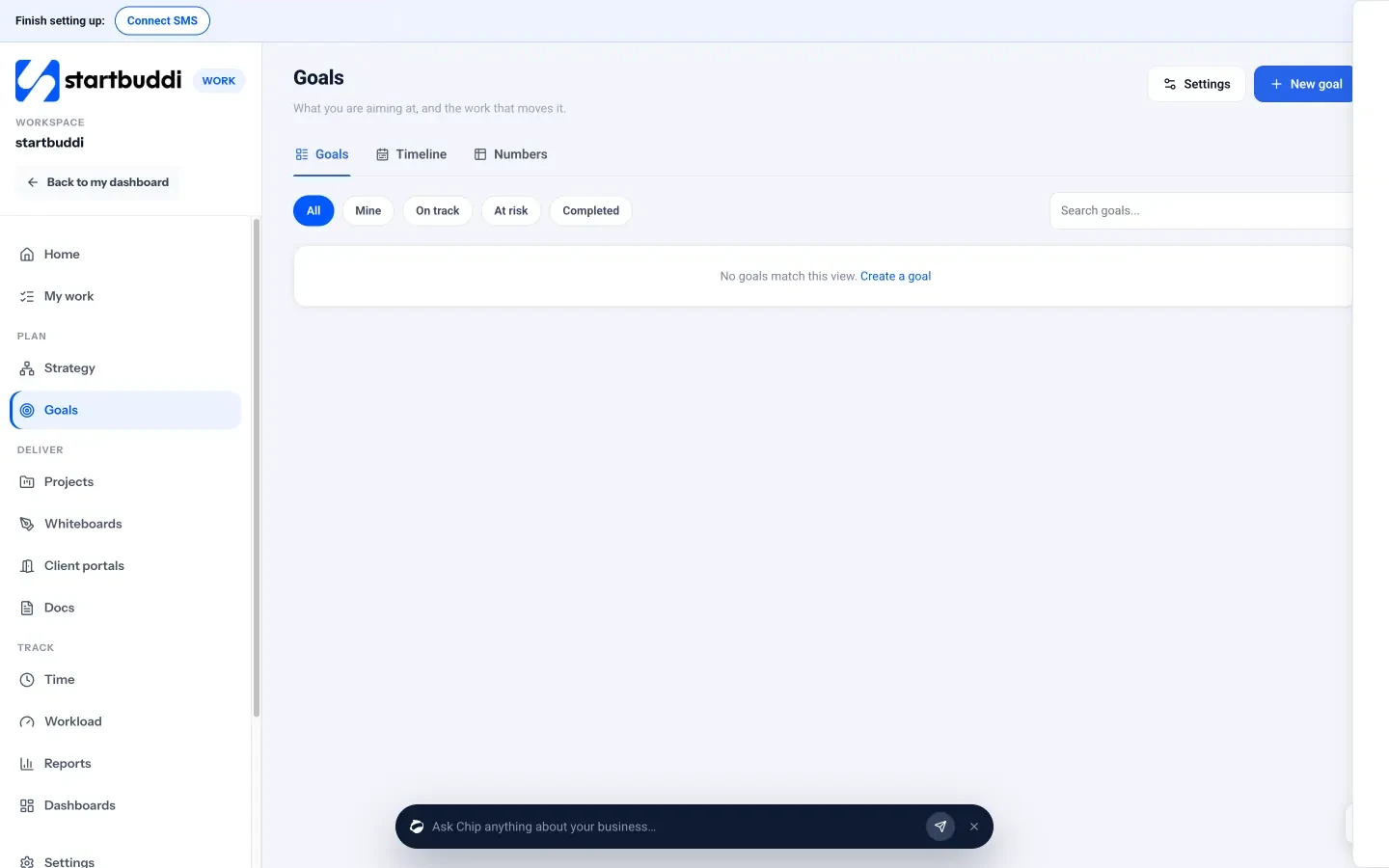
You can also set goals with key results, link the projects that deliver them, and check in each week with a health rating. Your next step: choose three KPIs that match your main goal this quarter, and add them to Numbers so they update without a spreadsheet.
Related terms
FAQ
What does KPI stand for?
KPI stands for key performance indicator: a number you track because it shows how an important part of your business is doing.
How many KPIs should a small business have?
Three to five is usually enough. More than that and it becomes hard to notice which one needs attention.
What is the difference between a KPI and a metric?
Every KPI is a metric, but not every metric is a KPI. A KPI is one of the few metrics tied directly to your most important goals.
How often should I check my KPIs?
Check fast-moving numbers such as enquiries weekly, and slower ones such as profit monthly. The key is to check on a fixed rhythm.
Chinedu Kalu is the co-founder and chief operating officer of startbuddi, responsible for how the company runs day to day. Chinedu writes about the operational side of a small business: registering and running the company, money, hiring and the routines that keep a team on track.
Co-founded startbuddi and runs its operations