What is paid time off (PTO)?
Also called: PTO, annual leave, paid leave, holiday entitlement, vacation time
Paid time off (PTO) is time an employee takes away from work while still receiving their normal pay, such as holidays, sick days and personal days, either as separate allowances or one combined bank.
Paid time off (PTO) is time an employee takes away from work while still being paid their normal wage. It usually covers holidays, and depending on the employer and the country, it can also include sick days, personal days, and time off for family events or bereavement. Some businesses keep separate allowances for each type; others put them into one PTO bank that staff can use as they need.
The term is most common in the United States. In the UK, Ireland, Australia and much of Africa, people more often say annual leave or holiday, with sick leave counted separately.
Why paid time off matters for a small business
- It is often a legal duty. Many countries set a minimum paid holiday, and getting it wrong can lead to claims.
- Rested people do better work. Staff who never take a break make more mistakes and burn out.
- It helps you hire. A clear, fair leave allowance is part of what makes a small employer attractive.
- It needs planning. In a team of five, two people away in the same week can stop the business. Knowing who is off, and when, is essential.
Paid time off rules in different countries
Minimum paid leave varies a great deal. A few examples:
- United States: federal law does not require paid vacation or holidays; it is a matter between employer and employee, though some states and cities have their own rules. See the US Department of Labor.
- United Kingdom: most workers on a five-day week are entitled to at least 28 days’ paid annual leave, which can include bank holidays. See GOV.UK.
- South Africa: at least 21 consecutive days of annual leave on full pay for each annual leave cycle. See the Department of Employment and Labour.
- Nigeria: the Labour Act sets a minimum of six working days’ paid holiday after 12 months’ continuous service for workers it covers. See section 18 of the Labour Act.
These are minimums. Many employers offer more, and rules change, so always check the current official source.
How paid time off works: an example
Joy runs a six-person salon in Nairobi. She sets each stylist’s allowance above the legal minimum, and writes three rules into her staff handbook:
- Book holidays at least two weeks ahead, except in emergencies.
- No more than one stylist off on a Saturday.
- Up to five unused days can carry over to the next year; the rest expire.
A stylist asks for a week off in April. Joy checks who else is away, sees Saturday is covered, and approves. The balance drops by five working days, and the public holiday that week does not count against it.
Types of paid time off
| Type | What it covers |
|---|---|
| Annual leave or vacation | Planned holidays and rest |
| Sick leave | Illness or injury, sometimes with a doctor’s note after a few days |
| Public or bank holidays | National holidays, paid in many countries |
| Compassionate or bereavement leave | A death or serious illness in the family |
| Parental leave | Maternity, paternity or adoption, often with its own legal rules |
| Personal days | Short breaks for personal matters |
Common mistakes
- Tracking leave in a notebook or chat. Balances drift and disputes follow.
- Forgetting part-timers. In many countries, part-time staff earn paid leave pro rata.
- Letting leave pile up. Staff who never take time off burn out, and unused leave may have to be paid out when they leave.
- Unclear approval. If nobody knows who approves, requests sit for days.
- Treating every request as first come, first served. In busy seasons, set a fair way to share popular dates, such as a rota for the December holidays, and publish it early so nobody feels overlooked.
- Counting public holidays twice. Decide whether they are included in the allowance or on top of it, and say so.
Related terms
Employee offboarding includes settling unused leave in final pay. Employee onboarding is when new hires should learn how to book time off. Timesheet software records hours worked, the other half of the picture.
Paid time off in startbuddi
Leave in People shows each person a balance card per leave type, with days used and pending. The default types are annual leave, sick leave, compassionate leave and unpaid leave, and you can set your own. When someone requests leave, startbuddi counts the working days and checks for problems before they send it: not enough leave left, not enough notice, team coverage or a restricted period.
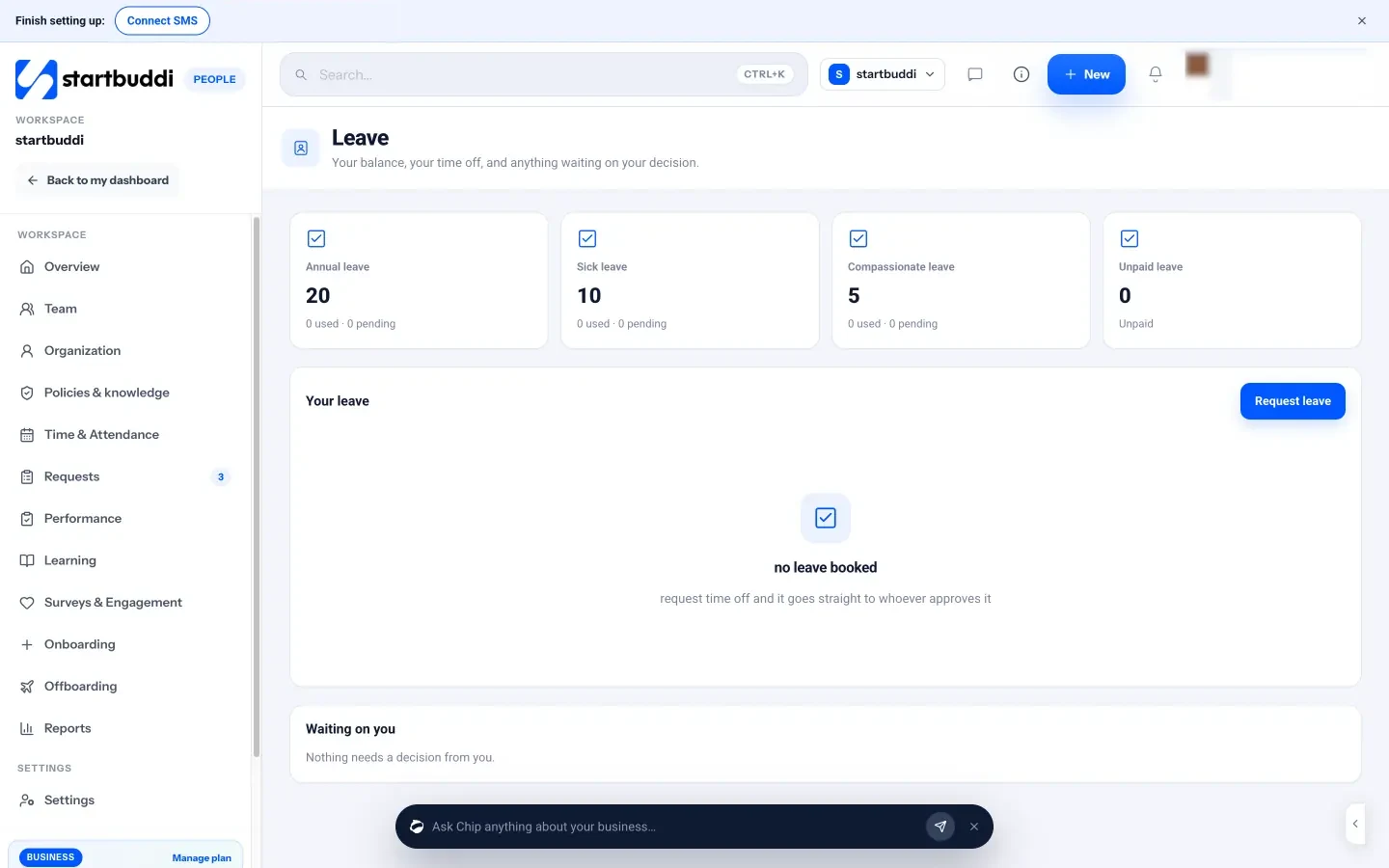
Requests go to whoever approves them. You can set an approval chain that runs in order, such as manager then owner, and give each leave type its own chain. Public holidays are not charged as leave, and the People overview shows who is away today and upcoming time off. Payroll is not part of startbuddi, so holiday pay itself is handled by your payroll provider. Your next step: write down your leave rules, then set them up so balances look after themselves.
Related terms
FAQ
What does PTO stand for?
PTO stands for paid time off: time away from work, such as holidays or sick days, for which an employee is still paid.
Is PTO the same as annual leave?
Often, but PTO can be broader. Some employers combine holiday, sick and personal days into one PTO bank; others keep annual leave separate.
Do part-time employees get paid time off?
In many countries, yes, usually in proportion to the hours they work. Check the rules where your staff are employed.
What happens to unused PTO when someone leaves?
It depends on the law and your policy. In some places unused statutory leave must be paid out in final pay.
Tiwalade Joanna Okedara-Kalu is the founder, CEO and CTO of startbuddi, the business system that brings clients, bookings, invoices, projects, marketing and the Chip AI assistant into one place. Tiwalade builds software around how service businesses really work day to day, and writes about client management, getting paid on time and why small businesses outgrow the tools they start with.
Founded startbuddi and leads its product and engineering