LLC Startup Checklist: Step-by-Step List + Free Template
An LLC startup checklist for US founders: name, state filing, registered agent, EIN, operating agreement, bank account and yearly filings. Free to copy.


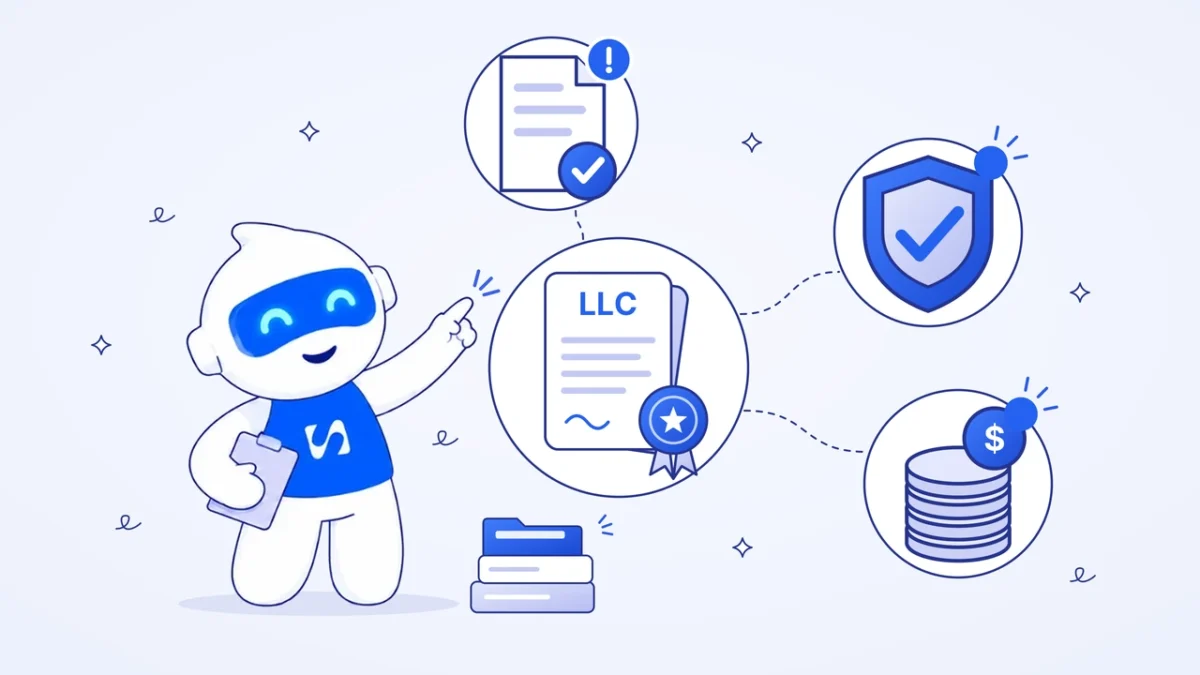
An LLC startup checklist covers six phases: plan the business and choose your state, check and reserve the name, file articles of organization with a registered agent, get a free EIN from the IRS, sign an operating agreement and open a business bank account, then register for state taxes, licences and yearly filings. Most founders finish it in two to four weeks.
Key takeaways
- An LLC is formed by your state, not the federal government, so the filing, the fee and the yearly report all depend on the state you choose.
- Form the LLC first, then get the EIN. The IRS asks you to form the entity with the state before applying, and the EIN itself is free.
- Every LLC needs a registered agent in its state of formation.
- The operating agreement and a separate bank account are what make the “limited liability” real in practice. Don’t skip them.
- Put the yearly deadlines in a calendar on day one. Missed annual reports and state taxes are the most common way an LLC falls out of good standing.
Why use an LLC startup checklist?
Forming an LLC isn’t hard, but the steps are spread across different offices: the state, the IRS, your bank, your city or county. Miss one and you find out months later, when a bank asks for a document you don’t have or a state sends a late notice.
The US Small Business Administration notes that most businesses spend less than $300 to register, though fees vary by state and structure (checked on 1 October 2026). The bigger cost is usually time lost to doing steps in the wrong order, such as applying for an EIN before the LLC exists.
The LLC startup checklist
Copy this list into your notes or task manager and tick it off as you go.
Phase 1: Plan (week 1)
Phase 2: Name (week 1)
Phase 3: File with the state (week 1 to 2)
Phase 4: Federal tax ID and tax setup (week 2)
Phase 5: Paperwork and money (week 2 to 3)
Phase 6: State, local and ongoing (week 3 to 4)
How to use this LLC startup checklist
Choosing your state
Your home state is usually the simplest choice. If you form elsewhere and operate at home, you typically pay for both: formation in one state, foreign qualification in the other, and two sets of yearly filings and registered agents. The SBA’s guide covers when you’re conducting business in a state.
Getting the EIN right
The IRS says on its EIN page (checked on 1 October 2026) that you should form your LLC with the state before you apply, that the online application issues the number immediately once approved, and that it’s free: you never have to pay a fee for an EIN. The online tool has opening hours (Eastern Time) and allows one EIN per responsible party per day.
A single-member LLC with no employees and no excise tax doesn’t always need an EIN for federal income tax, according to the IRS’s guidance on single-member LLCs. Banks often ask for one to open a business account, so most founders get it anyway.
Beneficial ownership reporting
Many older checklists include a beneficial ownership information (BOI) report to FinCEN. FinCEN’s BOI page (checked on 1 October 2026) says entities created in the United States, and their beneficial owners, are now exempt. Check the page again when you form, as the rules have changed several times.
Worked example: two founders, two states
Maya and Daniel are starting a two-person design studio. They live and work in Austin, Texas, but have read that Delaware is “better for LLCs”. Here’s how the checklist plays out each way. The structure is illustrative; check current fees on each state’s website.
| Step | Form in Texas | Form in Delaware, work in Texas |
|---|---|---|
| Formation filing | Texas | Delaware |
| Registered agent | One, in Texas | One in Delaware and one in Texas |
| Foreign qualification | Not needed | Needed in Texas |
| Yearly obligations | Texas only | Delaware’s annual LLC tax plus Texas filings |
| EIN | One, free | One, free |
Delaware charges every LLC formed or registered there an annual tax of $400, due by 1 June (checked on 1 October 2026). For a studio with no investors and no Delaware connection, that’s a yearly cost with little benefit, so Maya and Daniel form in Texas. A startup planning to raise venture capital might decide differently, which is a question for a lawyer.
Common mistakes when starting an LLC
- Getting the EIN before the LLC exists. The IRS asks you to form the entity first.
- Paying for an EIN. Some websites charge for it. The IRS issues it free.
- Skipping the operating agreement because you’re a single member. It still records how the business runs and helps show it’s separate from you.
- Mixing personal and business money. Use the business account for business only.
- Forgetting the yearly filing. An annual report or state tax that’s missed can cost late fees and good standing.
- Forming in another state for a perceived tax benefit and then paying twice for agents, filings and taxes.
Do this LLC startup checklist in startbuddi
startbuddi doesn’t file your LLC or get your EIN. It helps you run the checklist and the business that comes after it.
- Turn the checklist into tasks. In Work, open My work and click Add task for each phase, then add each item as a subtask with a due date. Assign items to your co-founder if you have one.
- Plan the yearly filing. Create a task for your annual report or state tax with a due date a month before the deadline, and when you file, add next year’s task straight away.
- Keep the paperwork together. Keep your operating agreement in Documents, where you can request e-signatures from each member. Our free LLC operating agreement template is a starting point for the wording.
- Get paid in the LLC’s name. Once the business bank account is open, connect Stripe in Money Manager and send your first invoice from the new business.
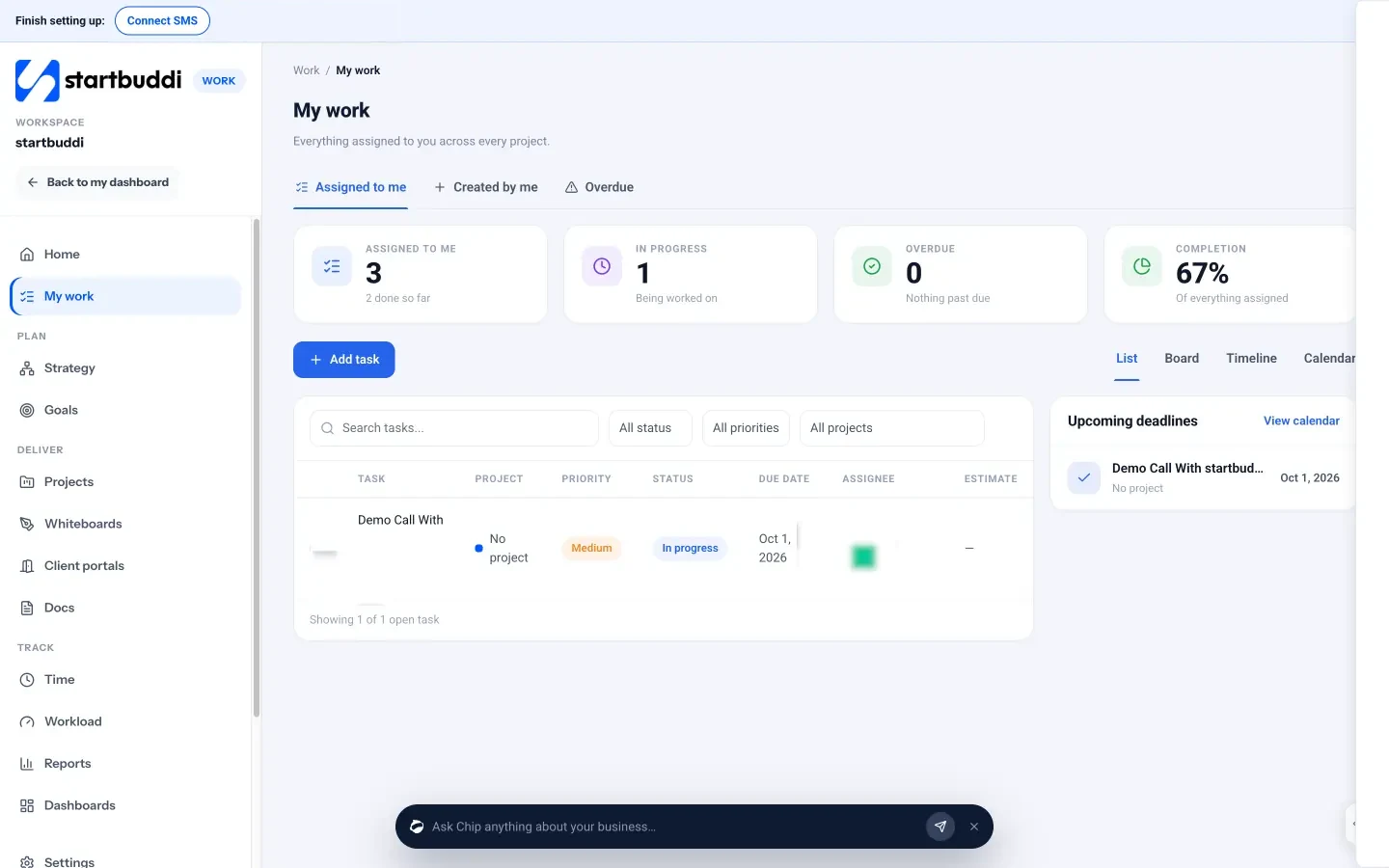
Founders can see how the rest of the workspace fits an early-stage company on startbuddi for startups. A free plan is available; see pricing for what each plan includes.
For the wider picture, our guide on how to start a small business covers planning and first customers, and small business taxes for beginners explains the taxes you’ll meet in year one. If you sell a service, the starting a service business checklist picks up where this one ends.
Run the checklist, then run the business
Copy the checklist above, turn it into tasks, and keep every formation document in one place. Start free with startbuddi, no card needed.
Frequently asked questions
What do I need to start an LLC?
You need a business name that's available in your state, a registered agent with an address in that state, and articles of organization filed with the state's business filing office along with the fee. After approval, get an EIN from the IRS, sign an operating agreement and open a business bank account. Check your state for licences and tax registration.
How long does it take to start an LLC?
The state filing itself can take from a day to a few weeks, depending on the state and whether you file online. The EIN is issued immediately online once approved. With the bank account, licences and tax registrations, most founders finish the checklist in two to four weeks.
How much does it cost to start an LLC?
It depends on the state. The SBA says most businesses spend less than $300 to register. The EIN is free from the IRS. Budget too for yearly costs such as annual reports or state taxes; Delaware, for example, charges LLCs an annual tax of $400.
Do I need an operating agreement for a single-member LLC?
Not every state requires one, but it's still worth having. It records how the business is run and what happens if things change, and banks sometimes ask for it. It also helps show the LLC is separate from you personally.
Should I get an EIN for a single-member LLC?
Usually yes. The IRS says a single-member LLC with no employees and no excise tax liability may not need one for federal income tax, but banks often ask for an EIN to open a business account. It's free and quick to get online.
Does my LLC need to file a beneficial ownership report?
As of 1 October 2026, FinCEN's guidance says entities created in the United States and their beneficial owners are exempt from BOI reporting. The rules have changed several times since 2024, so check FinCEN's BOI page when you form your LLC.
Chinedu Kalu is the co-founder and chief operating officer of startbuddi, responsible for how the company runs day to day. Chinedu writes about the operational side of a small business: registering and running the company, money, hiring and the routines that keep a team on track.
Co-founded startbuddi and runs its operations