Due Diligence Checklist for Buying a Business: Step-by-Step List + Free Template
A due diligence checklist for buying a business in 10 phases, from identity and accounts to staff, debts and handover, with red flags and a worked example.


A due diligence checklist for buying a business is the list of things you verify before you sign: who legally owns it, whether the profits are real, which customers, contracts and staff come with it, what it owes, and what could go wrong after you take over. Work through it in phases and get every answer in writing.
Key takeaways
- Due diligence happens after you agree a price in principle and before you sign the sale agreement. Sign a confidentiality agreement first, then ask for documents.
- Trust bank statements over a profit and loss statement. If the deposits don’t match the sales the seller claims, stop and ask why.
- For a small service business, the customers and the owner’s relationships are most of the value. Check how many clients would stay if the owner left.
- Find out whether you’re buying the company (and all its history) or only its assets. It changes which debts and disputes become yours.
- Write down every question and every answer. Anything important goes into the sale agreement as a warranty.
What does due diligence mean when you buy a small business?
Due diligence is checking that the business is what the seller says it is. The seller knows everything about it and you know very little, and the process closes that gap before money changes hands.
The US Small Business Administration’s guide to buying an existing business (checked on 1 October 2026) lists documents to review, including financial statements, tax returns, leases and contracts, and recommends hiring an attorney and an accountant. The checklist below adds the questions that matter most for small, owner-run service businesses such as salons, cleaners, agencies and trades.
Before you start: three things to have in place
- A confidentiality agreement. Most sellers won’t share numbers or customer lists without one. Our free NDA template is a starting point for your lawyer.
- A letter of intent or heads of terms. One or two pages with the price, what’s included, the timeline and the condition that the deal depends on due diligence.
- A document request list. Send the checklist below as questions, with a date for answers, so the process doesn’t drift.
The due diligence checklist for buying a business
Copy this checklist. Mark items “not applicable” rather than deleting them, so you can show you looked.
1. Legal identity and ownership
2. Financial records
3. Tax
4. Customers and revenue
5. Contracts and suppliers
6. Staff and contractors
7. Premises, assets and licences
8. Operations, systems and data
9. Debts, disputes and liabilities
10. Price, agreement and handover
Worked example: checking a cleaning business’s profit
These numbers are illustrative, to show the method. Use the real figures from the deal in front of you.
Tunde is buying an office cleaning business in Ikeja, Lagos. The seller’s profit and loss shows ₦9,600,000 of yearly profit and an asking price of ₦19,200,000, which is two times profit.
| Check | What Tunde found | Adjustment to yearly profit |
|---|---|---|
| Owner’s pay | The owner works full time and takes no salary. Tunde would need a supervisor at ₦250,000 a month. | minus ₦3,000,000 |
| Bank statements | Deposits match reported sales to within 2%. | none |
| Customer concentration | One bank branch contract is 40% of revenue and ends in four months. | flagged, not adjusted |
| Equipment | Two floor machines are near the end of their life. Replacement: ₦1,200,000, spread over three years. | minus ₦400,000 |
| Supplier discount | A 10% discount on supplies is personal to the owner. Supplies cost ₦2,000,000 a year. | minus ₦200,000 |
Adjusted profit: ₦9,600,000 − ₦3,000,000 − ₦400,000 − ₦200,000 = ₦6,000,000.
At the same multiple of two, that supports a price of ₦12,000,000, not ₦19,200,000. And because one contract is 40% of revenue and ends soon, Tunde could propose paying part of the price only if that contract is renewed. If you are not sure what gross versus net profit means in a seller’s accounts, our guide to financial statements for small business explains each line.
Red flags that should slow you down
| Red flag | Why it matters | What to ask for |
|---|---|---|
| Sales are mostly cash and bank deposits are lower | Profit can’t be proved | Till records, job sheets and an explanation in writing |
| The seller won’t share bank statements | You can’t check anything else | Walk away or make it a condition |
| One customer is over a third of revenue | Losing them changes the price | Contract terms and the customer’s renewal intentions |
| Customer records are on the owner’s personal phone | They may not come with the sale | A written list and a transfer plan |
| The lease ends within a year | The business may have to move | A new lease or written landlord consent |
| Accounts were prepared just for the sale | Numbers may be dressed up | Filed accounts and tax returns from earlier years |
Country notes: Nigeria, the UK and the US
Nigeria. Confirm the registration on the CAC’s public search and match the RC or BN number to the documents you’re given. If you’re registering a new company to buy the assets, see how to register a business in Nigeria.
The UK. Companies House (checked on 1 October 2026) lets you see a company’s filed documents, current and resigned officers, mortgage charges and insolvency information for free. When a business changes hands, TUPE (checked on 1 October 2026) usually means employees’ jobs move to the new owner with their terms and conditions, and continuity of employment is kept.
The US. Rules vary by state. Search the Secretary of State’s records, check for liens filed against the business and confirm which licences must be reissued in your name.
Common mistakes when buying a small business
- Relying on the seller’s spreadsheet instead of bank statements and filed returns.
- Not speaking to any customers or staff before completion (with the seller’s agreement).
- Skipping the handover plan, so on day one you have no logins and no customer list.
How to run this checklist in startbuddi
startbuddi doesn’t replace your lawyer or accountant. It keeps the deal organised: who is checking what, which documents have arrived, and what’s still open.
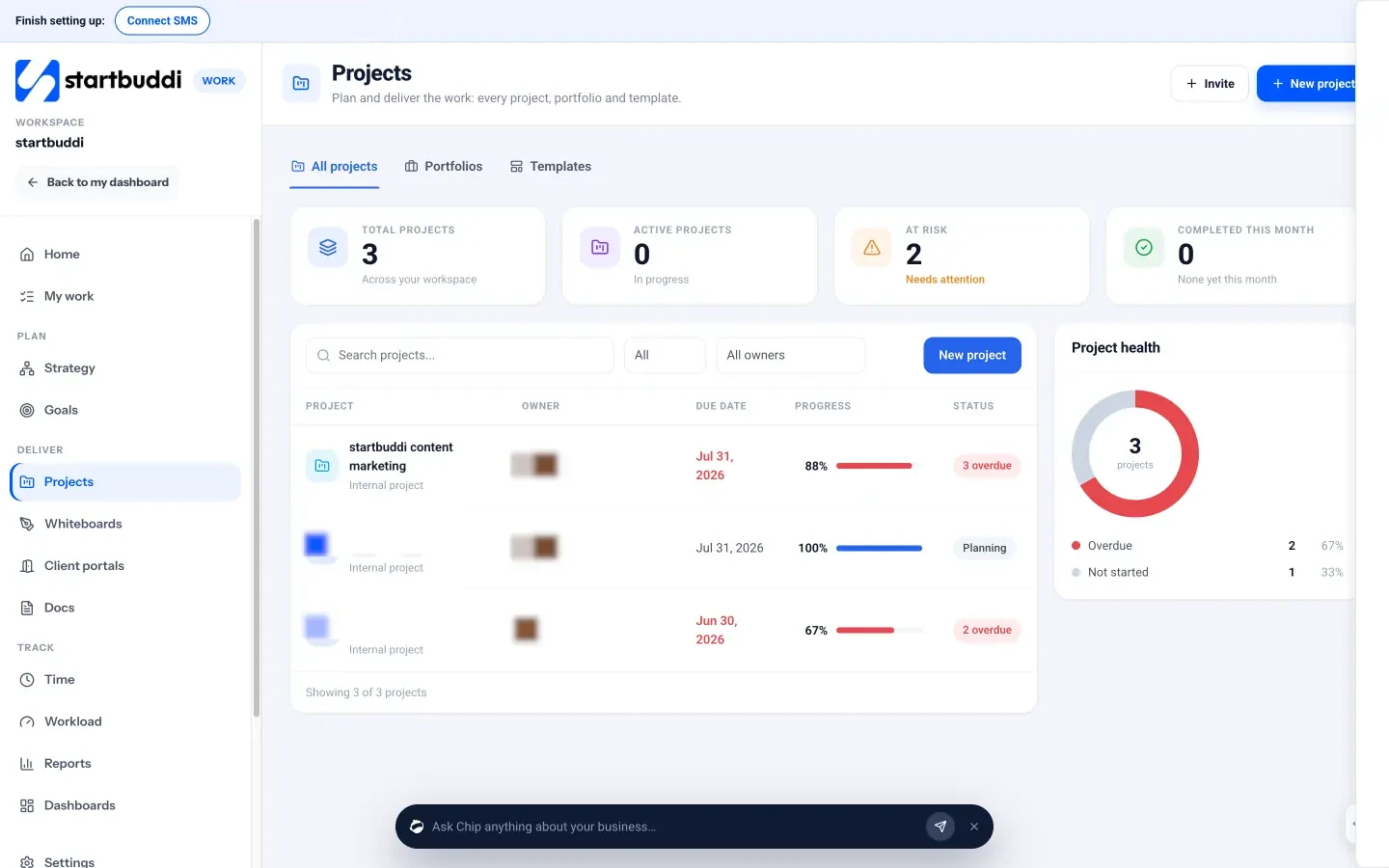
- Turn the checklist into a project. In Work, open Projects, click New project and call it something like “Buying Ikeja Cleaning”. Add one task per phase (Legal, Financial, Tax and so on) and add each checklist line as a subtask, with an owner and a due date.
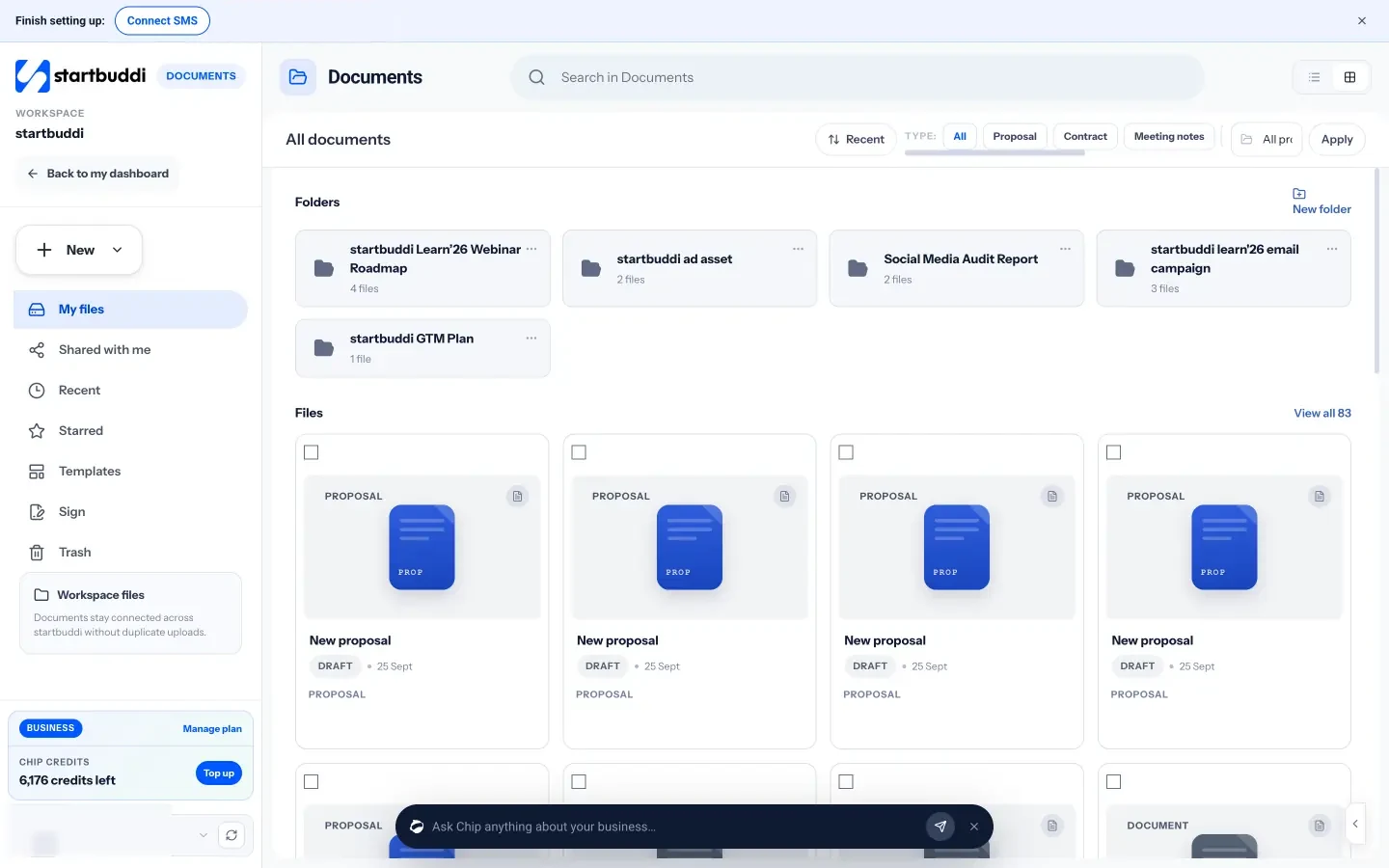
- Keep every document in one folder. In Documents, create a folder for the deal, upload what the seller sends and link each document to the project.
- Do the numbers in a sheet. Create a startbuddi Sheet with your adjusted profit table and share it with your accountant for comments. Every change is kept as a version.
- Ask Chip what’s missing. Open your notes document and ask Chip to list what is missing before it’s ready, then turn the gaps into tasks.
- Move the customers over on completion. Once the business is yours, import the customer list into Customers → Contacts → Import as a CSV, up to 10,000 contacts at a time. See how startbuddi works as a CRM for service businesses.
A free plan is available. See pricing for what each plan includes.
Start your due diligence today
Copy the checklist, send the document request list to the seller, and set up the project so every answer has a home. Start free with startbuddi to keep the tasks, documents and numbers for your deal in one place.
Frequently asked questions
What should a due diligence checklist for buying a business include?
It should cover legal identity and ownership, financial records, tax, customers and revenue, contracts, staff, premises and licences, systems and data, debts and disputes, and the final agreement and handover. Each item should be a question with a document that proves the answer. The checklist on this page groups them into ten phases.
How long does due diligence take for a small business?
For a small owner-run business it often takes a few weeks, depending mostly on how quickly the seller produces documents. Set a date for answers in your letter of intent. If the seller keeps missing dates, treat that as information about the business.
What is the difference between buying shares and buying assets?
When you buy shares, you take over the company itself, including its history, debts and disputes. When you buy assets, you buy chosen items such as equipment, the name and the customer list, and the seller's company keeps its own liabilities. Tax and legal consequences differ by country, so decide this with your lawyer and accountant.
What are the biggest red flags when buying a small business?
The biggest red flags are a seller who won't share bank statements, sales that can't be traced to deposits, one customer bringing in a large share of revenue, and a lease that ends soon. Customer records kept on the owner's personal phone are another warning sign. Each one can change the price or the deal itself.
Do I need a lawyer and an accountant to buy a small business?
Yes, for almost any purchase it is worth paying both. The US SBA recommends hiring an attorney and an accountant, and the same applies in Nigeria, the UK and elsewhere. Their fees are small next to the cost of inheriting a tax bill or a dispute.
Tiwalade Joanna Okedara-Kalu is the founder, CEO and CTO of startbuddi, the business system that brings clients, bookings, invoices, projects, marketing and the Chip AI assistant into one place. Tiwalade builds software around how service businesses really work day to day, and writes about client management, getting paid on time and why small businesses outgrow the tools they start with.
Founded startbuddi and leads its product and engineering