How to register a business in Nigeria: a plain-language guide to CAC registration for 2026
A plain guide to registering a business in Nigeria with the Corporate Affairs Commission: business name or company, what you need, the online steps, and what to do after.



- To register a business name in Nigeria, you apply online to the Corporate Affairs Commission (CAC): check the name, fill in your details with a valid NIN, upload your ID, photo and signature, pay the fee and download your certificate. You don't need a lawyer. Afterwards, show your registration number on your documents and file annual returns.
To register a business in Nigeria as a sole trader or partnership, you register a business name online with the Corporate Affairs Commission (CAC). You create an account on its registration portal, check that your chosen name is available, enter your personal details (verified against your National Identification Number), upload your ID, passport photo and signature, pay the fee and, once approved, download your certificate of registration. A sole proprietor or partners can do this themselves, without a lawyer or accountant.
This guide explains who needs to register, what to prepare, each step, and the rules you have to follow afterwards. It reflects what we could confirm as of 28 September 2026. CAC updates its portal and fees from time to time, so check the details on its site before you pay.
This is general information, not legal advice. For anything specific to your situation, speak to CAC directly or a qualified professional.
Business name or limited company: which should you register?
A business name (sometimes called an enterprise or sole proprietorship) is the simplest way to trade under a name that isn’t your own. It is not a separate legal person. You and the business are the same in law, so the business’s debts are your debts. A limited liability company (Ltd) is a separate legal entity with its own obligations, which protects your personal assets but comes with more paperwork.
| Business name | Limited company (Ltd) | |
|---|---|---|
| Separate legal entity | No | Yes |
| Personal liability for debts | Yes, unlimited | Generally limited to what you put in |
| Owners | One person (sole proprietor) or partners | Shareholders and at least one director |
| Paperwork | Lighter | Heavier, including company filings |
| Raising investment | Hard | Possible, since you can issue shares |
| Good for | Freelancers, traders, small service businesses starting out | Businesses with partners, investors, bigger contracts or more risk |
Many founders start with a business name to open a business bank account and look professional, then incorporate a company when they grow. If you already know you’ll take investment or sign large contracts, it can be cheaper to start as a company.
Do you have to register a business name?
Under section 815 of the Companies and Allied Matters Act 2020 (CAMA), you must register if you carry on business under a name that isn’t simply your own name (or, for partners, your surnames). For example, “Ada Okafor” selling cakes under her own name doesn’t strictly need to register, but “Ada’s Kitchen” does.
The law gives you 28 days from the day you start the business to apply. If you don’t, the proprietor (or each partner) can face a daily fine set by CAC’s regulations until the application is made.
Even when registration isn’t strictly required, there are good reasons to do it:
- Banks ask for your CAC certificate before they open an account in a business’s name.
- Payment providers and marketplaces often need registration before they’ll settle money to a business account.
- Larger clients, government bodies and many companies only pay registered suppliers.
- It protects the name from someone else registering it as a business name first.
- In 2024 the Central Bank of Nigeria set a deadline for POS agents of fintechs to register with CAC, as Channels Television reported. More providers now expect a registered business before they give you merchant tools.
What you need before you start
Gather these before you open the portal. Having everything ready is the difference between finishing in one sitting and giving up halfway.
- Two or three name ideas, in order of preference, in case your first choice is taken.
- Your National Identification Number (NIN). CAC’s portal checks proprietors’ details against the national identity database, so the name and date of birth you enter must match your NIN record exactly.
- A valid government-issued ID, scanned clearly in colour. The portal lists the types it accepts; a national ID card, international passport or driver’s licence are the usual choices.
- A recent passport photograph as a digital file.
- Your signature, signed on white paper and scanned or photographed clearly.
- Your residential address and the business address. The principal place of business decides which state your registration is filed under.
- A short description of what the business does (its “nature of business”), for example “graphic design services” or “retail of fashion accessories”.
- Details for every partner, if there’s more than one of you: each needs their own ID, photo, signature and NIN.
- A working email address and phone number you check often, because CAC’s updates come by email.
How to register a business name in Nigeria, step by step
1. Create an account on the CAC portal
Go to cac.gov.ng and open the online registration portal. Register with your email address and phone number, confirm your email, and log in. Use your own email, not a helper’s: this account is where your certificate and every future filing will live.
2. Check availability and reserve your name
Search for your proposed name. If it’s available, apply to reserve it. CAC reviews the name and may reject it if it’s too close to an existing business or company, if it’s misleading, or if it contains words that suggest a government link or a regulated activity (such as banking or insurance) without the right approval. Keep the name clear and specific. “Okafor Creative Studio” is easier to approve than “Creative Studio”.
3. Complete the registration form
Once the name is approved, start the business name registration using the reserved name. Enter the nature of business, the business address, the start date and the proprietor details. The NIN check happens here, so this is where mismatched names (a missing middle name, a different spelling) cause trouble.
4. Upload your documents
Upload your ID, passport photograph and signature. Poor scans are a common reason for queries: use good light, show the whole document and keep files within the size the portal asks for.
5. Pay the filing fee
The portal calculates the fee and lets you pay online. CAC reviewed its service fees with effect from 1 August 2025, as reported by Legit.ng, so older blog posts quoting prices may be out of date. Pay only through the portal, and keep the receipt.
6. Track the application and respond to queries
CAC checks the application. If something is wrong, it raises a query by email and on your dashboard, explaining what to fix. Respond quickly and resubmit. Queries are normal and usually small: a blurry photo, a signature that doesn’t match, an address missing a detail.
7. Download your certificate
When the registration is approved, download the electronic certificate of registration and the related registration documents from your dashboard. Save copies somewhere safe and backed up. You’ll need them for your bank, payment providers, tenders and clients.
A worked example
Ada is a graphic designer in Lagos who has been freelancing under her own name for a year. She wants to trade as “Okafor Creative Studio” so she can open a business account and pitch to companies that only pay registered suppliers.
- She checks that the name on her NIN record matches her passport, including her middle name.
- She scans her passport in colour, takes a passport photo against a plain background, and signs on white paper and photographs it in daylight.
- She searches “Okafor Creative Studio” on the portal. It’s available, so she reserves it.
- In the form she describes the business as “graphic design and brand identity services”, gives her studio address in Yaba as the principal place of business, and enters today as the start date.
- She pays through the portal and saves the receipt.
- CAC queries her signature because the photo is too dark. She uploads a clearer one the same day.
- Once approved, she downloads the certificate, saves it in two places, and books a time to open her business account.
Nothing in that list needs a professional. What slows most people down is step 1 and step 6: identity details that don’t match, and poor-quality uploads.
Using an agent: when it helps and what to watch
You can do all of this yourself, but some people prefer an accredited agent, a lawyer or a service offered by their bank or fintech. Moniepoint, for example, offers business name registration inside its app. That can save time if your documents are complicated or you’re short of time.
If you use someone else:
- Ask for a written breakdown of CAC’s fee and their service fee.
- Make sure the registration is in your name, with your details, and that you get the login or the documents at the end.
- Don’t share more personal information than the application needs.
- Check the finished registration yourself on CAC’s public search.
After registration: the rules you must follow
Registration isn’t the end. CAMA 2020 sets ongoing duties for business names, summarised in this legal primer on business names under CAMA.
- Display your certificate at your principal place of business.
- Show your name and registration number on official documents such as invoices, letterheads and receipts (section 820).
- File annual returns every year after the year you registered (section 822). They confirm your details with CAC and cover the business’s finances for the previous year. Late filing attracts penalties, so put the date in your calendar now.
- Tell CAC about changes, such as a new address, a new partner or a change in what you do.
- Notify CAC if you stop trading (section 819), rather than simply walking away.
An important point from section 821: if you are in default of your filings, you may not be able to enforce contracts made during that time without a court’s help. Staying up to date protects your right to get paid.
Tax and other registrations
Registering with CAC doesn’t replace tax registration. On 1 January 2026 the Federal Inland Revenue Service became the Nigeria Revenue Service (NRS), as The Guardian reported. Check your Tax Identification Number status with the tax authority, and read our guide to VAT for small businesses in Nigeria. Some businesses, including consultants, real estate dealers and hotels, also need to register with the EFCC’s Special Control Unit against Money Laundering (SCUML), and banks may ask for that certificate.
Your first week after approval
- Save the certificate and registration documents in a safe, backed-up folder.
- Add the registered name and number to your invoice template, email signature and website footer.
- Open a business bank account in the registered name.
- Update your payment provider, so settlements go to the new business account. If you haven’t chosen one yet, our guide on how to accept payments online in Nigeria compares the options.
- Tell your regular clients about the new name, so they update their supplier records and pay the right account.
- Put the annual returns deadline in your calendar with a reminder a month before.
Common mistakes that slow registration down
- Names that don’t match your NIN. Fix your NIN record first if it’s wrong.
- A name that’s too generic or too close to an existing one. Add your surname or location.
- Blurry, black-and-white or cropped scans.
- A vague nature of business. “General merchandise and services” invites questions. Describe what you really do.
- Letting someone else keep your login. You’ll need it every year for annual returns.
- Forgetting annual returns in year two, then paying penalties later.
How startbuddi helps once you’re registered
startbuddi doesn’t register businesses or file with CAC. Where it helps is the part that starts the day your certificate arrives: running the business under its new name.
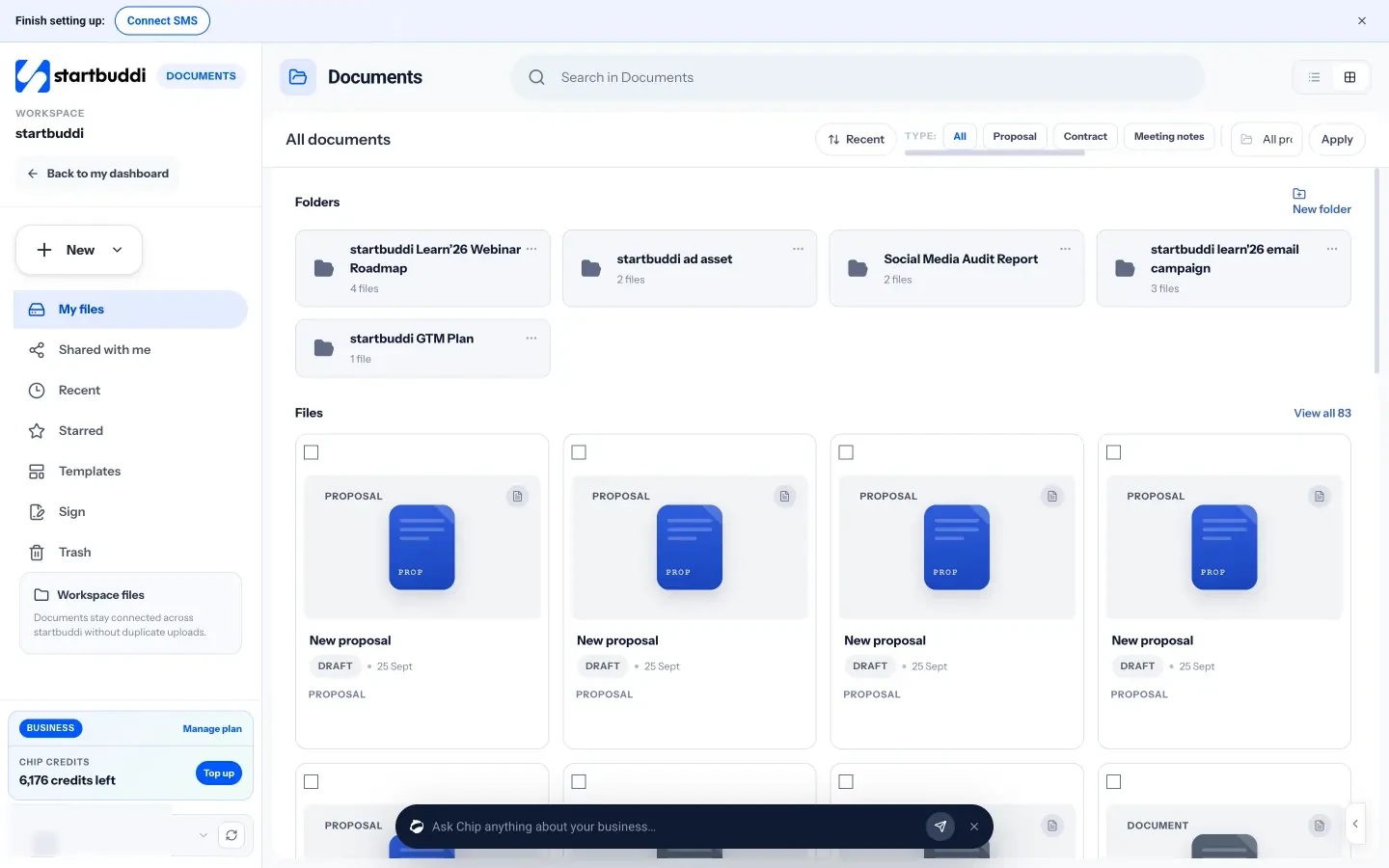
Keep your certificate, registration documents and later annual return receipts together in Documents, so they’re a few clicks away when a bank, client or tender asks for them.
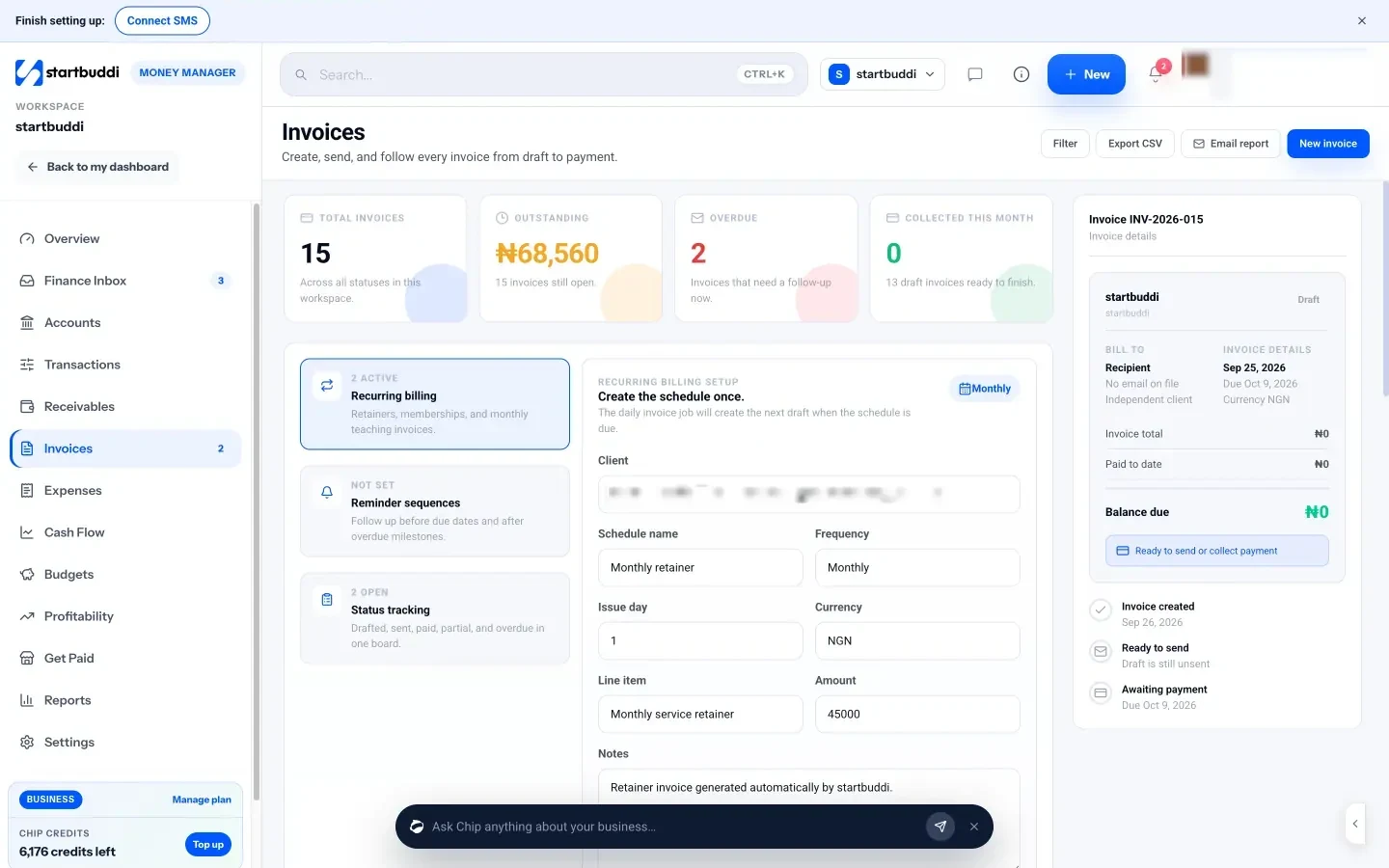
Send invoices that show your registered business name, with your registration number in the invoice footer, from Invoicing. You can invoice in naira, let customers pay by card, bank transfer or USSD through Paystack, and see who still owes you. The Free plan includes five invoices a month.
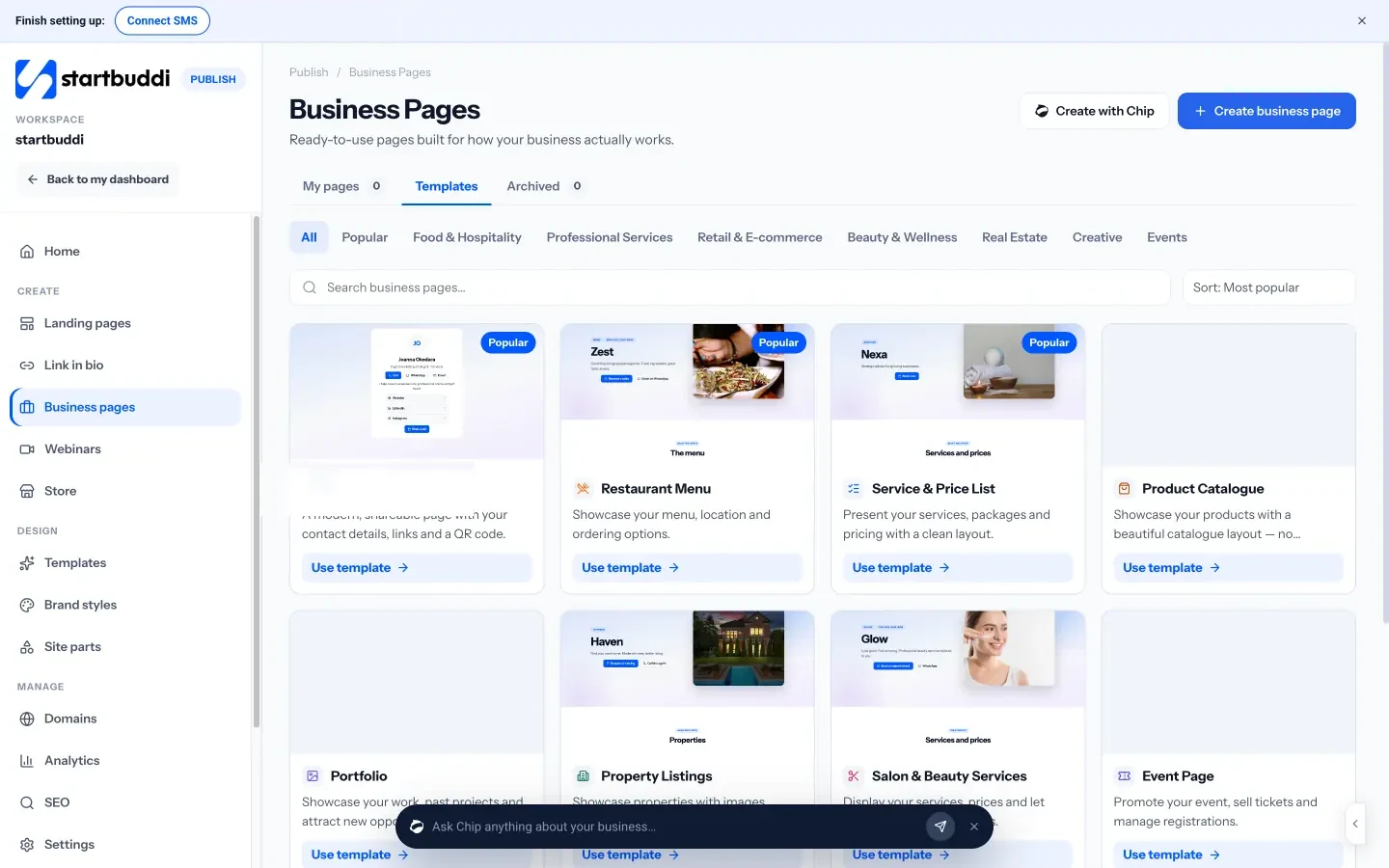
With your name registered, it’s worth putting it online too. A business page gives customers somewhere to check you’re real, see your services and get in touch.
Your next step
Write down three name ideas, check your NIN details match your ID, and gather your photo and signature scans today. Then set aside an hour to apply on the CAC portal. Once your certificate arrives, open your account with our guide to opening a business bank account in Nigeria, and set up startbuddi free to send your first invoice under your new name.
Sources
- Corporate Affairs Commission (CAC)
- Section 815, Companies and Allied Matters Act 2020 (LawGlobal Hub)
- Business names under CAMA 2020 (360 Solicitors)
- Legit.ng: CAC reviews service fees from 1 August 2025
- Channels Television: CBN deadline for POS operators to register with CAC
- The Guardian: FIRS transitions to Nigeria Revenue Service
- EFCC Special Control Unit against Money Laundering (SCUML)
- Moniepoint: CAC business name registration
Frequently asked questions
Can I register a business name in Nigeria myself?
Yes. Since CAMA 2020, sole proprietors and partners can register a business name on the CAC portal without a lawyer, accountant or company secretary.
How long does CAC business name registration take?
It depends on how quickly CAC reviews your application and whether it raises queries. Clear scans and details that match your NIN are the best way to avoid delays.
Can I register a business name while living abroad?
The portal is online, but the NIN check means each proprietor needs a valid NIN. If you don't have one, arrange that first or ask CAC or an accredited agent about your options.
Do I need to renew my business name registration?
You don't renew the certificate, but you must file annual returns every year after the year you registered, and tell CAC about changes to your details.
Chinedu Kalu is the co-founder and chief operating officer of startbuddi, responsible for how the company runs day to day. Chinedu writes about the operational side of a small business: registering and running the company, money, hiring and the routines that keep a team on track.
Co-founded startbuddi and runs its operations