Most service businesses think the easiest way to keep clients is to offer a discount. Drop the price, buy some loyalty. But that approach trains clients to expect…
- Why Do Most Service Businesses Struggle to Retain Clients?
- What Are the Most Effective Client Retention Strategies for Service Businesses?
- How Does Customer Experience Directly Impact Client Retention?
- What Role Do Systems and Tools Play in Retaining Clients Long-Term?
- How Can You Increase Customer Lifetime Value Without Lowering Prices?
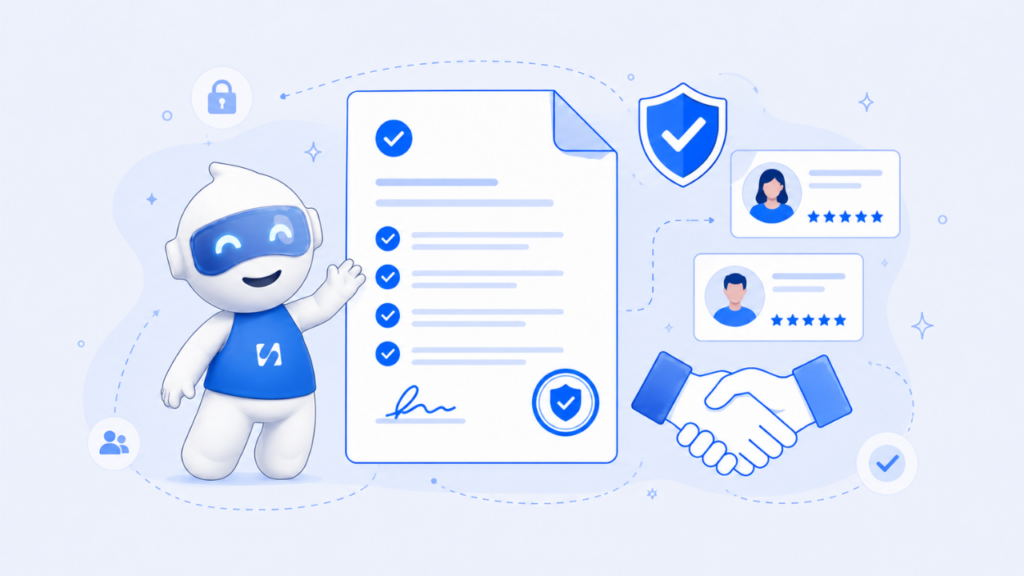
Most service businesses think the easiest way to keep clients is to offer a discount. Drop the price, buy some loyalty. But that approach trains clients to expect less and undermines the value of your work. The real answer to how to retain clients has nothing to do with your pricing and everything to do with how you make clients feel between transactions.
This article covers why discounting is not a retention strategy, and what actually works, from follow-up systems to customer experience improvements that keep clients coming back.
Why Do Most Service Businesses Struggle to Retain Clients?
The answer is usually not a quality problem. It is a systems problem.
A client books you once, receives a great service, and then hears nothing for three months. By the time you reach out again, they have moved on. Not because they were unhappy, but because another provider stayed top of mind and you did not.
Businesses lose clients through:
- Inconsistent communication after the first sale
- No follow-up after appointments or completed projects
- Disorganized booking and invoicing that creates friction
- Lack of personalization in how clients are treated over time
According to Harvard Business Review, acquiring a new customer can cost anywhere from 5 to 25 times more than retaining an existing one. Yet most service businesses spend the bulk of their energy chasing new leads. Flipping that ratio is one of the fastest ways to grow revenue without growing your workload.
What Are the Most Effective Client Retention Strategies for Service Businesses?
Client retention starts with one principle: make every interaction easier and more valuable than the last. Here are the strategies that consistently work across consulting, coaching, beauty, wellness, freelancing, and agency work.
- Deliver consistent value, not just good service
Good service is a baseline. Clients expect it. What keeps them returning is the feeling that you understand their specific situation and consistently deliver results that matter to them. This means documenting what each client needs, reviewing past work before new appointments, and proactively offering solutions rather than waiting to be asked.
A strong onboarding process also sets the tone for the entire relationship. Clients who feel welcomed and informed from day one are far more likely to stick around long term.
- Communicate proactively, not reactively
Most businesses only reach out when they want to sell something. Flip that habit. Send a check-in message a week after a completed project. Share a tip relevant to the client’s situation. Remind them of upcoming renewal dates or seasonal services they might need.
This is also where many businesses drop the ball. They finish a job and go silent. Tools like startbuddi help automate reminders, follow-ups, and client communication so nothing slips through the cracks, making customer retention a built-in process rather than something that depends on memory.
- Build a frictionless customer experience
Customer experience is everything a client feels from the moment they book to the moment they pay. If any part of that journey is complicated, from confusing invoices to missed reminders or unclear communication, clients start to feel like working with you is more effort than it is worth.
Smooth experiences build trust. And trust is what drives repeat business.
How Does Customer Experience Directly Impact Client Retention?
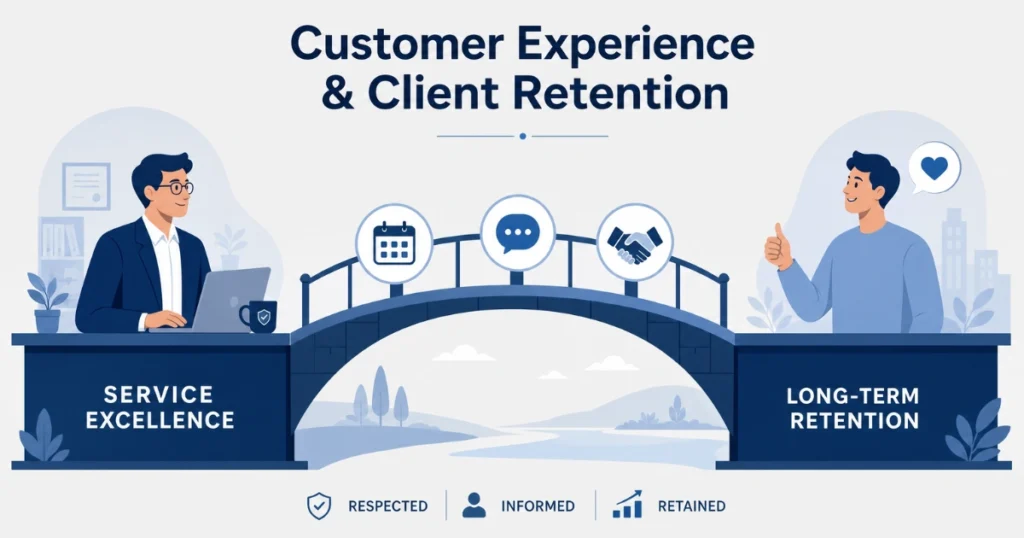
When clients feel organized, informed, and respected throughout their journey with you, they stay. When they feel like they have to chase you for answers or navigate a confusing process, they leave, even if the core service was excellent.
Practical ways to improve customer satisfaction through experience:
- Confirm bookings immediately and send reminders 24 to 48 hours before appointments
- Use clear, professional invoices that are easy to pay. If you are not sure how to structure your billing process, this guide on collecting payments from clients is a practical starting point
- Respond to messages within a set time window and communicate that window to clients
- Collect feedback after each service and actually act on what you hear
Customer engagement does not require a big team. It requires consistency. A client who feels seen and heard is far more likely to become a long-term client than one who only hears from you when it is time to pay.
What Role Do Systems and Tools Play in Retaining Clients Long-Term?
The honest answer is: a significant one.
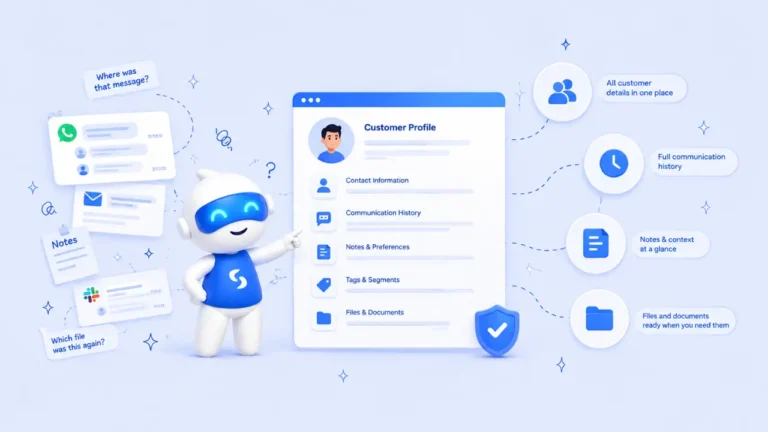
Many service professionals are skilled at what they do but under-equipped with systems to support ongoing client relationships. When bookings, communication, invoices, payments, and client records all live in different places, things inevitably fall through the cracks.
Clients notice when a business is disorganized. They may not say it directly, but confusion creates doubt. And doubt erodes loyalty.
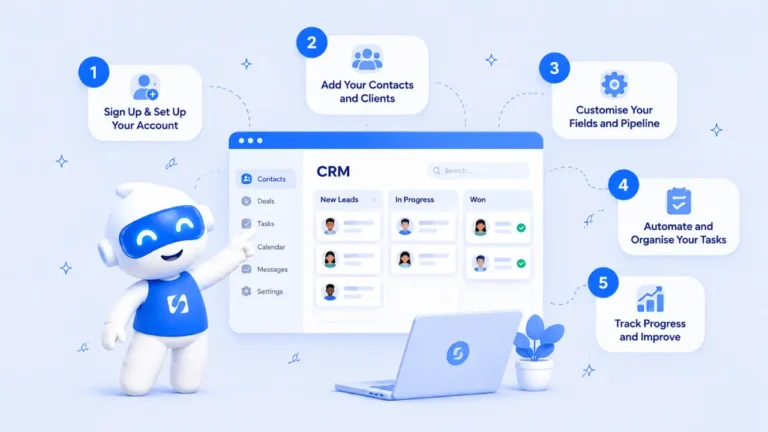
When businesses organize these functions in one place, something interesting happens: the customer experience improves without any extra effort because the basics are being handled reliably. startbuddi brings bookings, follow-ups, payments, invoicing, and client management together in one platform, giving service businesses the infrastructure to retain clients systematically, not accidentally.
How Can You Increase Customer Lifetime Value Without Lowering Prices?
Customer lifetime value is the total revenue a client generates over the entire time they work with you. Increasing it does not require discounting. It requires deepening the relationship.
Strategies that increase lifetime value without cutting prices:
- Offer service packages that bundle multiple sessions or deliverables at a predictable rate
- Create a referral process so happy clients have a clear way to send you new business
- Build loyalty through recognition by remembering details, acknowledging milestones, and sending a thank-you after a long-standing client’s anniversary with your business
- Upsell thoughtfully by recommending add-on services based on what a client actually needs, not just what is available
The businesses that master customer loyalty are the ones that treat long-term clients differently from new ones, with more personalization, more proactive communication, and more investment in the relationship.
Frequently Asked Questions
Run this from one workspace
Clients, projects, money and marketing — connected, not scattered across five apps.
See how it worksWhat is the most important factor in client retention for service businesses?
Consistent, proactive communication is the single most important factor. Clients who feel informed and remembered are significantly less likely to leave, even when competitors offer lower prices.
How often should you follow up with existing clients?
The frequency depends on your service type, but a general rule is to follow up within one week of completing a service, and then check in at regular intervals based on the typical buying cycle. Monthly touchpoints work well for most service businesses.
What is the difference between customer satisfaction and customer loyalty?
Customer satisfaction measures how happy a client is with a specific interaction. Customer loyalty measures whether they return, refer others, and stay long-term. Satisfaction is necessary but not sufficient. Loyalty requires consistent positive experiences over time.
Do loyalty programs work for small service businesses?
They can, but only when they feel genuine. A simple referral reward or a “thank you” upgrade for long-term clients works better than a complicated points system. The key is making clients feel valued in a way that is personal, not transactional.
Conclusion
Retaining clients is not about being the cheapest option. It is about being the most reliable, most responsive, and most organized option in your space. When clients trust that you will show up consistently, communicate clearly, and deliver value every time, they have no reason to look elsewhere.
startbuddi helps service businesses fix exactly that, managing bookings, follow-ups, payments, invoices, and customer relationships from one platform. With plans starting at less than $10 per month, there is no reason to keep relying on manual processes that cost you clients.
Put this into practice
Everything in this guide is built into startbuddi — free to start.
Start freeWritten by
Chinonye Umezinne
SEO Copywriter| Email growth Specialist| I help businesses increase revenue with strategic SEO content & high-converting email funnels.
Keep reading
Related playbooks
Stop reading. Start doing.
Free to start. No card needed. Your full workspace is ready in five minutes.