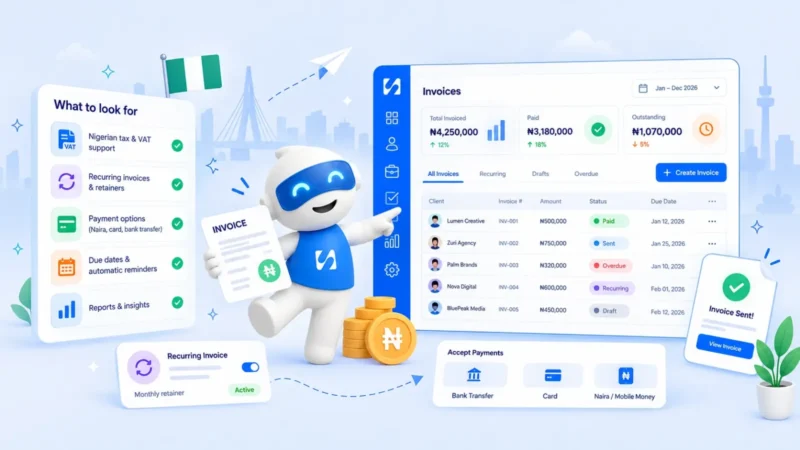
How to collect payment from a client without chasing them every time
How to collect payment from a client without chasing: terms to agree upfront, an invoice that's easy to pay, a follow-up timeline and email and WhatsApp templates.


Chinonye wrote this while on the startbuddi team. The product has changed since, so the team updated it on .
- To collect payment from a client without chasing, agree payment terms and any deposit before you start, send an invoice with a due date and a payment link, then follow up on a fixed schedule. Every message should name the invoice number, amount, due date and how to pay, and end with one clear ask.
To collect payment from a client without chasing them every time, build the payment into the job from the start. Agree clear terms (and a deposit where it makes sense) before the work begins, send an invoice that makes paying easy, and then follow up at planned moments with short, friendly messages that name the amount, the invoice number, the due date and exactly how to pay.
Asking for money you have already earned should not feel like begging, yet for most founders it is the most awkward email of the week. The good news: asking for payment politely is a skill, not a personality trait.
This guide gives you the set-up, the timeline, the wording and ready-to-copy templates for email and WhatsApp, so you can collect what you are owed without sounding pushy or apologetic.
Why asking for payment feels awkward (and why it shouldn’t)
Most people hesitate because they worry about damaging the relationship. You like the client, the project went well, and a reminder feels like an accusation. So you wait, hoping the money turns up on its own.
Waiting is expensive. In the UK, the government estimates that late payments cost the economy £11 billion a year and close 38 businesses every day. Big companies rarely suffer most; the small supplier who did not want to be a nuisance does.
Here is the mindset shift that helps: a payment request is admin, not an argument. Your client agreed a price, you delivered, and now you are helping them complete their side of the deal. Most late payers are not dodging you. They forgot, the invoice went to the wrong person, or the payment method was a hassle. A clear, polite message fixes all three.
Set payment terms before the work starts
The easiest payment conversation happens before you do any work. When the terms are agreed in writing, a reminder later is just pointing back to what you both said.
Agree the terms in writing
Put these in your quote, proposal or contract, and repeat them on every invoice:
- The price and what it covers, so nobody argues about scope later.
- When you get paid: on receipt, within 7 days, within 14 days, or in stages.
- Any deposit due before you start. Our guide to deposits and upfront payments covers how much to ask for.
- How to pay: bank transfer details, a card payment link, or both.
- What happens if payment is late, for example that work pauses until the account is up to date.
If you have no written agreement, a short email that says “Just confirming: the fee is ₦250,000, half upfront and half on delivery, payable by transfer or card” is far better than nothing.
Send an invoice that is easy to pay
Many payment delays are really invoice problems. The UK government lists what an invoice must include, and it is a sensible checklist wherever you work:
| Include | Why it matters |
|---|---|
| A unique invoice number | Lets the client’s finance person find and match it |
| Your business name and contact details | They know who to pay and who to ask |
| The client’s name and address | It reaches the right company and the right person |
| A clear description of the work | Nobody has to ask what the charge is for |
| The date of the work and of the invoice | Sets the clock for the payment terms |
| Amounts, any tax, and the total due | No maths for the client to do |
| The due date and how to pay | Removes the most common excuse for waiting |
The last row is not on every official list, but it is the one that gets you paid. You can build one with our free invoice template, and our post on creating a professional invoice that gets paid faster goes deeper on layout.
The six parts of a good payment request
Whether it is the first invoice email or a third reminder, every message that asks for payment should contain the same six things. Leave one out and you invite another round of back and forth.
- A friendly opener. One line, not a paragraph. “Hope the launch went well” is enough.
- The invoice number. So they can find it in seconds.
- The exact amount. Write the figure and the currency, for example ₦180,000 or $450.
- The due date. A real date, not “soon” or “at your earliest convenience”.
- How to pay. A payment link, or your bank details, in the message itself.
- One clear ask. “Could you let me know when this will be paid?” is easier to answer than a vague hope.
Keep the tone warm and matter-of-fact. Skip long apologies such as “so sorry to bother you”. You are not bothering them; you are reminding them of something they agreed to.
How to collect payment from a client: a simple timeline
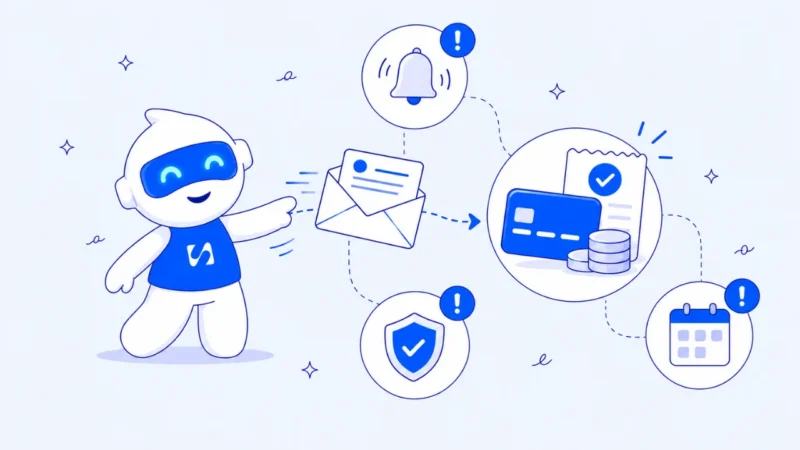
Good follow-up is planned, not emotional. Decide the schedule once and use it for every client, so you never have to wonder “is it too soon to chase?”.
| When | What to send | Tone |
|---|---|---|
| Day the work is delivered | The invoice, with the due date and payment link | Warm, thank them |
| 3 days before the due date | A short heads-up | Friendly |
| On the due date | A “due today” note with the link again | Friendly, direct |
| 3 days late | A check-in: did they receive it? | Polite, assumes good faith |
| 7 to 10 days late | A follow-up asking for a payment date | Firm but friendly |
| 14 days late | A phone call or voice note | Personal, calm |
| 30 days late | A final written notice with next steps | Formal, factual |
If a client pays within the first two steps, they never see the firmer messages. If they do not, each step is a small, reasonable escalation. When an invoice is already well overdue, our free late payment email writer helps you word a firmer message.
Templates: how to ask for payment politely
Copy these, then change the details. Short messages get read; long ones get saved “for later”. Replace anything in square brackets.
1. Sending the invoice
Subject: Invoice [INV-042] for [project name]
Hi [Name],
Thanks again for choosing us for [project]. Your invoice [INV-042] for [₦180,000] is attached and due on [14 October]. You can pay by card or transfer here: [payment link]. Bank details are also on the invoice.
Any questions, just reply to this email.
Put this into practiceEverything in this article works inside startbuddi, free to start.Start free[Your name]
2. A friendly heads-up before the due date
Subject: Quick reminder: invoice [INV-042] due [14 October]
Hi [Name], a quick heads-up that invoice [INV-042] for [₦180,000] is due on [Friday, 14 October]. Here is the link again in case it is handy: [payment link]. Thanks!
3. Due today
Subject: Invoice [INV-042] is due today
Hi [Name], just a note that invoice [INV-042] for [₦180,000] is due today. You can pay in a minute here: [payment link]. If it has already gone out, thank you, and please ignore this.
4. A few days late: check they received it
Subject: Did invoice [INV-042] reach you?
Hi [Name], I have not seen payment for invoice [INV-042] ([₦180,000], due [14 October]) yet, so I wanted to check it reached the right person. Should I send it to someone in your accounts team? Here is the link again: [payment link].
5. A week or more late: ask for a date
Subject: Payment date for invoice [INV-042]
Hi [Name], invoice [INV-042] for [₦180,000] is now [9] days past its due date of [14 October]. Could you let me know the date you expect to pay? If there is a problem with the invoice or the work, tell me and I will sort it out quickly. Payment link: [payment link].
6. WhatsApp version
On WhatsApp, keep it shorter and more personal. Many clients in Nigeria and across Africa answer a WhatsApp message faster than an email.
Hi [Name], hope your week is going well. Quick one: invoice [INV-042] for [₦180,000] was due on [14 Oct]. Here is the link to pay by card or transfer: [link]. Thank you!
If you want more variations, our free payment reminder generator writes one for your situation in seconds.
A phone script for when messages go quiet
A call feels bigger than it is. Keep it short and practical:
- “Hi [Name], it’s [you] from [business]. Is now a good time for two minutes?”
- “I’m calling about invoice [INV-042] for [amount], which was due on [date]. Is there anything holding it up?”
- Listen. If there is a problem, agree what happens next. If not: “Great, what date can I expect it?”
- “Thanks. I’ll send a quick email confirming that date.”
Then send the email the same day. A written record of the promised date makes the next follow-up simple.
Choosing the right channel
The best channel is the one your client actually reads. As a rough guide:
- Email for the invoice itself and anything that may need to be forwarded to a finance team. It also gives you a clear paper trail.
- WhatsApp or SMS for quick nudges to small business owners and individual clients, who often live in their messages.
- Phone or voice note when two written reminders have had no answer. Hearing a real person often gets things moving.
Whichever you use, include the payment link every time. Every extra step between “I should pay this” and “paid” is a chance for the client to get distracted.
Mistakes that slow payment down
- Vague amounts or dates. “Just a gentle nudge about the invoice” gives the client nothing to act on.
- Over-apologising. “Sorry, I hate to ask” tells the client the request is optional.
- Sending to the wrong person. In bigger companies, ask upfront who handles invoices and copy them in.
- Only one way to pay. If a client cannot do a transfer from their phone right now, a card link lets them pay anyway.
- Chasing by memory. If your follow-up plan lives in your head, it will slip in busy weeks. Put the dates somewhere you will see them.
- Getting angry in writing. Stay factual. If you need to escalate, do it with clear next steps, not sharp words.
A note on rules: in some places the law backs you up. In the UK, a business-to-business payment with no agreed date is late after 30 days, and you can usually claim statutory interest. In New York State, the Freelance Isn’t Free Act requires a written contract and payment within 30 days of completing the work unless the contract says otherwise. This is general information, not legal advice, so check the rules where you and your client are based.
How startbuddi helps you ask for payment
With startbuddi, the invoice, the payment link and the follow-up live in one place, so asking for money takes a minute instead of an evening.
- Invoices with a pay button. In Invoicing you add line items, tax and a due date, then choose Create and send. Your client gets an email with a link to a page where they can pay by card, bank transfer or USSD through Paystack, or by card through Stripe. Your bank details can be shown too. Payments made through Paystack or Stripe mark the invoice as paid automatically.
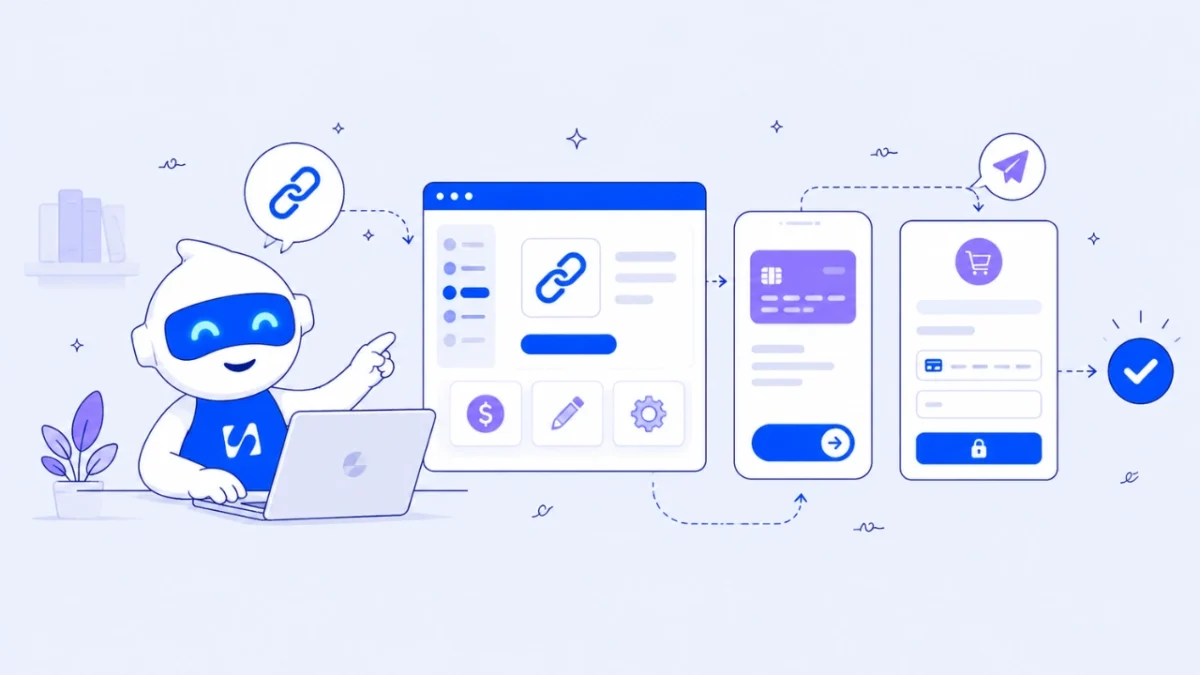
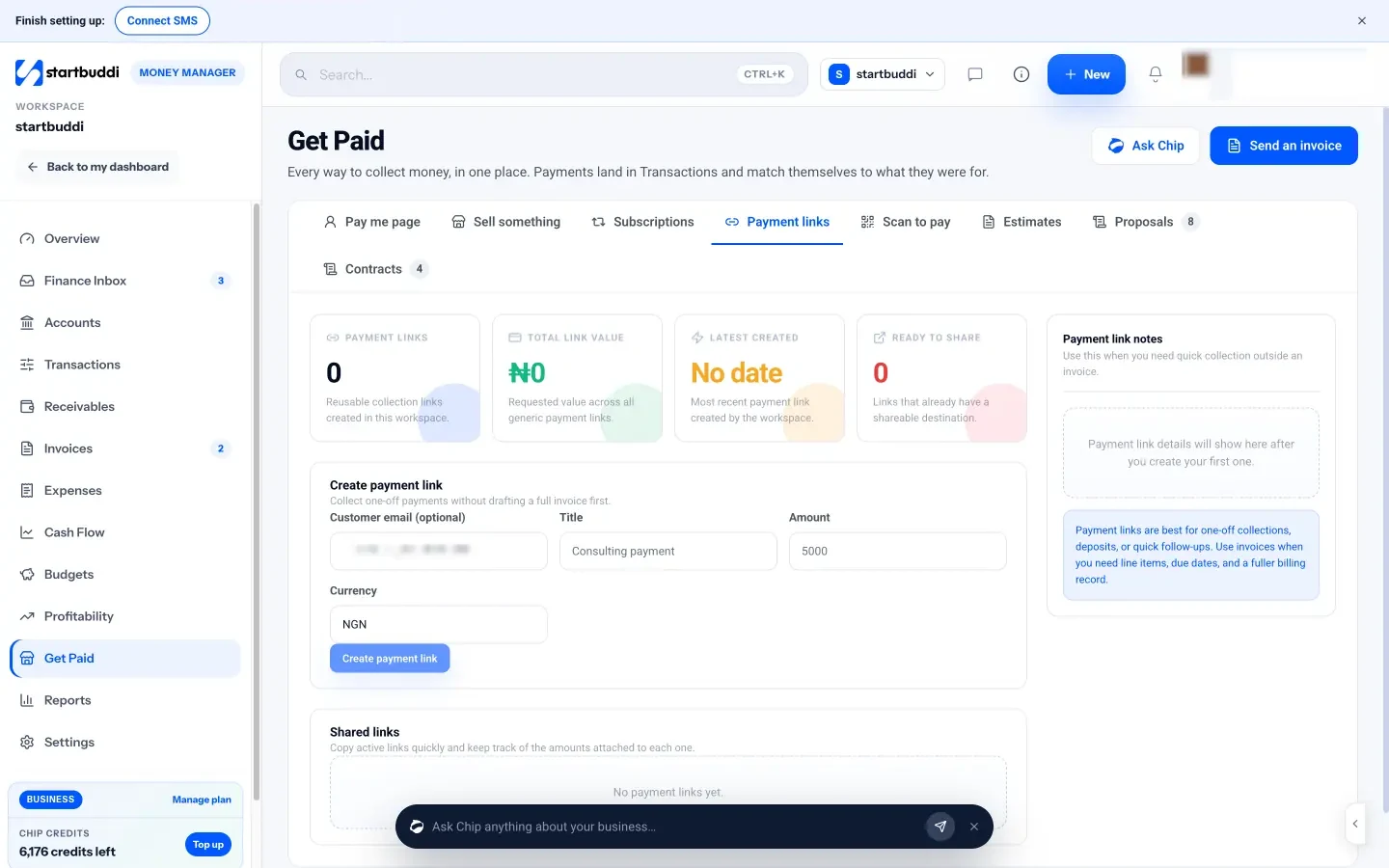
- Payment links for quick requests. For a deposit or a small job, Get Paid lets you create a payment link with a title and amount and paste it straight into WhatsApp.
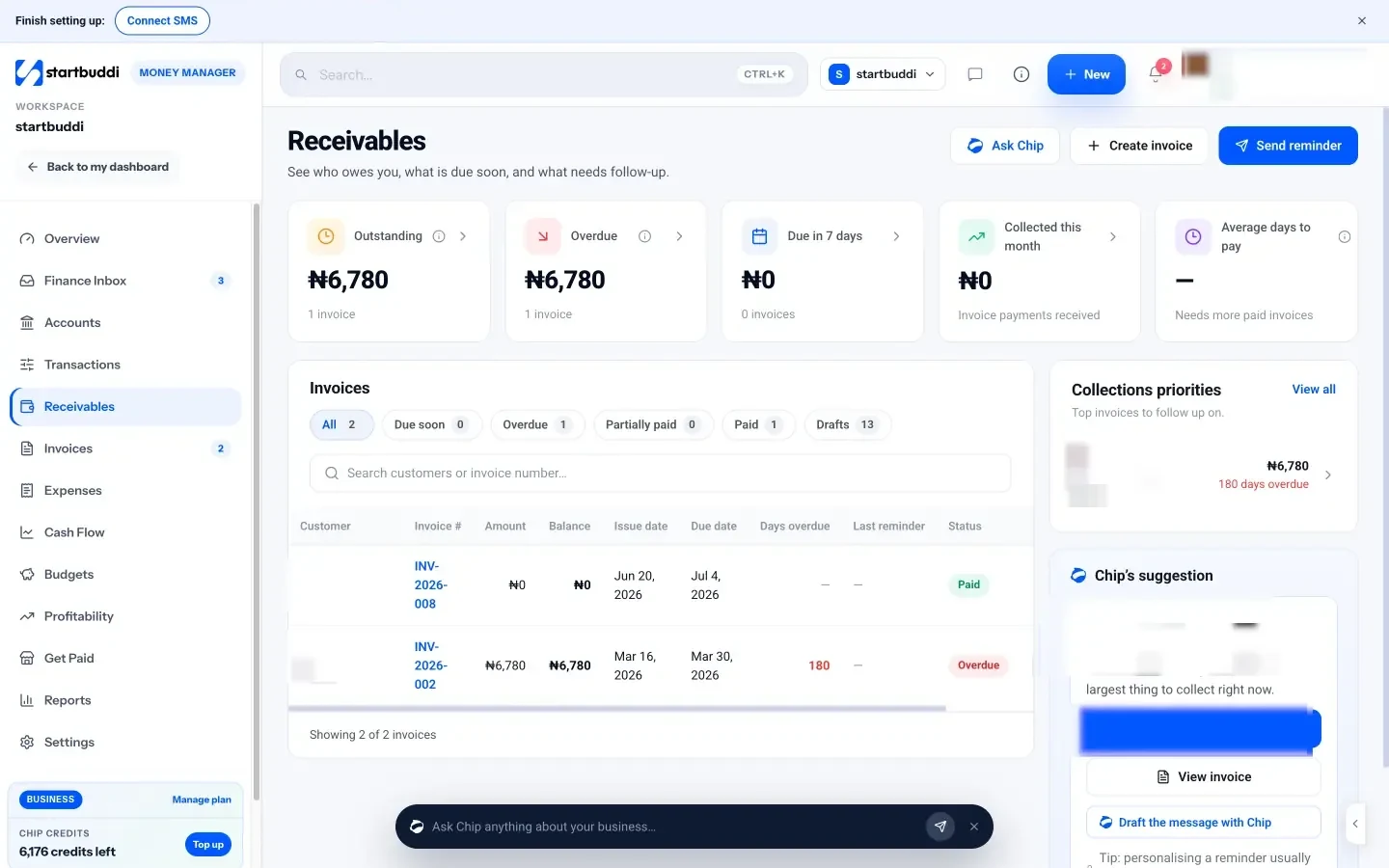
- One place to see who owes you. Receivables shows what is outstanding, overdue and due in the next 7 days, with a Remind button on each open invoice.
- Help with the wording. On an invoice or in Receivables, Chip can draft a friendly reminder, or a firm but friendly one when the invoice is overdue, which you review before sending.
- A reminder plan you set once. Reminder sequences let you choose how many days before the due date to remind, whether to send on the due date, and which overdue days to follow up on.
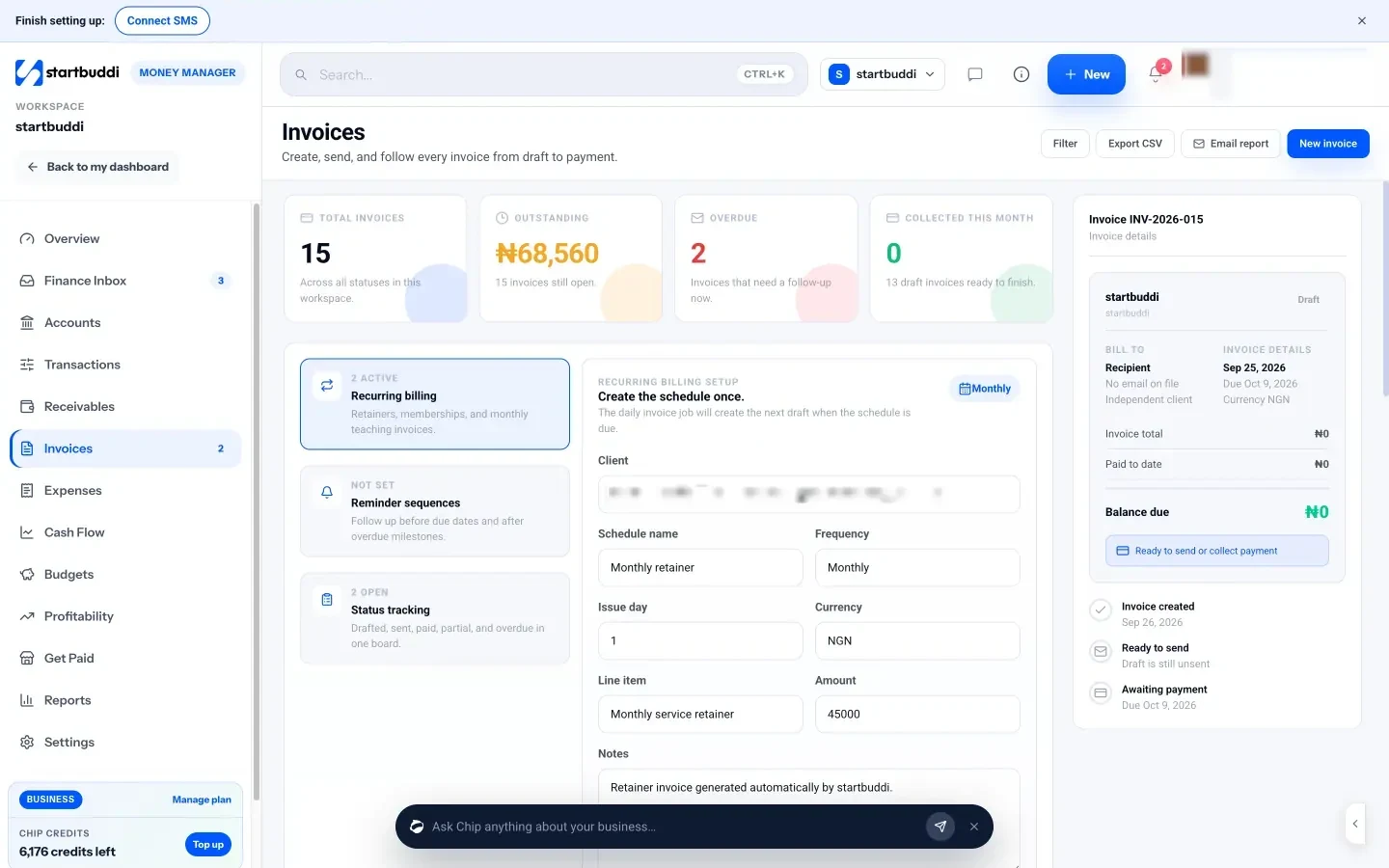
Invoicing is included on the Free plan (5 invoices a month), and Starter and above have unlimited invoices. If you already use Paystack, see how to send invoices and get paid via Paystack.
Your next step
Pick one invoice you are waiting on right now. Check it has a due date and a way to pay, then send template 2, 3 or 4, depending on where it sits in the timeline. Then write your follow-up schedule down so the next one happens without thinking. When you are ready to put invoices, payment links and reminders in one place, compare the plans on our pricing page.
Sources
- GOV.UK: Commercial Payments Bill overview
- GOV.UK: Invoices, what they must include
- GOV.UK: Late commercial payments
- New York State Senate: Bill S5026 (Freelance Isn’t Free Act)
- Freelancers Union: Freelance Isn’t Free goes into effect in New York State
Frequently asked questions
Is it rude to ask a client for payment?
No. You are asking for money they agreed to pay for work you delivered. Keep the message short, factual and friendly, and it reads as normal business admin.
How soon after sending an invoice can I follow up?
A short heads-up a few days before the due date is fine, and so is a note on the due date. After that, a first check-in around 3 days late is reasonable.
Should I ask for payment by email or WhatsApp?
Send the invoice by email so there is a record, then use whatever the client reads fastest for reminders. For many small business owners that is WhatsApp.
What if the client says they cannot pay in full?
Ask what they can pay now and agree dates for the rest in writing. A clear instalment plan is better than an open-ended promise.
SEO Copywriter| Email growth Specialist| I help businesses increase revenue with strategic SEO content & high-converting email funnels.