Knowing how to onboard a new client is the difference between a client who stays, refers, and trusts you and one who quietly disappears after the first invoice.…
- What Is the New Client Onboarding Process?
- How Do You Welcome a New Client by Email?
- Why Does a Client Onboarding Checklist Matter?
- What Should a Welcome Package Include for New Clients?
- How Do You Set Clear Client Expectations During Onboarding?
Knowing how to onboard a new client is the difference between a client who stays, refers, and trusts you and one who quietly disappears after the first invoice. Most service businesses focus all their energy on winning clients.
Very few think hard enough about what happens the moment a client says yes. That first week, before any real work begins, is when trust is either built or quietly broken.
Whether you are running a freelance business, an agency, or a small service company in Nigeria, this guide covers every step of the new client onboarding process, from your welcome email and discovery questionnaire to project timelines and communication setup, so you can run a professional operation from day one without overcomplicating it.
What Is the New Client Onboarding Process?
The new client onboarding process is the structured set of steps you take after a client says yes before the actual work begins. It covers everything from your welcome email to collecting information, setting expectations, and getting the project organised.
Think of it as the bridge between “we’re hired” and “we’re delivering.” Without that bridge, clients fill the silence with anxiety.
A solid onboarding process:
- Confirms the client made the right decision
- Gives your team everything they need to execute
- Reduces back-and-forth emails later
- Establishes you as a professional from day one
How Do You Welcome a New Client by Email?
Your welcome email is the first real impression after the sale. Most businesses get this wrong by keeping it too casual or too generic. A strong welcome email does three things: it confirms the relationship, sets the tone, and tells the client what to expect next.
Here is what an effective welcome email includes:
- A warm but professional opening that confirms you are excited to work together
- A brief summary of what was agreed services, timeline, and next steps
- A clear call to action, such as completing an intake form or booking a kickoff call
- Your preferred communication channels and response time expectations
Keep it short. Clients do not need a wall of text. They need to feel organised and informed. The subject line matters too something like “Welcome to [Your Business] Here’s What Happens Next” works far better than a plain “Welcome.”
Why Does a Client Onboarding Checklist Matter?
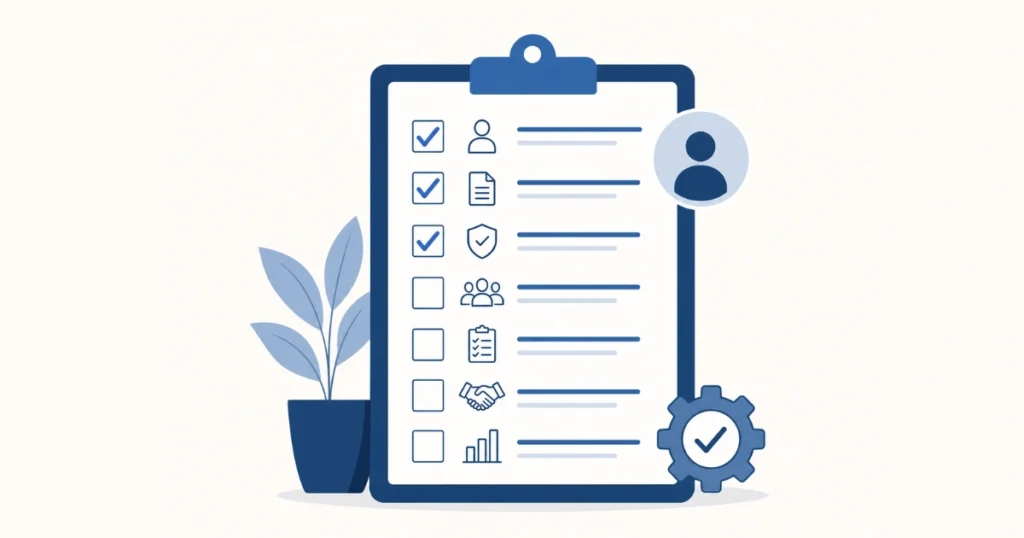
Without a checklist, onboarding becomes inconsistent. You handle some clients well and others poorly, depending on how busy you are that week. A client onboarding checklist removes that variability.
A reliable onboarding checklist typically includes:
- Send welcome email within 24 hours of contract signing
- Share a welcome package with your processes, contact details, and expectations
- Send a discovery questionnaire to gather business context
- Schedule a kickoff call to align on goals
- Set up a shared project timeline
- Confirm communication channels (email, Slack, WhatsApp, etc.)
- Create the client’s account profile in your CRM
- Set up a reporting dashboard if applicable
The benefit of a checklist is not just organisation, it is consistency. When every client goes through the same structured experience, your business looks more established and your delivery improves.
What Should a Welcome Package Include for New Clients?
A welcome package is more than a PDF; it is your first chance to show the client how you work. It removes guesswork, which is one of the biggest causes of early client friction.
A strong welcome package covers:
- Your process how you work week to week
- Key contacts who handles what on your team
- Communication guidelines how and when to reach you
- What you need from them assets, approvals, access
- Project timeline key milestones and deadlines
- Reporting how and when they will receive updates
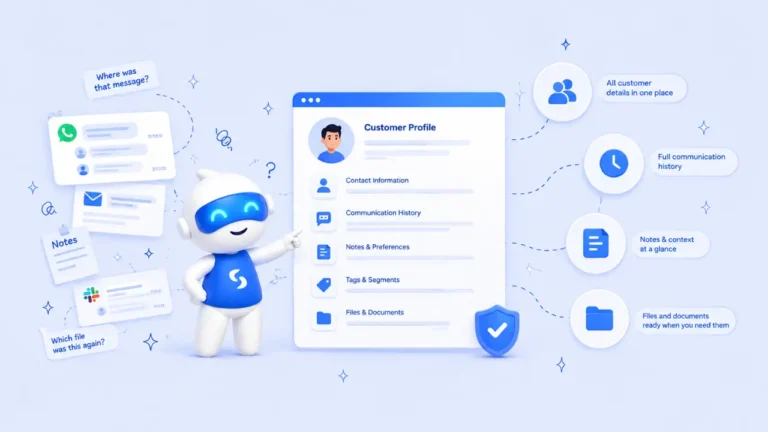
Businesses using tools like startbuddi can build this into their workspace from the beginning with CRM profiles, booking forms, and task workflows all tied to the same client record, so nothing falls through the gaps.
How Do You Set Clear Client Expectations During Onboarding?
Unclear expectations are the root cause of most client disputes. Setting them early is not about being rigid it is about making sure both sides understand the rules of the engagement.
The best way to do this is through a combination of your welcome email, discovery questionnaire, and kickoff call. Each touchpoint reinforces the same message: here is what we are doing, here is when it happens, and here is how we communicate.
Practical steps to set expectations clearly:
- Define scope of work in plain language avoid jargon
- Agree on a revision process before it is ever needed
- Clarify what constitutes a delay versus a change in scope
- Establish a response time expectation from both sides
- Confirm how decisions will be documented
When clients know what to expect, they stop worrying. And when they stop worrying, they start trusting.
What Questions Should a Discovery Questionnaire Ask?
A discovery questionnaire is one of the most underused tools in client onboarding. It gathers the context you need to do the work well and it shows the client you take their business seriously.
Good discovery questions cover:
- What does success look like for this project?
- Who are your main competitors or reference points?
- What has worked (or not worked) in the past?
- Who are the key decision-makers we should know about?
- Are there any deadlines or events we should plan around?
- What are your communication preferences?
Keep it focused. Ten well-chosen questions are more effective than a 30-question form that clients abandon halfway through.
Frequently Asked Questions
Run this from one workspace
Clients, projects, money and marketing — connected, not scattered across five apps.
See how it worksHow long should client onboarding take?
For most small businesses and freelancers, the onboarding new clients process should take between two and five business days. That includes the welcome email, intake form, kickoff call, and initial project setup. The goal is speed without cutting corners.
What is the difference between a welcome email and a welcome package?
A welcome email is a short message sent immediately after signing that confirms next steps. A welcome package is a more detailed document or resource that explains your process, contact information, project timeline, and what the client needs to provide. Both are part of the new client onboarding process.
How do I create a repeatable client onboarding process?
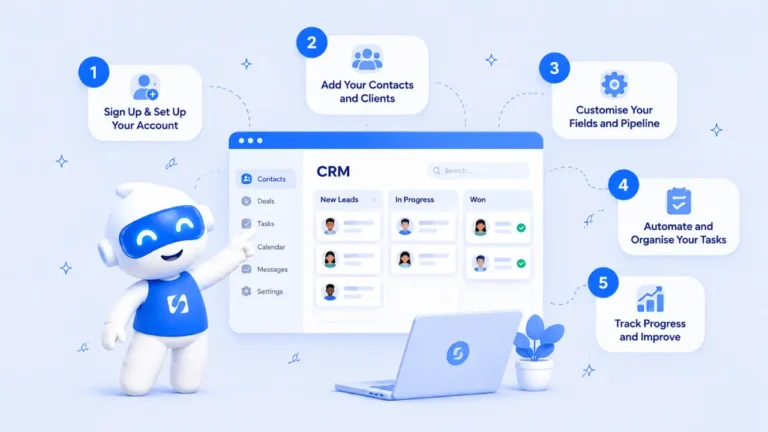
Start with a checklist of every step you take with a new client, then build templates for your welcome email, intake form, and kickoff agenda. Store everything in a CRM so each new client gets the same structured experience. The client onboarding process becomes repeatable when it is documented and tool-supported.
What communication channels work best during onboarding?
This depends on the client, but email works well for formal updates and documentation, while Slack or WhatsApp can handle faster back-and-forth. The key is agreeing on channels upfront so nothing gets missed and clients always know where to reach you.
Conclusion
Knowing how to onboard a new client is one of the highest-leverage skills a service business can develop. The fundamentals are simple: a strong welcome email, a clear welcome package, a discovery questionnaire, defined communication channels, and a project timeline set before the work begins. None of this requires a big team, it requires consistency.
If you are starting out in Nigeria or anywhere else, startbuddi gives you everything you need to run this properly from day one CRM, forms, task workflows, and invoicing for less than $10.
Put this into practice
Everything in this guide is built into startbuddi — free to start.
Start freeWritten by
Chinonye Umezinne
SEO Copywriter| Email growth Specialist| I help businesses increase revenue with strategic SEO content & high-converting email funnels.
Keep reading
Related playbooks
Stop reading. Start doing.
Free to start. No card needed. Your full workspace is ready in five minutes.