Gross profit vs net profit: what is the difference?
Also called: Gross income vs net income, gross margin vs net margin, top line vs bottom line, profit before and after expenses
Gross profit is revenue minus the direct cost of what you sold. Net profit is what is left after every other cost too, including rent, software, marketing, interest and tax. Net profit is the true bottom line.
Gross profit is the money left after you take away the direct cost of the things you sold. Net profit is the money left after you take away every cost of running the business. That is the whole gross profit vs net profit difference in one sentence: gross profit shows whether your sales make money, and net profit shows whether your business does.
Both matter. A business can have a healthy gross profit and still lose money overall if its running costs are too high.
Gross profit vs net profit: the formulas
- Gross profit = revenue − cost of sales
- Net profit = gross profit − operating expenses − interest − tax
Cost of sales (also called cost of goods sold, or COGS) is what it directly costs to deliver what you sold: stock, materials, packaging, and the pay of the people who do the job. Operating expenses are the costs of keeping the doors open whether you sell one thing or a hundred: rent, software, insurance, marketing, admin salaries, phone and internet.
A worked example
Zanele runs a small bakery in Johannesburg that sells cakes to order. One quarter looks like this:
| Line | Amount (ZAR) |
|---|---|
| Revenue from cake orders | R180,000 |
| Ingredients, boxes and baker’s wages per order | −R99,000 |
| Gross profit | R81,000 (45% gross margin) |
| Kitchen rent, electricity, delivery van, website, ads | −R54,000 |
| Loan interest | −R4,500 |
| Tax set aside | −R6,000 |
| Net profit | R16,500 (about 9% net margin) |
Her gross profit says her cake prices comfortably cover ingredients and baking. Her net profit says the kitchen, van and ads take most of that, so the business keeps R16,500 of the R180,000 it earned. Both numbers are true; they answer different questions. Turning each figure into a percentage gives you profit margin.
What each number tells you
| Gross profit | Net profit | |
|---|---|---|
| Question it answers | Do my prices cover the direct cost of the work? | Is the whole business making money? |
| Costs included | Cost of sales only | All costs, including overheads, interest and tax |
| If it is low | Raise prices, cut direct costs, change suppliers | Also look at rent, tools, marketing and debt |
| Where it appears | Near the top of a profit and loss statement | At the bottom, the “bottom line” |
Gross vs net for service businesses
If you sell time rather than products, cost of sales is mostly the pay of whoever delivers the work, plus anything bought for a specific client. A design studio’s cost of sales might be freelancer fees and stock photos for each project. If you do all the work yourself, decide on a fair hourly cost for your own time and count it, or your gross profit will look far better than reality.
How to improve each one
To lift gross profit, look at the sale itself: raise prices where your value supports it, buy materials in bulk, cut waste, or stop offering the jobs that take the most time for the least money. To lift net profit, look at the business around the sale as well: cancel software nobody uses, renegotiate rent, pay down expensive debt, and check that every marketing cost brings in customers. Small changes on both lines add up quickly.
Common mistakes
- Calling revenue “profit”. Money coming in is not money you keep.
- Putting overheads in cost of sales, or the other way round. Be consistent, or month-to-month comparisons mean nothing.
- Forgetting tax. Set money aside for tax as you go so net profit is not a surprise.
- Confusing profit with cash. You can be profitable on paper and still run out of cash if customers pay late. Our guide on how to track cash flow covers this.
- Not recording small expenses. They quietly lower net profit. Expense tracking keeps them visible.
This is general information, not tax or accounting advice. Your accountant, or official bodies such as the IRS, HMRC or SARS, can tell you how profit is defined for tax where you are.
Related terms
Profit margin turns gross or net profit into a percentage of revenue so you can compare periods and businesses. Accounts receivable is money customers owe you, which counts as revenue on an accrual basis before it arrives in your bank.
Gross and net profit in startbuddi
Money Manager’s Reports page has a Profit and loss tab built from your real invoices, payments and expenses. It shows revenue, expenses and net profit for this month, this quarter, this year or year to date, with income by source and expenses by category, plus a running total of tax added to invoices. It is a cash-basis management view, not statutory accounting, and you can export it as CSV for your accountant.
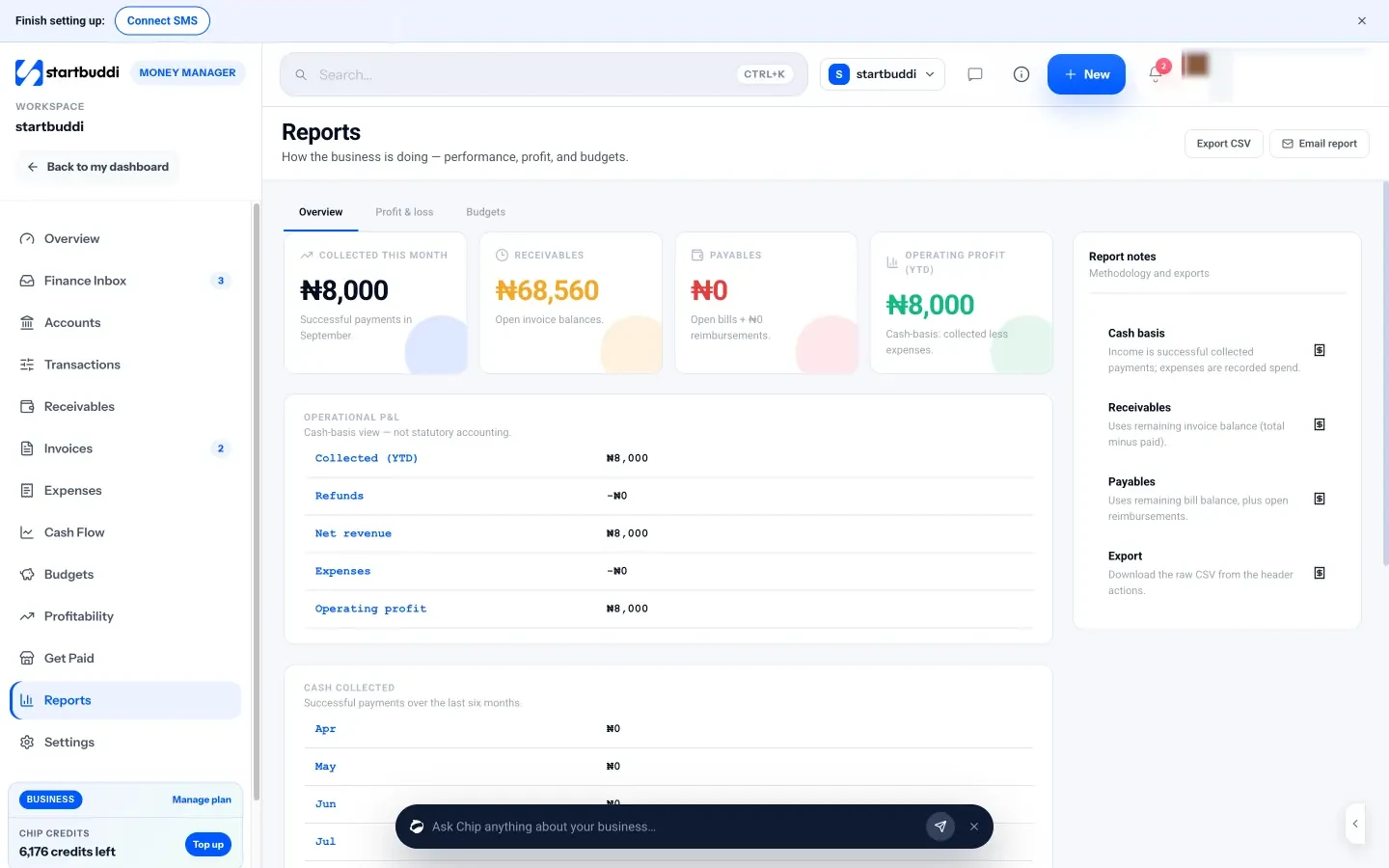
To keep net profit honest, log costs as they happen in Expenses, including recurring ones such as rent and software. Your next step: split last month’s costs into “cost of sales” and “running costs” and work out both profit figures once by hand. After that, let the reports do it.
Related terms
FAQ
Which is more important, gross profit or net profit?
Both. Gross profit tells you whether your prices cover the direct cost of your work. Net profit tells you whether the business makes money after everything. Watch both every month.
Can gross profit be positive and net profit negative?
Yes. If your running costs, interest and tax are larger than your gross profit, you make a net loss even though each sale is profitable.
Is net profit the same as cash in the bank?
No. Profit counts income when it is earned and costs when they are incurred, depending on your method. Late payments, loan repayments and stock purchases mean cash can differ a lot from profit.
Is gross profit the same as revenue?
No. Revenue is the total you sold. Gross profit is revenue minus the direct cost of those sales.
Chinedu Kalu is the co-founder and chief operating officer of startbuddi, responsible for how the company runs day to day. Chinedu writes about the operational side of a small business: registering and running the company, money, hiring and the routines that keep a team on track.
Co-founded startbuddi and runs its operations