How to generate a lead for sales: a step-by-step guide for small businesses
Define your ideal customer, mix inbound and outbound methods, capture every lead in one place, then qualify and nurture them. Plus a 30-minute daily routine.


Chinonye wrote this while on the startbuddi team. The product has changed since, so the team updated it on .
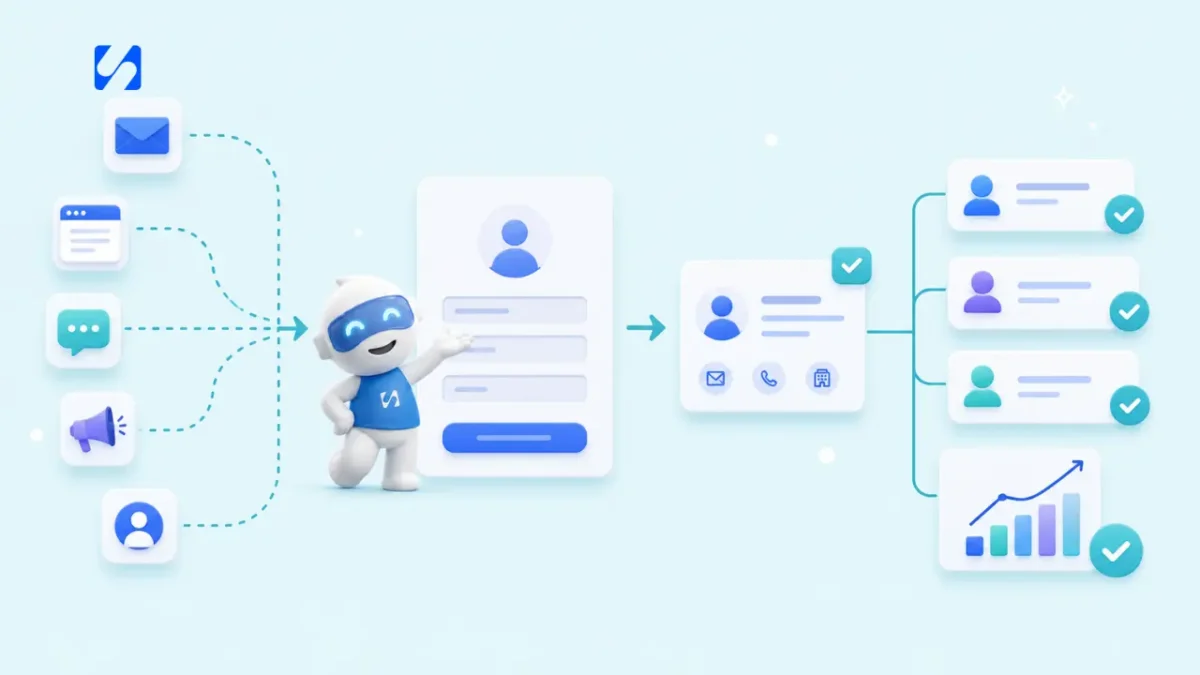
- To generate leads for sales, define your ideal customer, combine inbound methods (Google profile, content, lead magnets) with outbound ones (referrals, warm outreach, partnerships), capture every lead in one place, qualify quickly and nurture the rest. A 30-minute daily routine keeps the pipeline full.
Here is how to generate leads for sales in short: first define who your ideal customer is, then combine a few inbound methods (content, a Google Business Profile, social posts and a landing page with a simple offer) with a few outbound ones (referrals, warm outreach and partnerships), capture every enquiry in one place, qualify it quickly and follow up until you get an answer. If you’re asking how to generate a lead for sales this week, start with referrals and warm outreach: they’re the fastest.
This guide is written for founders, freelancers and small service businesses doing their own selling. It explains what counts as a lead, the methods that work without a big budget, how to qualify and nurture the leads you get, and a 30-minute daily routine that keeps your pipeline full.
What is a sales lead?
A sales lead is a person or business that has shown interest in what you sell, or that fits your ideal customer closely enough to be worth contacting. Not everyone who follows you or visits your site is a lead. It helps to separate three levels:
| Level | What it means | Example |
|---|---|---|
| Contact | You have their details, nothing more | Someone who followed you on Instagram |
| Lead | They’ve shown interest or clearly fit your ideal customer | A café owner who downloaded your menu design checklist |
| Qualified lead | They have a need, a budget, the authority to decide and a timeframe | A café owner who wants new menus before a relaunch next month |
Most of your time should go to qualified leads. The methods below fill the top of that list. The later sections cover how to move people down it.
Step 1: define your ideal customer
Lead generation gets much easier when you know exactly who you’re looking for. Write a one-paragraph description of your best customer. Look at your three favourite past clients, the ones who paid well, were easy to work with and got great results, and ask what they have in common:
- Who they are: type of business or person, size, location.
- What problem they have when they need you, in their words.
- Where they spend time: Google, Instagram, LinkedIn, WhatsApp groups, trade associations, local events.
- What triggers a purchase: opening a new location, a busy season, a new hire, a bad experience with a competitor.
For example: “Independent restaurants in Nairobi with 10 to 40 staff, opening a second branch or refreshing their brand, who find us through Instagram and referrals from other owners.” Every method below works better with a description like that.
Step 2: generate inbound leads (people come to you)
Inbound lead generation means making it easy for the right people to find you and get in touch. It takes longer to build, but it keeps working once it’s set up.
Get found on Google
For local and service businesses, a complete Google Business Profile is often the single best free lead source. Add your services, hours, photos and a booking or contact link, and ask happy customers for reviews. Our guides to setting up a Google Business Profile and local SEO for small businesses go step by step.
Answer your customers’ questions in content
Write down every question customers ask on first calls. Each one is a blog post, a short video or a social post. “How much does a wedding cake for 150 guests cost?” attracts exactly the people who are about to buy.
Offer something useful in exchange for contact details
A lead magnet is a small, free resource your ideal customer wants: a checklist, a price guide, a template, a short consultation. Put it on a simple landing page with a short form. Everyone who asks for it is a lead, and you know what they’re interested in.
Show your work on social media
Post examples, before and after photos, short tips and the story behind jobs. End with a clear next step: “Send me a DM with the word MENU and I’ll send you the checklist.” Our post on turning social media traffic into leads covers this in more depth.
Paid ads, once you know your numbers
Ads on Google, Instagram or Facebook can bring leads quickly, but they cost money every day they run. Try them once you know roughly what a customer is worth to you and how many enquiries turn into sales. Start with a small budget, send the ads to a page with one clear offer and a short form, and check the cost per lead each week before spending more.
Step 3: generate outbound leads (you go to them)
Outbound means you start the conversation. It’s the fastest way to generate leads for sales when you’re new or need work this month.
Ask for referrals
Referrals are the most trusted route there is. In a 2021 Nielsen study, 88% of respondents said they trust recommendations from people they know more than any other channel. After every successful project, ask: “Do you know one other business owner who could use this?” Make it easy by giving them a short message or link to forward.
Reach out to warm contacts
Before cold outreach, work through people who already know you: former colleagues, past clients, suppliers, people you’ve met at events. A personal message saying what you do now and who you help often brings work or introductions within days.
Build partnerships
Find businesses that serve your ideal customer but don’t compete with you. A wedding photographer and a florist, a web designer and an accountant, a cleaner and an estate agent. Agree to refer clients to each other.
Start with two or three partners you already respect. Meet for a coffee, explain exactly who your ideal customer is, and ask about theirs. Then send them a referral first. Partnerships built on a real introduction tend to last far longer than a swapped logo on each other’s websites.
Targeted cold outreach, done respectfully
Cold outreach works best when it’s personal, short and useful. Research the business, mention something specific, offer one helpful idea and ask a simple question. Send a few thoughtful messages a day rather than hundreds of identical ones. Rules on unsolicited marketing messages vary by country and by whether you’re contacting a business or an individual, so check the guidance where you are, for example from the UK’s Information Commissioner’s Office or the US Federal Trade Commission. This is general information, not legal advice.
Hi Wanjiru, I saw you’re opening a second branch of Mama’s Kitchen in Westlands, congratulations. I design menus and signage for restaurants, and a fresh menu for a new branch is often a quick win. Would a few examples from other Nairobi restaurants be useful?
Step 4: capture every lead in one place
Generating leads is wasted effort if they get lost. Every enquiry, from forms, DMs, calls, events and referrals, should land in one list with the source recorded. That way you can see which methods actually bring customers and spend more time on those.
Speed matters too. Research published in Harvard Business Review found that firms contacting online leads within an hour were nearly seven times as likely to qualify them as firms that waited even one hour longer. Send an instant confirmation when someone fills in a form, and reply personally the same day. Our posts on how to organize leads and how to handle inbound leads go into this in detail.
Step 5: qualify leads so you spend time on the right ones
Not every lead will buy. Qualifying helps you decide who deserves a call. A common framework is BANT:
- Budget: can they afford what you offer?
- Authority: are you talking to the person who decides?
- Need: do they have a real problem you solve?
- Timing: do they want to act soon?
You don’t need to ask these as an interrogation. Work them into your first conversation: “When are you hoping to launch?” and “Do you have a budget range in mind?” tell you most of what you need. Leads who aren’t ready now go on a nurture list rather than being dropped. Our post on how to pre-qualify leads has more questions to use.
Step 6: nurture leads until they’re ready to buy
Many leads aren’t ready on day one. They’re comparing options, waiting for budget or busy with something else. Lead nurturing keeps you in front of them with useful contact until they are ready:
- A short follow-up sequence after first contact: something useful after two days, an example after a week, a check-in after two weeks.
- Occasional updates for longer-term leads: a monthly email with a tip, a new example of your work, an offer.
- A personal nudge when something relevant happens, such as a new service or a seasonal slot opening.
Every message should be useful even if they never buy. That’s the difference between nurturing and nagging. Read more in our glossary entry on lead nurturing.
Which lead generation methods fit your business?
| Method | Speed | Cost | Best for |
|---|---|---|---|
| Referrals | Fast | Free | Everyone with happy past clients |
| Warm outreach | Fast | Free | New businesses and freelancers |
| Google Business Profile | Medium | Free | Local and service businesses |
| Partnerships | Medium | Free | Businesses with a clear niche |
| Lead magnet and landing page | Medium | Low | Anyone with a clear audience |
| Content and SEO | Slow | Time | Businesses planning for the long term |
| Paid ads | Fast | Ongoing budget | Businesses that know their numbers |
Pick two or three and do them consistently rather than trying all of them at once. Consistency beats variety.
Common lead generation mistakes to avoid
- Targeting everyone. “Any business that needs marketing” is not a customer description. Narrow it until you could list ten real businesses that fit.
- Only doing inbound. Content and SEO take months. If you need work now, pair them with referrals and outreach.
- Buying email lists. Bought lists rarely convert, can damage your email reputation and may break marketing rules in your country.
- Pitching in the first message. Lead with something useful or a relevant question, not your price list.
- Not tracking the source. Without it, you keep spending time on methods that don’t bring customers.
- Stopping after one follow-up. Many good leads reply to the third or fourth message, not the first.
Fix these and the same effort brings noticeably more conversations.
A 30-minute daily lead generation routine
Lead generation works best as a small daily habit, not a burst of effort once a month:
- 5 minutes: reply to any new enquiries and log them in your list.
- 10 minutes: send two or three personal outreach or referral messages.
- 10 minutes: follow up with leads whose next step is due today.
- 5 minutes: post or share one useful thing where your ideal customers are.
Done five days a week, that’s more than 50 personal touches a month, and a pipeline that never runs dry. For more ideas when you’re starting out, read how to get your first 100 customers.
How startbuddi helps you generate leads for sales
With startbuddi, you get the pages to attract leads, the forms to capture them, and one place to follow them up.
- Landing pages and forms. Build a landing page for your lead magnet or offer, with a form that sends every signup to your contacts with the source page saved. Forms can also be embedded on any website.
- Prospecting with Chip. In Prospecting, describe your ideal customer, for example “owners of independent restaurants in Nairobi”, and Chip looks for real companies and people on the web, with the reasons and sources. You choose who goes into your contacts, and Chip can draft an intro. It uses Chip credits, and only professional details are looked up.
- A pipeline to follow up. Contacts, deals and the pipeline show every lead’s stage, and Chip can tell you who needs a reply or which deals have stalled.
- Follow-up on autopilot. Automations can send a welcome message when a form is submitted and follow up over the following days. They need the Starter plan or above.
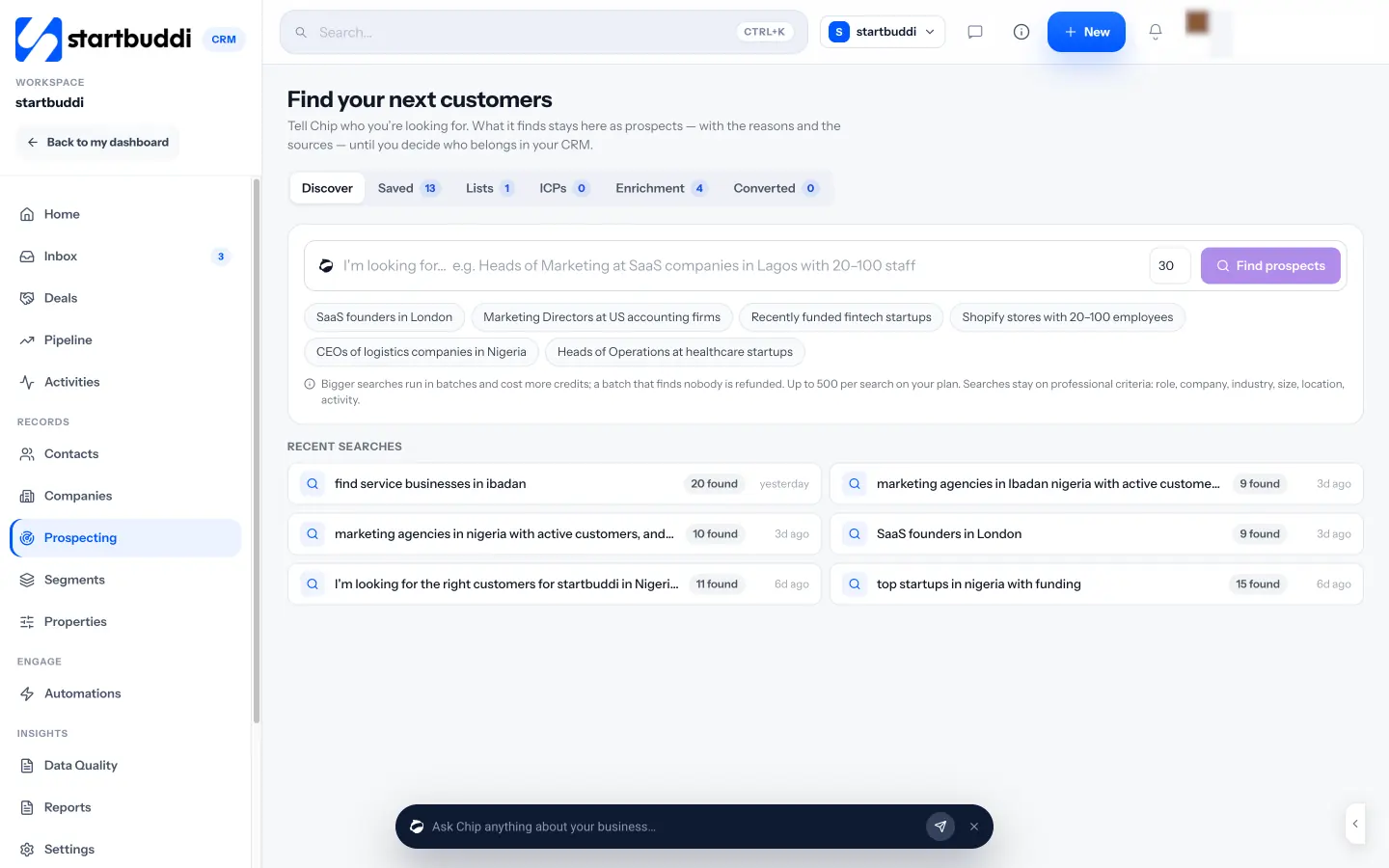
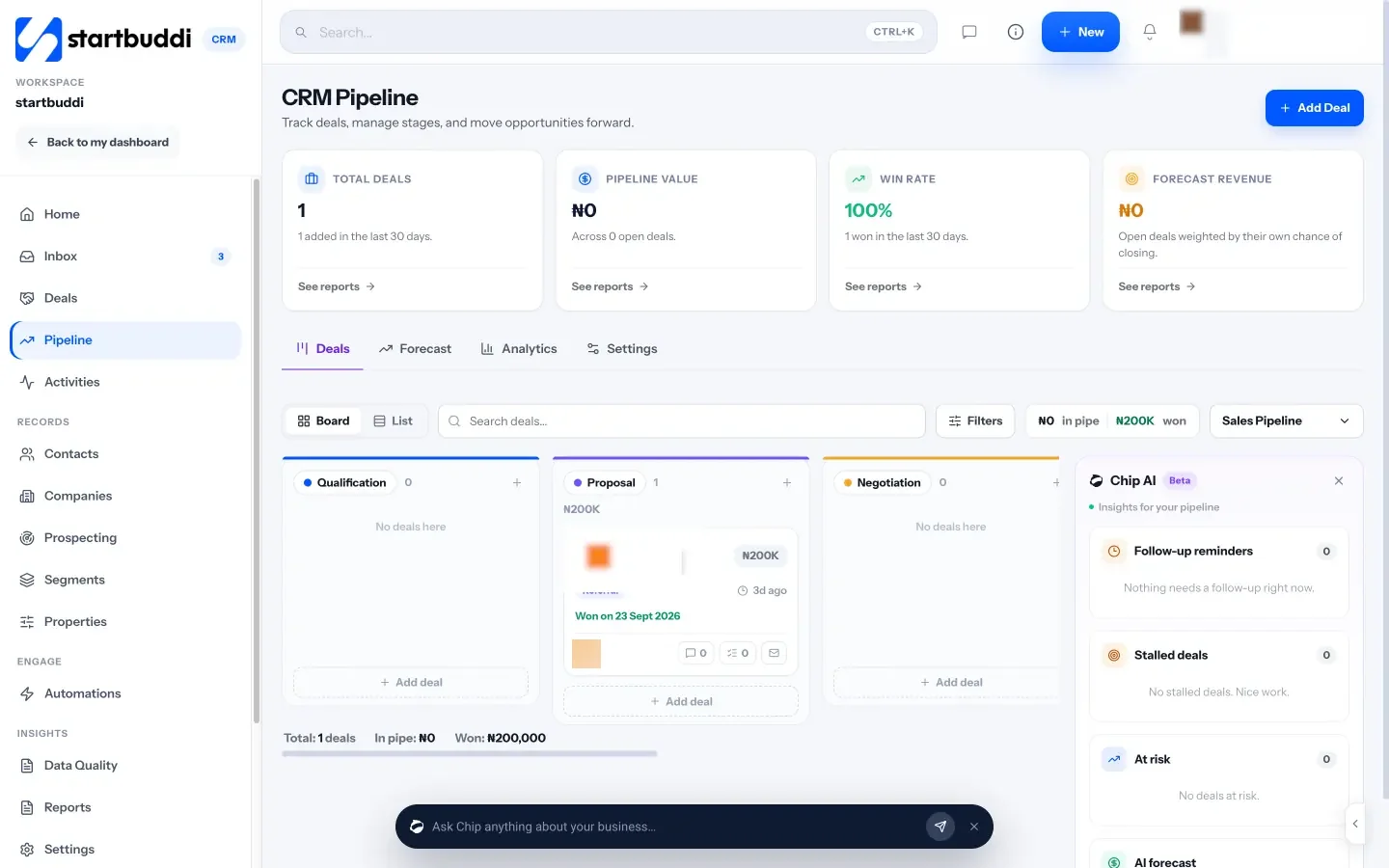
See our help article on finding prospects with Chip to get started.
Your next step
Today, write your one-paragraph ideal customer description and send three referral or warm outreach messages. Tomorrow, start the 30-minute routine. If you want your pages, contacts and follow-ups in one place, start free with startbuddi.
Sources
- Nielsen: Beyond martech, building trust with consumers (2021)
- Harvard Business Review: The Short Life of Online Sales Leads
- Information Commissioner’s Office: Electronic mail marketing
- FTC: CAN-SPAM Act compliance guide for business
Frequently asked questions
What is the fastest way to generate a lead for sales?
Referrals and warm outreach to people who already know you. They cost nothing and often bring conversations within days.
What is the difference between a lead and a qualified lead?
A lead has shown interest or fits your ideal customer. A qualified lead also has the budget, authority, need and timing to buy.
Do I need a CRM to generate leads?
Not to start. You do need one place to record every lead, its source and its next step, and a CRM makes that easier as volume grows.
How many lead generation methods should I use?
Two or three, done consistently. Pick one fast method, such as referrals, and one that builds over time, such as a Google Business Profile.
SEO Copywriter| Email growth Specialist| I help businesses increase revenue with strategic SEO content & high-converting email funnels.