How to handle inbound leads so fewer go cold
A practical process for handling inbound leads: capture them in one place, reply fast, qualify, offer one next step and follow up on a schedule.


Chinonye wrote this while on the startbuddi team. The product has changed since, so the team updated it on .
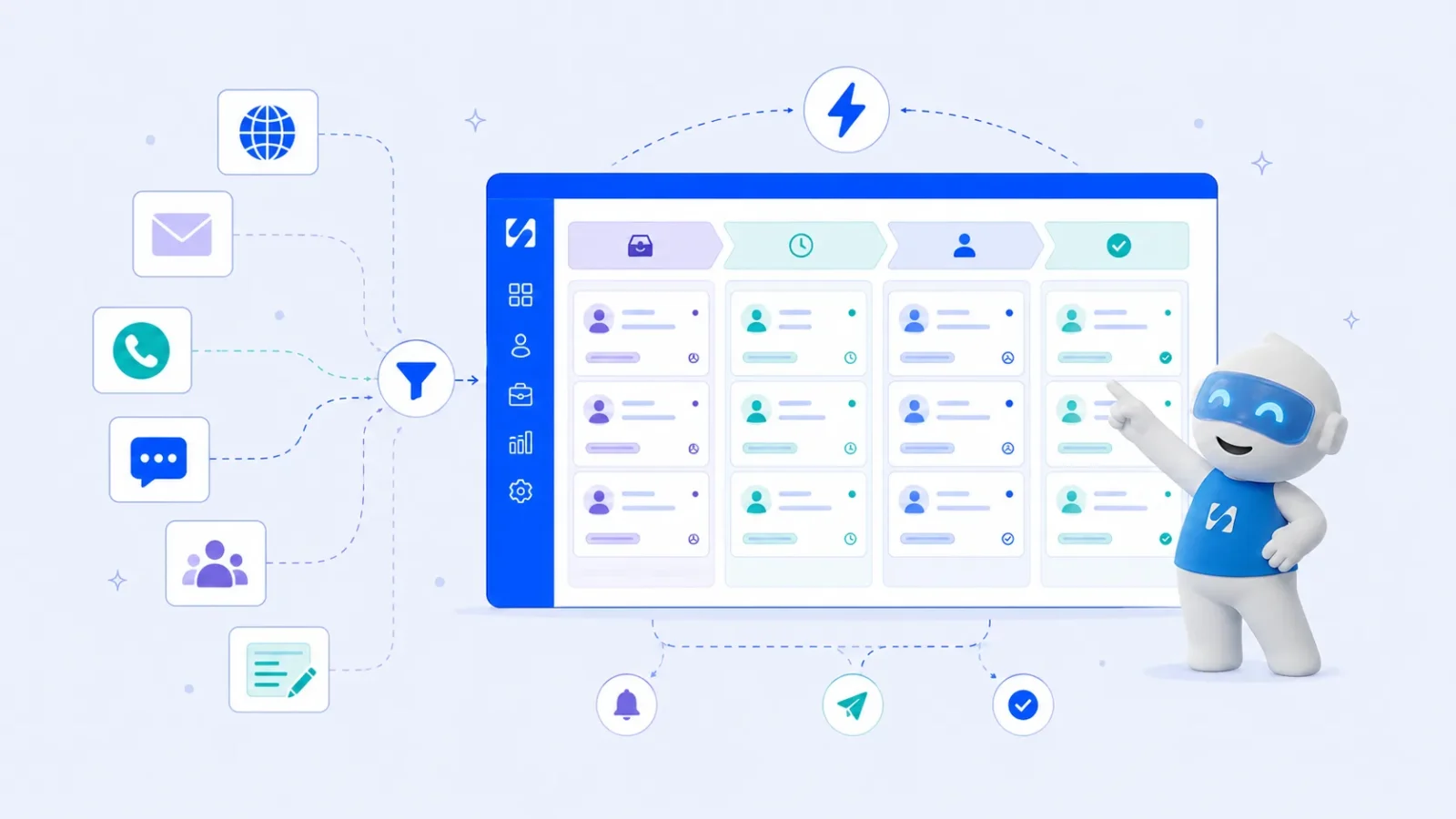
- To handle inbound leads, capture every enquiry in one place, reply within the hour where you can, ask three or four qualifying questions, offer one clear next step and follow up over about two weeks. Give every lead an owner and a status so nothing falls between people.
To handle inbound leads well, reply fast (ideally within the hour), ask a few questions to qualify them, offer one clear next step such as a call or a quote, and follow up on a set schedule until you get a yes or a no. Behind that, you need one place where every enquiry lands, a named person responsible for each one, and automatic confirmations so nobody waits in silence.
Inbound leads are the people who come to you: they fill in your form, send a DM, book a call, reply to a post or ring your number. They’re usually your warmest prospects, and they’re often lost for simple reasons: a slow reply, an unclear next step or a follow-up that never happened. This guide gives you a practical process for handling them, with message templates and a response plan you can use this week.
Why inbound leads go cold
An inbound lead is interested right now. That interest fades quickly, and they’re often asking other businesses at the same time. The most common reasons they slip away:
- Slow first reply. The enquiry sits in an inbox over the weekend.
- Nobody owns it. In a team, each person assumes someone else answered.
- No clear next step. The reply answers the question but doesn’t suggest what to do next.
- One follow-up, then silence. The lead didn’t reply to the quote, so it was dropped.
- Scattered channels. A DM on Instagram, an email and a WhatsApp message from the same person are treated as three separate conversations, or none.
Slow replies are the biggest leak. In a study of more than a million online sales leads published in Harvard Business Review, firms that tried to contact a lead within an hour were nearly seven times as likely to qualify it as those that waited just one hour more, and more than 60 times as likely as those that waited 24 hours or longer. The same research found an average response time of 42 hours, and 23% of companies never responded at all. Beating that doesn’t take a sales team. It takes a process.
Step 1: capture every inbound lead in one place
You can’t handle leads you can’t see. Before anything else, make sure every channel ends in one list or one inbox:
- Website forms save straight to your contact list.
- Booking pages create a contact with each booking.
- Messages from WhatsApp, Instagram, Facebook, email and website chat arrive in one shared inbox, or get copied into your list the same day.
- Phone calls and walk-ins are added straight after the conversation.
Record the source of each lead (for example “Instagram DM” or “Google, contact form”). It costs nothing now and tells you later which channels bring customers, not just enquiries. Our post on how to organize leads goes deeper on building the list itself.
Step 2: respond fast, even when you’re busy
The first reply has two jobs: show the person they’ve been heard, and move the conversation forward. You can’t always give a full answer within the hour, but you can almost always acknowledge the enquiry.
Set a response target
Pick a target you can actually meet, such as “within one hour during working hours, by 10am the next day outside them”. Share it with your team and put it on your contact page. Customers are more patient when they know what to expect.
Send an instant confirmation
For forms and bookings, an automatic reply takes care of the first minutes:
Thanks, Kwame. We’ve got your request for a kitchen quote and one of the team will reply by 3pm today. If it’s urgent, message us on WhatsApp at +233 20 000 0000.
Cover evenings and weekends
Many enquiries arrive outside office hours. Options include an away message with your reply time, a chat assistant that answers common questions from your own information and hands over to a person, or a rota for checking messages at weekends. Our post on AI chatbots for small business websites covers what to check before you let a bot answer customers.
Step 3: qualify the lead with a few good questions
Not every enquiry is a good fit. Qualifying means finding out quickly whether you can help and whether it’s worth a call. Keep it to three or four questions, asked naturally in your first reply or on your form:
| Question | What it tells you |
|---|---|
| What are you looking to get done? | Whether it’s a service you offer |
| When do you need it by? | Urgency and whether your schedule fits |
| Do you have a budget in mind? | Whether your prices are in range |
| Who else is involved in the decision? | Whether you’re talking to the decision maker |
If the fit is poor, say so politely and, if you can, point them somewhere better. It saves both of you time and leaves a good impression. For a deeper framework, see how to pre-qualify leads.
Step 4: offer one clear next step
Every reply to a qualified lead should end with one specific next step. Not “let me know if you have any questions”, but something they can say yes to:
- “Can we do a 15-minute call? Pick any time that suits you here: [booking link].”
- “If you send me two photos of the space, I’ll send a fixed quote by tomorrow.”
- “Here’s our price list. Reply with the package you’d like and I’ll hold a date for you.”
A booking link is especially useful here. It removes the back-and-forth about times, which is where many warm leads quietly give up. When they book, you get a confirmed slot and their details in one go.
Step 5: follow up until you get an answer
Many inbound leads don’t reply to the first quote or message. It rarely means no. They’re busy, comparing options or waiting on someone else. A short, polite follow-up plan recovers a lot of them:
| When | What to send |
|---|---|
| Day 0 | Reply, answer the question, offer a next step |
| Day 2 | A short nudge with something useful, such as an example of similar work |
| Day 5 | Answer a likely question or objection (“Many clients ask about…”) |
| Day 10 | Check whether their plans have changed, and offer an easy yes or no |
| Day 14 | A polite close: “I’ll assume the timing isn’t right. I’m here when it is.” |
After that, move them to occasional updates rather than personal chasing. Our post on how to follow up with leads has full message templates for WhatsApp and email, and our glossary entry on lead nurturing explains the longer-term side.
Step 6: assign an owner and a status to every lead
Once there are two or more of you, handling inbound leads depends on clear ownership. Agree:
- Who picks up new leads: one person, by service type, by region, or in turn.
- What each status means: for example New, Replied, Call booked, Quote sent, Won, Lost.
- When a lead is handed over, such as from whoever answered the chat to the person who does quotes, and how the context travels with it.
Internal notes on the lead’s record stop the customer from having to repeat themselves. “Wants a 3-bedroom repaint, prefers weekends, budget around £2,000” is enough for anyone to pick it up.
Step 7: measure and improve your response
A few simple numbers show whether your inbound process works. Check them monthly:
- Leads by source: where enquiries come from.
- Time to first reply: roughly, even if you only spot-check a handful.
- Leads that reached a call or quote: how many enquiries turn into real conversations.
- Won and lost, with a reason for losses such as price, timing or no reply.
If lots of leads go quiet before a call, look at your first reply and next step. If many are lost on price, look at who your marketing attracts or how you present value. Small changes at each step add up.
You don’t need a dashboard to start. A quick monthly look at your last 20 enquiries, noting where each came from, how fast you replied and what happened, will show you the biggest leak. Fix that one first, then look again next month.
Common mistakes when handling inbound leads
| Mistake | What happens | Better approach |
|---|---|---|
| Replying only when you have a full answer | The lead waits a day and asks someone else | Acknowledge now, answer fully later with a time |
| Sending the price and nothing else | The conversation ends at the price | Price, what’s included and one question back |
| Asking for a call too early | Casual enquirers drop out | Offer a call, but also a quick written option |
| Different answers from different people | Confused customers and lost trust | Shared saved replies and notes on the record |
| Following up with “just checking in” | Easy to ignore | Add something useful in every follow-up |
| Never marking leads as lost | A cluttered list hides live leads | Close them with a reason after your final message |
Handling inbound leads channel by channel
The process is the same everywhere, but each channel has its own habits:
- Website forms: people expect an email reply. Send the instant confirmation, then reply personally from the same address.
- WhatsApp and DMs: people expect short, quick replies. Keep messages brief, use voice notes sparingly, and move long details such as quotes into a document or email.
- Phone calls: note the lead’s details and the agreed next step straight away, then send a short written summary so both of you have it.
- Website chat: visitors are on your site right now. Answer quickly, and if you can’t, ask for an email so you can reply later.
- Referrals: thank the person who referred them, and mention the referral in your first reply. It warms up the whole conversation.
Templates for handling inbound leads
First reply to a form enquiry
Hi Priya, thanks for getting in touch about bookkeeping support. A couple of quick questions so I can point you in the right direction: roughly how many transactions do you have a month, and when would you like to start? If it’s easier to talk it through, you can book a 15-minute call here: [link].
Reply to a DM asking “how much?”
Hi! Our standard logo package is $350, and most projects take about two weeks. What’s the business, and when are you hoping to launch? I can suggest the package that fits best.
Run this from one workspaceClients, projects, money and marketing, connected instead of spread across five apps.See how it works
Polite close after no reply
Hi Daniel, I haven’t heard back so I’ll assume the timing isn’t right. No problem at all. If anything changes, just reply to this message and I’ll pick it up from here.
How startbuddi helps you handle inbound leads
With startbuddi, your enquiries, contacts and follow-ups sit in one account, so every inbound lead has a home and an owner.
- One inbox. The Inbox brings email, website chat, WhatsApp, SMS, Instagram and Facebook messages into one shared view. Assign conversations to a teammate, add internal notes, snooze, resolve and schedule replies. Chip can suggest a reply for you to edit. WhatsApp and SMS need the Starter plan or above.
- Answers when you’re away. The live chat widget lets visitors chat or book a meeting from your website. On the Growth plan and above, Chip can reply automatically on the channels you choose, straight away, when nobody on the team replies within a set time, or outside business hours, and hands the conversation to your team when a customer asks for a person.
- Forms and bookings that create contacts. Every form response and booking creates or updates a contact, with the source kept. Booking pages give leads a link to pick a time themselves.
- Automatic follow-up. Automations can start when a form is submitted or a booking is made, then send a confirmation, wait, send a follow-up and create a task for the owner. Free includes 2 active automations, and Starter allows 10.
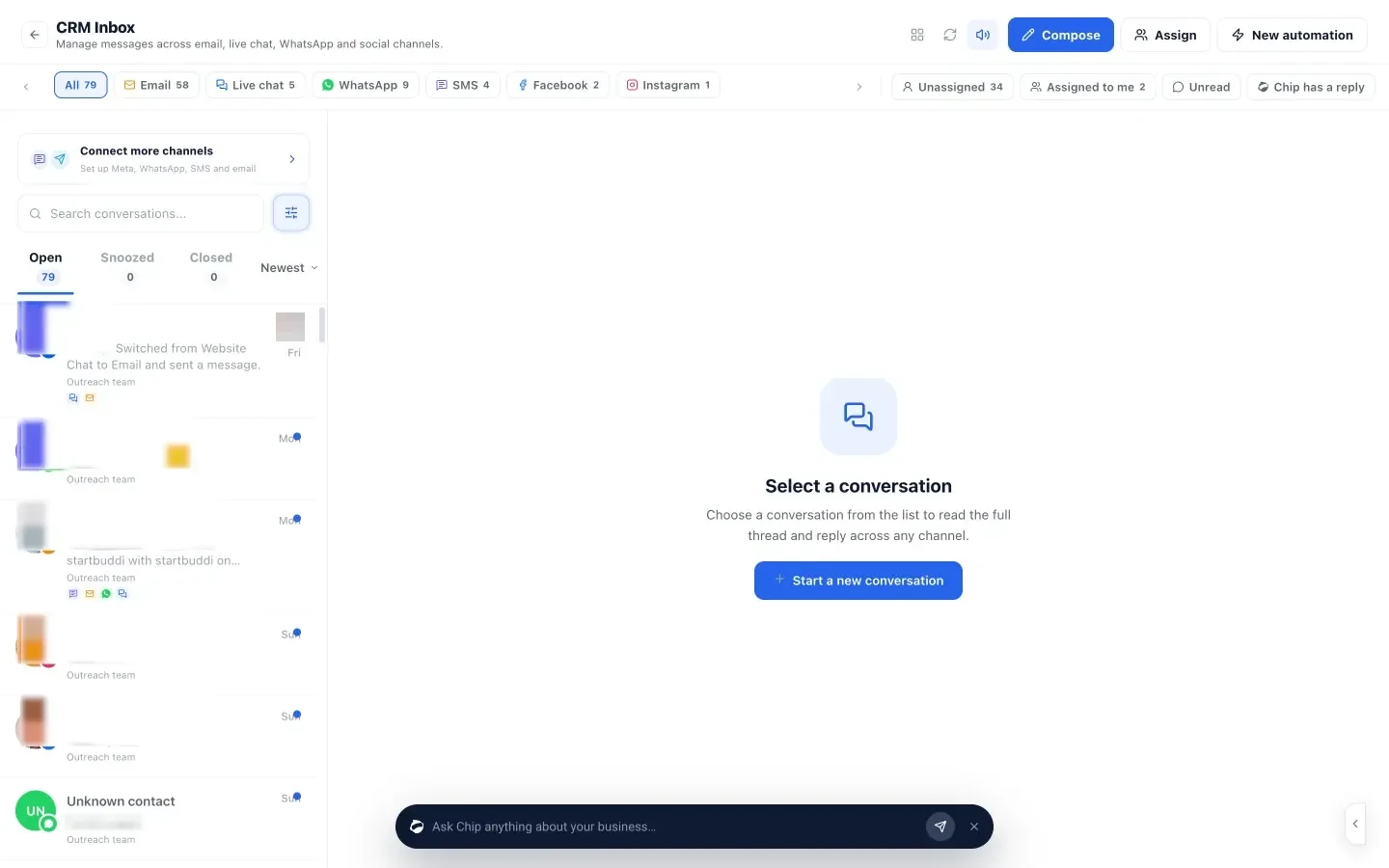
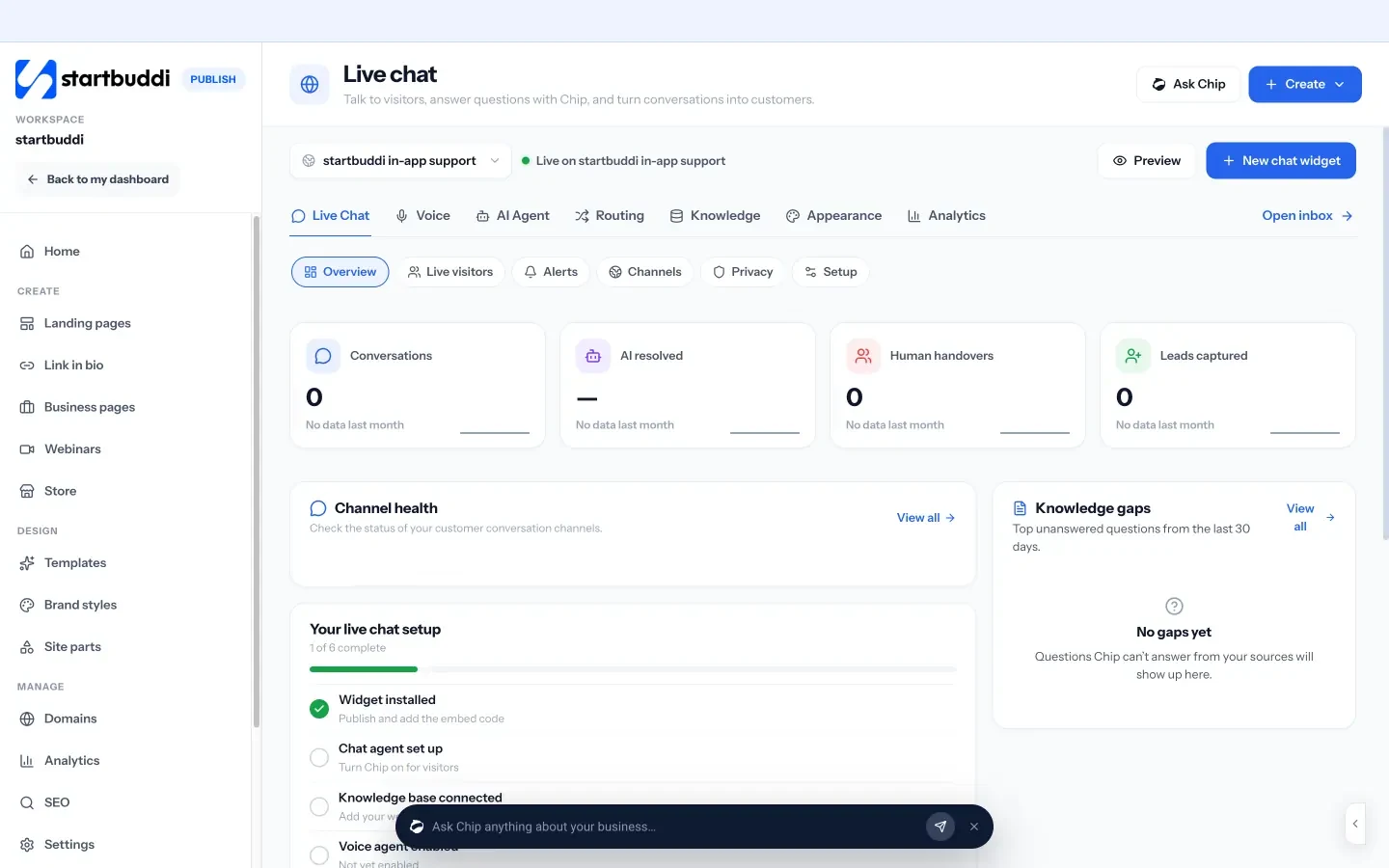
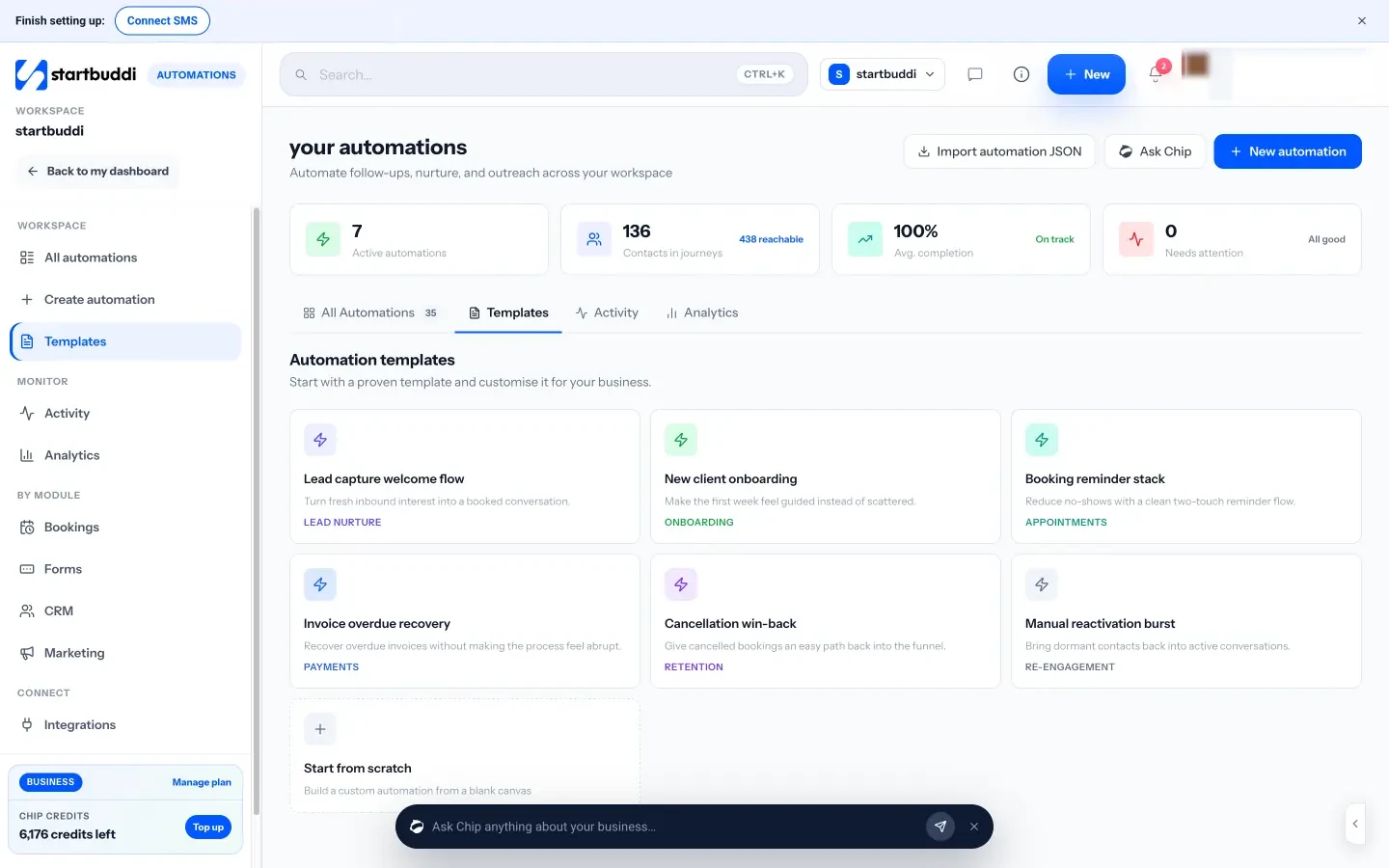
Read how to use the Inbox to set up your channels.
Your next step
This week, check how long your last ten inbound leads waited for a first reply. Then set a response target, write your instant confirmation and your two-week follow-up plan. If you want every channel in one inbox, start free with startbuddi and connect your first channel today.
Sources
Frequently asked questions
How fast should I respond to an inbound lead?
As fast as you can, ideally within the hour during working hours. An instant automatic confirmation helps when you can't give a full answer straight away.
What is the difference between qualifying and scoring leads?
Qualifying decides whether a lead is a good fit. Scoring ranks leads by signals like activity and value so you know who to contact first.
How many times should I follow up with an inbound lead?
Four or five touches over about two weeks suits most small businesses, ending with a polite close.
What should I do with inbound leads that arrive at night?
Send an instant confirmation with your reply time, and consider a chat assistant or rota for common questions outside hours.
SEO Copywriter| Email growth Specialist| I help businesses increase revenue with strategic SEO content & high-converting email funnels.