What is lead nurturing?
Also called: Lead nurture, nurture sequence, prospect nurturing, drip marketing

Lead nurturing is the process of staying in touch with people who have shown interest but are not ready to buy, using helpful, well-timed messages that build trust and lead them towards a purchase.
Lead nurturing is the process of building a relationship with people who are interested in what you sell but are not ready to buy yet. Instead of pushing for a sale, you stay in touch with useful, relevant messages until they are ready, and then you are the obvious choice.
A lead is anyone who has shown interest: they filled in a form, asked for a price on WhatsApp, downloaded a guide or booked a call and did not go ahead. Nurturing is what you do between that first contact and the sale.
Why lead nurturing matters for a small business
Most people do not buy the first time they hear about you. They are comparing options, waiting for payday, checking with a partner or simply busy. If you only follow up once, you hand those customers to whoever follows up next.
- More sales from the same leads. You get more value out of the enquiries you already worked hard to get.
- Trust before the sale. Helpful tips, examples and stories show you know your stuff.
- Better timing. You are there when the lead’s situation changes and they are ready.
- Less awkward chasing. A planned sequence of helpful messages feels natural. Random “any update?” messages do not.
How lead nurturing works: an example
Funke is a fitness coach. Someone downloads her free “7-day home workout plan”. Rather than immediately asking them to buy coaching, she sends:
- Day 0: the workout plan and a short welcome, asking what their main goal is.
- Day 2: three mistakes beginners make, with a quick fix for each.
- Day 5: a short story about a client who started in the same place.
- Day 8: answers to the questions people usually ask before hiring a coach, such as cost and time.
- Day 12: a clear offer: a free 20-minute consultation, with a booking link.
If the lead books a call at any point, the sequence stops and Funke takes over personally. If they do not, they move to her regular monthly newsletter, so the relationship continues without pressure.
Key parts of lead nurturing
Segmentation
Different leads need different messages. A restaurant owner and a hair salon owner asking about the same website service care about different things. Group leads by what they asked for, where they came from or what kind of business they run.
Channels
Email is the classic nurturing channel, but many small businesses, especially in Nigeria and across Africa, get better replies on WhatsApp or SMS. Use the channel your customers actually read, and only with their permission.
Content
Good nurturing content answers the questions a lead has on the way to buying: Is this right for me? What does it cost? What results can I expect? What happens next? Case examples, how-to tips and clear pricing all help.
Timing and a clear next step
Space messages a few days apart. Every message should have one small next step, like replying with a question, reading a guide or booking a call.
Lead scoring
Lead scoring gives each lead a number based on their activity, such as emails opened, links clicked or recent contact. It helps you spot who is warming up and deserves a personal call.
Best practices and common mistakes
- Lead with help, not the pitch. If every message says “buy now”, people stop reading.
- Keep sequences short. Three to five messages is plenty for most small businesses.
- Stop when they engage. A reply or a booking should end the automated sequence straight away.
- Personalise lightly. Use their name and what they asked about. It makes a big difference.
- Get consent. Only send marketing messages to people who agreed to hear from you, and include an easy way to opt out.
- Measure replies and bookings, not just opens. The goal is conversations and sales.
Related terms
An email drip sequence is a common way to deliver nurturing messages on a schedule. CRM automation runs the sequence and stops it when a lead replies. Your sales pipeline shows where each nurtured lead sits, and marketing automation covers nurturing at a larger scale across campaigns. For practical follow-up ideas, read marketing automation vs manual outreach.
Lead nurturing in startbuddi
There are two ways to nurture leads in startbuddi. On any contact’s page, Nurture with Chip (in beta) drafts a follow-up sequence from that contact’s real history: you describe the goal, choose how many emails and a tone, edit the steps and then enrol them. Chip’s own guidance is that a good nurture is 3 to 5 emails, 2 to 5 days apart.
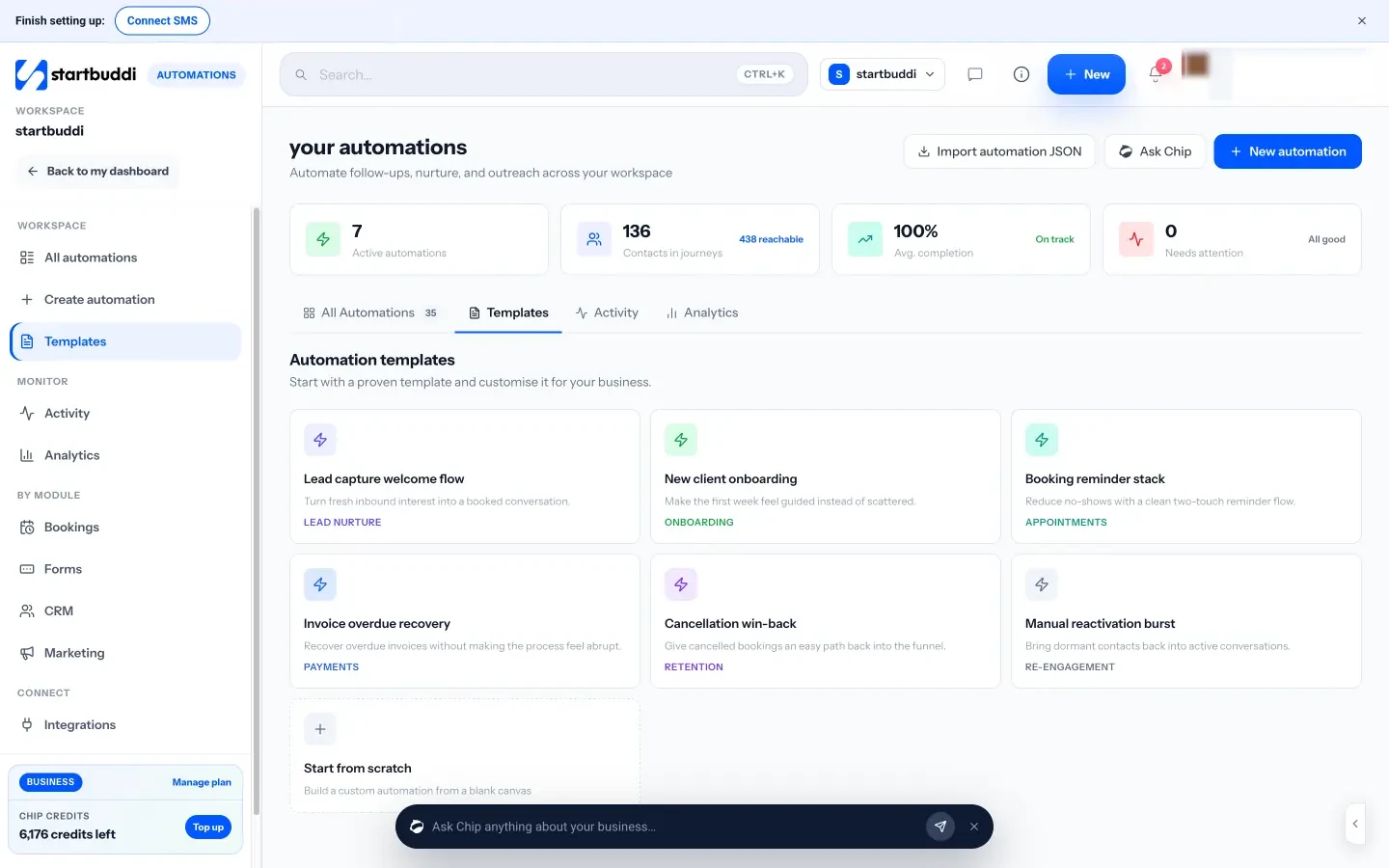
For nurturing at scale, Automations includes templates such as the Lead capture welcome flow, which starts when a form is submitted and aims to turn fresh interest into a booked conversation. Steps can send email, SMS or WhatsApp, wait, branch on contact details and wait for a reply before deciding what to do next. Each contact also has a lead score from 0 to 100 based on activity, spend, how recently you were in touch and whether they have a deal, so you can see who is warming up in your contact list.
Free includes 2 active automations and Starter 10, and SMS and WhatsApp need Starter or above. Your next step: write a three-email nurture for your most common enquiry, then set it up as an automation. See plans on the pricing page.
Related terms
FAQ
How long should a lead nurturing sequence be?
For most small businesses, three to five messages spaced a few days apart is enough. After that, move leads to a regular newsletter.
What is the difference between lead nurturing and lead generation?
Lead generation gets new people interested, for example through ads, forms or referrals. Lead nurturing is what you do afterwards to turn that interest into a sale.
Can I nurture leads on WhatsApp?
Yes, if they have agreed to hear from you. WhatsApp often gets faster replies than email, but keep messages short and do not overdo the frequency.
When should I stop nurturing a lead?
Stop the automated messages as soon as they reply, book or buy, and switch to personal contact. If they unsubscribe, stop completely.
Olabimpe Salami is the email and outreach specialist at startbuddi. Olabimpe writes about the messages that bring customers in and back: email, WhatsApp and SMS campaigns, follow-ups, and turning enquiries into paying clients.
Runs email and outreach at startbuddi