What is an email drip sequence?
Also called: Drip campaign, automated email sequence, nurture sequence, email series
An email drip sequence is a series of pre-written emails sent automatically, one after another with a set wait between each, starting when someone takes an action such as joining your list, filling in a form or booking a call.
An email drip sequence is a short series of emails that go out automatically, one after another, with a set gap between each. It starts when something happens, such as a person joining your list, filling in a form or booking a call, and then it “drips” the next message a day or a few days later. You write it once and it keeps working for every new person.
People also call it a drip campaign, an automated email sequence or a nurture sequence. A welcome email series is the most common example.
Why an email drip sequence matters for a small business
Most small business owners mean to follow up and then run out of time. A new enquiry arrives on Tuesday, you reply on Friday, and by then they have booked someone else. A drip sequence makes the follow-up happen on time, every time, without you remembering.
It also makes you sound consistent. Every new customer hears the same helpful welcome, the same answers to common questions and the same gentle reminder to book or pay. That is hard to do by hand once you have more than a handful of leads a week.
Finally, it spreads your message out. Nobody reads a 2,000-word email on day one. Three short emails over a week, each with one idea and one link, are far easier to take in.
How a drip sequence works
Every sequence has the same three parts:
- A trigger: the event that starts it, for example “someone submits my contact form”.
- Emails: the messages, written in advance, often with merge tags so each one uses the person’s first name.
- Waits: the delay between emails, such as “wait 2 days”.
Here is a simple example for a Lagos photographer who gets enquiries through a website form:
- Straight away: “Thanks for getting in touch, here is my price list and three recent shoots.”
- Wait 2 days: “The five questions couples ask me most (and my honest answers).”
- Wait 3 days: “I have two Saturdays left in December. Want one? Here is my booking link.”
Good sequences also stop at the right moment. If the person books after email two, they should not get email three asking them to book. That is done with a condition, such as “only send if they have not booked yet”.
Common types of drip sequence
- Welcome series: introduces your business to new subscribers and sets expectations.
- Lead nurture: answers questions and builds trust until someone is ready to buy.
- Onboarding: helps a new client get started, with what to send you and what happens next.
- Booking reminders: reduces no-shows with a reminder before the appointment.
- Payment follow-up: polite nudges when an invoice is due or overdue.
- Win-back: reaches people who cancelled or went quiet, with a reason to return.
Best practices and common mistakes
Do
- Start small. Three emails is plenty for a first sequence. You can add more once you see what gets replies.
- Give each email one job. One idea and one clear link or question.
- Write like a person. Short, friendly, and signed with your name. Plain emails often feel more personal than heavily designed ones.
- Add exit conditions. Stop the sequence when someone books, pays or replies.
- Check the results every month: which email gets opened, which gets clicked, and where people drop off.
Avoid
- Sending without permission. Only email people who agreed to hear from you or who are existing customers where the law allows it. In the UK, the ICO’s guidance on electronic mail marketing explains consent and the “soft opt-in” for existing customers. In the US, the FTC’s CAN-SPAM guide requires an opt-out link and a real postal address. This is general information, not legal advice.
- Too many emails too fast. Daily emails for two weeks will earn unsubscribes.
- Setting and forgetting. Prices, links and dates go out of date. Read your sequence every few months.
- Selling in every email. Useful content earns the right to ask.
Related terms
Email automation is the wider idea: any email sent by a rule rather than by hand. A drip sequence is one kind of email automation. Lead nurturing is the goal many drip sequences serve, moving someone from “just looking” to “ready to buy”. Email segmentation decides who enters which sequence, so a new lead and a repeat customer get different messages. Marketing automation covers sequences across email, SMS and WhatsApp together.
Email drip sequences in startbuddi
In startbuddi, drip sequences are built in Automations, the one engine that runs follow-ups for Customers, Forms, Bookings and Marketing. You pick a trigger (for example Form submitted, New contact, Booking made or Payment succeeded), then add steps such as Send email, Wait, Wait until, Wait for reply and Condition. Steps can also tag a contact, update their stage or create a task, and the same sequence can include an SMS or WhatsApp step.
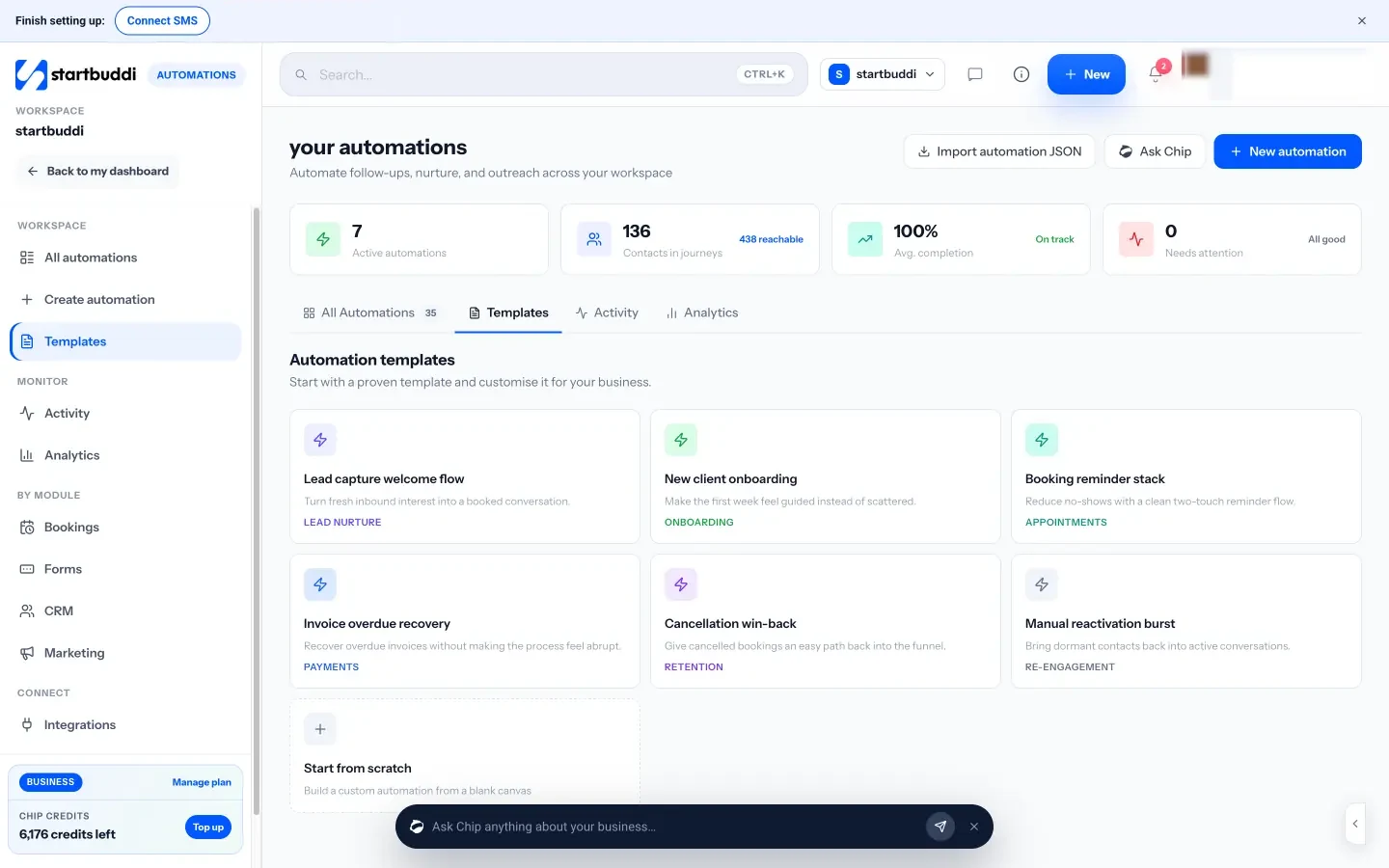
You don’t have to start from a blank canvas. There are starter templates such as Lead capture welcome flow, New client onboarding, Booking reminder stack, Invoice overdue recovery and Cancellation win-back. After you send a campaign from Email Marketing, you can also click Create a follow-up automation to turn it into a sequence.
Automations are included on the Starter plan and above, and each plan has a monthly number of automation runs. The Free plan doesn’t include them. See plans and pricing for the details.
Next step: write the three emails you wish every new enquiry received, then open Automations and start from the Lead capture welcome flow template.
Related terms
FAQ
What is the difference between a drip campaign and a newsletter?
A newsletter goes to your whole list at the same time. A drip campaign is personal to each subscriber: it starts when they do something and follows their own timeline.
How many emails should a drip sequence have?
Start with three to five. A short sequence is easier to write, easier to keep up to date and less likely to cause unsubscribes. Add emails only when you have something useful to say.
How long should I wait between drip emails?
One to three days works for most welcome and enquiry sequences. Longer nurture sequences often move to a weekly gap after the first few emails.
Can a drip sequence include WhatsApp or SMS?
Yes, if your tool supports it. Many businesses send the first touch by email and a short reminder by SMS or WhatsApp, as long as the person has agreed to receive messages on that channel.
Olabimpe Salami is the email and outreach specialist at startbuddi. Olabimpe writes about the messages that bring customers in and back: email, WhatsApp and SMS campaigns, follow-ups, and turning enquiries into paying clients.
Runs email and outreach at startbuddi