What is marketing automation?
Also called: Automated marketing, marketing workflows, customer journeys, follow-up automation
Marketing automation is using software to send marketing messages and run marketing tasks automatically, triggered by what people do (signing up, buying, clicking) or by time, across channels like email, SMS and WhatsApp.
Marketing automation is using software to send marketing messages and do marketing tasks automatically, based on what people do or when things happen. A new subscriber gets a welcome email the moment they sign up. Someone who clicked a link about a product gets a follow-up about that product. A customer who hasn’t bought in three months gets a “we miss you” message. You set the rules once, and the software handles the timing for every person.
It covers email, SMS, WhatsApp and other channels, and it usually connects to your contact list so each message can use the person’s name, history and interests.
Why marketing automation matters for small businesses
Small businesses rarely lose customers because their product is bad. They lose them because follow-up is slow or never happens. The owner is busy delivering the work, and the welcome email, the reminder and the “how did it go?” message all slip.
Marketing automation fixes the consistency problem. The right message goes out at the right moment even when you are with a client, asleep or on holiday. It also lets a one-person business look organised to hundreds of customers, without hiring a marketing team.
It is not about sending more messages. Done well, it means sending fewer, better-timed ones that people actually want.
How marketing automation works
Most marketing automation follows four parts:
- Contacts and data. A list of people with details such as name, email, phone, tags and what they have done (signed up, bought, clicked).
- Triggers. Events that start something: a form submitted, a purchase, an email clicked, a tag added.
- Sequences. The messages and actions that follow, with waits between them.
- Reporting. Opens, clicks, replies and sales, so you can see what works.
Example: an online skincare shop in Lagos adds a sign-up form to its page offering a short routine guide. When someone signs up, they get the guide straight away by email. Three days later, they get tips for their skin type. A week later, they get a small offer on a starter kit. If they buy, the sequence stops and a thank-you message with usage tips goes out instead. The owner wrote five messages once, and every new subscriber goes through the same journey.
Common types of marketing automation
- Welcome series: introduce your business to new subscribers.
- Lead nurturing: keep interested people warm until they are ready to buy.
- Abandoned or unfinished actions: nudge people who started but didn’t finish, such as a booking or checkout.
- Re-engagement and win-back: bring quiet customers back.
- Post-purchase: thank-yous, how-to tips, review requests.
- Reminders: appointments, events and renewals.
Consent comes first
Automated marketing is still marketing, and privacy laws apply. In the UK, the ICO’s guidance on electronic mail marketing covers email and text messages and generally requires consent, with a limited “soft opt-in” for existing customers. In Nigeria, the Nigeria Data Protection Act 2023 gives people the right to object to direct marketing. Collect clear permission, make opting out easy, and honour it straight away. This is general information, not legal advice.
Best practices and common mistakes
- Automate one journey at a time. A good welcome series beats five half-finished flows.
- Segment your audience. A first-time visitor and a loyal customer need different messages.
- Write like a person. Automation sets the timing. The words should still sound like you.
- Set exits. Stop promotional messages once someone buys.
- Check results monthly. Rewrite messages nobody opens and remove steps that add nothing.
- Don’t buy lists. Messaging people who never asked hurts deliverability and breaks consent rules.
Related terms
Email automation is marketing automation on email only. Lead nurturing is one of its most common goals. An automation workflow is the trigger-and-steps structure each automated journey runs on.
Marketing automation in startbuddi
In startbuddi, marketing automation runs on Automations, the same engine used across Customers, Bookings and Forms. In the Marketing module, the Automations link opens Marketing automations: “Build customer journeys across email, SMS, WhatsApp and more.” Steps include send email, send SMS, WhatsApp message and send payment link, plus waits, conditions, tags and tasks.
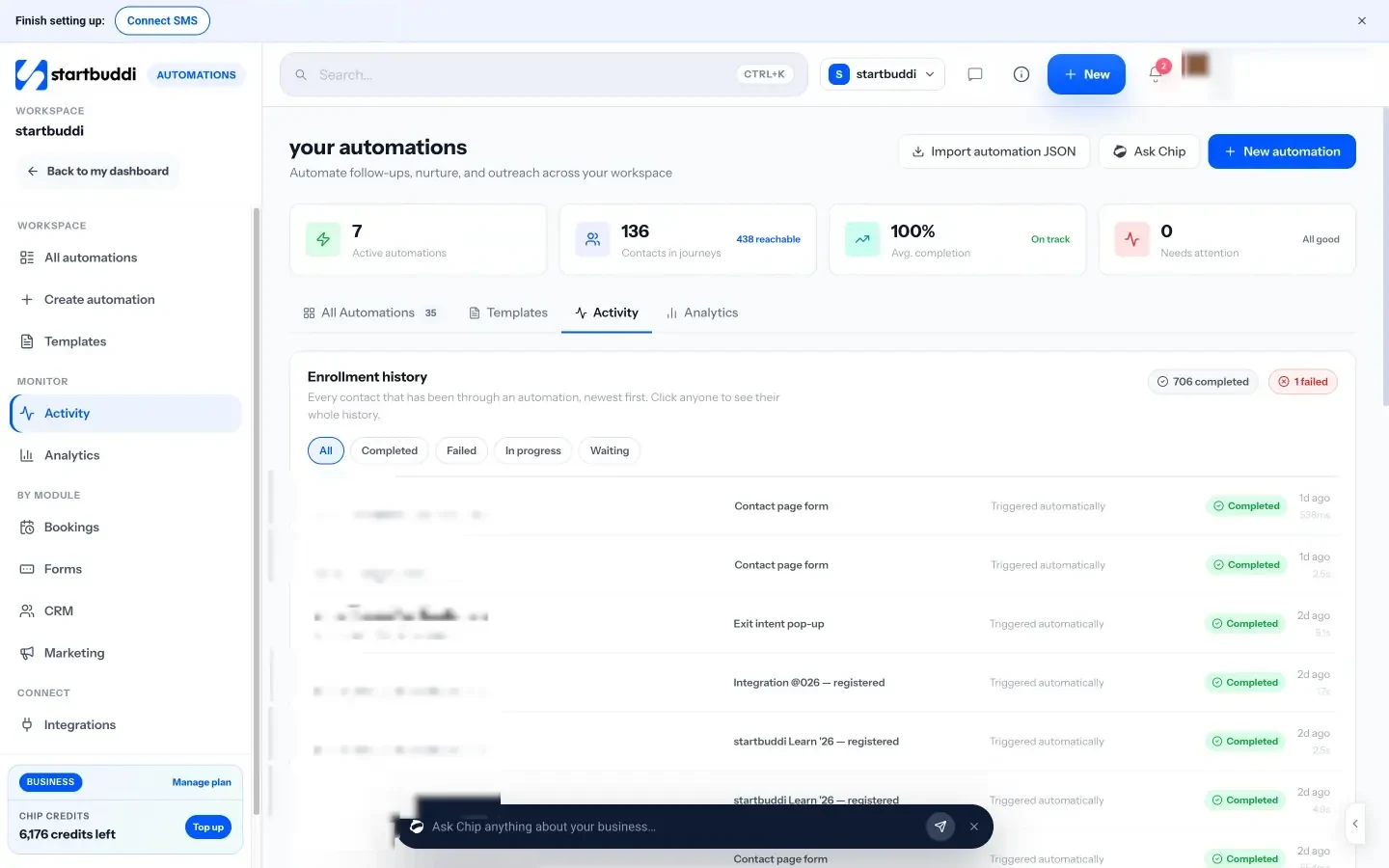
You can start from templates such as a lead capture welcome flow or cancellation win-back, or tell Chip what you want and review the draft it builds. Before activation, startbuddi checks consent and reachability and shows how many contacts are suppressed. After a sent email campaign, you can choose Create a follow-up automation. Activity shows every contact who has been through an automation, and each automation has its own analytics. Marketing and Automations are available on the Starter plan and above. See the Marketing and Automations pages, or read marketing automation vs manual outreach.
Next step
Write down the first three messages a new customer should get from you, and when. That is your first automated journey. When you are ready to set it up, check what each plan includes on the pricing page.
Related terms
FAQ
Is marketing automation only for big companies?
No. Small businesses often benefit most, because automation handles follow-ups that a busy owner would otherwise forget. A single welcome series is a good start.
What is the difference between marketing automation and email marketing?
Email marketing is sending emails to your audience, including one-off newsletters. Marketing automation sends messages automatically based on triggers, and can use email, SMS, WhatsApp and more.
Do I need permission to send automated marketing messages?
Generally yes. Laws differ by country, but most require consent or a close existing customer relationship, plus an easy way to opt out. Check the rules where your customers live.
Can I try marketing automation on startbuddi's Free plan?
The Marketing module is on Starter and above, and Free includes 2 active automations against 10 on Starter. Every paid plan comes with a 30-day trial.
Olabimpe Salami is the email and outreach specialist at startbuddi. Olabimpe writes about the messages that bring customers in and back: email, WhatsApp and SMS campaigns, follow-ups, and turning enquiries into paying clients.
Runs email and outreach at startbuddi