How to get your first 100 customers
A stage-by-stage plan to get your first customers: your own network, referrals and communities, then channels you can repeat, with scripts to adapt.


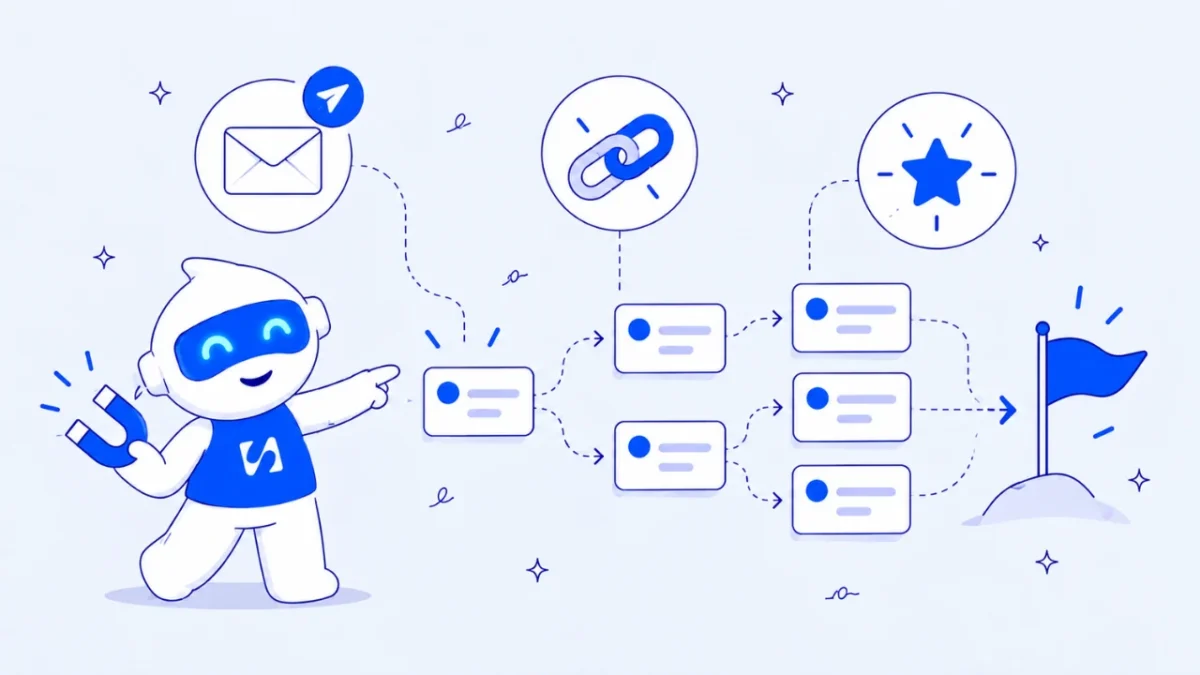
- Your first customers come from people you reach directly: your network first, then referrals, communities and partners, then repeatable channels like a Google Business Profile and one page that sells. Reply fast, track every lead and ask happy customers for referrals.
To get your first customers, go to people directly instead of waiting for them to find you. The first 100 rarely come from ads or a clever website. They come from your own network, from referrals, from the communities your customers already belong to, and from quick, personal follow-up. Only once you know who buys and why is it worth building channels that run without you.
This guide splits the journey into three stages: your first 10 customers, customers 10 to 40, and customers 40 to 100. Each stage has its own tactics, scripts you can adapt and the numbers worth tracking.
Why the first 100 customers are different
Early on, you do not have reviews, a track record or a marketing budget. What you do have is time, conversations and the ability to go the extra mile for each person. Use them.
Paul Graham, co-founder of the startup programme Y Combinator, made this point in his 2013 essay Do Things That Don’t Scale: early growth usually comes from founders recruiting users by hand, one at a time, rather than waiting for a product to spread on its own. That applies just as much to a cleaning company in Abuja or a bookkeeper in Manchester as to a tech startup.
Your first 100 customers also teach you things no survey can: which words make people buy, what they object to, what they are willing to pay and who refers others. Treat every early sale as research as well as revenue.
Before you start: know exactly who you serve
“Everyone” is not a customer. Before you message anyone, write one sentence that describes your ideal customer, for example:
Restaurant and café owners in Lekki and Victoria Island who get most of their orders on Instagram and WhatsApp and want more weekday sales.
Then answer three questions:
- Where do they already spend time? WhatsApp groups, trade associations, markets, church or mosque groups, LinkedIn, Instagram, local Facebook groups, events.
- What problem are they paying to fix? Use their words, not yours.
- Who do they already trust? Suppliers, accountants, landlords, other business owners. These people can introduce you.
A narrow description feels risky, but it makes every message sharper. You can widen it once you have 100 customers.
Customers 1 to 10: get your first customers from people who know you
Your first customers are likely to be people who know, like and trust you already, or know someone who does.
The list-of-100 exercise
- Open a spreadsheet or your phone contacts and list 100 people you could message today: former colleagues, classmates, friends, family, past clients, people from your church, mosque or community.
- Mark each one: could they buy, or could they introduce you to someone who would?
- Message ten a day, personally. Not a broadcast.
A message you can adapt
Hi Tunde, hope the family is well. I’ve just started a bookkeeping service for small shops and restaurants. I’m taking on five clients this month at a starter price while I build up reviews. Do you know any business owner who is behind on their books? I’d really appreciate an introduction.
Notice it asks for an introduction, not a sale. People find it easier to help than to buy, and introductions from friends carry weight.
Do the work brilliantly
For these first ten, over-deliver. Reply fast, send updates without being asked, and finish early if you can. Then ask each one for a short review and for one name. Your next 30 customers depend on it.
Customers 10 to 40: referrals and communities
Word of mouth is the most trusted form of marketing. In Nielsen’s 2021 Trust in Advertising study, 88% of respondents said they trust recommendations from people they know more than any other channel. Your job at this stage is to make recommendations easy.
Ask for referrals at the right moment
The best time to ask is right after a customer says thank you. Try:
So glad you’re happy with it. Most of my work comes from people like you mentioning me. Is there one other business owner you think I could help? I’ll look after them the same way.
Some businesses offer a small thank-you for referrals, such as a discount on the next job or a free extra. Keep it simple and deliver it promptly.
Show up in communities, helpfully
- Join two or three groups where your customers talk shop: a traders’ WhatsApp group, a local business association, a professional body, a LinkedIn group.
- Answer questions for free and share useful tips. Do not spam links. People buy from the person who helped them last week.
- Offer a short free session: a 20-minute talk, a checklist, a clinic. It puts you in front of a room of the right people at once.
Partner with businesses that serve the same customers
A photographer and a wedding planner, a web designer and an accountant, a cleaner and an estate agent. Agree to recommend each other. One good partner can send more customers than months of posting.
Customers 40 to 100: build channels you can repeat
By now you know who buys, what they ask and which words work. Start turning that into things that bring customers without you messaging each one.
Get found locally
If customers search for businesses like yours nearby, claim your Google Business Profile. Google says you can add or claim your business at no charge. Add photos, your hours and a link to book or buy, and ask every happy customer for a review. Our guide to setting up a Google Business Profile covers each step.
Have one page that sells
You do not need a big website. You need one page that says what you do, who it is for, what it costs and how to book or pay. Put that link in your Instagram bio, WhatsApp profile and email signature. See how to turn your link in bio into a shop front.
Reach out to strangers, carefully
Once your offer is proven, contact businesses you do not know yet. Research each one, mention something specific about them, and offer something useful. Ten thoughtful messages a day beat a thousand copy-paste ones, and they protect your reputation and your number.
Create content from real questions
Every question a customer asks is a post, a short video or a WhatsApp status. Answer it once publicly and point people to it. Over time, this content does some of your selling for you.
Test small paid ads last
Ads work best when you already know your customer and your message. Start with a small budget, send people to one clear page or a WhatsApp chat, and measure cost per customer, not likes.
Make buying easy and fast
You can lose customers you have already won over by making them wait or making it hard to pay.
- Reply fast. In a Harvard Business Review study of 2,241 companies, firms that responded to web enquiries within an hour were nearly seven times as likely to qualify the lead as those that waited even an hour longer. Aim to reply the same day, ideally within the hour.
- Show prices, or a starting price. “From ₦50,000” filters out the wrong people and reassures the right ones.
- Give one way to book or pay. A booking link or a payment link removes the back-and-forth.
- Follow up. Many people mean to buy and forget. A polite nudge two days later is a service, not a nuisance. See how to follow up with leads without being pushy.
Track every lead from day one
You will not remember who you spoke to, where they came from or what you promised. Write it down. A simple table is enough to start:
| Name | Came from | What they need | Stage | Next step and date |
|---|---|---|---|---|
| Ada’s Kitchen | Referral from Tunde | Monthly bookkeeping | Proposal sent | Follow up Thursday |
| Kemi Salon | Business association talk | Catch-up on 6 months of books | Won | Ask for review Friday |
| Green Grocers | Not sure yet | New enquiry | Call today |
After 30 or 40 customers, count where they came from. Put more time into the two sources that work and drop the rest. If your leads live in WhatsApp chats right now, see how to turn WhatsApp chats into a customer database.
The four numbers to watch
You do not need a dashboard full of charts. While you work towards 100, check four numbers every week:
- Conversations started. How many new people you spoke to about your offer. If this is low, nothing else matters yet.
- Enquiries to sales. Out of every ten serious enquiries, how many paid? If very few, look at your price, your offer or how fast you follow up.
- Where customers came from. Referral, community, Instagram, Google, outreach. This tells you where to spend next week’s time.
- Referrals per customer. If happy customers are not sending anyone, ask more directly, or check whether they are as happy as you think.
Write the four numbers down every Friday. After a month you will see a pattern, and after three months you will know which channel deserves a proper budget.
What to do when nobody is buying
Almost every new business hits a week where messages go unanswered and enquiries stall. Before you change everything, work through these questions in order:
- Are you talking to enough people? Most slow weeks are a volume problem. Double your conversations before you change your offer.
- Are you talking to the right people? Check your customer description. Are the people you message the ones who have the problem and the money to fix it?
- Is the offer clear? Ask a friend to read your page or message and explain back what you sell and what it costs. If they cannot, rewrite it.
- Is the price the problem? Listen for “too expensive” versus “not now”. The first may need a smaller starter package. The second needs follow-up, not a discount.
- What do your paying customers have in common? Find more people like them.
Keep a note of every objection you hear. The same three or four will come up again and again, and answering them upfront on your page and in your messages is one of the fastest ways to lift sales.
Turn customers into repeat customers
Getting a customer back is usually easier than finding a new one. Keep in touch after the job ends: a check-in a month later, a useful tip, an early look at a new service. Customers who come back and refer others are how 100 becomes 1,000.
How startbuddi helps you find and keep your first customers
With startbuddi you get one place to track every lead, reply to them and get paid, so nobody slips through the cracks while you are busy doing the work.
Keep every lead in one list. Contacts holds each person with where they came from, notes and activity. New contacts can arrive from your forms, bookings and website chat, and you can move each one through your sales pipeline. On the Customers home, Chip suggests who needs a reply and which deals have stalled.
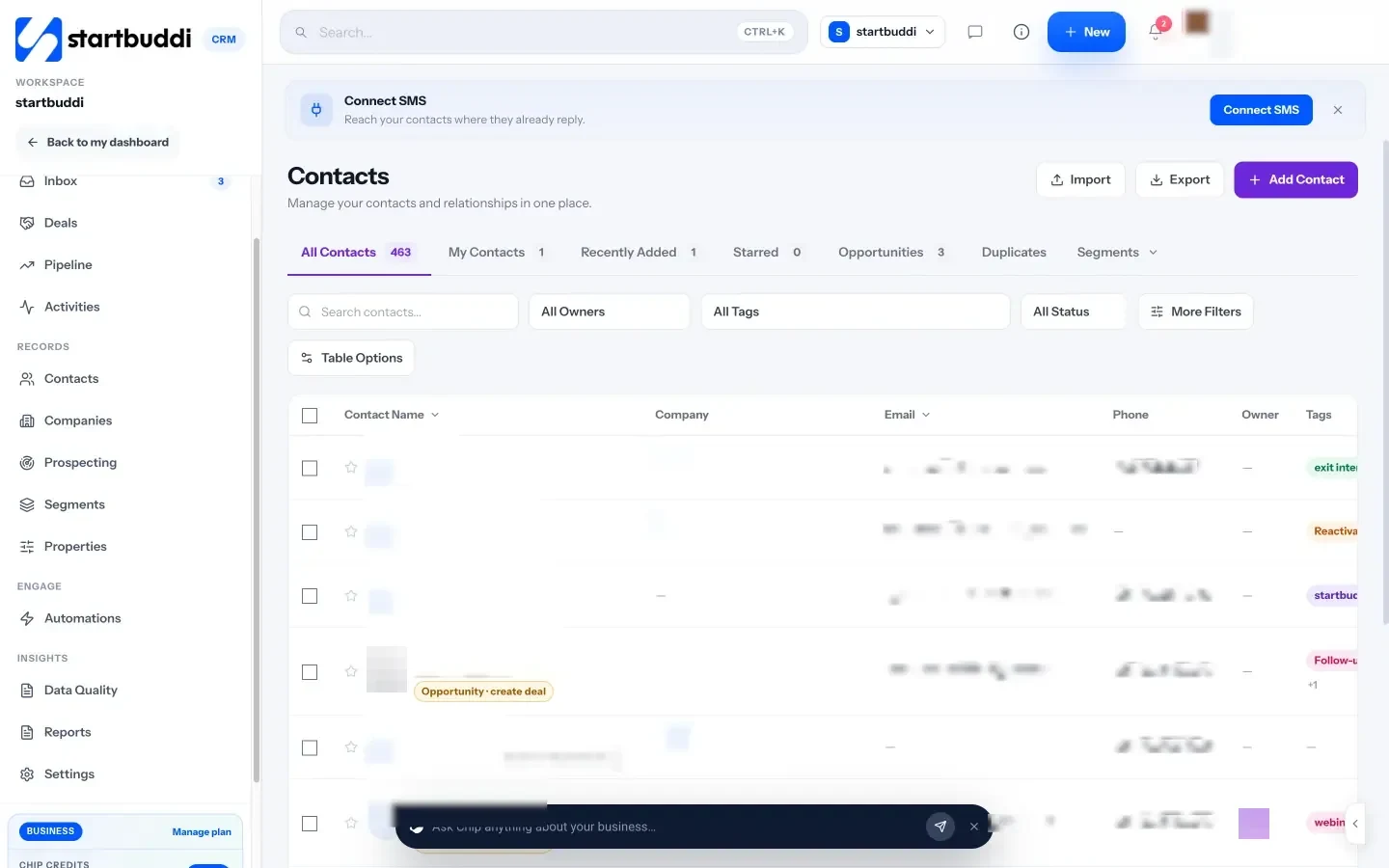
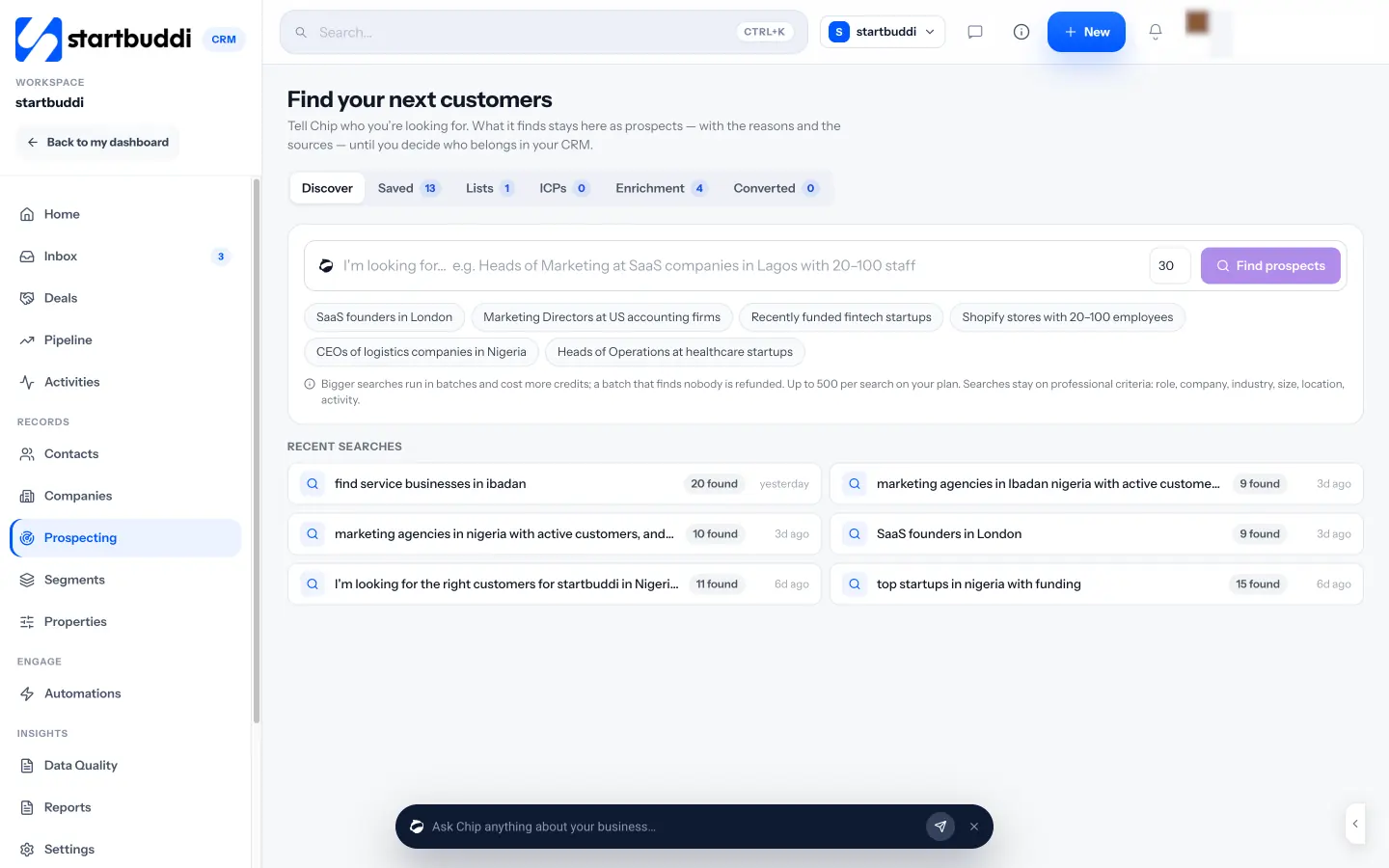
Find prospects with Chip. When you are ready to reach beyond your network, Prospecting lets you describe your ideal customer in plain words. Chip searches the web and business listings and returns real companies and people, with the reasons and sources, and you choose who to add to your contacts. It uses Chip credits and only looks up professional details.
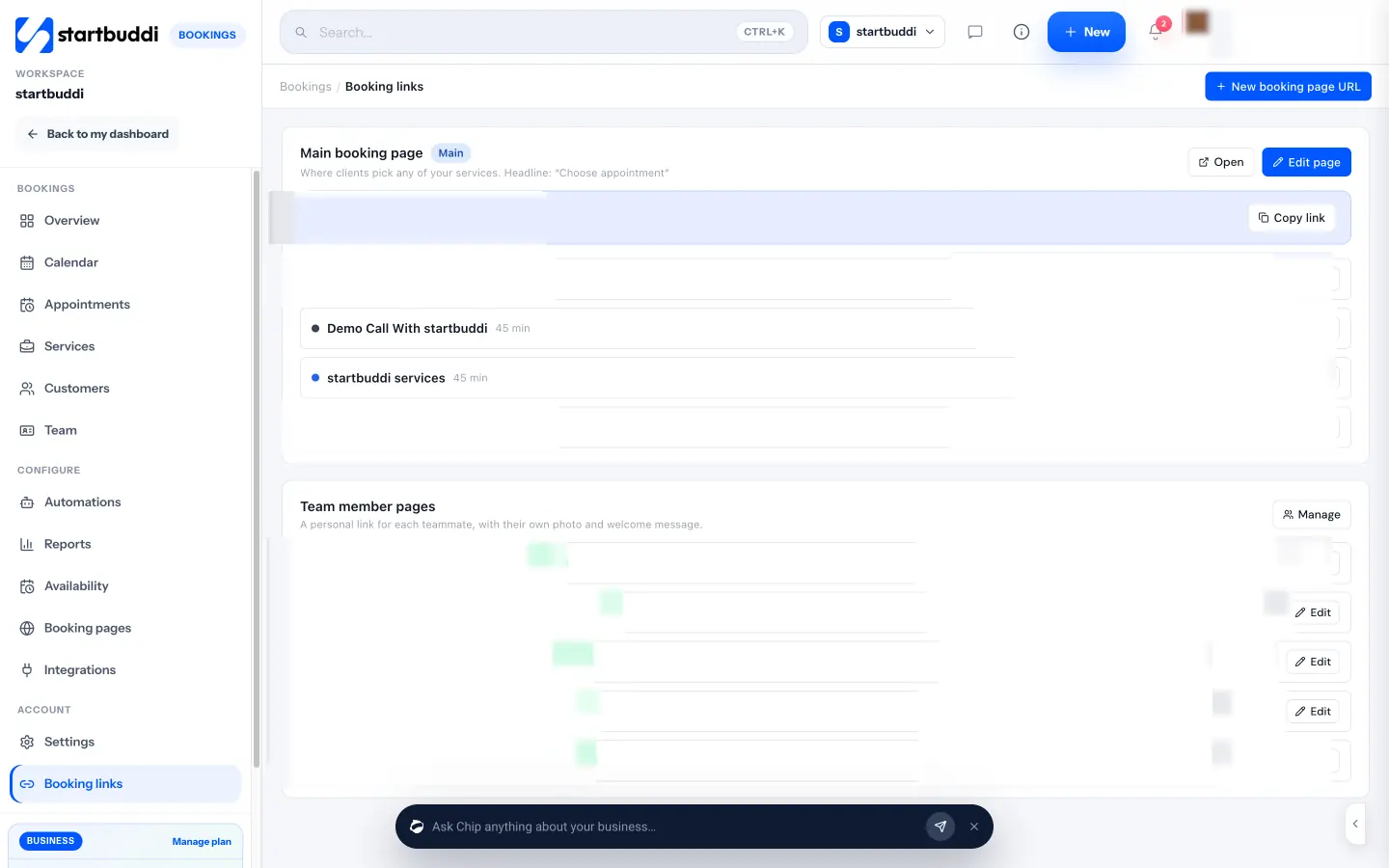
Let people book and pay from one link. Share a booking page so new customers pick a time without the back-and-forth, and use a link in bio page or a payment link to take money on WhatsApp or Instagram.
The Free plan includes up to 250 contacts and one form, which is enough to run your first campaign. Starter holds 2,500 contacts and unlocks marketing tools such as email, SMS and WhatsApp campaigns, with a 30-day trial.
Your next step
Write your one-sentence customer description today, then list 100 people you could message and contact the first ten tomorrow. Add each one to Customers as you go so you can see who to follow up with, or compare plans on the pricing page.
Sources
- Paul Graham: Do Things That Don’t Scale (2013)
- Nielsen: Beyond martech, building trust with consumers (2021)
- Harvard Business Review: The Short Life of Online Sales Leads (2011)
- Google Business Profile Help: Add or claim your Business Profile
Frequently asked questions
How long does it take to get 100 customers?
It varies a lot by business and price. Track where each customer comes from so you can double down on what works.
Should I run ads to get my first customers?
Usually not first. Ads work better once you know your customer and message from real conversations.
Is it okay to offer a discount to early customers?
A limited starter price in exchange for a review or feedback is common. Set an end date so it does not become your normal price.
What should I track for each lead?
Name, where they came from, what they need, their stage and your next step with a date.
Omolola Akiyode is the operations and project manager at startbuddi, leading cross-functional projects and the content that helps founders get set up. Omolola writes about projects, websites and getting found online, and turns complex ideas into clear, practical steps.
Runs operations and projects at startbuddi