Closing a Business Checklist: Step-by-Step List + Free Template
A closing a business checklist in eight phases: clients, staff, money, tax, registration, contracts and records, with UK, US and Nigeria notes. Free copy.


A closing a business checklist is the ordered list of everything you must do to shut a business down properly: decide how to close, tell staff, clients and suppliers, finish or hand over work, collect what you’re owed, pay what you owe, file final tax returns, deregister, cancel contracts and keep your records. Close the bank account last.
Key takeaways
- Order matters. Collect money and pay debts before you deregister, and close the bank account last.
- Tell people in a sensible sequence: staff first, then clients, then suppliers and everyone else.
- Final tax returns and deregistration rules depend on your country and structure. Check with the official body or an accountant.
- Keep your records after closing. In the UK, that means business documents for 7 years after a company is struck off.
- If the business still has value, compare closing with selling before you start.
This page is general information, not legal or tax advice. Rules differ by country and by business structure.
Before you start: close, sell or pause?
Closing is final, so check the alternatives first. A service business with regular clients, a good reputation or a team that works well together may be worth something to a buyer or a competitor. Our selling a business checklist covers that route.
If you’re stopping because of a temporary setback, such as illness, a move or a quiet season, pausing may be enough. Bear in mind that a company that stays registered must keep filing accounts and returns.
Once you’ve decided to close, set a closing date and work backwards. Most small service businesses need four to eight weeks to wind down cleanly, longer if there are staff, a lease or a limited company to dissolve.
The complete closing a business checklist
Copy this checklist into a document or task list. Skip what doesn’t apply, for example the staff section if you work alone.
Phase 1: Decide and plan
Phase 2: Tell your people
Phase 3: Clients and unfinished work
Phase 4: Money in and money out
Phase 5: Staff
Phase 6: Tax and registration
Phase 7: Contracts, accounts and online presence
Phase 8: Records and the final step
Closing a business in the UK, US and Nigeria
The phases are the same everywhere. The official steps aren’t. Here is a short guide to the three places our readers ask about most.
| UK | US | Nigeria | |
|---|---|---|---|
| Sole trader / business name | Tell HMRC you’ve stopped, send a final Self Assessment return | File a final Schedule C with your income tax return | Notify the Corporate Affairs Commission (CAC) that the business name has ceased |
| Company | Close down, then apply to strike off (form DS01) or liquidate | File final returns and dissolve with your state | Wind up, or apply to strike off if the company never traded |
| Payroll | Close your PAYE scheme and send final reports | Final Form 941 or 944, Form 940, W-2s | Final PAYE to the state internal revenue service |
| Sales tax / VAT | Cancel VAT registration | Close state sales tax permits | Close VAT with the Nigeria Revenue Service (NRS, formerly FIRS) |
United Kingdom
GOV.UK’s guide to stopping being self-employed (checked on 1 October 2026) says you must tell HMRC, send a Self Assessment return, cancel any VAT registration and close your PAYE scheme if you stop employing staff.
A limited company that has stopped trading can apply to be struck off. GOV.UK’s guide to closing down a company before strike off (checked on 1 October 2026) sets out the steps:
- the company must not have traded or sold stock in the last 3 months;
- the application costs £18;
- you must send a copy within 7 days to anyone who could be affected, including shareholders, creditors and employees;
- assets left in the company when it’s struck off pass to the Crown, so distribute them first;
- the company is dissolved two months after a notice in The Gazette if nobody objects;
- you must keep business documents for 7 years afterwards.
United States
The IRS’s closing a business page (checked on 1 October 2026) lists the federal steps. You file a final return and tick the “final return” box. If you had employees, you pay final wages, file a final Form 941 or 944, give each employee a W-2 and file a final Form 940. A corporation that adopts a plan to dissolve files Form 966. Then you write to the IRS to close the EIN account, and you keep employment tax records for at least four years. State rules for dissolving an LLC or corporation, and for sales tax permits, come on top of this.
Nigeria
Under the Companies and Allied Matters Act 2020, a company that has traded is usually closed by winding up, which normally needs a lawyer or insolvency practitioner. A company that never started business and has no outstanding obligations can apply to the CAC to be struck off, after a special resolution and a newspaper advert. Federal taxes moved from FIRS to the Nigeria Revenue Service (NRS) on 1 January 2026, so file final returns and close tax accounts with the NRS and your state internal revenue service. Ask an accredited agent or lawyer to confirm current CAC forms and fees, because they change.
Worked example: the order of closing
Here is how a small cleaning business in Lagos with two part-time staff might schedule a six-week close. The dates are illustrative.
| Week | What happens |
|---|---|
| 1 | Decide, set the last trading day for the end of week 4, list debts and money owed |
| 2 | Tell both staff, then regular clients and the supplier; stop new bookings |
| 3 to 4 | Finish booked jobs, refund two deposits for jobs after week 4, send final invoices |
| 5 | Chase unpaid invoices, pay the supplier, pay staff final wages, sell equipment |
| 6 | File final returns, deregister the business name, export records, close the bank account |
The money step in week 5 is where most closings stall. Say the business is owed ₦380,000 across four clients and owes ₦120,000 to its supplier and ₦150,000 in final wages. It needs at least ₦270,000 of that ₦380,000 collected before it can pay everyone, so chasing starts in week 3, not week 5.
Common mistakes when closing a business
- Closing the bank account too early. Late client payments and refunds then have nowhere to go.
- Forgetting recurring billing. A client charged for a plan after you’ve stopped is a refund, a complaint and possibly a chargeback.
- Deregistering before final returns. Tax doesn’t go away when the registration does.
- Telling clients before staff. Your team shouldn’t hear the news from a customer.
- Losing the records. Tax authorities can ask questions years later. Export everything before you cancel your software.
Keep the checklist where you’ll use it
Copy the list above into a document or a task list so you can tick items off as you go. If you’re closing one business to start another, our guide to starting a service business covers the other end, and small business taxes for beginners explains the returns you’ll file.
How to work through this checklist in startbuddi
If your business already runs in startbuddi, most of the wind-down happens in the same place you ran the business.
- Turn the checklist into tasks. In Work, open My work, add a task for each phase and add the checklist items as subtasks with due dates.
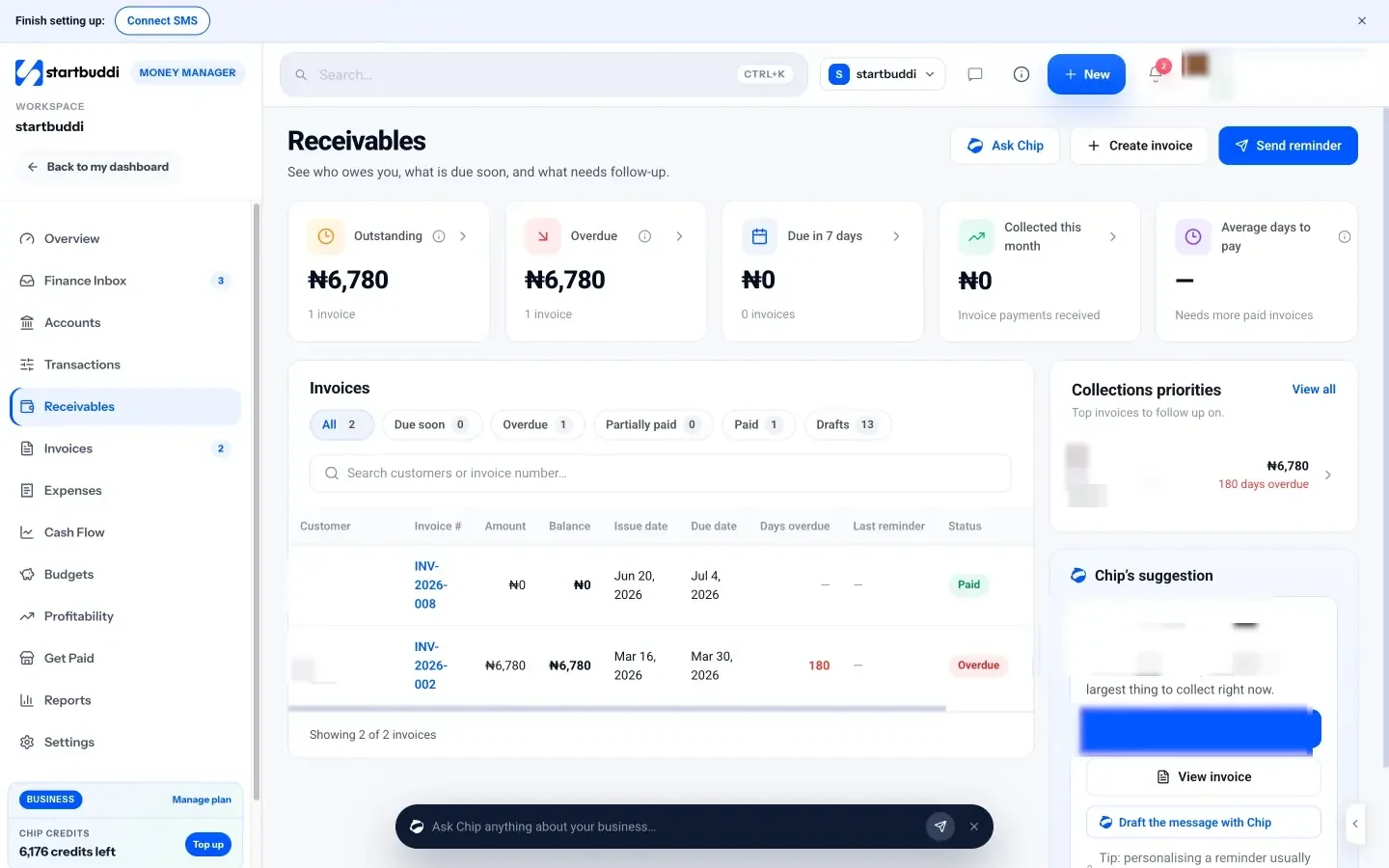
- Collect what you’re owed. In Money Manager, open Receivables and the Overdue tab to see every unpaid invoice, then use Send reminder. Chip suggests which client to chase first and can draft the message. The free payment reminder generator helps too.
- Stop future charges and bookings. In Get Paid, open Subscriptions and cancel each subscriber. In Bookings, cancel future appointments from the booking detail screen.
- Offboard staff. In People, each leaver gets an exit checklist covering handover, files, equipment and access, and completing it removes their startbuddi access.
- Export your records. Export contacts from Customers as CSV or Excel, export invoices from Money Manager, and use Export workspace data in Settings before you close your account.
startbuddi doesn’t file tax returns or deregister your business, so use your accountant and the official bodies for those steps. See how startbuddi works as a CRM for service businesses, or check pricing.
Close it properly, then move on
Copy the checklist, set your closing date and start with the people and the money. If you’re winding down in startbuddi, start with a free account or your existing one and turn each phase into tasks.
Frequently asked questions
What is the first step in closing a business?
The first step is deciding how to close and agreeing it in writing with any co-owners. Then check your business structure, because sole traders, partnerships and companies close in different ways, and list everything the business owes and is owed.
How long does it take to close a small business?
A sole trader with no staff can wind down in a few weeks. A limited company takes longer: in the UK, a strike-off application leads to dissolution two months after a notice in The Gazette if nobody objects. Staff, a lease or unpaid debts add time.
Do I need to tell my clients I'm closing my business?
Yes. Tell clients with active work, bookings, deposits or recurring plans as early as you can, with a date and what happens to their work or money. Offer refunds or a handover to another provider where you can't finish the job.
What records do I need to keep after closing a business?
Keep financial, tax and employment records for as long as your country requires. In the UK, business documents such as bank statements, invoices and receipts must be kept for 7 years after a company is struck off. The IRS says to keep employment tax records for at least four years.
Can I close a business that still owes money?
You must deal with debts before you close. Pay them from the business's money or assets, or agree a settlement with creditors. A company that can't pay its debts usually needs a formal insolvency process, so speak to a lawyer or insolvency practitioner before you apply to close it.
Tiwalade Joanna Okedara-Kalu is the founder, CEO and CTO of startbuddi, the business system that brings clients, bookings, invoices, projects, marketing and the Chip AI assistant into one place. Tiwalade builds software around how service businesses really work day to day, and writes about client management, getting paid on time and why small businesses outgrow the tools they start with.
Founded startbuddi and leads its product and engineering