How to turn social media traffic into leads: a simple social media sales funnel
Likes don't pay the bills. Here's a five-step social media sales funnel that turns followers into contacts, contacts into conversations, and conversations into customers.


Chinonye wrote this while on the startbuddi team. The product has changed since, so the team updated it on .
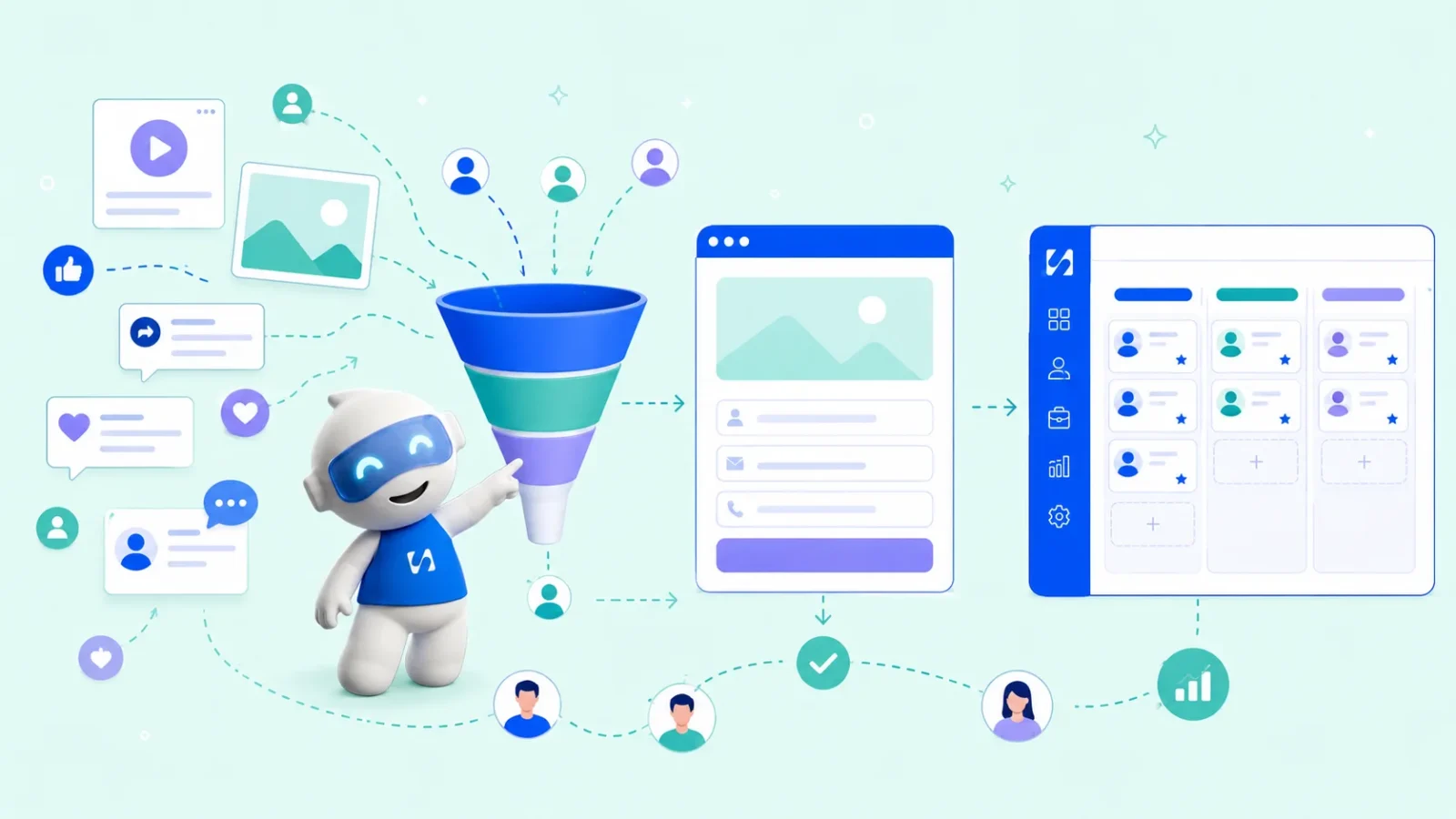
- To turn social media traffic into leads, give people one clear next step off the platform: a link in bio or landing page with a simple offer and a short form. Reply fast, follow up automatically, keep every lead in one contact list, and make it easy to book or buy. Track which posts and platforms bring real leads.
To turn social media traffic into leads, you need to give people one clear, easy next step that happens off the feed: a link to a page with a useful offer and a short form, or a direct message that you capture properly. Followers and likes feel good, but they belong to the platform. A lead is someone whose name and contact details you have, with permission to follow up. The job of your social media is to move the right people from one to the other.
This guide lays out a simple social media sales funnel in five steps: attract the right people, give them a reason to share their details, reply and follow up quickly, keep every lead in one place, and make it easy to book or buy. It works for service businesses, small shops and creators on Instagram, TikTok, Facebook, LinkedIn, X or YouTube, anywhere in the world.
Why social media traffic doesn’t turn into leads on its own
Most small businesses post regularly and still get few enquiries. The usual reasons:
- No next step. Posts entertain or inform, then end. Nobody is told what to do next.
- The link goes to the wrong place. A homepage with ten options, or a link-in-bio page with twenty buttons, loses people.
- Nothing worth giving an email for. “Sign up for our newsletter” is not an offer.
- Slow or lost replies. DMs and comments go unanswered for days, or get answered and forgotten.
- No follow-up. Someone downloads a guide or asks a price, and never hears from you again.
- No tracking. You can’t tell which posts or platforms bring customers, so you keep doing what gets likes.
A funnel fixes this by linking each step to the next. Our explainer on what a sales funnel is covers the idea in general; here we focus on social media.
What a social media sales funnel looks like
| Stage | What happens | What you need |
|---|---|---|
| Attract | People discover you through posts, reels, videos and shares | Useful, specific content for one type of customer |
| Capture | They click your link or message you, and share their details | An offer, a link in bio or landing page, a short form |
| Nurture | They hear from you quickly and a few more times | Fast replies and a short follow-up sequence |
| Convert | They book, buy or ask for a quote | A booking link, payment link or clear way to buy |
| Keep | They come back and tell others | A thank-you, check-ins and a reason to return |
Step 1: Attract the right people with useful content
Traffic only becomes leads if it’s the right traffic. Decide who your best customer is and post for them, not for everyone. A wedding photographer wants engaged couples, not other photographers. A bookkeeper wants small business owners, not accountants.
Content that tends to bring enquiries rather than just likes:
- Answers to real questions. “How much does a small bathroom renovation cost?” beats “Monday motivation”.
- Before and after, or the result you created for someone like them.
- Behind the scenes of how you work, so people feel they know you.
- Mistakes to avoid, which show expertise without a sales pitch.
- A regular invitation to take the next step, roughly one post in five.
Consistency matters more than volume. Our guide on planning a month of social media content in an afternoon helps you post regularly without it taking over your week.
Step 2: Give people a reason to share their details
People trade their email or phone number for something useful. This is your offer, sometimes called a lead magnet. Good offers are specific and quick to use:
- A checklist (“10 things to check before you hire a builder”)
- A price guide or menu
- A free consultation, assessment or quote
- A short guide or template
- Early access, a waitlist or an event invitation
Then send people to a page built for that one offer. Two good options:
A link in bio page
Your profile link is the one clickable link on most platforms. Instead of pointing it at your homepage, use a simple page with your offer at the top, a signup form or booking button, and a few other links below. Keep the first button the most important one. Our guide to link in bio for Instagram sellers covers layout ideas.
A landing page
For a specific campaign, a landing page with one offer, one form and no menu usually works better than a general website page, because there’s nowhere else to click. Put the benefit in the headline, three short reasons to trust you, and the form. Ask only for what you need: name and email, or name and phone for businesses that work on WhatsApp.
Don’t forget direct messages. Many people will message rather than click. Treat every DM that asks about prices or availability as a lead: reply, then capture their details in your contact list the same day. Our post on building a lead capture form that converts goes deeper on form design.
Step 3: Reply fast and follow up automatically
Interest fades quickly. When someone asks a question in the comments or DMs, reply the same day, ideally within the hour during working time. When someone fills in your form, send an automatic email or message straight away with what they asked for and one next step.
A simple follow-up sequence for a new lead:
- Immediately: deliver the offer (the checklist, the price guide, the booking confirmation) and say who you are.
- Day 2: a useful tip related to what they downloaded, plus an invitation to reply with questions.
- Day 5: a short story of someone you helped, told honestly.
- Day 8: a clear invitation: book a call, get a quote or buy.
Keep emails short and personal. Make sure people have agreed to hear from you and can unsubscribe; rules such as the UK’s electronic mail marketing guidance and the US CAN-SPAM Act set out what’s expected. This is general information, not legal advice. Our guide on building a sales funnel email sequence covers writing each email.
Step 4: Keep every lead in one place
Leads from Instagram DMs, TikTok comments, LinkedIn messages and your landing page form all need to end up in the same contact list, with a note of where they came from. Otherwise you’ll forget half of them and never know which platform works. Record the source, what they asked for, and a next step with a date. Our guide on how to track leads explains the simple system.
Step 5: Make it easy to book, buy and come back
The last step is where many funnels leak. If someone is ready, don’t make them message back and forth. Give them:
- A booking link with your real availability
- A payment link or simple checkout for fixed-price offers
- A clear way to ask for a quote
After they buy, thank them, ask how it went, and invite them to share or review. Happy customers who tag you bring the next round of social traffic.
Tips for each platform
The funnel is the same everywhere, but each platform has its own habits.
Your bio link does the heavy lifting, so keep it pointing at your current offer. Use Stories to mention the link often, pin a post that explains your offer, and answer DMs quickly: many people ask about prices by message rather than clicking.
TikTok and short video
Short videos reach new people fast but hold attention briefly. End useful videos with one simple instruction (“the full checklist is at the link in my bio”) and reply to comments with follow-up videos, which often reach more people than the original.
Groups and local community pages matter for many small businesses. Share genuinely helpful answers, and when someone asks for a recommendation, send them to your booking or quote page rather than a long comment thread.
For business-to-business services, posts that share lessons and results bring profile visits. Make sure your profile headline says who you help, and add your offer link to your featured section.
YouTube
Longer videos build trust. Put your offer link at the top of the description and mention it in the video, where it fits naturally.
An example funnel
A home cleaning company in Manchester posts short videos of before-and-after cleans twice a week. Every video ends with “Get our free end-of-tenancy checklist, link in bio.” The bio link opens a page with the checklist signup at the top and a “Get a quote” button below. Signups get the checklist by email straight away, a tip two days later, and an invitation to book a quote on day five. Every signup lands in one contact list tagged with its source. After a month, the owner can see that TikTok brings the most signups but Facebook groups bring the most booked jobs, and plans the next month around both.
Track what’s working
You only need a few numbers to know if your social media is producing leads:
- Clicks on your profile link, per platform.
- Signups or enquiries from each platform. Add a source tag to each link (for example “?src=instagram” on the link in your Instagram bio) so you can tell them apart. If your tool doesn’t support tags, use a different link per platform.
- Leads that became customers, per platform.
- Which posts drove the clicks. Most platforms’ own analytics show link clicks or profile visits by post.
After a month, do more of what brings customers, not just followers.
Common mistakes
- Sending traffic to your homepage. Send it to a page built for the offer in the post.
- Asking for too much. Every extra form field loses people. Ask for more later.
- Posting and disappearing. Replies to comments and DMs are where leads start.
- Only selling. If every post is an offer, people stop watching.
- Changing the offer every week. People need to see the same invitation several times before they act. Run one offer for at least a month before judging it.
- Ignoring the thank-you page. The moment after someone signs up is when they’re most interested. Use it to invite them to book, follow you elsewhere or reply with a question.
- Using too many tools. A scheduler, a link page, a form tool, an email tool and a CRM that don’t talk to each other means copying data by hand. Fewer connected tools are easier to keep running.
How startbuddi helps turn social media traffic into leads
There’s no separate funnel builder in startbuddi. Instead, the pieces of the funnel above live in one place and share one contact list.
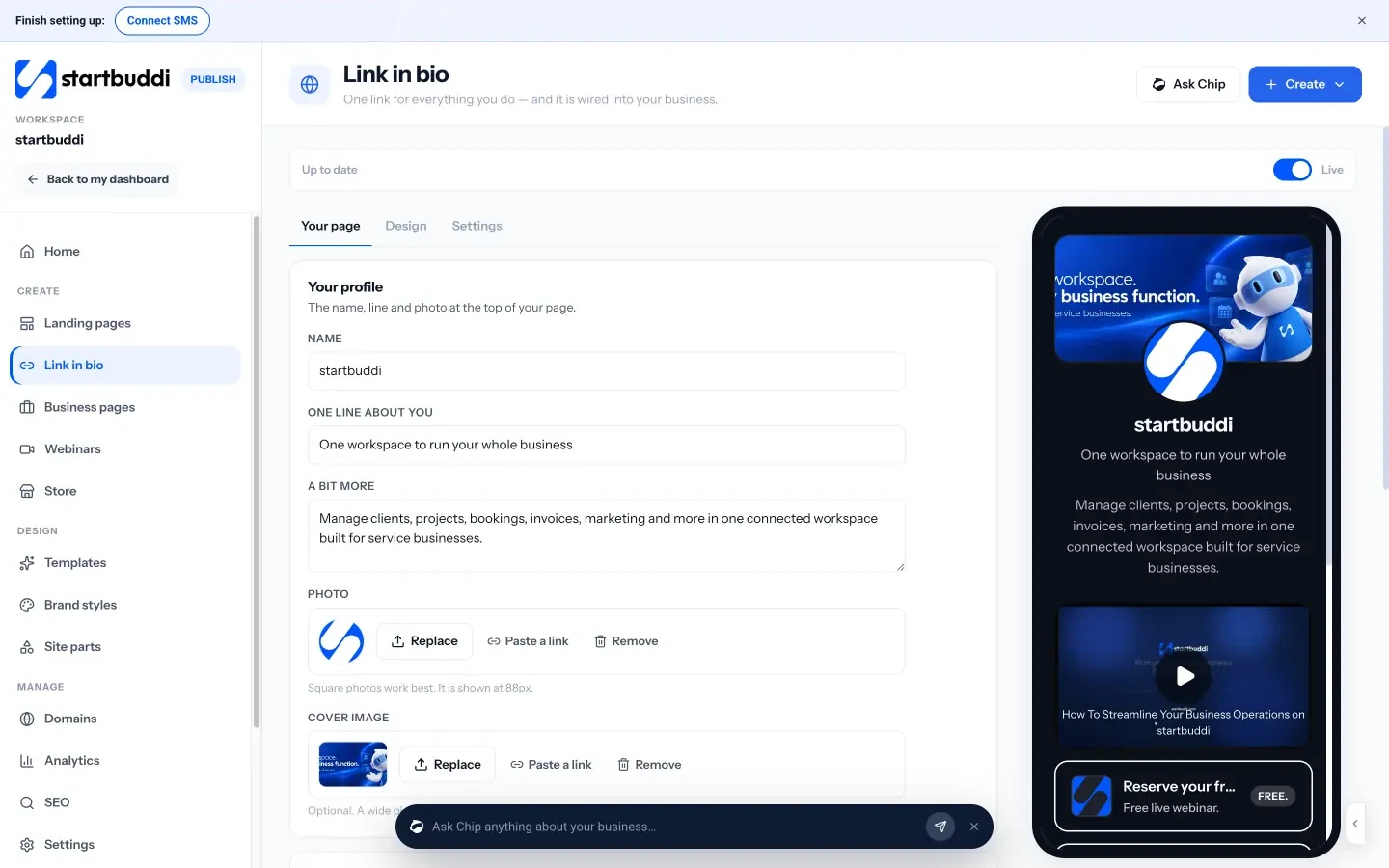
- Link in bio. Build a mobile page with blocks for links, a Subscribe form, one of your forms, a booking button, a product or a WhatsApp button. Add “?src=instagram” to the link in each profile and the analytics show taps and visits by source. See link in bio.
- Landing pages. Build a page for one offer with Chip, from a template or blank. Every signup lands in your contacts with the source page saved, and you can add a thank-you or download page as the next step. See landing pages.
- Social media planning. The Social Media Manager schedules posts to Facebook, Instagram, LinkedIn, X, YouTube and Pinterest, and Chip can plan a week of posts from what’s happening in your business.
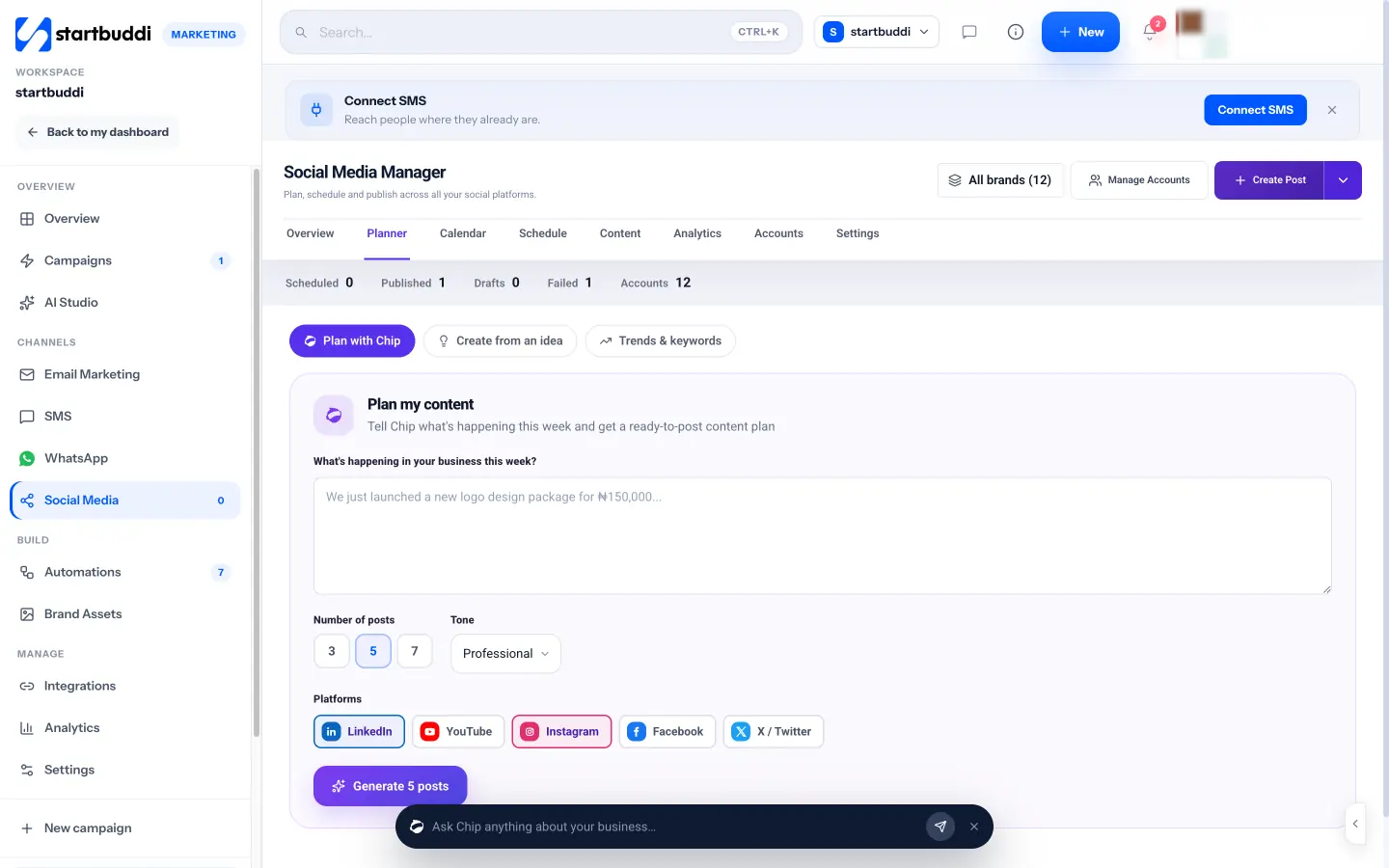
- DMs in one inbox. Instagram and Facebook messages can arrive in the Inbox alongside WhatsApp and email.
- Automatic follow-ups. Automations can send an email, SMS or WhatsApp message the moment a form is submitted, then wait and send the next one.
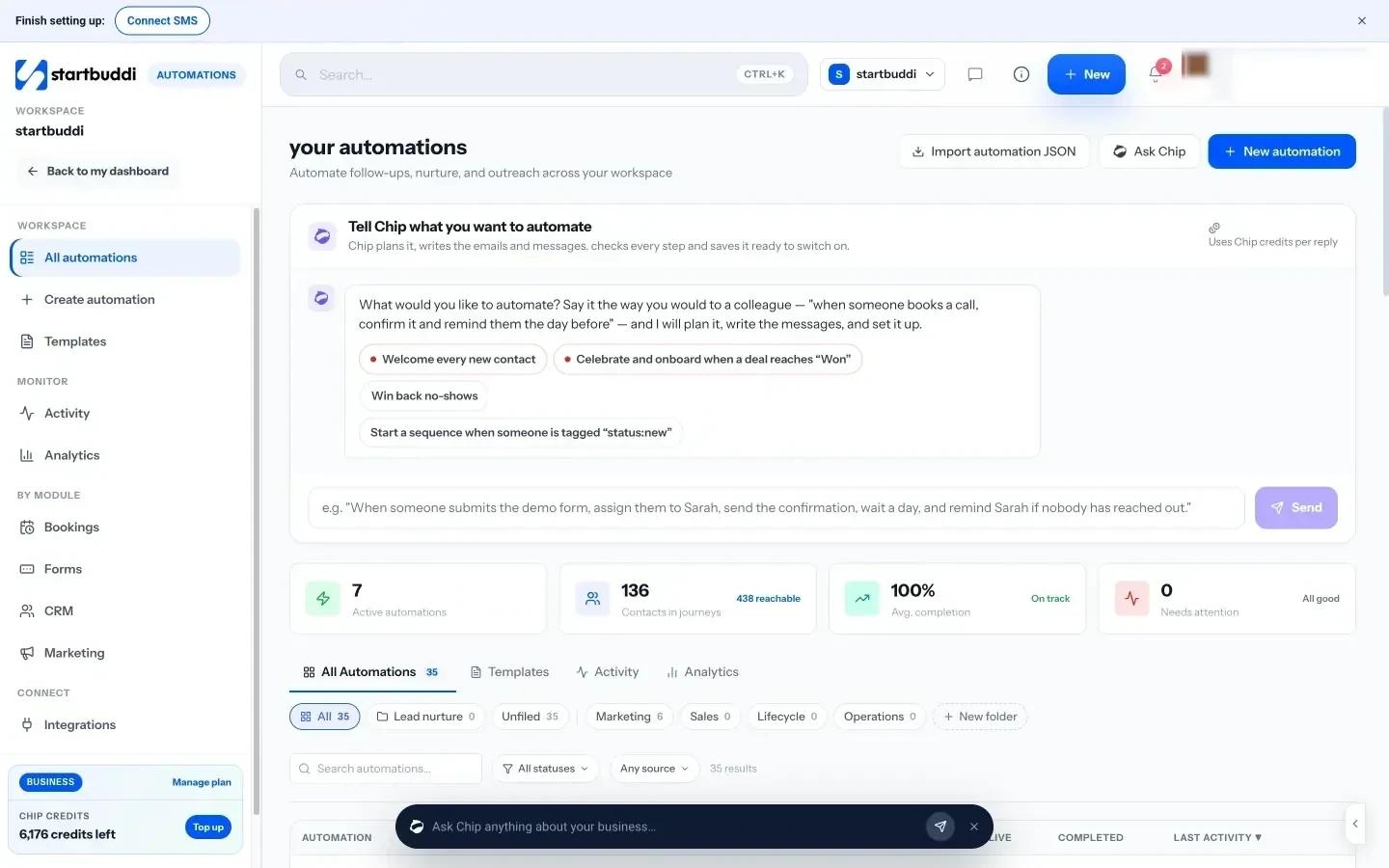
Landing pages and link in bio are available on every plan. The Marketing module (including social scheduling) needs Starter, which also raises active automations from 2 to 10, and every paid plan has a 30-day trial (see pricing). See pricing.
Next step
Pick one offer your ideal customer would genuinely want, build one page for it, and put that link in your bio today. Mention it in your next three posts, reply to every comment and DM within the day, and count the signups after two weeks. You can build the page for free with startbuddi link in bio.
Sources
Frequently asked questions
What is a social media sales funnel?
The path from someone seeing your post to becoming a customer: discover, click or message, share their details, get followed up, then book or buy.
Should I link to my website or a landing page from social media?
For a specific offer, a landing page or link in bio page with one clear action usually works better than a homepage with many options.
How do I know which social platform brings leads?
Use a different link or a source tag for each platform, and record the source on every lead. After a month, compare leads and customers by platform.
Can I turn Instagram DMs into leads?
Yes. Reply quickly, then add the person to your contact list with their source and a next step. A shared inbox that brings DMs in makes this easier.
SEO Copywriter| Email growth Specialist| I help businesses increase revenue with strategic SEO content & high-converting email funnels.