What is a no-show appointment?
Also called: Missed appointment, no-call no-show, did not attend (DNA), broken appointment

A no-show appointment is a booked appointment that the client neither attends nor cancels in advance, leaving the time slot empty and unpaid.
A no-show appointment is a booking the client misses without telling you beforehand. They don’t turn up, don’t cancel and often don’t reply. You kept the time free, perhaps turned other people away, and the slot is gone.
No-shows are different from cancellations. When a client cancels, even late, you at least know the slot is free and can try to fill it. With a no show appointment you find out only when the client fails to appear, which is usually too late to do anything.
Why no-shows matter for a small business
For a service business, time is the product. An empty hour can never be sold again, and your costs (rent, staff, travel, preparation) are the same whether the client comes or not.
- Lost income: the fee for that slot, and sometimes the product sales that come with it.
- Wasted preparation: materials ordered, a room set up, a stylist or technician kept free.
- Customers turned away: someone else may have wanted that slot.
- Staff frustration: repeated no-shows are demoralising and make planning harder.
To see the cost in your own numbers, multiply your average booking value by the number of no-shows in a typical month. Our free no-show cost calculator does the sum for you.
How a no-show happens: an example
Sofia runs a small physiotherapy clinic in Madrid. A new patient books a Tuesday 9am slot through a website form three weeks ahead. There is no confirmation message and no reminder. On Monday night the patient forgets, and on Tuesday the physio waits 15 minutes, then calls and gets voicemail. The hour is lost.
After adding an automatic confirmation, a reminder the day before and a deposit for first appointments, Sofia’s missed slots drop. The patients who can’t come now cancel in advance, which gives her time to offer the slot to someone else.
Common causes of no-shows
- They forgot. The most common reason, especially for bookings made weeks ahead.
- Cancelling felt like a hassle. If the only option is a phone call during office hours, many people just don’t turn up.
- No commitment. A free booking with no deposit is easy to ignore.
- Confusion about details. Wrong time zone, unclear address or a missing video link.
- Plans changed. Illness, work or childcare problems happen to everyone.
How to prevent no-shows
Confirm and remind
Send a confirmation as soon as someone books, with the date, time, place or joining link and a calendar invite. Then send a reminder shortly before the appointment. Reminders are the single easiest fix for forgetting.
Make cancelling and rescheduling easy
Put a cancel or reschedule link in every message. It sounds backwards, but a client who can cancel in two taps frees up the slot instead of simply not showing up.
Take a deposit
Asking for part-payment when booking makes people more likely to attend and covers some of the cost if they don’t. The deposit calculator helps you pick a fair amount.
Have a clear policy
Explain what happens if someone cancels late or doesn’t come: for example, the deposit is kept. Show it when they book, not after they miss. Our cancellation policy template is a good starting point. Check any consumer rules where you operate before charging fees.
Keep a waiting list
If you often have late cancellations, keep a list of clients who want an earlier slot and contact them when one opens.
How to handle a no-show well
- Record it. Mark the booking as a no-show so you can see patterns and your no-show rate: no-shows divided by total bookings for the period.
- Follow up kindly. A short, friendly message offering a new time wins many clients back. Assume a genuine reason the first time.
- Apply your policy consistently. If you keep deposits, do it for everyone, and explain it politely.
- Adjust for repeat no-shows. For someone who has missed several bookings, ask for full payment upfront next time.
Related terms
Appointment booking is the process that no-shows disrupt, and booking software automates the confirmations and reminders that prevent them. Follow-up automation sends the “sorry we missed you” message for you. For a full list of prevention tactics, read how to reduce no-show appointments.
No-shows in startbuddi
In startbuddi Bookings, every confirmed booking gets a confirmation email with a calendar invite, and reminder emails go out automatically before the appointment, each with a link to cancel. For any service you can switch on Require payment to book and take the full price or a deposit through Paystack or Stripe before the booking is confirmed.
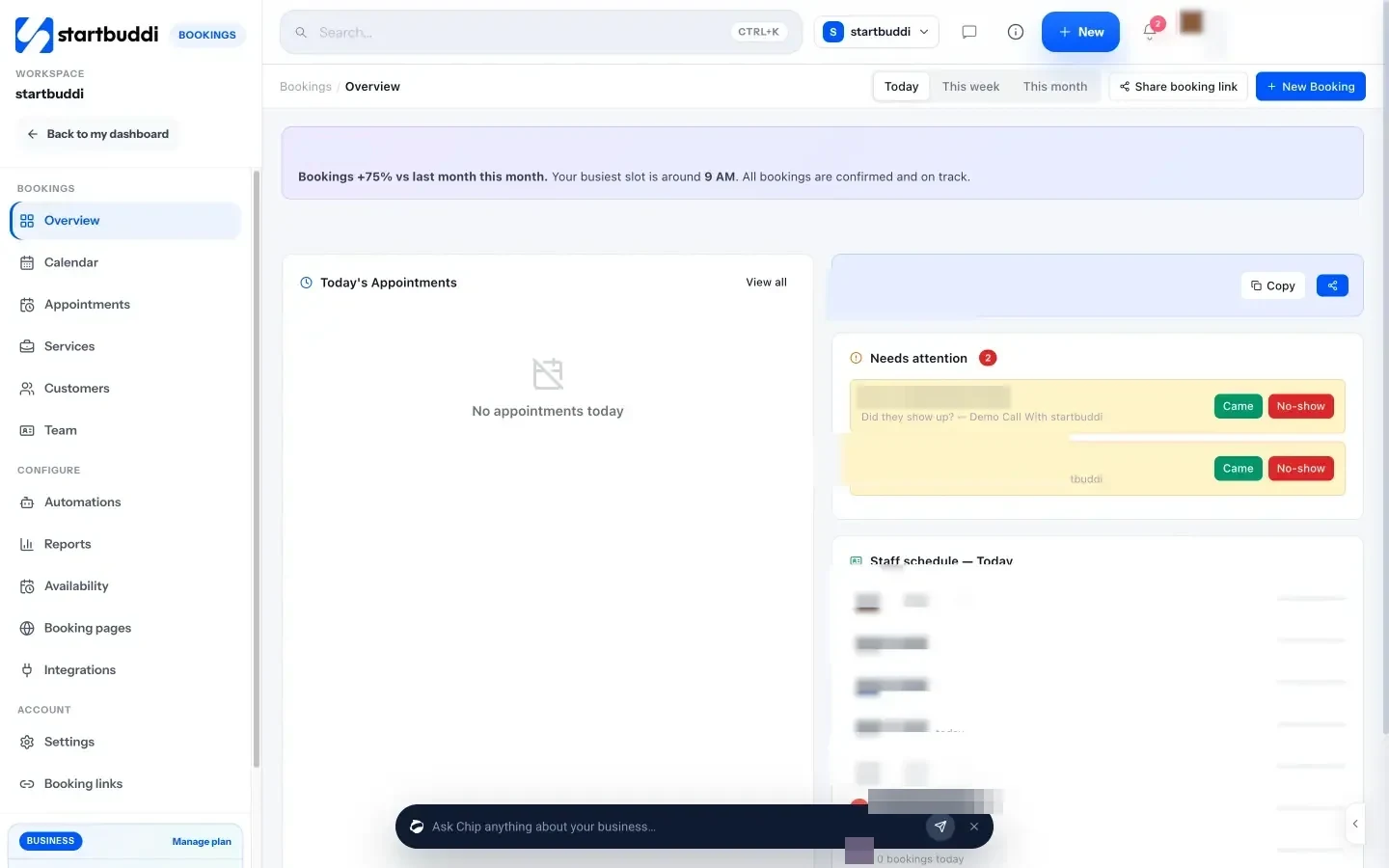
When someone misses a slot, click No-show in the Needs attention list on the Bookings overview, or Mark no-show on the booking itself. That marks the booking and, if you have switched on the “After a no-show” follow-up in Settings, emails the client your message inviting them to rebook. The overview counts no-shows, and Reports shows your cancellation rate. For WhatsApp or SMS follow-ups, build an automation that starts on a booking no-show (SMS and WhatsApp need the Starter plan or above).
Your next step: work out what no-shows cost you last month, then switch on a deposit for your most-missed service. See plans on the pricing page.
Related terms
FAQ
What is the difference between a no-show and a late cancellation?
A late cancellation is when the client tells you, but too close to the appointment to fill the slot. A no-show is when they don't come and don't tell you at all.
Should I charge a no-show fee?
Many businesses keep a deposit rather than billing a fee afterwards, because it is easier to collect. Whatever you choose, state it clearly at booking and check local consumer rules.
How do I calculate my no-show rate?
Divide the number of no-shows by the total number of bookings in the same period and multiply by 100. Track it monthly to see if your changes are working.
Should I stop taking bookings from someone after one no-show?
Usually not. One missed appointment is often an honest mistake. For repeat no-shows, asking for full payment upfront is a fair middle ground.
Omolola Akiyode is the operations and project manager at startbuddi, leading cross-functional projects and the content that helps founders get set up. Omolola writes about projects, websites and getting found online, and turns complex ideas into clear, practical steps.
Runs operations and projects at startbuddi