Marketing Qualified Lead (MQL): Definition, Examples and How It Works

A marketing qualified lead (MQL) is a lead who fits the kind of customer you serve and has engaged with your marketing enough to be worth a sales conversation, but hasn't asked to buy. So what is marketing qualified lead status for?
A marketing qualified lead (MQL) is a lead who fits the kind of customer you serve and has engaged with your marketing enough to be worth a sales conversation, but hasn’t asked to buy. So what is marketing qualified lead status for? It decides who gets a personal follow-up and who stays on the newsletter.
Key takeaways
- An MQL needs two things: fit (they are the kind of business or person you sell to) and interest (they have engaged more than once).
- The criteria are yours to set. Write them down so everyone in the business uses the same rule.
- A simple points rubric with a threshold is enough for a small team; you don’t need marketing automation software to start.
Why MQLs matter for a small business
Most enquiries a small IT services firm gets are not ready to buy: a checklist download, a student project, a vague question about backups. Call all of them and the week disappears; call none and the good ones go elsewhere.
An MQL rule picks out the leads that look like your best customers and have shown real interest, so your selling time goes to them first. Everyone else gets lead nurturing until they show more interest.
How a marketing qualified lead works
The term comes from teams where marketing hands leads to sales. HubSpot’s lifecycle stages list it between “lead” and “sales qualified lead”, and define an MQL as a contact that marketing “has qualified as ready for the sales team” (checked on 1 October 2026). Salesforce’s explainer on MQL vs SQL describes MQLs as leads that are a good fit but “just aren’t ready to buy yet” (checked on 1 October 2026).
| Stage | Meaning | Example for an IT support firm |
|---|---|---|
| Lead | Left contact details | Downloads your “10-point office IT security checklist” |
| Marketing qualified lead | Fits your customer profile and has engaged | A 25-person accounting firm in your city that downloaded the checklist and opened three follow-up emails |
| Sales qualified lead | Checked on a call: need, budget, timing | Confirms their server is out of warranty and they want a quote this quarter |
| Customer | Has paid | Signs a monthly support contract |
Our MQL vs SQL page compares the middle two stages.
Fit signals and interest signals
- Fit: business size, sector, location within your service area, the person’s role, the tools they use.
- Interest: downloading a lead magnet, opening or replying to emails, attending a webinar, asking a question in chat, returning to your pricing page.
Strong fit with no interest means nurture. Strong interest with poor fit (a student, a competitor, a business outside your area) is not an MQL, however many emails they open.
What is marketing qualified lead scoring? An example with numbers
A points rubric with a threshold is the simplest test. This one is an illustration for a managed IT provider; set your own points.
| Signal | Points |
|---|---|
| Business with 10 to 100 staff | 20 |
| Located in your service area | 15 |
| Contact is an owner, director or office manager | 15 |
| Downloaded a guide or checklist | 10 |
| Opened 3 or more of your emails | 10 |
| Attended a webinar or event | 15 |
| Asked a question by chat, email or WhatsApp | 15 |
| MQL threshold | 50 |
A three-person IT support firm in Accra runs a free security checklist for a quarter. The figures are illustrative.
- 300 people download the checklist.
- 75 of them reach 50 points, so 75 ÷ 300 = 25% become MQLs.
- The owner calls all 75. 30 confirm a real need and timing, so 30 ÷ 75 = 40% become sales qualified leads.
- 9 of the 30 sign a monthly support contract at GH₵ 4,000, so 9 ÷ 30 = 30% of SQLs become customers.
That is 9 × GH₵ 4,000 = GH₵ 36,000 a month in new contracts from 75 calls instead of 300.
How to set MQL criteria in five steps
- Look at your last ten good customers. Write down what they had in common: size, sector, location, role of the buyer.
- List the actions that came before they bought. A download, a webinar, a WhatsApp question, a second visit.
- Give each a few points and pick a threshold.
- Agree what happens at the threshold. For example: a personal reply within one working day.
- Review every quarter. Compare MQLs that bought with those that didn’t, and adjust.
For the qualifying call that follows, BANT (budget, authority, need, timing) keeps it short.
Related terms
- Warm lead: a lead who knows you and has shown interest. Most MQLs are warm leads with good fit.
- Lead magnet: the free resource that turns visitors into leads you can score.
- Lead nurturing: what you do with leads who haven’t reached the threshold yet.
For more, read our guide to lead generation for small business and the post on lead scoring for small business.
How startbuddi handles marketing qualified leads
startbuddi has no separate “MQL” stage or custom points builder. Here is what it does:
- Leads arrive as contacts from forms, bookings, website chat and CSV imports, with their source.
- A fixed lead score from 0 to 100, based on activity, spend, recency and open deals. It isn’t your own rubric, but it’s a quick first sort.
- Your own rule with filters. Filter Contacts by tag, source, lead status (New, Qualified, Disqualified), last contacted date and “Lead score is at least”, then save the view as a segment, for example “MQL: 25+ staff, downloaded checklist, not contacted”.
- A next step for each MQL. On paid plans from Starter, Automations can create a follow-up task when a lead is added, and Nurture with Chip (in beta) drafts a short email sequence from a contact’s history for you to edit before anyone is enrolled.
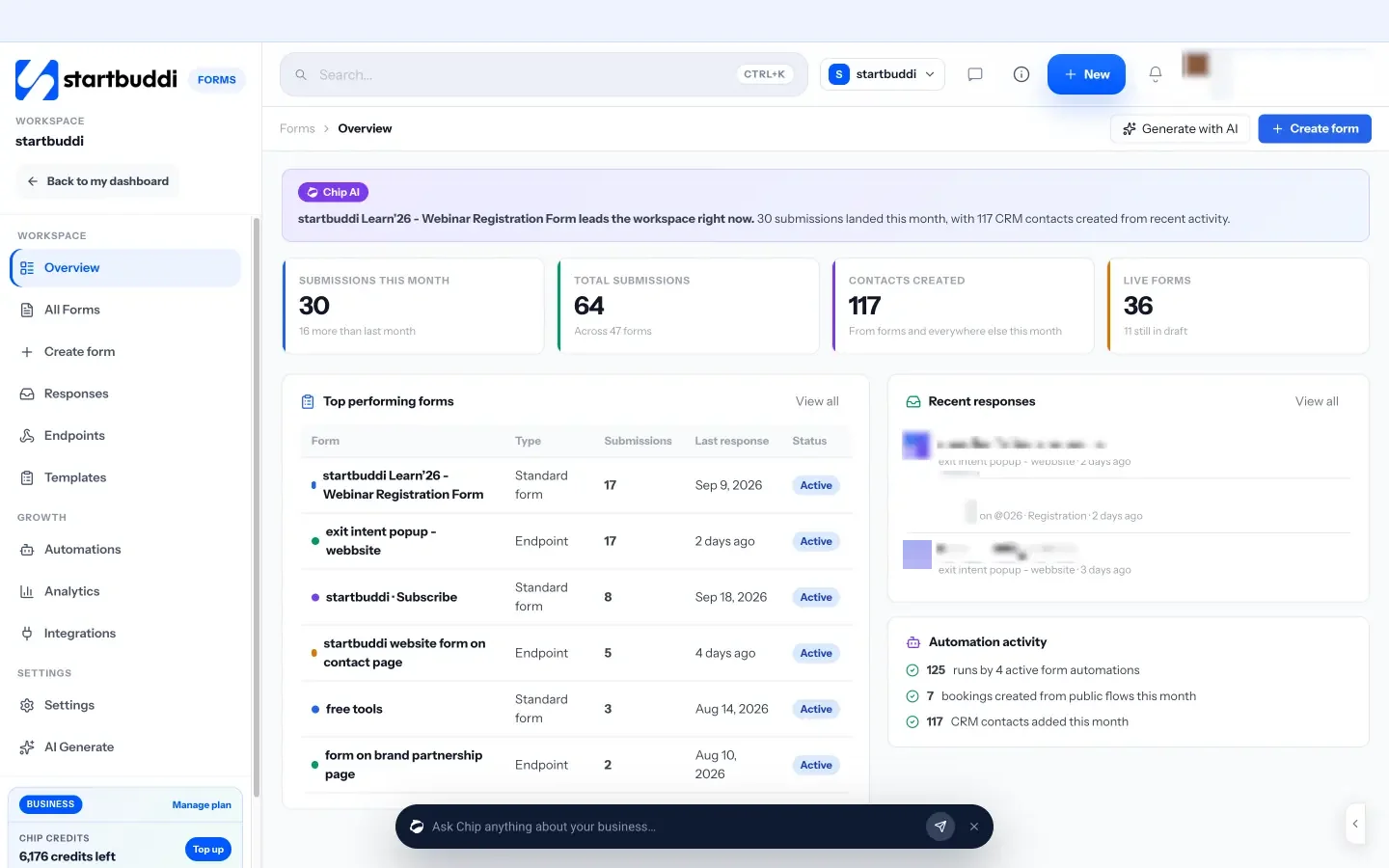
See also our CRM for IT teams. A free plan is available; see pricing.
Marketing Qualified Lead (MQL) is part of Marketing in startbuddi.
See MarketingRelated terms
FAQ
What makes a lead marketing qualified?
A lead becomes marketing qualified when it fits your customer profile and has engaged enough to suggest real interest. Typical signals are the right business size and location plus actions such as downloading a guide, attending a webinar or asking a question. You set the exact rule.
What is the difference between an MQL and an SQL?
An MQL is interested and a good fit but hasn't been checked for need, budget and timing. An SQL has been checked, usually on a call, and is ready for a quote or proposal. Our MQL vs SQL page compares them in detail.
Do small businesses need to use MQLs?
Not the label, but the idea is useful. Any business that gets more enquiries than it can personally follow up needs a rule for who to call first. Writing that rule down is all an MQL definition is.
Is a newsletter subscriber an MQL?
Usually not on its own. Subscribing shows mild interest, and HubSpot even lists "subscriber" as a stage before "lead". A subscriber who fits your profile and starts engaging, such as replying or attending an event, can become an MQL.
Olabimpe Salami is the email and outreach specialist at startbuddi. Olabimpe writes about the messages that bring customers in and back: email, WhatsApp and SMS campaigns, follow-ups, and turning enquiries into paying clients.
Runs email and outreach at startbuddi