Warm Lead: Definition, Examples and How It Works

A warm lead is a potential customer who already knows your business and has shown interest, for example by replying to an email, asking a question, attending a webinar or being referred by a client, but hasn't asked to buy yet. So what is warm lead status worth?
A warm lead is a potential customer who already knows your business and has shown interest, for example by replying to an email, asking a question, attending a webinar or being referred by a client, but hasn’t asked to buy yet. So what is warm lead status worth? It means the next conversation starts with trust, not a cold introduction.
Key takeaways
- Leads are often sorted by temperature: cold (no contact or interest yet), warm (aware and interested) and hot (ready to buy now).
- A warm lead has done something you can point to: a reply, a referral, a download, a booked call they later moved.
- Warm leads usually convert better and faster than cold ones, because they already know who you are.
- Interest isn’t consent to marketing. Reply to their question freely; ask before adding them to newsletters or broadcast lists.
Why warm leads matter for a small business
In a small IT services firm the owner is often also the lead engineer, so every hour spent chasing strangers is an hour not spent fixing servers. Warm leads are where that time pays back best: people who have already said, in some way, “I might need you”.
Most small businesses have more warm leads than they realise, sitting in old email threads and WhatsApp chats that ended with “let me check with my boss”. Without a list and a temperature label, they quietly go cold.
How a warm lead works: cold, warm and hot
The boundaries aren’t fixed, so write down what each label means in your business.
| Temperature | What it means | Typical signs | What to do next |
|---|---|---|---|
| Cold | Doesn’t know you, or hasn’t shown interest | On a list you built; no reply yet | Introduce yourself through cold outreach, carefully and legally |
| Warm | Knows you and has shown interest | Replied, asked a question, downloaded a guide, came by referral, attended an event, or is a past client | Follow up with something useful and one clear next step |
| Hot | Ready to buy soon | Asked for a price, a start date or a proposal | Send the quote or book the call today |
A lead can move both ways. A warm lead who asks for a quote turns hot. A hot lead who goes silent for three months is warm again at best.
Larger teams call a similar stage a marketing qualified lead; the MQL vs SQL page explains that split.
What is warm lead follow-up? An example with numbers
Warm lead follow-up is the short run of useful contacts that moves an interested person towards a decision. The figures below are illustrative.
A three-person managed IT provider in Nairobi has 40 warm leads in its contact list after a quarter: 15 small offices that attended a free cybersecurity talk, 10 referrals from existing clients, and 15 businesses that asked about pricing on WhatsApp but didn’t book a site visit.
The owner sends each one a personal follow-up with one offer: a free 30-minute network check. Over the next month:
- 12 of the 40 book the network check (30%).
- 5 of those 12 sign a monthly support contract at KSh 25,000 a month.
That is 5 × KSh 25,000 = KSh 125,000 a month in new recurring revenue, or KSh 1,500,000 over a year if they all stay. The warm-lead-to-customer rate is 5 ÷ 40 = 12.5%.
If the same owner emailed 200 businesses that had never heard of them and 2 became clients, that cold rate would be 2 ÷ 200 = 1%. Your numbers will differ; the gap between warm and cold usually doesn’t.
Rules for contacting warm leads
The UK Information Commissioner’s Office electronic mail marketing guidance says you need specific consent to send marketing emails to individuals, unless the “soft opt-in” applies: they bought, or negotiated to buy, a similar product from you and were given a simple way to opt out (checked on 1 October 2026).
On WhatsApp, the WhatsApp Business Messaging Policy says a business may only contact people who have given it their number and opted in to receive messages, and must respect requests to stop (checked on 1 October 2026). In Nigeria, the Nigeria Data Protection Act 2023 governs how a lead’s phone number and email may be collected and used.
Related terms
- Lead: anyone who has shown interest and left a way to reach them.
- Lead nurturing: staying in touch with leads who aren’t ready yet, so warm leads stay warm.
- Cold outreach: contacting people who haven’t heard from you before.
For what to say next, read how to follow up with leads; to rank leads, see lead scoring for small business; and for a list gone quiet, how to revive cold leads.
How startbuddi handles warm leads
In startbuddi, leads are contacts in Customers, created by forms, bookings, website chat, CSV import or by hand.
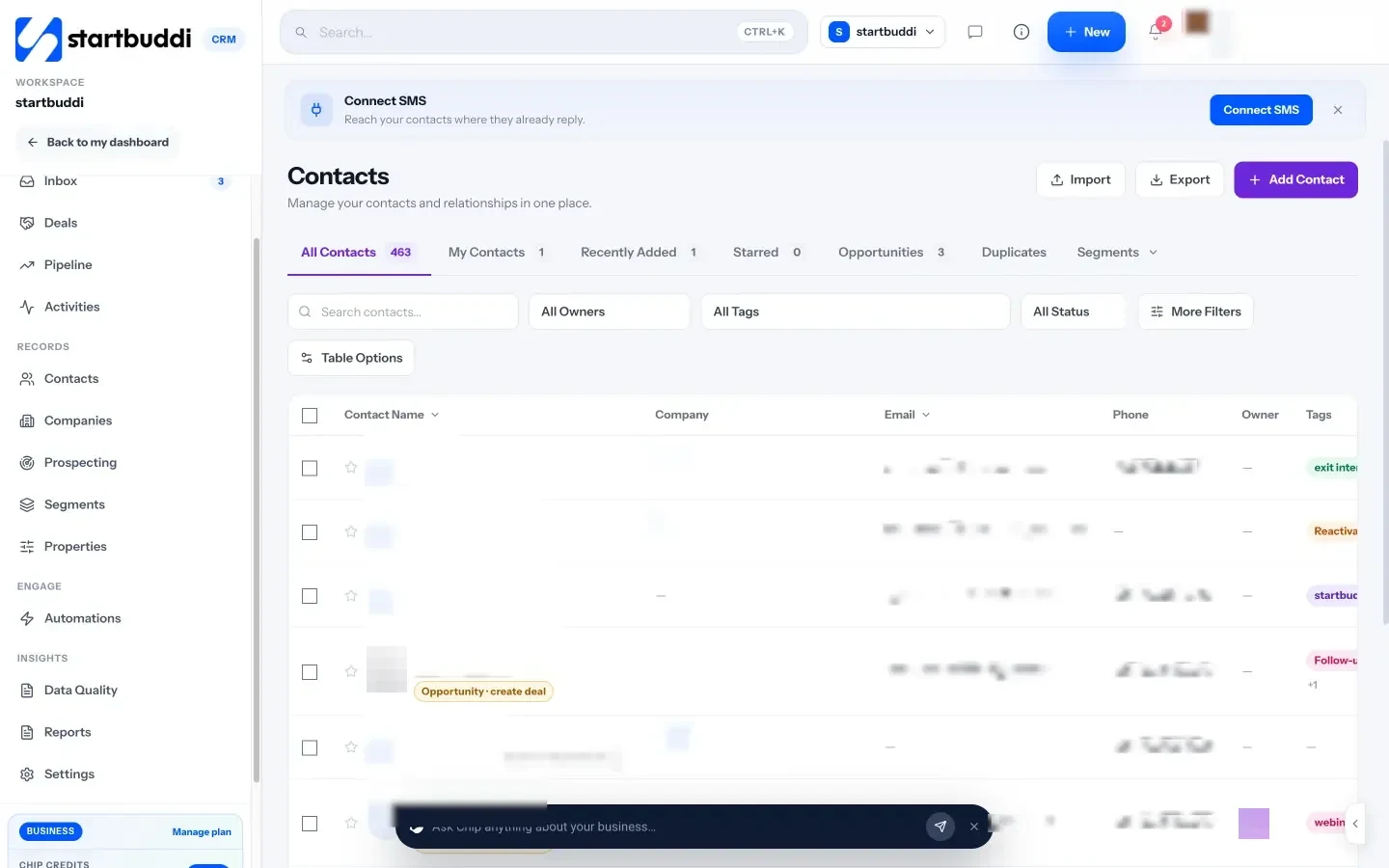
- Lead score: each contact gets a score from 0 to 100 based on activity, spend, recency and open deals, and the contact page labels it hot, warm or cold. It is a fixed formula, so you can see why a contact scores the way it does.
- Filters: the Contacts list can filter by lead status, last contacted date and a minimum lead score, and you can save that view as a segment, for example “warm, not contacted in 14 days”.
- Follow-up: reply from the shared Inbox, add a task, or use Nurture with Chip (in beta) to draft a short email sequence from the contact’s history, which you edit before anyone is enrolled.
See also our CRM for IT teams. A free plan is available; see pricing.
Warm Lead is part of Customers in startbuddi.
See CustomersRelated terms
FAQ
What is the difference between a warm lead and a cold lead?
A cold lead hasn't heard of you or hasn't shown interest yet. A warm lead knows your business and has done something to show interest, such as replying, asking a question or coming by referral. Warm leads usually need fewer touches to convert.
What is the difference between a warm lead and a hot lead?
A warm lead is interested but not ready to buy now. A hot lead has a clear buying signal, such as asking for a price, a proposal or a start date. Hot leads need a quote or a call today; warm leads need a useful follow-up and one next step.
How do you turn a warm lead into a customer?
Follow up quickly with something useful to them, such as an answer, a short case study or a free check, and end with one clear next step. Keep the conversation going on the channel they prefer. When they ask about price or timing, treat them as hot and send a quote.
How long does a lead stay warm?
There is no fixed rule, but interest fades within days to weeks without contact. A lead who hasn't heard from you for a month or more is often cool again. Regular, relevant follow-up keeps them warm until they are ready.
Tiwalade Joanna Okedara-Kalu is the founder, CEO and CTO of startbuddi, the business system that brings clients, bookings, invoices, projects, marketing and the Chip AI assistant into one place. Tiwalade builds software around how service businesses really work day to day, and writes about client management, getting paid on time and why small businesses outgrow the tools they start with.
Founded startbuddi and leads its product and engineering