What is cold outreach?
Also called: Cold emailing, cold calling, outbound prospecting, outbound sales, cold messaging
Cold outreach is contacting a potential customer who has had no previous contact with your business, usually by email, phone or LinkedIn, to start a relevant business conversation.
Cold outreach is getting in touch with a potential customer who has never had contact with your business, to start a conversation. “Cold” means there is no existing relationship: they did not fill in your form or ask you a question. The most common forms are cold emails, cold calls and direct messages on LinkedIn.
Done well, it is a short, relevant note to the right person about a problem they probably have. Done badly, it is spam.
Why cold outreach matters for a small business
- You choose who you talk to. Instead of waiting for enquiries, you approach the businesses you most want to work with.
- It works from day one. You do not need an audience, a big website or an ad budget.
- It suits B2B services. Agencies, consultants, IT firms, cleaners and suppliers who sell to other businesses often win their first clients this way.
It is also slow and full of rejection, so it works best alongside referrals and inbound marketing, not instead of them.
The rules to respect
Laws on unsolicited marketing differ by country and by channel, and they often treat businesses and individuals differently. A few examples:
- United States: the FTC’s CAN-SPAM guide applies to commercial email, including business to business. You need honest headers and subject lines, your postal address and a working way to opt out.
- United Kingdom: under PECR, you can email limited companies without prior consent if you offer an opt-out, but sole traders and some partnerships are treated like individuals. See the ICO’s B2B marketing guidance.
- Canada: CASL allows implied consent only in limited cases, such as an address that is conspicuously published and a message relevant to the person’s business role. See the CRTC’s guidance on implied consent.
- Nigeria: personal data, including work contact details of individuals, falls under the Nigeria Data Protection Act, overseen by the Nigeria Data Protection Commission.
This is general information, not legal advice. Check the rules where you and your prospects are before you start.
How to do cold outreach well: step by step
- Define who you want. Use your buyer persona: industry, size, location, role.
- Build a small, accurate list. Twenty well-chosen businesses beat 2,000 random addresses. Use work contact details, never personal ones.
- Research each one for two minutes. A recent post, a new branch, a job advert or a gap on their website gives you a reason to write.
- Write a short, personal first message. Three to five sentences: why them, the problem you noticed, what you do about it, and one easy question.
- Follow up two or three times, then stop. Space follow-ups several days apart, add something new each time, and respect any “no thanks” immediately.
- Record everything. Keep every contact, message and reply in one place, and mark anyone who asks not to be contacted.
Common mistakes
- Bulk-sending the same message. It reads like spam and it can damage your email domain’s reputation. Gmail asks bulk senders to keep spam rates reported in Postmaster Tools below 0.3%, according to Google’s sender guidelines.
- Talking about yourself. Your first line should be about them, not your company history.
- Asking for too much. “Can we book a 45-minute call?” is a big ask from a stranger. “Would it help if I sent a quick idea?” is easier.
- Ignoring opt-outs. Anyone who says no, or asks to be removed, should never hear from you again.
- Giving up after one message. Most replies come after a follow-up.
Related terms
Once someone replies, you can check fit with BANT, and interested people who are not ready yet move into lead nurturing. Cold outreach is different from email marketing, which goes to people who have agreed to hear from you. Our post on marketing automation vs manual outreach compares the two approaches.
Cold outreach in startbuddi
Prospecting in Customers lets you describe who you are looking for, and Chip finds real companies and people on the web, each with the reasons it picked them and the sources. Searches stay on professional criteria, and personal emails and personal phone numbers are never looked up. Work emails are revealed only when you ask, which uses Chip credits, and you can mark a prospect as Do not contact.
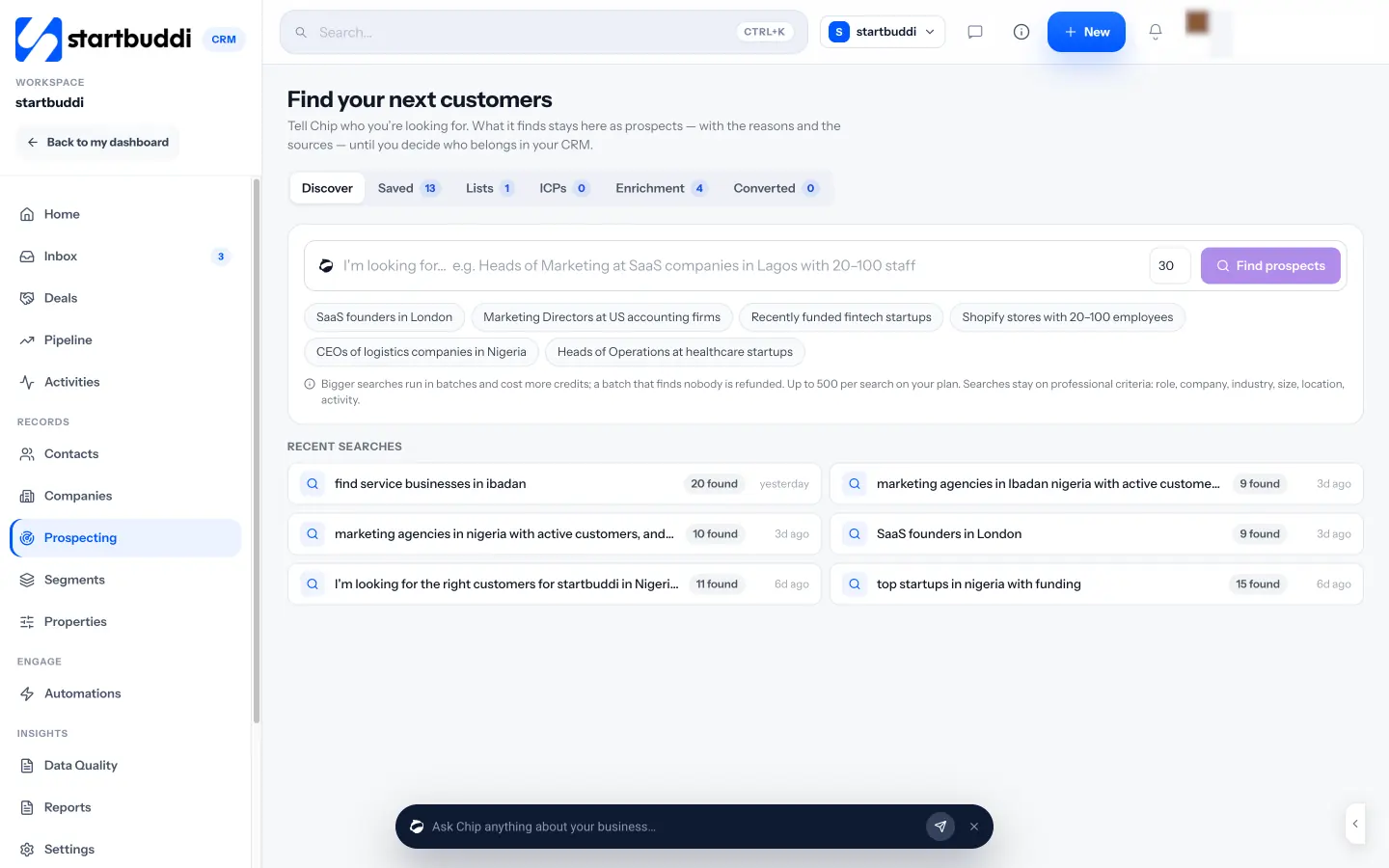
When you convert prospects into contacts, they keep “Chip Prospecting” as their source, and you can ask Chip to draft an intro you edit before sending. Replies from a connected mailbox land in the Inbox next to the contact’s history. Keep cold messages one to one: marketing campaigns are for people who have agreed to receive them.
Your next step: pick ten businesses you would love to work with, find one specific reason to write to each, and send three this week.
Related terms
FAQ
Is cold outreach legal?
In many countries, yes, if you follow the rules for the channel and the recipient, such as offering an opt-out and not emailing individuals without consent where that is required. Rules differ by country, so check the official guidance where you and your prospects are.
What is the difference between cold and warm outreach?
Cold outreach goes to people with no previous contact with you. Warm outreach goes to people who already know you, such as past customers, referrals or people who filled in your form.
How many follow-ups should I send?
Two or three, spaced several days apart, each adding something useful. After that, stop, and always stop at once if someone says no.
Is cold email better than cold calling?
It depends on your buyers. Email is easier to personalise and less intrusive; calls can be faster for local businesses. Many small businesses use a short email, then a call.
Olabimpe Salami is the email and outreach specialist at startbuddi. Olabimpe writes about the messages that bring customers in and back: email, WhatsApp and SMS campaigns, follow-ups, and turning enquiries into paying clients.
Runs email and outreach at startbuddi