What is BANT? Lead qualification explained
Also called: BANT framework, BANT qualification, budget authority need timeline, lead qualification framework
BANT is a lead qualification framework that checks four things before you invest time in a sale: Budget, Authority, Need and Timeline.
BANT is a quick way to decide whether a lead is worth your time. It stands for Budget, Authority, Need and Timeline. Before you write a detailed proposal or spend hours on calls, you check four things: can they pay, can they decide, do they have a real problem you solve, and do they want it solved soon?
It is one of the oldest and simplest lead qualification frameworks, and it works well for small businesses that sell services or higher-priced products.
Why lead qualification matters for a small business
When you are the one doing the selling, your time is the scarcest thing you have. Every hour spent on a lead who was never going to buy is an hour not spent on one who would.
- Fewer wasted proposals. You write quotes for people who can say yes.
- Faster sales. Qualified leads move through your sales pipeline more quickly.
- Better forecasts. You know which deals are real.
- Kinder to buyers. Telling someone early that you are not a fit saves them time too.
The four parts of BANT
| Letter | What you check | Questions to ask |
|---|---|---|
| Budget | Can they afford your service? | “Do you have a budget in mind for this?” “Projects like this usually cost between $2,000 and $4,000. Does that work for you?” |
| Authority | Can this person decide, or who else is involved? | “Who else will be part of the decision?” “How have you chosen suppliers before?” |
| Need | Is there a real problem you solve? | “What made you start looking now?” “What happens if you do nothing?” |
| Timeline | When do they want it solved? | “When would you like this in place?” “Is there a date driving this?” |
How BANT works: an example
A marketing consultant in Manchester gets two enquiries in the same week.
- Lead A: a café owner who “wants to do more on social media”. No budget in mind, no deadline, and she mentions her business partner handles money. Need is vague, authority is shared, timeline is open. The consultant sends a helpful guide and adds her to the newsletter, but does not write a proposal yet.
- Lead B: the owner of a physiotherapy clinic opening a second site in eight weeks. He needs a launch campaign, has set aside £3,000 and signs off spending himself. All four boxes are ticked. The consultant books a call the next morning and sends a proposal the same day.
Lead A is not a bad lead. She is just not ready. That is exactly what lead nurturing is for.
When BANT falls short
- Need comes first for many buyers. People often set a budget only after they understand the problem and the options.
- Authority is spread out. In many businesses, several people have a say, so there is no single “decision maker”.
- It can feel like an interrogation. Asking four blunt questions on the first call puts people off.
Other frameworks rearrange or extend the idea. CHAMP starts with challenges, and ANUM puts authority and need before money. For most small businesses, BANT asked in a natural, conversational order is enough.
Common mistakes
- Asking the questions in a script. Weave them into a real conversation about the customer’s problem.
- Not writing the answers down. If the answers live only in your head, you cannot compare leads or hand them to someone else.
- Dropping unqualified leads completely. Today’s “not now” is often next quarter’s customer.
- Qualifying too late. A short form question or a two-minute call before a big proposal saves hours.
Related terms
BANT is often used to decide when a marketing qualified lead becomes a sales qualified lead. Qualified leads then move through pipeline management. Our post on lead scoring for small business covers ranking leads by how engaged they are.
Lead qualification in startbuddi
In Contacts, each contact has a lead status (New, Qualified or Disqualified) you can filter by, plus custom properties where you can record budget, decision maker and timeline so the answers stay on the record. You can ask BANT-style questions up front on a form and save each answer to a contact property.
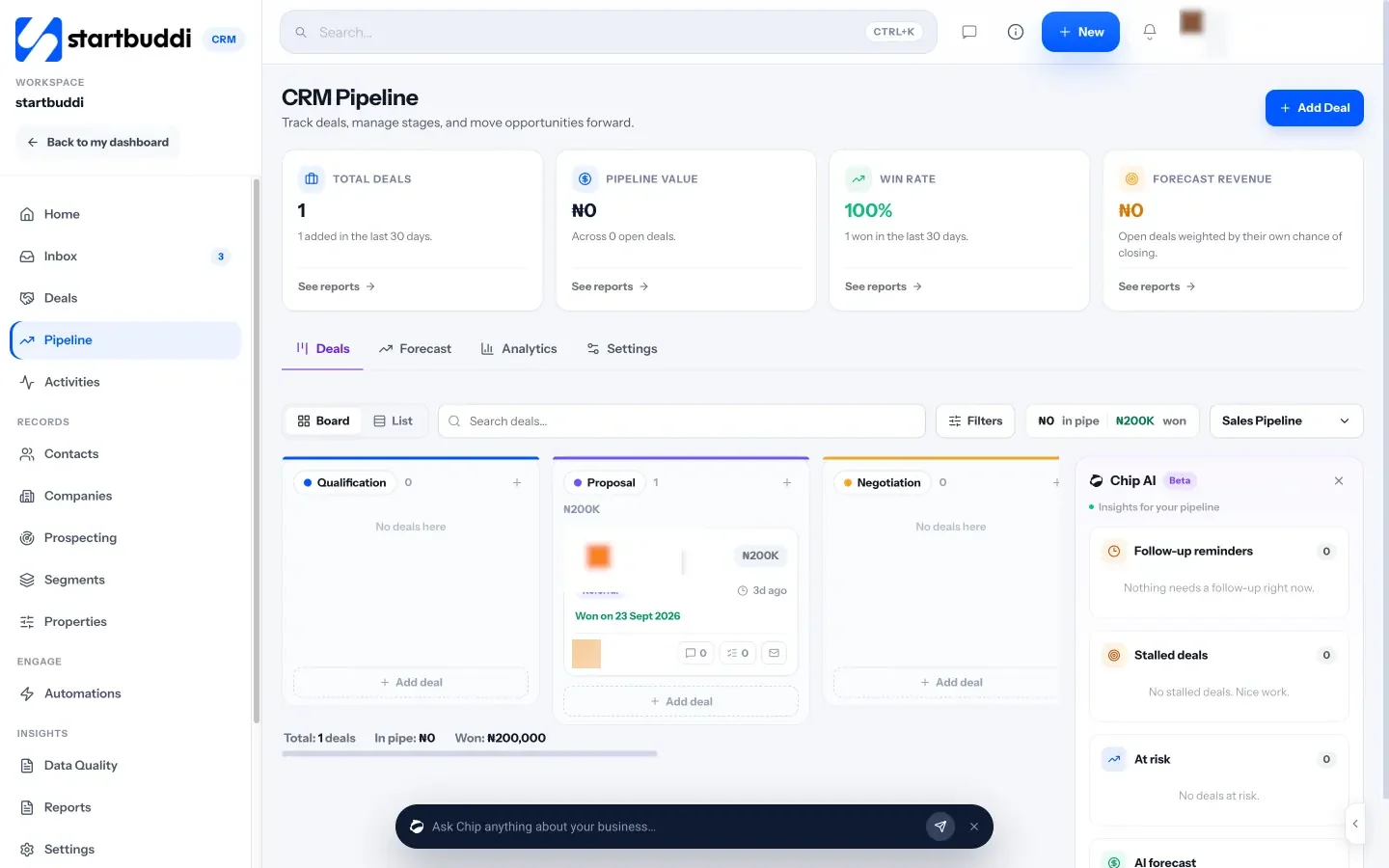
The Pipeline has stages you can name to match your process, such as a qualification stage before a proposal. Each deal holds a value, expected close date and probability, and you can require a reason when a deal is marked lost, so you learn which leads were never a fit.
For discovery calls, Bookings gives people a link to pick a time and answer your questions first. Your next step: add one budget question and one timeline question to your enquiry form this week.
Related terms
FAQ
What does BANT stand for?
Budget, Authority, Need and Timeline: four things to check before investing time in a sale.
Is BANT still used?
Yes, especially as a simple checklist. Many teams now ask about need first and treat budget and authority more flexibly.
When should I ask BANT questions?
Early, but naturally. A short enquiry form and the first few minutes of a discovery call are usually enough to cover all four.
What should I do with leads that do not qualify?
Keep them. Tag them, add them to a newsletter or follow-up sequence, and check back when their timing or budget changes.
Tiwalade Joanna Okedara-Kalu is the founder, CEO and CTO of startbuddi, the business system that brings clients, bookings, invoices, projects, marketing and the Chip AI assistant into one place. Tiwalade builds software around how service businesses really work day to day, and writes about client management, getting paid on time and why small businesses outgrow the tools they start with.
Founded startbuddi and leads its product and engineering