What is email marketing?
Also called: Email campaigns, newsletters, email broadcasts, bulk email
Email marketing is the practice of sending emails, such as newsletters, offers and automatic follow-ups, to people who have agreed to hear from you, in order to build relationships and win and keep customers.
Email marketing is using email to reach people who have agreed to hear from you, so you can share news, offers and useful advice that turn readers into customers and customers into repeat buyers. It includes one-off campaigns (sometimes called broadcasts or newsletters) and automatic emails that go out when someone signs up, books or buys.
Unlike social media, where a platform decides who sees your post, an email goes straight to the inbox of someone who asked for it. That is why many small businesses treat their email list as one of their most valuable assets.
Why email marketing matters for a small business
- You own the audience. If a social account is suspended or reach drops, your email list is still yours.
- It is low cost. Sending an email costs a tiny fraction of a printed flyer or a paid ad, and many tools include a free or low-cost allowance.
- It drives action. A clear email with one link, such as “book your December slot” or “pay your invoice here”, gets people to act.
- It builds trust over time. Regular, helpful emails keep you in mind until the day someone needs what you sell.
How email marketing works
Every email marketing programme has four moving parts:
- A list built with permission. People join through a signup form, a checkout, a booking or in person. They should know they will get marketing emails from you.
- An email service. Software that stores your contacts, lets you design emails, sends them in bulk and handles unsubscribes.
- Content. A subject line, preview text, the message and a call to action.
- Measurement. Opens, clicks, replies, unsubscribes and, most importantly, sales or bookings that came from the email.
Here is a simple example. A tailor in Accra collects emails when customers pick up their orders. Once a month she sends a short email: new fabrics in stock, one styling tip and a link to book a fitting. Before the festive season she sends a campaign to past customers only, offering early booking slots. The emails take an hour a month and fill her diary before the rush.
Types of marketing email
- Newsletters: regular updates, tips and news.
- Promotional campaigns: sales, launches and seasonal offers.
- Welcome emails: the first message a new subscriber receives.
- Nurture sequences: a series of emails that helps a lead decide, often called a drip sequence.
- Re-engagement emails: sent to people who have stopped opening.
- Announcements: new services, opening hours, events.
Transactional emails, such as receipts and booking confirmations, are related but different. They are sent because of something the person did and are not treated as marketing in most rules.
Email marketing rules to know
Email marketing is regulated in most countries. In the US, the CAN-SPAM Act requires honest subject lines, a valid postal address and a working opt-out. In the UK, the ICO explains that you generally need consent, with a limited “soft opt-in” for your own customers. In Nigeria, the Nigeria Data Protection Commission oversees how personal data, including email addresses, is collected and used. Mailbox providers add their own rules: Google’s sender guidelines ask bulk senders to authenticate their domain and offer one-click unsubscribe. This is general information, not legal advice.
Best practices and common mistakes
- Never buy a list. Bought lists break the rules above, hurt your delivery and rarely buy anything.
- Send from your own domain. hello@yourbusiness.com looks more trustworthy than a free address and helps delivery.
- Write a subject line that says what is inside. Clear beats clever.
- One email, one goal. Pick the single action you want and make the button obvious.
- Segment your list. Email segmentation means customers, leads and lapsed buyers get different messages.
- Be consistent. A monthly email you actually send beats a weekly plan you abandon.
- Measure clicks and sales, not just opens. Some email apps load images automatically, which can make open rates look higher than they are.
Related terms
Email automation covers the emails that send themselves based on triggers. Marketing automation extends that to SMS, WhatsApp and other channels. SMS marketing and WhatsApp marketing are often used alongside email for time-sensitive messages.
Email marketing in startbuddi
With Email Marketing in startbuddi, creating a campaign takes four steps: choose the audience, write the message, review it, then send. You can let Chip write the subject, preview text and copy, start from a template, build with drag-and-drop blocks, or use the HTML builder. The Review step checks for problems such as a missing subject or broken links, and you can send a test first.
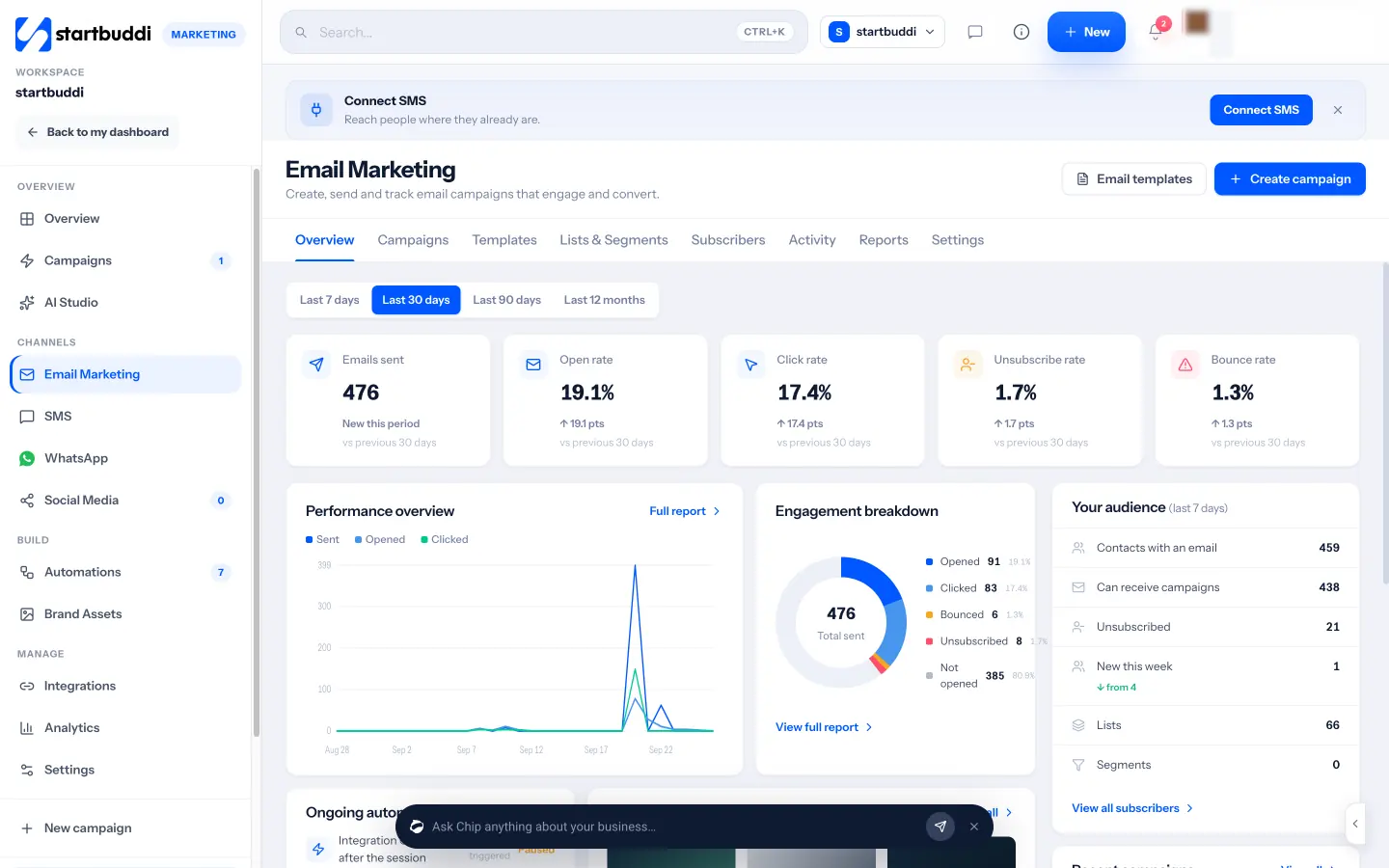
Other features include A/B tests on the subject line, content or sender name, Smart send, which picks the hour your readers open most once there is enough history, and Resend to non-openers with a new subject. Every send automatically adds an unsubscribe link, your business address and a preferences link. You can verify your own sending domain, and replies land in your Customers inbox. Emails also sit alongside SMS, WhatsApp and social in Campaigns.
The Marketing module is available on the Starter plan and above, with a monthly email allowance per plan. See pricing.
Next step: add a signup form to your website or booking page this week, then plan one short, useful email for next month.
Related terms
FAQ
Is email marketing still worth it for a small business?
Yes. It is one of the few channels where you own the audience, and it costs little to run. It works best alongside the channels your customers already use, such as WhatsApp.
How often should I send marketing emails?
Start with once or twice a month. Send more only if you have genuinely useful things to say and your unsubscribe rate stays low.
What is a good open rate?
It varies by industry and by how opens are measured, so compare yourself with your own past results. Clicks, replies and sales are more reliable signs of success.
Can I email people from my phone contacts?
Only if they have agreed to receive marketing emails from you, or a legal exception such as the UK soft opt-in applies. When in doubt, ask them first.
Olabimpe Salami is the email and outreach specialist at startbuddi. Olabimpe writes about the messages that bring customers in and back: email, WhatsApp and SMS campaigns, follow-ups, and turning enquiries into paying clients.
Runs email and outreach at startbuddi