What is WhatsApp marketing?
Also called: WhatsApp business marketing, conversational marketing on WhatsApp, WhatsApp campaigns
WhatsApp marketing is using WhatsApp to attract, sell to and keep customers, through opted-in broadcasts, chat conversations, click-to-WhatsApp ads, chatbots, in-chat forms and order or booking updates.
WhatsApp marketing is using WhatsApp to find, win and keep customers. It covers sending offers and updates to people who opted in, answering questions in chat, sharing order and booking updates, running ads that open a WhatsApp conversation, and using chatbots or forms inside the chat. Done well, it feels less like advertising and more like good customer service in the app people already use every day.
It can be as simple as replying quickly from the WhatsApp Business app, or as organised as a team inbox, approved templates and automations running through the WhatsApp Business API.
Why WhatsApp marketing matters for small businesses
In many markets, including much of Africa, customers already like to ask, order and arrange payment over WhatsApp. They message the number on your flyer, your Instagram bio or your shop sign. If that chat goes unanswered or gets lost among personal messages, the sale goes elsewhere.
WhatsApp marketing turns those chats into a system. Messages are answered faster, useful updates reach the right people, and every conversation is linked to a customer you can follow up with later. Because it is a two-way channel, it builds trust in a way a poster or banner ad can’t.
How WhatsApp marketing works
- Get your number ready. Use the WhatsApp Business app, or connect to the WhatsApp Business API when you need a team inbox, templates at scale and automation.
- Collect opt-ins. Meta’s opt-in rules require people to clearly agree to hear from your business, by name.
- Start conversations. Through a link or QR code, a click-to-WhatsApp ad, your website or your social profiles.
- Send useful messages. Broadcasts of approved templates for offers and updates, plus quick replies inside the 24-hour window after a customer writes.
- Automate the repetitive parts. Welcome messages, FAQs, booking forms and follow-ups.
- Measure. Delivered, read, replied, and ideally which chats became sales.
Example: a catering business in Lagos runs a small Instagram ad that opens a WhatsApp chat. A welcome message greets each person and offers quick replies: “See menu”, “Get a quote”, “Talk to someone”. The quote option opens a short form inside the chat. Answers go into the customer record, the owner sends a price, and a week later a follow-up template checks whether they are ready to book.
Main types of WhatsApp marketing
- Broadcast campaigns: one approved message to many opted-in contacts. See WhatsApp broadcast.
- Conversational selling: answering questions, sending photos and prices, closing the sale in chat.
- Click-to-WhatsApp ads: Facebook and Instagram ads that open a chat. Meta’s pricing page explains that replying within 24 hours opens a 72-hour window in which your messages are free.
- Chatbots: automatic answers to common questions, with a handover to a person.
- In-chat forms: booking, quote or feedback forms that open inside WhatsApp.
- Updates and reminders: order status, booking confirmations and payment reminders using utility templates.
Best practices and common mistakes
- Opt-in first, always. Unwanted messages lead to blocks and reports, which hurt your number’s quality rating and how many people you can message.
- Reply fast. A customer who messaged you is warm. Inside 24 hours you can reply freely.
- Don’t copy SMS habits. Use images, buttons and conversation, not walls of text.
- Pick the right template category. Promotions are marketing. Order and booking updates are utility.
- Keep a human in the loop. Chatbots should hand over when someone asks for a person or the question is unusual.
- Don’t live on one phone. Once several people handle chats, move to a shared inbox so nothing is missed.
Related terms
SMS marketing reaches phones without WhatsApp and suits short, urgent texts. Lead nurturing is keeping interested people warm until they buy, which WhatsApp follow-ups do well.
WhatsApp marketing in startbuddi
In startbuddi, WhatsApp lives in Marketing and runs on your own business number through Meta’s Cloud API. The WhatsApp workspace has tabs for Home, Campaigns, Templates, Chatbot, Flows & forms, Contacts, Ads and Settings. You can send campaigns to opted-in contacts, get templates approved by Meta, build forms that open inside the chat (Book a slot, Get a quote, How did we do?), and track click-to-WhatsApp ads from the first message to the deal.
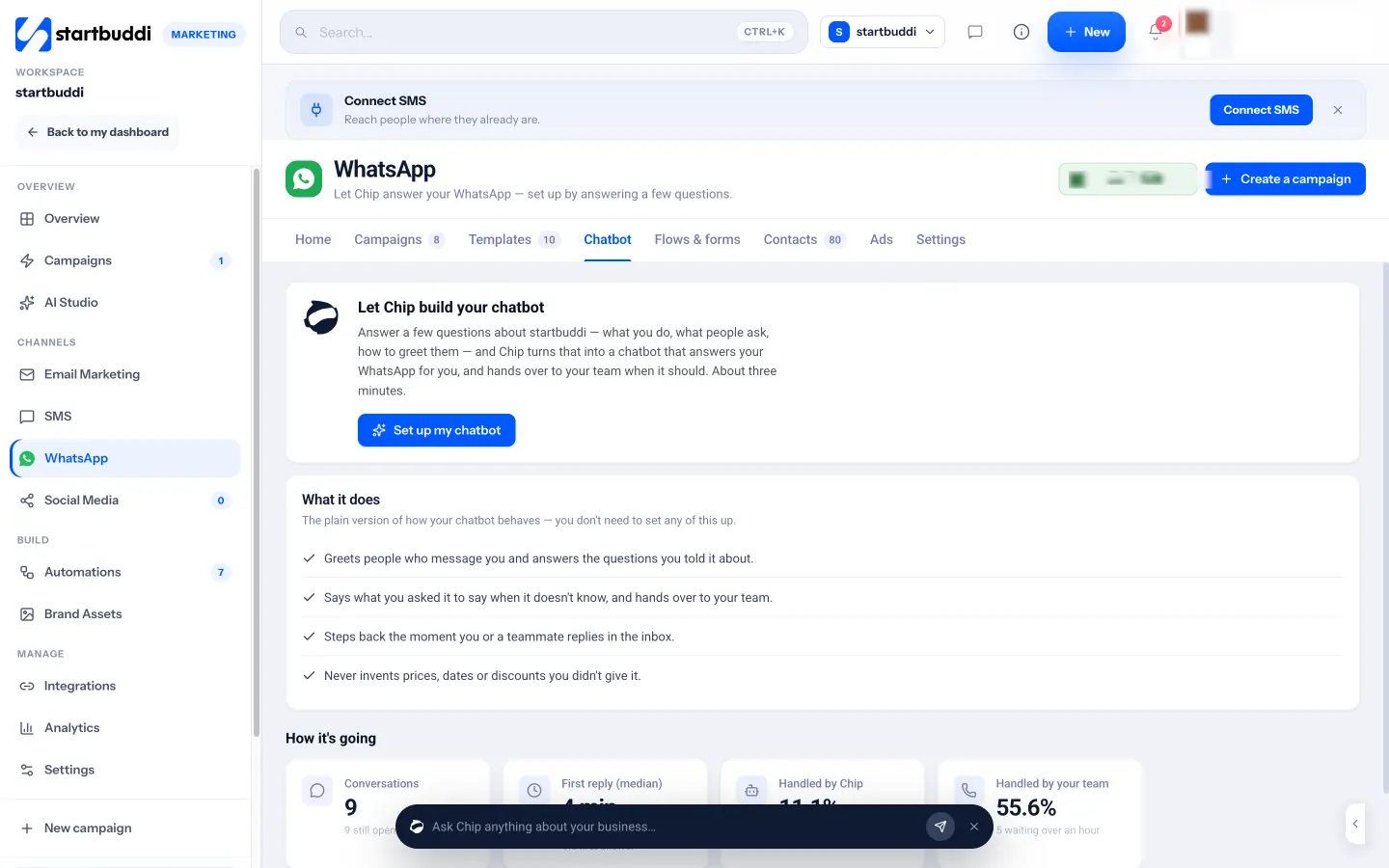
On the Chatbot tab, Chip asks a few questions about your business and builds a chatbot that answers in your tone and hands over to your team when it should. It steps back when you or a teammate replies. You can build it on Starter, and switching it on to answer customers needs the Growth plan. Conversations land in your Customers inbox. WhatsApp is available on Starter and above, and Meta’s message charges apply to your WhatsApp Business account. See the WhatsApp marketing page or our guide to WhatsApp marketing in Nigeria.
Next step
Add a WhatsApp opt-in line to your forms and checkout, and write down the five questions customers ask you most. Those become your first templates and chatbot answers. When you are ready to run it all from one place, compare plans on the pricing page.
Related terms
FAQ
Can I do WhatsApp marketing with the free WhatsApp Business app?
Yes, for small audiences. The app has broadcast lists, quick replies and a catalogue. Once you need a team inbox, larger campaigns or automation, the WhatsApp Business API is the next step.
Is WhatsApp marketing allowed without consent?
No. Meta requires people to opt in to messages from your business, and privacy laws in many countries require consent for marketing too.
How much does WhatsApp marketing cost?
The app is free. Through the API, Meta charges per delivered template message, based on category and country. Replies inside the 24-hour customer service window are free.
Can a chatbot answer my WhatsApp customers?
Yes. In startbuddi, Chip builds a WhatsApp chatbot from a short interview and hands over to a person when needed. Turning it on to answer needs the Growth plan.
Olabimpe Salami is the email and outreach specialist at startbuddi. Olabimpe writes about the messages that bring customers in and back: email, WhatsApp and SMS campaigns, follow-ups, and turning enquiries into paying clients.
Runs email and outreach at startbuddi