What is a buyer persona?
Also called: Customer persona, marketing persona, customer avatar, ideal customer profile (for B2B companies), target customer profile
A buyer persona is a short, research-based profile of a typical ideal customer: who they are, what they need, what worries them and how they decide to buy.
A buyer persona is a short profile of one typical ideal customer, written as if they were a real person. It covers their situation, what they are trying to achieve, what gets in the way, what worries them about buying and where they look for help. Good personas are built from real conversations with customers, not from guesswork.
Instead of writing for “everyone”, you write for “Tunde, who runs a three-person logistics firm and has no time for admin”. Your marketing gets sharper overnight.
Why a buyer persona matters for a small business
Small businesses cannot afford to talk to everyone. A persona helps you spend limited time and money on the people most likely to buy.
- Clearer messages. You use the words your customers use, not industry jargon.
- Better offers. Knowing the real problem helps you package and price your service around it.
- Smarter channels. If your persona lives on WhatsApp and LinkedIn, you can stop forcing TikTok.
- Consistent teams. Anyone who writes a post or answers an enquiry knows who they are talking to.
What to include in a buyer persona
| Part | Questions to answer |
|---|---|
| Snapshot | Role, type of business or household, location, rough budget |
| Goals | What are they trying to achieve in the next 6 to 12 months? |
| Problems | What is getting in the way? What have they already tried? |
| Triggers | What happens that makes them start looking for help? |
| Objections | What makes them hesitate: price, time, trust, past bad experiences? |
| How they decide | Who else is involved? Do they compare three quotes or ask a friend? |
| Where they are | Which platforms, groups, events and publications do they use? |
| Their words | Phrases they actually use to describe the problem |
You do not need a designer or a fancy template. A shared document with these eight headings, filled in from real notes, is enough. Add a photo or a first name only if it helps your team remember the persona as a person.
Leave out details that will not change a decision. Whether your persona likes jazz rarely matters. Whether they need approval from a business partner often does.
How to build a buyer persona: an example
A bookkeeping freelancer in Birmingham interviews six of her best clients for 20 minutes each and reads through her last 30 enquiries. A clear pattern appears:
“Busy Bea”, owns a small beauty salon with two staff. Wants to stop doing the books on Sunday nights. Problem: receipts in a shoebox, a VAT deadline she keeps nearly missing. Trigger: a penalty letter or a stressful quarter end. Objection: “I can’t afford an accountant.” Decides alone, but asks other salon owners for recommendations. Spends time on Instagram and in a local business owners’ WhatsApp group. Says “I just want someone to sort it out”.
From this, the freelancer changes her homepage headline to “Get your Sundays back”, publishes a fixed monthly price, and asks happy clients for referrals in owner groups.
Buyer persona vs ideal customer profile
The two are related but not the same. An ideal customer profile (ICP) describes the kind of company you sell to best: industry, size, location, the tools they use. A buyer persona describes the person you deal with inside it: their goals, worries and habits. B2B businesses often use both. If you sell to consumers, the persona does most of the work.
Common mistakes
- Making it up. A persona invented in a meeting reflects your assumptions, not your customers.
- Too many personas. Start with one or two. Five personas usually means no focus.
- Only demographics. Age and income matter less than goals, problems and triggers.
- Writing it once. Revisit it every year or when your offer changes.
- Forgetting the negative persona. It helps to describe who you do not want, such as clients who always want the cheapest option.
Related terms
Your persona shapes your value proposition and maps onto the customer journey, the steps they take from first hearing of you to buying. Email segmentation lets you send different messages to different personas.
Buyer personas in startbuddi
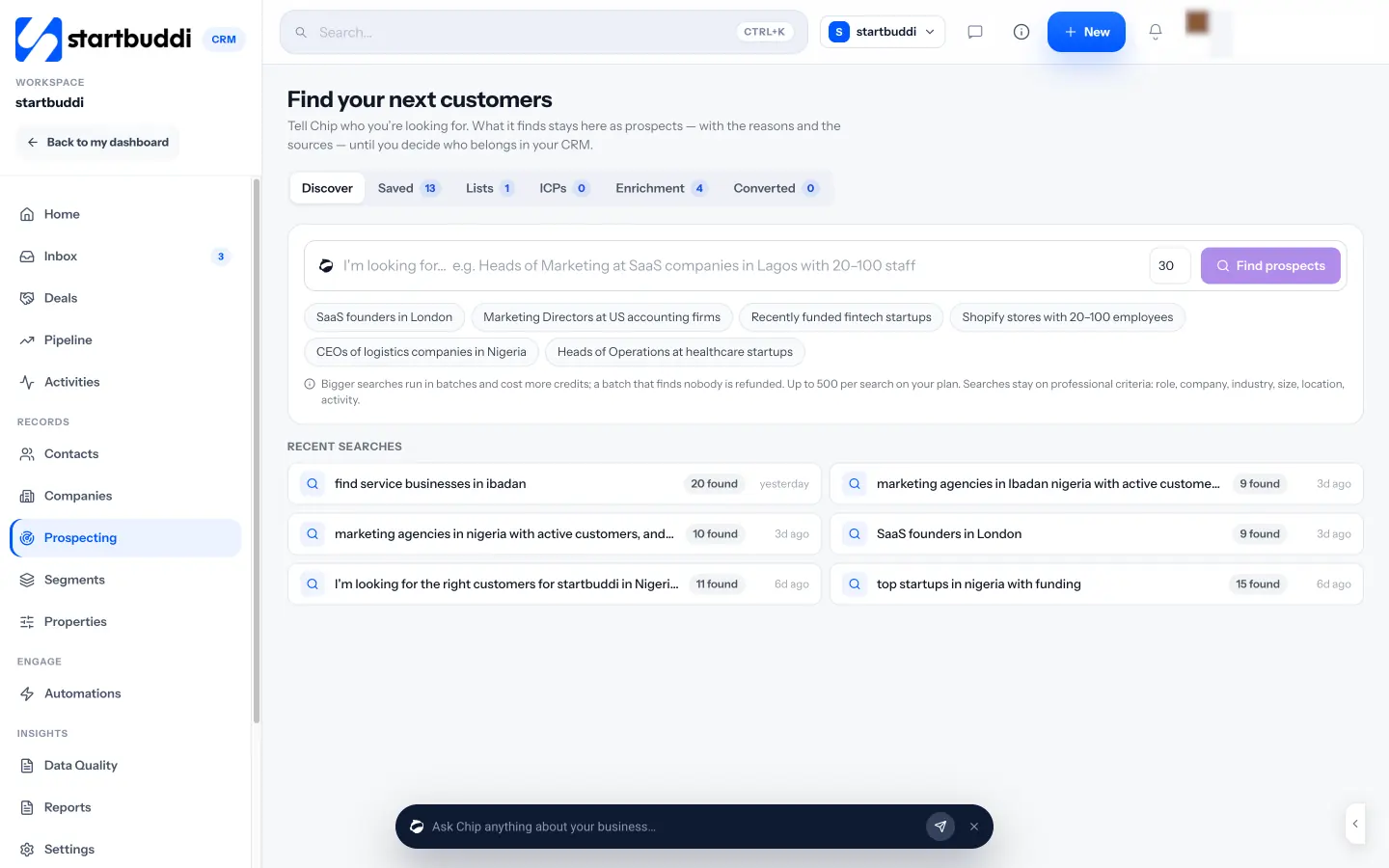
startbuddi does not have a persona document builder, but you can put your personas to work. In Prospecting, you can save ideal customer profiles with roles, industries, countries, cities, company size, the tools they use and funding stage, then ask Chip to find matching companies and people, each with the reasons and sources. “Ask Chip to suggest one” builds an ICP from customers you have already converted.
In Contacts, custom properties and tags let you record which persona each contact fits, and segments keep a self-updating list of them for tailored campaigns. For more on organising customers this way, see our guide on how to organise your customers.
Your next step: book three short calls with your best customers this week and ask what was going on the day they decided to look for help.
Related terms
FAQ
How many buyer personas should a small business have?
Start with one, or two if you clearly serve two different kinds of customer. Add more only when you have real evidence they behave differently.
What is the difference between a buyer persona and a target market?
A target market is the broad group you sell to, such as UK salon owners. A buyer persona is a detailed picture of one typical person in that group.
How do I research a buyer persona?
Talk to your best customers, read your enquiries and reviews, and note the words people use. A handful of real conversations beats any survey you guess at.
Is a buyer persona the same as a customer avatar?
Yes. Customer avatar, customer persona and buyer persona are different names for the same idea.
Tiwalade Joanna Okedara-Kalu is the founder, CEO and CTO of startbuddi, the business system that brings clients, bookings, invoices, projects, marketing and the Chip AI assistant into one place. Tiwalade builds software around how service businesses really work day to day, and writes about client management, getting paid on time and why small businesses outgrow the tools they start with.
Founded startbuddi and leads its product and engineering