Lead: Definition, Examples and How It Works

A lead is a person or business that has shown interest in what you sell and left a way to reach them, such as an email, phone number or WhatsApp chat, but hasn't bought yet. So what is lead in practice? It is the step between a stranger and a customer: someone you can follow up with.
Key takeaways
- A lead needs two things: a sign of interest and contact details. A follower who never messages you isn’t one yet.
- Not every lead is worth the same time. Qualifying them (budget, need, timing) tells you who to call first.
- Speed matters more than polish: a lead who waits two days for a reply may well have booked someone else.
- Marketing messages to leads have rules. In the UK you need consent to email individuals, and in the US every marketing email needs a working opt-out.
Why leads matter for a small business
Most small service businesses don’t have a traffic problem; they have a follow-up problem. Enquiries arrive through Instagram DMs, a website form, a missed call and a WhatsApp forward from a friend, and nobody writes them down in one place. A week later, half are forgotten.
Treating each enquiry as a lead, with a name, a source and a next step, turns a messy inbox into a list you can work through. It also tells you which channels bring buyers, which is the only honest way to decide where to spend on marketing.
How a lead works: from stranger to customer
A lead moves through a few stages. The names vary between businesses, but the idea is the same.
| Stage | What it means | Example |
|---|---|---|
| Visitor or follower | Has seen you, no contact details | Watches your Instagram stories |
| Lead | Showed interest and left a way to reach them | Fills in your quote form |
| Qualified lead | Has the need, budget and timing you serve | Confirms a budget and a start date on a call |
| Opportunity or deal | You’ve sent a price or proposal | Has your quote in their inbox |
| Customer | Has paid | Pays the deposit |
Leads come from two directions. Inbound leads reach out first: a form, a booking request, a chat on your website. Outbound leads are people you find and contact, such as businesses you research and email. Inbound leads often convert better, because they asked.
Qualifying is a quick check, not an interrogation. Frameworks like BANT (budget, authority, need, timing) help. Larger teams split leads into marketing qualified and sales qualified; the MQL vs SQL page explains that split.
What is lead conversion? An example with numbers
Lead conversion is the share of leads who become paying customers. A two-person web design studio in Lagos tracks every enquiry for one month. The figures are illustrative.
- 60 enquiries arrive across WhatsApp, Instagram and the website form.
- 15 are spam, job seekers or people wanting a free logo, so they are not leads. That leaves 45 leads.
- 18 of the 45 have a real project, a budget above ₦400,000 and want to start within two months. These are qualified leads.
- The studio sends 18 quotes and wins 6 projects at an average of ₦550,000.
That is ₦3,300,000 of work. The lead-to-customer rate is 6 ÷ 45 = 13.3%, and the qualified-to-customer rate is 6 ÷ 18 = 33.3%. The useful insight is the second number: one in three qualified leads buys, so getting more qualified leads matters more than getting more enquiries.
A bookkeeper in Toronto might run the same sums with smaller volumes: 12 leads a month, 5 qualified, 2 new monthly clients at CA$400. The arithmetic is identical.
Rules for contacting leads
Having someone’s email doesn’t always mean you can send them marketing. The UK Information Commissioner’s Office says in its electronic mail marketing guidance (checked on 1 October 2026) that you need specific consent to email or text individuals, with a “soft opt-in” exception for existing customers. In the US, the FTC’s CAN-SPAM compliance guide (checked on 1 October 2026) says opt-outs must be honoured “within 10 business days” and the law makes no exception for business-to-business email.
Replying to someone who asked you a question is different from adding them to a newsletter. Answer the enquiry; ask before you market.
Related terms
- Lead magnet: a free resource offered in exchange for contact details.
- Lead nurturing: staying in touch with leads who aren’t ready to buy yet.
- Sales pipeline: the stages a qualified lead moves through until they buy.
For the bigger picture of finding leads, see the guide to lead generation for small business, and for what to say once they arrive, how to follow up with leads.
How startbuddi handles leads
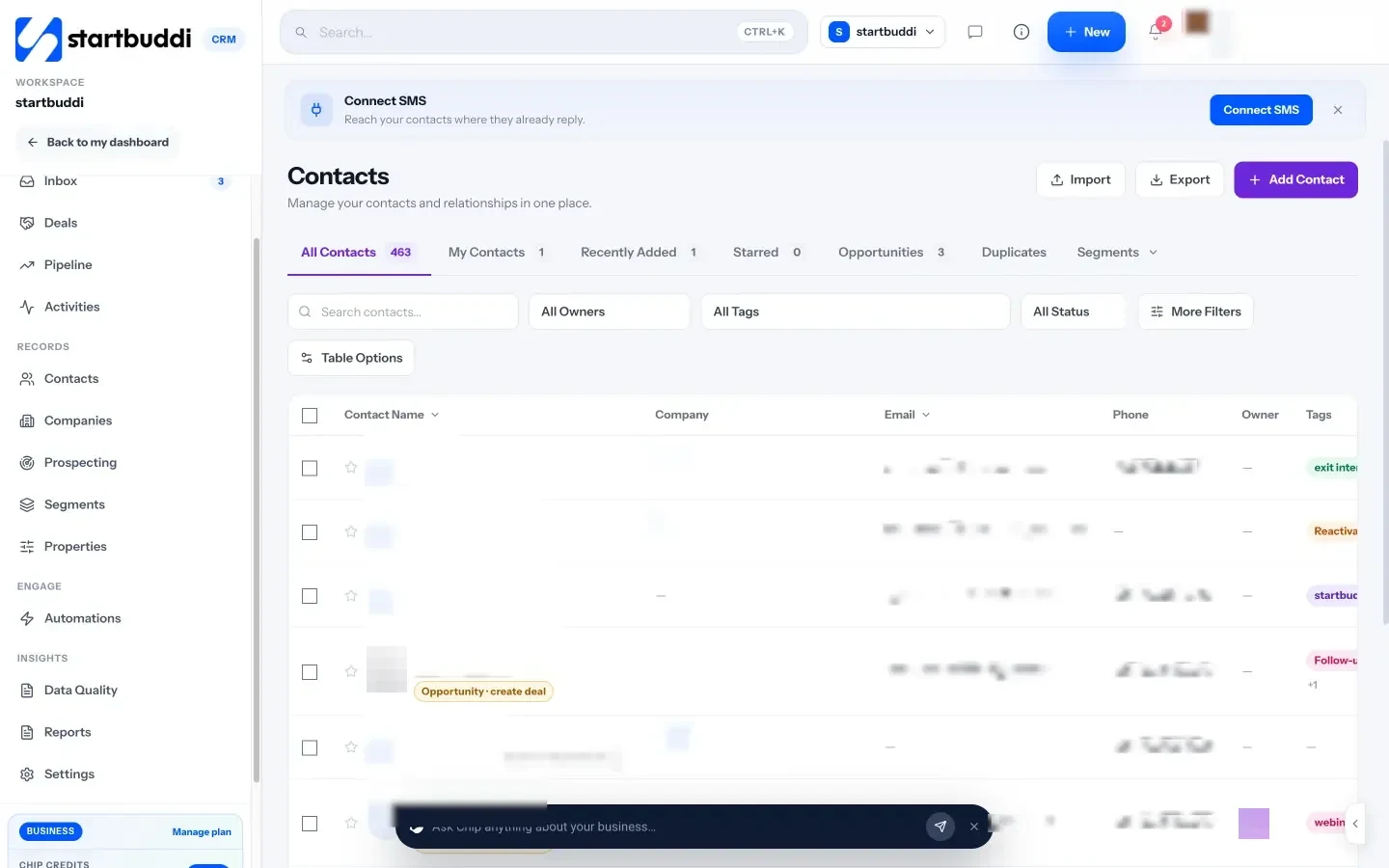
In startbuddi, leads live in Customers as contacts, created by your forms, bookings and website chat, by CSV import, or added by hand.
- Lead status: filter contacts by New, Qualified or Disqualified, or switch to the board view to drag them between lead stages.
- Lead score: each contact gets a 0 to 100 score from activity, spend, recency and open deals. It’s a fixed formula, so you can see why someone scores high.
- Follow-up: reply from the shared Inbox, add a task, or use Nurture with Chip (in beta) to draft a short email sequence from the contact’s history, which you edit before anyone is enrolled.
- Deals: when a lead asks for a price, open a deal and move it through your pipeline.
A free plan is available; see pricing.
Lead is part of Customers in startbuddi.
See CustomersRelated terms
FAQ
What is the difference between a lead and a contact?
A contact is anyone in your records: suppliers, past customers, friends of the business. A lead is a contact who has shown interest in buying and hasn't bought yet. Every lead is a contact, but not every contact is a lead.
What is a sales lead?
A sales lead is a lead that is ready for a sales conversation: they have a need you can meet and have asked about price, availability or next steps. Many teams call this a qualified or sales qualified lead.
Is a social media follower a lead?
Usually not. A follower has shown mild interest but hasn't given you a way to contact them directly or asked about buying. They become a lead when they message you, fill in a form or book a call.
How quickly should I follow up with a new lead?
As fast as you reasonably can, ideally the same day. Service buyers often contact two or three businesses at once, and the first useful reply tends to win. A short acknowledgement with one clear next step beats a long reply sent days later.
Tiwalade Joanna Okedara-Kalu is the founder, CEO and CTO of startbuddi, the business system that brings clients, bookings, invoices, projects, marketing and the Chip AI assistant into one place. Tiwalade builds software around how service businesses really work day to day, and writes about client management, getting paid on time and why small businesses outgrow the tools they start with.
Founded startbuddi and leads its product and engineering