What is a lead magnet?
Also called: Opt-in offer, freebie, gated content, opt-in bribe, signup incentive
A lead magnet is something free and genuinely useful, such as a checklist, template, guide or calculator, that people get in exchange for their email address or phone number.
A lead magnet is a free, useful thing you offer in exchange for someone’s contact details. A wedding photographer offers a “10 questions to ask your venue” checklist. An accountant offers a tax deadline calendar. The visitor gets something they want right now, and you get permission to stay in touch.
It is called a magnet because it pulls in leads: people who have shown interest in the problem you solve, but have not bought yet.
Why a lead magnet matters for a small business
Most people who visit your website or profile are not ready to buy today. Without a reason to leave their details, they disappear and you have no way to reach them again. A lead magnet changes that.
- It grows a list you own. Social platforms can change their rules overnight. An email list is yours.
- It attracts the right people. Someone who downloads “How to price your first bakery orders” is very likely a new baker, which is exactly who a baking business coach wants.
- It starts the relationship with help, not a pitch. If the freebie is good, people trust the paid offer more.
- It gives your follow-up a natural start. Your first email is simply “here is your checklist”.
How a lead magnet works: an example
Adaeze runs an interior design studio in Abuja. She creates a one-page “Small living room layout guide” and builds a page for it with a short form: first name and email.
- She shares the page on Instagram and in her WhatsApp status.
- A visitor fills in the form and is taken to a thank-you page with the download.
- The visitor is added to her contacts, tagged with the guide they asked for.
- Over the next two weeks they get three short emails: a before-and-after project, a common mistake, and an invitation to book a paid consultation.
The guide does the attracting. The follow-up emails do the selling. Neither works well without the other.
Types of lead magnet
| Type | Good for | Example |
|---|---|---|
| Checklist | Almost any business | “Moving house checklist” for a removals firm |
| Template | B2B and freelancers | A client proposal template from a consultant |
| Short guide | Explaining a process | “How to register a food business” from a food safety trainer |
| Calculator or price list | Services with variable prices | A “what will my kitchen cost?” sheet from a builder |
| Email mini-course | Coaches and educators | “5 days to a tidier inbox” |
| Discount or first-order offer | Shops and restaurants | 10% off your first order |
| Free consultation or audit | Higher-priced services | A 20-minute website review |
| Waitlist or early access | Launches | “Be first to know when bookings open” |
What makes a good lead magnet
- Specific. “Marketing tips” is vague. “7 Instagram captions that get salon bookings” is specific.
- Quick to use. A checklist someone uses in five minutes beats a 60-page ebook nobody opens.
- Linked to what you sell. The freebie should solve the first step of a problem your paid service solves fully.
- Delivered instantly. Show it on the thank-you page and send it by email.
- Easy to ask for. A name and email is usually enough. Every extra field lowers your conversion rate.
Common mistakes
- No follow-up. Collecting emails and never writing to them wastes the whole effort. Plan the first three emails before you launch. Our post on growing an email list from zero covers this.
- Attracting the wrong crowd. A generic prize draw brings people who want the prize, not your service.
- Hiding it. Put the offer on your homepage, your link in bio and at the end of your most-read posts.
- Skipping consent. Say clearly that people will get emails from you, and let them opt out in every message. In the UK, the ICO’s email marketing guidance explains the rules; in the US, see the FTC’s CAN-SPAM guide. This is general information, not legal advice.
Related terms
A lead magnet usually lives on a single-goal page made with a landing page builder. What happens after the download is lead nurturing, often through an email drip sequence. The button that asks for the download is your call to action.
Lead magnets in startbuddi
When you create a page in Publish, one of the page types Chip knows is a lead magnet page: “Give away a guide, checklist or template in exchange for an email.” Chip’s page recipes include a free guide with the form at the top and a centred checklist, and the Steps panel can add a Download step after signup. Each page shows its visits, leads and conversion.
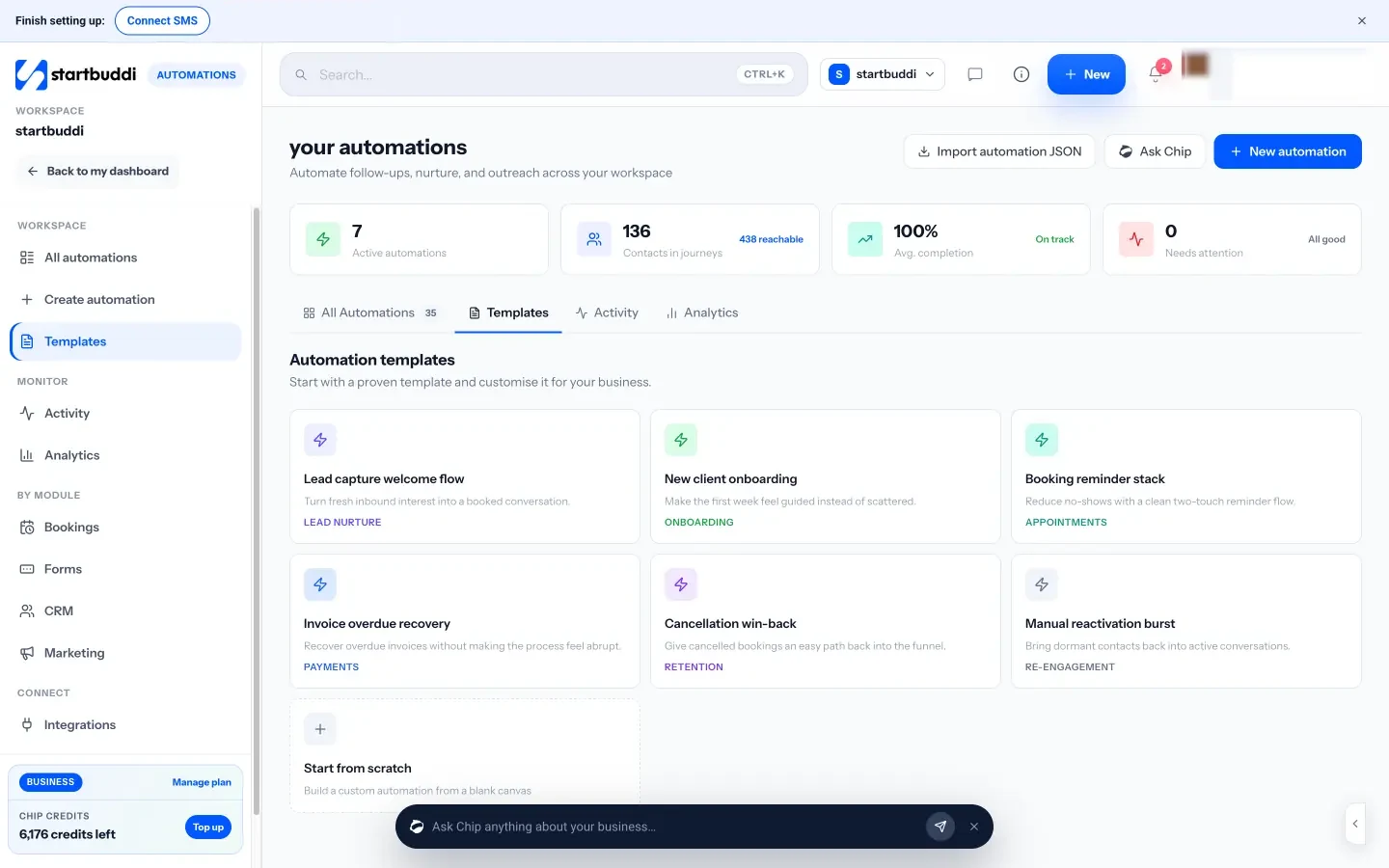
The signup form comes from Forms, where each question can be marked “Counts as marketing consent” and answers land in your contacts. On paid plans, Automations can send the follow-up: the “Lead capture welcome flow” template starts when a form is submitted and aims to turn fresh interest into a booked conversation.
Your next step: write down the one question customers ask you most, and turn the answer into a one-page checklist. That is your first lead magnet.
Related terms
FAQ
What is an example of a lead magnet?
A free checklist, template, short guide, price calculator, discount code or free consultation offered in exchange for an email address or phone number.
Do lead magnets still work?
Yes, when they are specific and useful. Generic ebooks work less well than short tools that solve one clear problem quickly.
How long should a lead magnet be?
As short as it can be while still being useful. Many of the best are one or two pages, or something people can use in under ten minutes.
Can I ask for a phone number instead of an email?
Yes, if you plan to follow up by SMS or WhatsApp. Make it clear how you will contact them, and follow the consent rules where you and your customers are.
Tiwalade Joanna Okedara-Kalu is the founder, CEO and CTO of startbuddi, the business system that brings clients, bookings, invoices, projects, marketing and the Chip AI assistant into one place. Tiwalade builds software around how service businesses really work day to day, and writes about client management, getting paid on time and why small businesses outgrow the tools they start with.
Founded startbuddi and leads its product and engineering