Service Agreement Template for Freelancers and Agencies (Free to Copy)
A free service agreement template for freelancers and agencies: 14 copy-ready clauses, a filled example and how to send it for e-signature with the client.


A service agreement template is a ready-made contract you fill in before starting paid work for a client. It names both parties, sets out the scope of services, the fees and payment dates, how changes and revisions work, who owns the finished work, confidentiality, liability and how either side can end it. Both sides sign it before work starts.
Key takeaways
- The template below has 14 clauses plus two schedules: one for the scope and one for the fees.
- Most disputes come from a vague scope, so spend most of your time on Schedule A.
- Tie ownership of the work to full payment, and make the deposit non-refundable once work starts.
- Have a lawyer in your country check the template once before you rely on it.
The service agreement template (copy and paste)
Copy everything in this section into a document and replace each item in square brackets. Most disputes start with a vague scope or unclear payment dates, so both live in schedules you rewrite for every client. For a clause-by-clause explanation, read our guide to writing a client service agreement.
SERVICE AGREEMENT
This agreement is made on [date] between [Your business name], of [address] (“the Provider”), and [Client name or company], of [address] (“the Client”).
1. Services. The Provider will deliver the services described in Schedule A (“the Services”). Anything not listed in Schedule A is outside this agreement and will be quoted separately.
2. Term. This agreement starts on [start date] and continues until the Services are complete, or for [number] months for ongoing work, unless ended earlier under clause 12.
3. Fees. The Client will pay the fees set out in Schedule B. Prices exclude [VAT / sales tax], which will be added where it applies.
4. Payment. The Provider will invoice as set out in Schedule B. Invoices are due within [14] days of the invoice date. The deposit is non-refundable once work has started. If an invoice is unpaid [7] days after its due date, the Provider may pause work until it is paid, and the timeline moves by the length of the pause.
5. Changes. Either party may ask for a change to the Services in writing. The Provider will confirm the effect on fees and timeline in writing, and the change only starts once the Client approves it.
6. Revisions. The fees include [two] rounds of revisions per deliverable. Further revisions are charged at [rate per hour or per round].
7. Client responsibilities. The Client will provide content, feedback, approvals and access the Provider reasonably needs, within [5] working days of a request. Delays caused by late input move the timeline accordingly.
8. Approval. A deliverable is approved when the Client approves it in writing, or [5] working days after delivery if the Client has not raised any issues.
9. Ownership. When the Client has paid all fees in full, ownership of the final deliverables passes to the Client. The Provider keeps ownership of its own tools, templates, methods and any materials it created before this agreement. The Provider may show the work in its portfolio unless the Client objects in writing.
10. Confidentiality. Each party will keep the other’s confidential information private and use it only for this agreement. This continues for [two] years after the agreement ends.
11. Liability. The Provider’s total liability under this agreement is limited to the fees paid by the Client in the [12] months before the claim. Neither party is liable for indirect losses, such as lost profits.
12. Ending the agreement. Either party may end this agreement with [14] days’ written notice. The Client will pay for all work done up to the end date, plus any costs the Provider has committed to and cannot cancel. Either party may end it immediately if the other seriously breaches it and does not fix the breach within [7] days of written notice.
13. Independent provider. The Provider is an independent business, not an employee of the Client, and is responsible for its own taxes.
14. General. This agreement is the whole agreement between the parties and replaces earlier discussions. Changes must be in writing and agreed by both. It is governed by the laws of [country or state], and the parties will first try to settle any dispute by talking in good faith.
Signed for the Provider: [name], [title], [date] Signed for the Client: [name], [title], [date]
Schedule A: Scope of services
- Deliverables: [list each deliverable, with format and quantity]
- Not included: [list what is excluded, for example printing, stock photos, hosting]
- Timeline: [key dates or milestones]
- Main contacts: [names and email addresses on each side]
Schedule B: Fees and payment
- Total fee or monthly fee: [amount and currency]
- Deposit: [amount or percentage], due on signing
- Further payments: [amounts and the milestone or date each is due]
- Expenses: [which expenses are billed, and whether they need approval first]
- How to pay: [bank details or payment link]
How to fill in the service agreement template
- Check who is signing. Use the client’s registered name and make sure the signer can commit the business.
- Write the scope first. List every deliverable in Schedule A with quantities, then list the exclusions. A short statement of work can sit in Schedule A for bigger projects.
- Set the money. Fill in Schedule B: total, deposit, milestones and due dates. Make the payment terms in clause 4 match your invoices.
- Choose your numbers. Set revision rounds, notice period and the liability cap you’ll actually enforce.
- Pick the governing law. Usually the country or state where your business is based.
- Get it signed before any work starts.
Filled example: a brand identity project in Lagos
These numbers are illustrative. A two-person design studio in Lekki agrees a brand identity project with a restaurant group.
| Schedule item | What the studio wrote |
|---|---|
| Deliverables | Logo (primary and secondary), colour palette, two fonts, a 12-page brand guide (PDF), social media templates (5) |
| Not included | Printing, signage, website design, photography |
| Total fee | ₦1,200,000 |
| Deposit | 50%, so ₦600,000 on signing |
| Second payment | 30%, so ₦360,000 when concepts are approved |
| Final payment | 20%, so ₦240,000 before final files are released |
The three payments add up to ₦1,200,000. Because clause 9 ties ownership to full payment, the final files go out once the last ₦240,000 arrives.
For a freelance copywriter in London on £1,500 a month, Schedule B becomes “invoiced on the 1st, due in 14 days”. If a UK business client pays late, GOV.UK says statutory interest is 8% plus the Bank of England base rate for business to business payments (checked on 1 October 2026).
Freelancer or agency: what to change
- Freelancers usually prefer a project fee with a deposit. For one defined project, our freelance agreement template adds a kill fee.
- Agencies should name the roles in Schedule A, allow subcontractors and say who on the client side approves work.
- Monthly retainers need hours or deliverables per month; see the agency retainer agreement template. Advisers billing by milestone may prefer the consulting agreement template.
Mistakes to avoid
- Starting work before it is signed. An unsigned agreement is a weak position once something goes wrong.
- A scope that only says “website” or “social media management”. Name the pages, posts or hours, and list exclusions.
- Payment terms that don’t match the invoice. If the agreement says 14 days, the invoice should too.
- Copying a template from another country without checking it. Contract rules vary.
Is an e-signed service agreement valid?
Usually, yes, for an ordinary business contract. In England and Wales, the Law Commission confirmed in 2019 that electronic signatures can be used to execute documents (checked on 1 October 2026). Nigeria’s Evidence Act 2011 (section 93) and the US ESIGN Act also recognise electronic signatures. Some documents, such as wills, still need traditional signatures.
How to send this service agreement in startbuddi
Paste the template into any word processor, or use startbuddi Documents to get it signed and filed against the client.
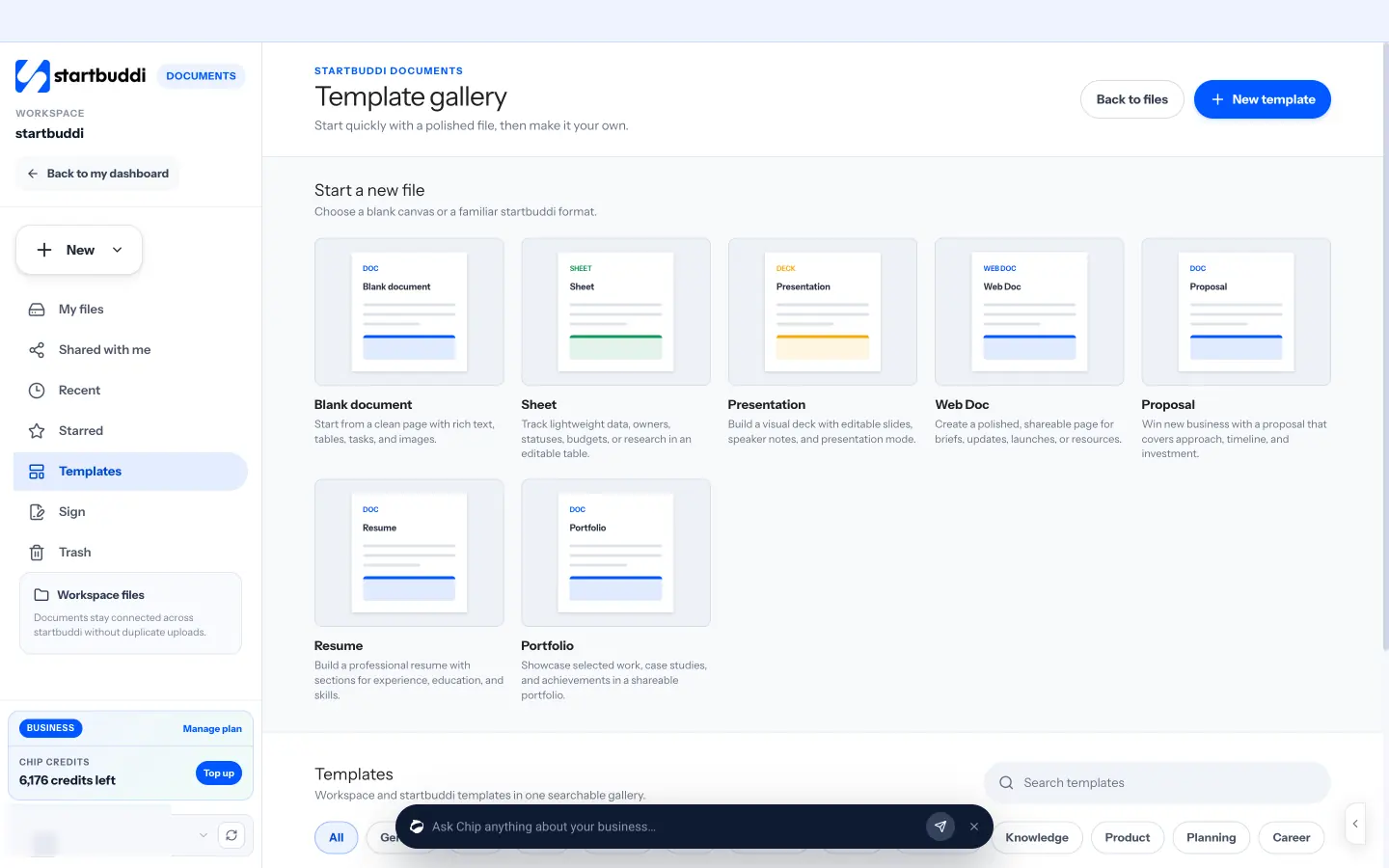
- In Documents, click New, then From a template, and pick Service Agreement from the template gallery. Or start a blank document and paste the text above.
- Edit the wording. Use Variables for details like the client name and fee, so you can’t send the document while one is still empty.
- Use Links to connect it to the client’s contact record and the project.
- Open Signers, add yourself and the client, then use Fields to place signature and date fields.
- Send it for signature. Track it under Sign and send a reminder to pending signers if the client goes quiet.
The built-in templates are a starting point, not legal advice, too. See the Documents features, how startbuddi works for agencies, or our guide to running client projects once the agreement is signed.
Get your next agreement signed
Copy the template, fill in the two schedules and send it before you start. Start free with startbuddi to send service agreements for e-signature and keep each one linked to the client and project. A free plan is available.
Frequently asked questions
What should be included in a service agreement?
A service agreement should include the parties, the scope of services with exclusions, fees and payment terms, how changes and revisions are handled, client responsibilities, ownership of the work, confidentiality, a liability limit and how to end the agreement. A schedule for scope and one for fees keep the main clauses reusable.
Is a service agreement the same as a contract?
Yes, a signed service agreement is a contract. "Service agreement" just describes what the contract is for: one business providing services to another. It is legally binding once both sides agree to it, which is usually shown by signing.
What is the difference between a service agreement and a statement of work?
A service agreement sets the legal terms of the relationship: payment, ownership, liability and ending it. A statement of work describes one specific project: deliverables, timeline and price. Many agencies sign one service agreement and then add a new statement of work for each project.
Do I need a lawyer to use a service agreement template?
You don't need a lawyer to use one, but it is worth paying for a single review of your template in your country. After that, you mostly change the schedules, which don't need legal input. Get advice for unusually large, risky or international contracts.
Omolola Akiyode is the operations and project manager at startbuddi, leading cross-functional projects and the content that helps founders get set up. Omolola writes about projects, websites and getting found online, and turns complex ideas into clear, practical steps.
Runs operations and projects at startbuddi