What is a statement of work (SOW)?
Also called: SOW, scope of work, project agreement, work order
A statement of work (SOW) is a document that sets out exactly what will be delivered on a project: the scope, deliverables, timeline, price, responsibilities and how the work will be accepted.
A statement of work (SOW) is a document that spells out exactly what you will do for a client on a project: the work included, the deliverables, the timeline, the price and payment schedule, who is responsible for what, and how the finished work will be accepted. It turns a friendly conversation (“we’ll redo your website”) into a clear, shared agreement that both sides can point back to.
An SOW often sits alongside a main contract. The contract covers the general legal terms of working together; the statement of work covers the specifics of one project. Small businesses often combine the two in a single signed document.
Why a statement of work matters for a small business
Most client disputes are not about bad work. They are about different expectations: the client thought three rounds of changes were included, you thought one. A statement of work settles those questions before the project starts.
- It stops scope creep. When a new request arrives, you can check it against the SOW and quote for it separately.
- It protects your cash flow. Payment dates and milestones are agreed in writing.
- It makes you look professional. Clients trust a supplier who is clear about what they will get.
- It helps you plan. Writing the SOW forces you to think through the tasks, timings and risks.
How a statement of work works: an example
Hannah, a marketing consultant in Toronto, agrees to set up email marketing for a local gym. Her one-page statement of work says:
- Objective: launch a welcome email sequence and a monthly newsletter.
- Scope: choose and set up the email tool, import up to 2,000 existing members, write and design a three-email welcome sequence and one newsletter template.
- Out of scope: writing monthly newsletters after the first, paid advertising, website changes.
- Deliverables: working sequence, newsletter template, a 30-minute training call and a one-page how-to guide.
- Timeline: four weeks from the kick-off call, with copy approval at the end of week two.
- Price and payment: CA$3,000 (about US$2,200): 50% on signing, 50% on launch.
- Client responsibilities: provide the member list and logo by day three, and give feedback within two working days.
- Acceptance: the work is complete when the sequence sends correctly to a test list and the gym signs off.
In week three the gym asks for a promotional email for a new class. Hannah points to “out of scope”, sends a small separate quote, and both are happy.
Key parts of a statement of work
| Section | What it answers |
|---|---|
| Purpose or objective | Why is this project happening? |
| Scope of work | What exactly will be done, and what will not? |
| Deliverables | What will the client receive? |
| Timeline and milestones | When will each part be ready? |
| Responsibilities | What must each side provide, and by when? |
| Price and payment terms | How much, when and how is it paid? |
| Acceptance criteria | How do we both agree it is done? |
| Changes | How are extra requests quoted and approved? |
Our free statement of work template includes all of these sections ready to fill in.
Common mistakes
- Vague deliverables. “A new website” could mean three pages or thirty. Count things: pages, revisions, hours, emails.
- No acceptance criteria. Without them, a project can drag on with endless small tweaks.
- Forgetting the client’s side. If they supply content late, your deadline should move. Say so.
- No change process. Agree how extra work is requested and priced before it is needed.
- Copying a template without editing it. A template is a starting point. Clauses about hosting, travel or licences that do not apply to your project only confuse the client, and missing ones you actually need can cost you later.
- Writing it after work has started. Once you are halfway through, it is much harder to say no to extras. Agree the SOW before the first hour of work.
- Not getting it signed. An unsigned document is much weaker when there is a disagreement.
Related terms
A deliverable is each thing you hand over, and the SOW lists them all. A project milestone is a checkpoint in the timeline, often tied to a payment. A proposal comes before the SOW: it pitches the idea, while the SOW fixes the details once the client says yes. Our business proposal template helps with that first step.
Statements of work in startbuddi
You can write and send a statement of work in Documents. Start from a blank document or one of the templates, such as the Project Proposal, Letter of Engagement, Service Agreement or Consulting Agreement, and adapt it. Variables let you mark the details that change per client, and the document keeps a version each time you save.
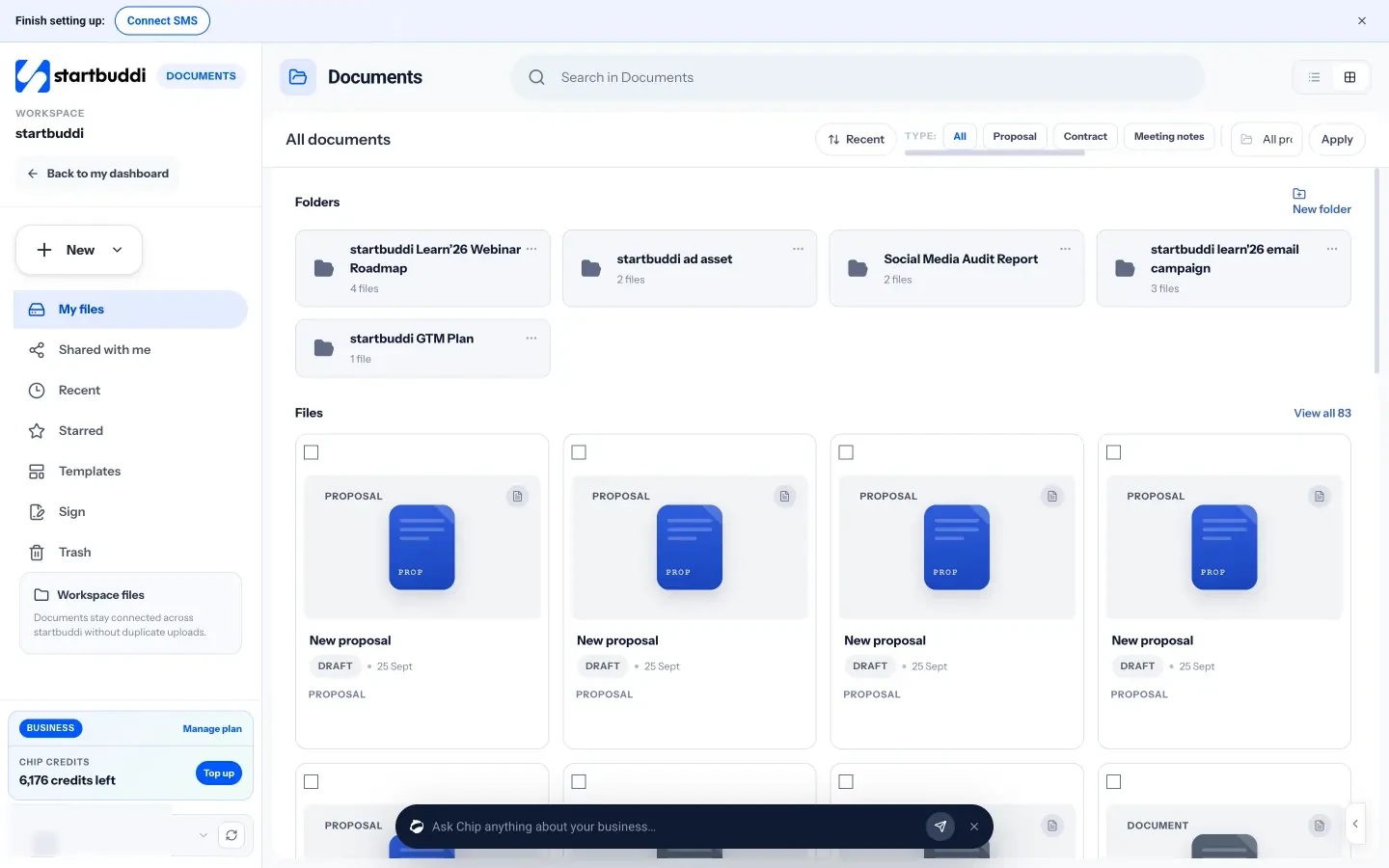
When it is ready, send it for e-signature with startbuddi eSign: add signers, place signature and date fields, and track who has signed. Link the document to the client and the project so the agreed scope is one click away when a new request comes in. Your next step: take your next project, write the “out of scope” list first, and build the rest of the SOW around it.
Related terms
FAQ
What is the difference between a statement of work and a contract?
A contract sets the general legal terms of working together. A statement of work describes one specific project. Many small businesses combine both in one signed document.
Is a statement of work the same as a scope of work?
People often use them interchangeably. Strictly, the scope of work is one section of the SOW, describing the tasks included.
Who writes the statement of work?
Usually the supplier writes it, because they know what the work involves, and the client reviews and signs it.
Is a statement of work legally binding?
A signed SOW can form part of a binding agreement, but the rules depend on your country and the wording. Get legal advice for high-value work.
Tiwalade Joanna Okedara-Kalu is the founder, CEO and CTO of startbuddi, the business system that brings clients, bookings, invoices, projects, marketing and the Chip AI assistant into one place. Tiwalade builds software around how service businesses really work day to day, and writes about client management, getting paid on time and why small businesses outgrow the tools they start with.
Founded startbuddi and leads its product and engineering