
If you are a startup founder trying to grow, you already know the pain. You are following up with leads manually, sending reminders one by one, chasing customers…
- 1. StartBuddi — The Best Marketing Automation Tool Built for Startups
- 2. HubSpot — Best for Automation Tools That Integrate with CRM and CMS Systems
- 3. Mailchimp — Best Marketing Automation for Small Businesses Getting Started
- 4. ActiveCampaign — Best Marketing Automation for SaaS Lead Nurturing Workflows
- 5. Brevo — Best Budget Tool for Drip Email Campaigns and SMS
If you are a startup founder trying to grow, you already know the pain. You are following up with leads manually, sending reminders one by one, chasing customers who never replied, and hoping nothing falls through the cracks.
Finding the best marketing automation tools for your budget is not a luxury at this stage. It is the only way to scale without burning out. That’s why comparing the top marketing automation tools early, especially affordable marketing automation options for a lean team, can save you months of wasted effort and scattered data.
This guide cuts through all of that. It walks you through 5 solid tools for marketing automation for small businesses and startups, what each one does, what it costs and how to use them without losing your mind. By the end, you will know exactly which tools support lead nurturing workflows, drip email campaigns, customer journey automation and CRM automation so you can stop doing everything manually and start growing.
1. StartBuddi — The Best Marketing Automation Tool Built for Startups
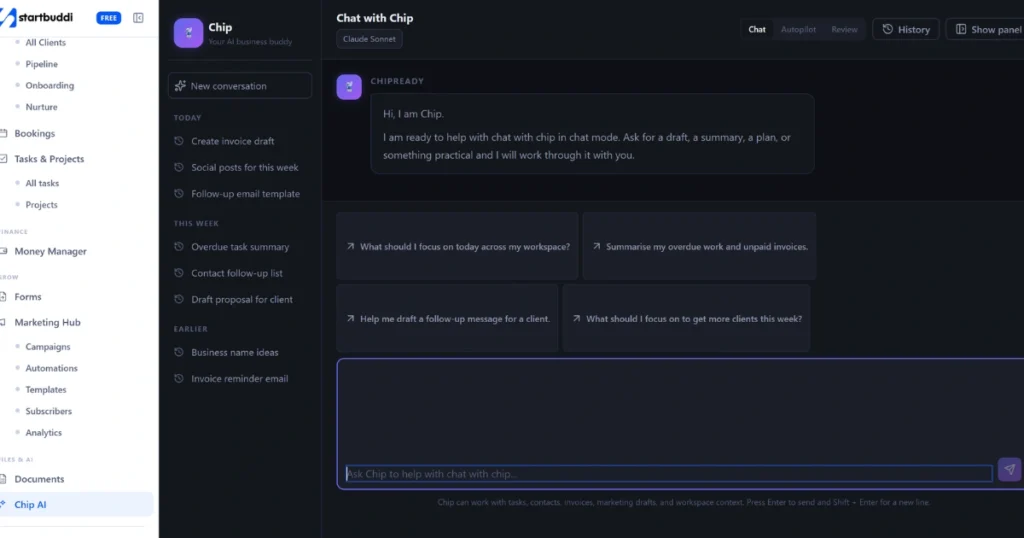
If you are tired of stitching together five different tools just to follow up with a lead, startbuddi was made for you.
Most automation platforms are built for enterprise teams with dedicated ops staff. StartBuddi is built for founders who need everything working on day one.
It combines your website, CRM, forms, bookings, funnels, payments, notifications, and automations into one system. Instead of paying separately for a form builder, an email tool, a booking platform, and a CRM, you get all of it in one place.
If you have been struggling to follow up with leads,organize your contacts, or track where each lead stands, startbuddi handles all three automatically inside one dashboard.
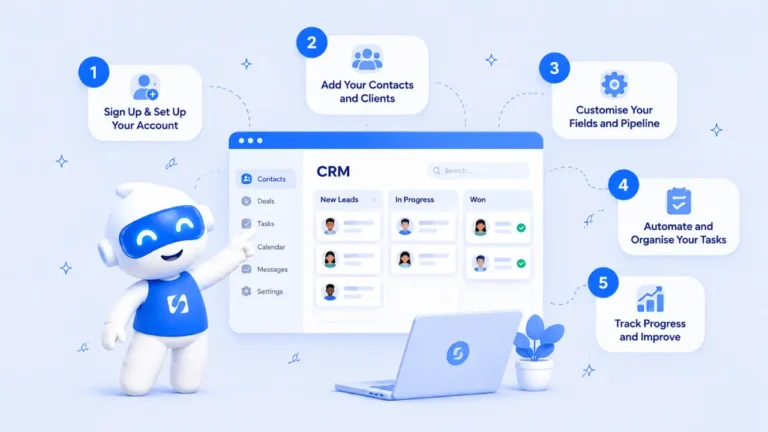
Here is what a realistic workflow looks like:
- A lead visits your website and fills out a form
- Their contact is automatically added to your CRM
- A confirmation email goes out instantly
- A booking is scheduled and a reminder is sent automatically
- You close the sale without touching anything manually
For marketing automation for SaaS companies and service businesses, this kind of customer journey automation is the difference between a lead going cold and a lead converting. Paid plans start at less than $10 per month. You can create a free account, pick the modules you need, and be running automations the same week.
2. HubSpot — Best for Automation Tools That Integrate with CRM and CMS Systems
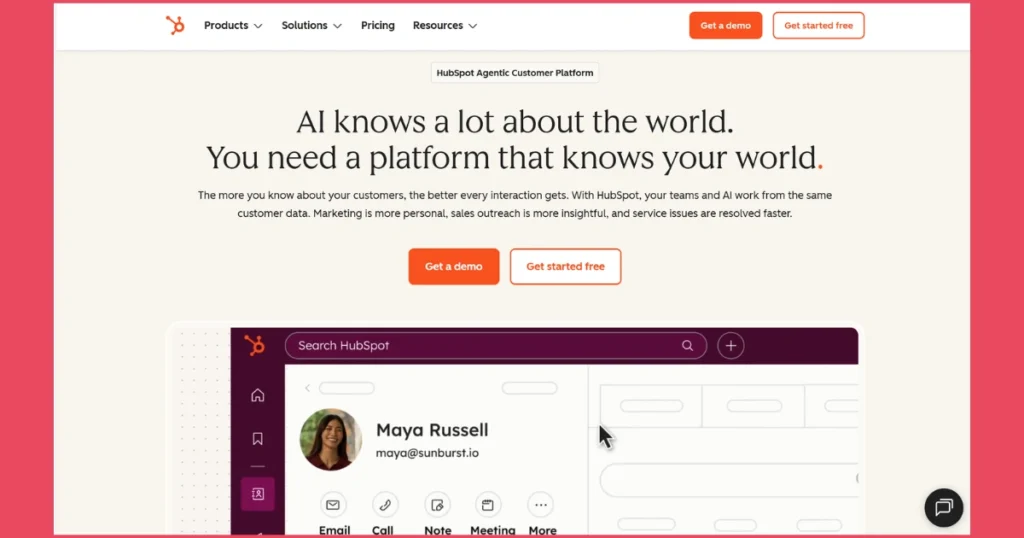
When it comes to automation tools that integrate with CRM and CMS systems, HubSpot is the most recognized name in the space and for good reason.
HubSpot’s free CRM tracks every interaction with a contact, logs emails, and gives you a clear view of where each lead sits in your pipeline. The marketing automation layer on top handles lead scoring, behavior-triggered emails, and multi-step nurturing sequences.
Where HubSpot earns, its reputation is integrations. It connects with most CMS platforms, payment tools, and third-party apps.
Best for: Growth-stage startups with an existing tech stack who need deep CRM automation and reporting.
3. Mailchimp — Best Marketing Automation for Small Businesses Getting Started
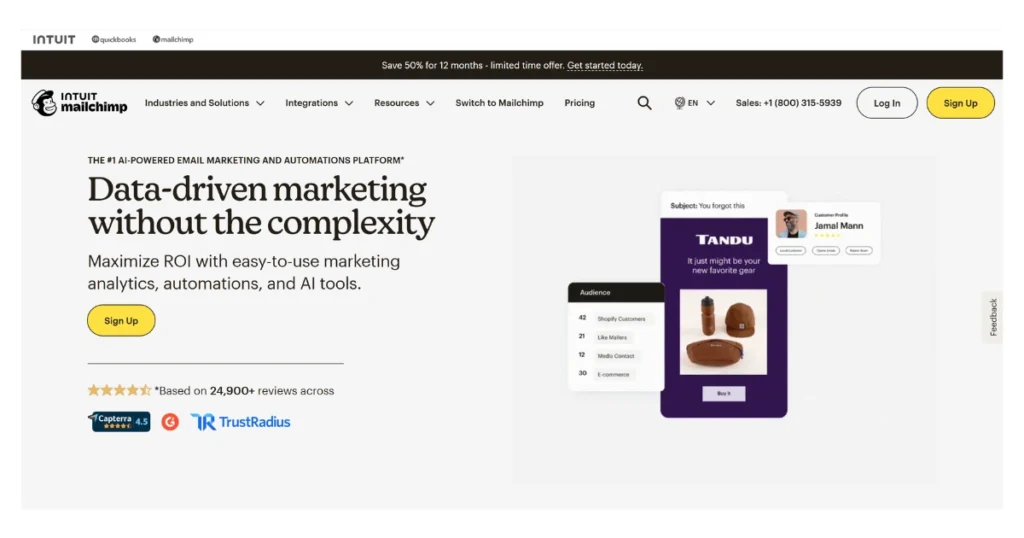
Marketing automation for small businesses does not need to be complicated, and Mailchimp proves that.
Mailchimp’s drag-and-drop email builder, simple audience segmentation, and pre-built automation templates make it approachable for non-technical teams. You can set up a welcome sequence, or a basic drip email campaign in under an hour. The customer journey automation feature lets you map out touchpoints visually — a lead subscribes, gets a welcome email, waits three days, receives a case study, then gets a soft pitch.
Where Mailchimp falls short is depth. As your list grows, you will start hitting its limits. Segmentation rules are basic and the CRM functionality is thin. It also gets expensive as your contact count scales. That said, for a startup just beginning to build marketing automation tools for lead nurturing, Mailchimp is a solid, low-risk starting point.
Best for: Early-stage startups sending their first email sequences and building initial drip campaigns.
4. ActiveCampaign — Best Marketing Automation for SaaS Lead Nurturing Workflows
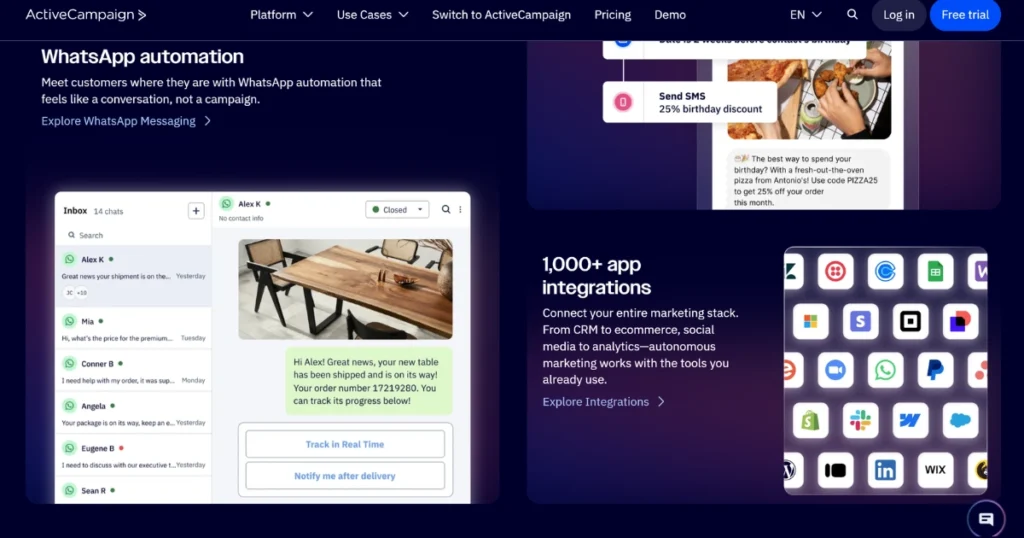
If lead nurturing workflows are your primary challenge, ActiveCampaign is built exactly for that.
ActiveCampaign combines email marketing, CRM automation, and sales automation into one connected system. What separates it is conditional logic. You can build sequences that branch based on what a contact does. If they click the pricing page, they get one sequence. If they download a guide but don’t book a call, they get another. This kind of conversion funnel automation turns cold leads into paying customers.
ActiveCampaign delivers that for teams running longer sales cycles. It also integrates with over 900 apps, making it one of the stronger automation tools that integrate with CRM and CMS systems at the mid-market level.
Pricing starts around $15 per month but scales with contact count.
Best for: SaaS startups and service businesses running complex, multi-branch lead nurturing workflows.
5. Brevo — Best Budget Tool for Drip Email Campaigns and SMS
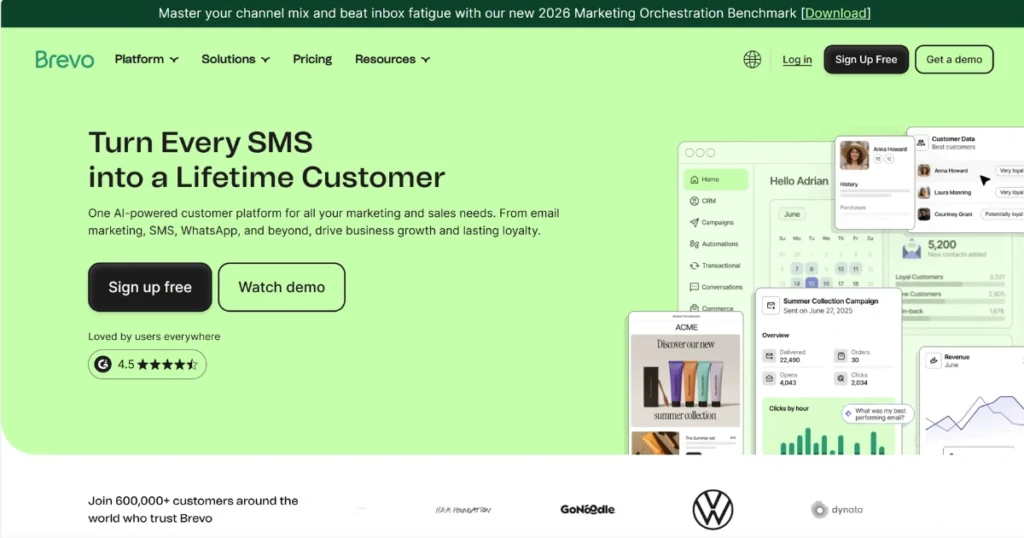
Brevo earns its place on this list because it is genuinely affordable and surprisingly capable.
For startups that need marketing automation for small businesses across both email and SMS, Brevo covers both channels from one dashboard. You can run drip email campaigns, trigger SMS notifications based on behavior, and manage a basic CRM without a large monthly bill.
The free plan includes 300 emails per day with unlimited contacts, which is rare. Most platforms charge by contact count. Brevo charges by sends, which makes it more budget-friendly during early growth when your list is large but your send frequency is low. That multi-channel approach matters for marketing automation for SaaS companies trying to reach users across different touchpoints.
Best for: Budget-conscious startups that need both email and SMS automation without paying per contact.
Why Most Startups Are Using Too Many Tools
Most startups end up with a CRM in one tab, an email tool in another, a form builder somewhere else, a booking link from a third-party app, and payment collection through yet another platform. Each tool has its own login, pricing, and learning curve.
Run this from one workspace
Clients, projects, money and marketing — connected, not scattered across five apps.
See how it worksCustomer data ends up scattered. Follow-ups get missed. Founders spend time managing tools instead of closing deals. This is exactly why platforms like startbuddi exist. Instead of paying for five separate products, startbuddi puts your bookings, CRM, forms, automations, funnels, and payments in one place. It works together by design, and it costs a fraction of what most stacks do.
Frequently Asked Questions
What tools do you use for automations?
The most commonly used tools include startbuddi, HubSpot, ActiveCampaign, Mailchimp, and Brevo. The right choice depends on your budget, tech stack, and whether you need email-only automation or a full CRM and workflow system
How does marketing automation software improve customer engagement?
Marketing automation software improves customer engagement by responding to a lead’s behavior in real time. Instead of a generic monthly newsletter, a contact who books a call gets a confirmation and reminder instantly, while one who downloads a guide gets a nurture sequence. This is one of the clearest ways digital marketing automation tools keep leads warm without any added manual work.
How do modern platforms integrate with marketing automation tools?
Modern CRMs, payment tools, and booking systems increasingly integrate with marketing automation tools through native connections or APIs, so data moves between systems without manual exports. Among affordable marketing automation platforms, startbuddi bundles the CRM, forms, and automation layer together, which is one reason it ranks among the best marketing automation tools for founders who want fewer moving parts.
Conclusion
The best marketing automation tools do one thing well: they take the repetitive, manual work off your plate so you can focus on growth. Whether you need simple drip email campaigns through Mailchimp, deep lead nurturing workflows in ActiveCampaign, or an all-in-one system, the important thing is that you start.
You can create a free account, choose the modules you need, and run your first automation the same week. When your bookings, CRM, forms, and customer communications are all in one place, running your business stops feeling like chaos and starts feeling like a system. Platforms like startbuddi make that possible for less than $10 per month.
Put this into practice
Everything in this guide is built into startbuddi — free to start.
Start freeWritten by
Chinonye Umezinne
SEO Copywriter| Email growth Specialist| I help businesses increase revenue with strategic SEO content & high-converting email funnels.
Keep reading
Related playbooks

Stop reading. Start doing.
Free to start. No card needed. Your full workspace is ready in five minutes.