
How to start a plumbing business: licences, pricing, jobs and customers
A four-part guide to starting a plumbing business: licences and insurance, pricing and quoting jobs, job management from call to invoice, and winning local customers.


This guide explains how to start a plumbing business: getting the qualifications, licences and insurance your area requires, setting up the business, pricing and quoting jobs so they make money, running jobs from the first call to the paid invoice, and winning the steady local work that keeps a van busy. It is for qualified plumbers leaving employment to go it alone, apprentices planning ahead, and trades businesses adding plumbing, in any country.
The short answer: make sure you are licensed or registered for the work you plan to do, set up as a business with proper insurance, work out your hourly rate from your real costs, give clear written quotes, run every job from a simple system rather than your memory, and look after your local reputation, because most plumbing work comes from people nearby searching when something leaks. Each chapter starts with the business side, with worked numbers, templates and mistakes to avoid, then shows how to do it in startbuddi. We are honest about fit: startbuddi handles bookings, quotes, invoices, customer messages and job tasks, but it is not field service dispatch software with GPS tracking or route planning, and chapter 3 explains when you might want that too.
Licences, insurance and setting up
- United States
- United Kingdom
- Australia
- Nigeria, Kenya, South Africa and elsewhere
- Is it a good time to start?
- Set up the business
- Van, tools and stock
- A start-up budget you can adapt
- Working alone or with a partner
- Choose what work you want
- Open trade accounts with suppliers
- Health and safety for your own business
- Name, brand and your van
- Your first 90 days
- Keep records from day one
- Decide your service area
- Common start-up mistakes
Most new plumbing businesses are started by skilled plumbers. The trade is rarely the problem. What catches people out is everything around it: the licence for the type of work, the insurance, the paperwork, the van, and the cash to get through the first slow months. This chapter covers what to put in place before your first job as your own boss.
How to start a plumbing business: qualifications, licences and registration
Plumbing is regulated in most places, because bad work can flood homes, contaminate drinking water or, with gas, kill people. The rules differ a lot by country and even by state or city, so treat the examples below as a map of what to look for, then check with the authority where you will work. This is general information, not legal advice.
United States
The US Bureau of Labor Statistics says most states and some localities require plumbers to be licensed, and that licensing usually requires two to five years of experience and passing an exam before working independently (BLS, plumbers, pipefitters and steamfitters). Many states have separate licence levels, such as apprentice, journeyman and master, and running a contracting business may need a contractor or master licence on top of your trade licence. Check your state licensing board and your city or county, which may add permits for specific jobs.
United Kingdom
General plumbing in the UK does not have a single national licence, but some work is tightly controlled. Anyone working on gas appliances and installations must be on the Gas Safe Register, a legal requirement under the Gas Safety (Installation and Use) Regulations 1998 (Gas Safe Register). For water work, approved plumber schemes such as WaterSafe list plumbers with recognised qualifications and training in the Water Fittings Regulations, who can issue certificates of compliance. Many customers check these registers before booking, so being listed is also good marketing.
Australia
Plumbing is licensed by each state and territory. In New South Wales, for example, you need a licence or certificate to do any plumbing, draining or gasfitting work, whatever the cost and whether it is residential, commercial or industrial (NSW Fair Trading, plumbing licences). Other states have their own regulators and rules.
Nigeria, Kenya, South Africa and elsewhere
Requirements vary between countries, states and municipalities, and may involve trade testing, registration with a professional or construction body, or approvals for specific work. Ask your local authority, water utility and any trade association what applies, and keep copies of every certificate you hold.
Is it a good time to start?
Plumbing is steady work: pipes leak and boilers fail in every economy. In the US, the BLS projects employment of plumbers, pipefitters and steamfitters to grow 7 per cent from 2025 to 2035, faster than the average for all occupations, with about 42,000 openings a year, and reports a median annual wage of $63,800 in May 2025 (BLS). Running your own business can pay more than employment, but it also brings costs, risk and unpaid admin time, which the rest of this guide helps you plan for.
Set up the business
- Choose a structure. Most plumbers start as a sole trader or sole proprietor. Some form a limited company or LLC to separate business and personal liability or for tax reasons. Talk to an accountant before you decide.
- Register for tax. For example, set up as a sole trader with HMRC in the UK, use the IRS self-employed hub in the US, or register with the South African Revenue Service or the Nigeria Revenue Service. Find out whether you must register for VAT or sales tax.
- Open a business bank account so income, materials and fuel are easy to separate.
- Get insurance. Public or general liability insurance is essential: if a joint fails and floods a ceiling, you want cover. Consider tools and van insurance, professional indemnity for design work, and employer's liability or workers' compensation once you hire.
- Write your terms and conditions. Payment terms, call-out charges, cancellations, guarantees on workmanship, and who supplies parts. Have them checked by someone who knows local consumer law.
Van, tools and stock
Your van is your workshop, store and advert. You may already own most of your tools, but budget for the gaps: a drain camera, pressure testing kit, a press-fit tool, a leak detector or specialist boiler tools, depending on the work you target. Keep a small stock of common fittings, valves, washers and pipe on the van so you can finish most jobs in one visit. Customers value a plumber who fixes it today over one who has to come back tomorrow.
A start-up budget you can adapt
These figures are an illustrative example for a sole plumber in the US who already owns hand tools. Replace them with your own quotes; the same lines apply in the UK, Nigeria or Australia with local prices.
| Start-up cost (example) | Amount (USD) |
|---|---|
| Used van, racking and signage | $22,000 |
| Specialist tools and test equipment | $4,000 |
| Van stock of fittings and parts | $1,500 |
| Licences, registrations and exam fees | $800 |
| Insurance for the first year | $2,400 |
| Phone, laptop and software | $1,200 |
| Website, logo and first marketing | $1,000 |
| Working capital for three months | $9,000 |
| Total | $41,900 |
The working capital line matters most. Customers who pay late, a quiet month in summer or a van repair can drain a new business quickly. Plan to cover at least three months of personal and business costs before the phone rings reliably.
Working alone or with a partner
Some plumbers start with a partner, often another trade such as an electrician or a heating engineer, so they can offer more complete jobs. A partnership can share costs and fill gaps in skills, but agree the essentials in writing first: who owns the business, how money is split, who does the admin and what happens if one of you wants to leave. Others stay solo and subcontract specialist work when needed. Either works; what matters is that the arrangement is clear before money starts flowing.
Choose what work you want
Decide early what kind of plumbing business you are building, because it shapes your equipment, marketing and prices:
- Emergency and repair work. Leaks, blockages, burst pipes. Fast response, higher rates, unpredictable hours.
- Heating and hot water. Boilers, water heaters, servicing contracts. Often needs gas registration or specific licences.
- Bathrooms and kitchens. Planned installations, larger jobs, more coordination with other trades.
- New builds and commercial. Contracts with builders and businesses. Bigger jobs, longer payment terms.
- Maintenance for landlords and property managers. Regular, repeat work with a few key clients.
Many plumbers mix two or three. A combination of reactive repairs, which bring new customers, and servicing or maintenance, which brings repeat income, is a common and stable mix.
Open trade accounts with suppliers
Good suppliers save you time and money. Open trade accounts with one or two plumbing merchants near where you work, and ask about trade discounts, credit terms, delivery to site and how returns work. A merchant who knows you will often hold parts, suggest alternatives when something is out of stock and help with tricky fittings. Keep an eye on your credit terms: buying on 30-day credit while your customers pay on completion can help cash flow, but only if you pay the merchant on time.
Health and safety for your own business
As your own boss, you are responsible for working safely. Depending on where you work, that may include written risk assessments for common jobs, awareness training for materials such as asbestos in older buildings, safe working at height, safe use of blowtorches and hot works, and first aid. Keep your training up to date and record it. If you employ people, you usually have extra legal duties. Your insurer and local safety regulator can tell you what is expected.
Name, brand and your van
Your business name will be on your van, invoices and online profiles for years, so choose one that is easy to say, spell and search for. Many plumbers use their own name or their area, such as "Okafor Plumbing" or "Eastside Plumbing and Heating". Check that the name is not already used by a local business and that a web address is free. A clean van with a clear name, phone number, services and registration logos is one of the best adverts you will ever buy.
Your first 90 days
A simple plan keeps the first three months focused:
- Weeks 1 to 2: licences and registrations confirmed, insurance in place, bank account open, terms written, pricing set.
- Weeks 3 to 4: Google Business Profile, a simple web page, booking link and van signage live. Tell everyone you know.
- Month 2: contact ten letting agents, builders or local businesses; ask every customer for a review.
- Month 3: review your numbers: enquiries, jobs, average job value, hours and money owed. Adjust prices and marketing.
Keep records from day one
Tax authorities in most countries expect you to keep records of income and expenses, usually for several years. Photograph every receipt, record every payment in and out, and keep copies of invoices, quotes and job sheets. Separate business and personal spending completely. It sounds dull, but tidy records make your tax return quicker, help you claim every allowable expense and make it much easier to get a loan or vehicle finance later.
Decide your service area
Draw your service area deliberately. A tight area means less driving, more jobs per day and faster emergency response. A wide area brings more enquiries but more unpaid travel. Many plumbers pick a core area where they take any job and an outer area where they only take larger or well-paid work, with a travel charge. Write it down, use it on your website and Google profile, and stick to it when the phone rings.
Common start-up mistakes
- Starting without the right licence or registration for the work being advertised.
- Skimping on liability insurance to save money.
- No written terms, so disputes over call-out fees and extras become arguments.
- Not keeping receipts for tools, van and materials from day one.
- No cash buffer for the first quiet months.
Set up your plumbing business in startbuddi
In startbuddi, a plumbing business keeps customers, bookings, quotes, jobs and invoices in one place. Start by setting up what you sell.
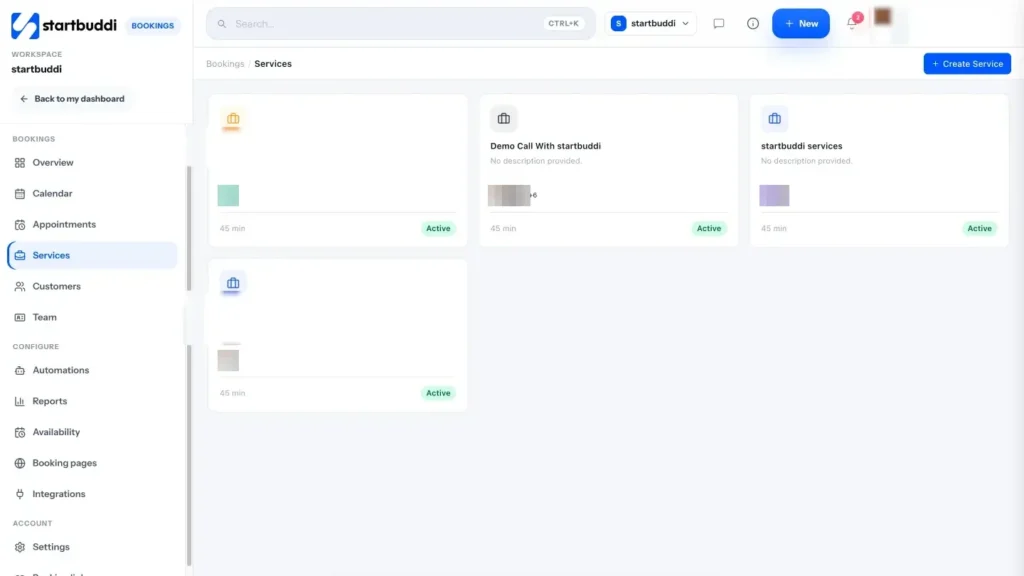
List your services. In Bookings, go to Services and create the jobs customers can book online, such as "Boiler service", "Leak investigation" or "Free estimate visit". Each service has a name, a duration and a colour, and in the full editor a price and currency. You can require payment or a deposit to book, and add booking questions such as "What is the problem?", "Is water leaking now?" and "Postcode or area". Name, email, date and time are always collected. The booking software for plumbers page shows how other trades use it.
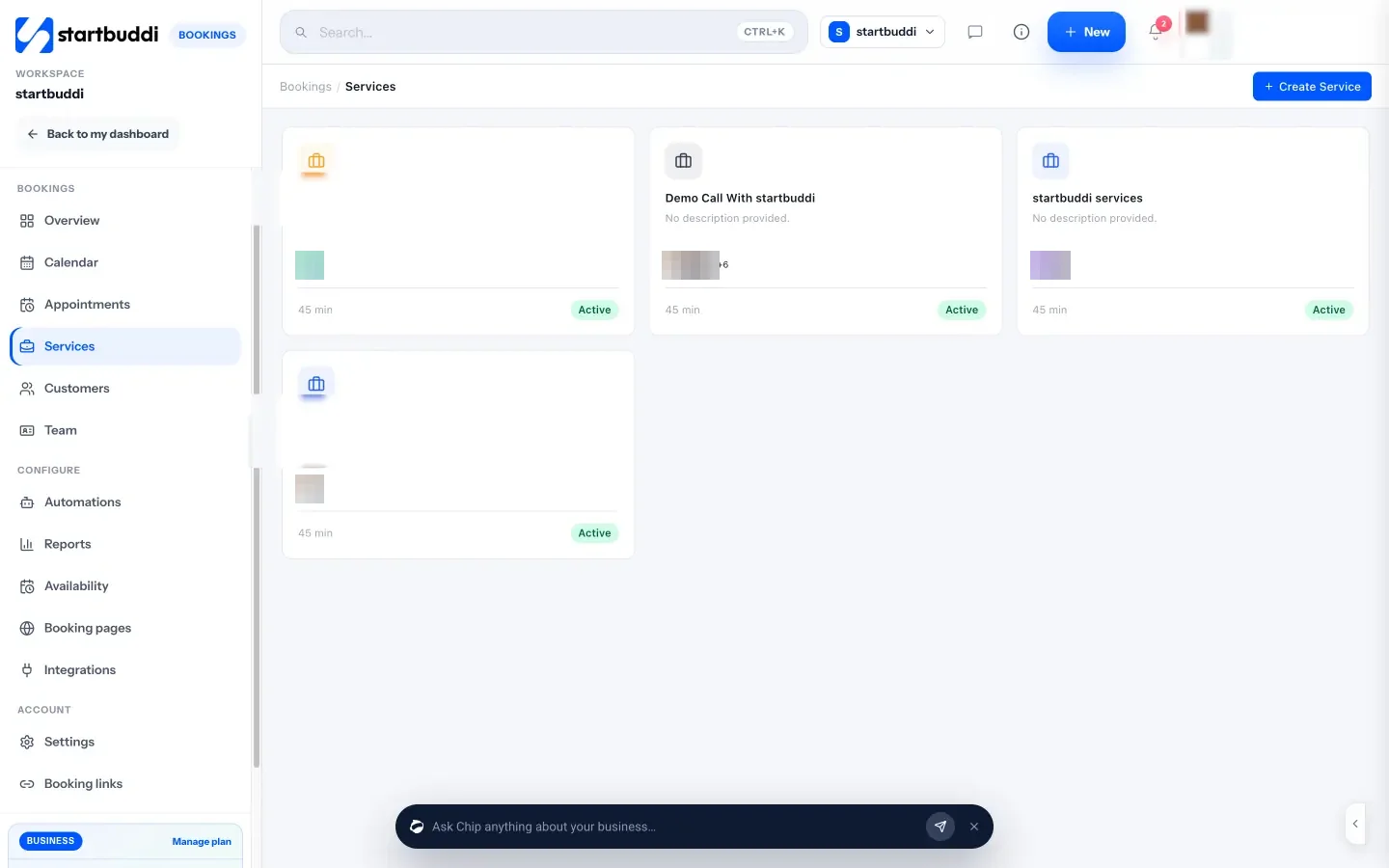
Ask Chip to set it up with you. Chip, the assistant built into startbuddi, can create a booking service from a plain description, such as "a 60-minute boiler service for $130, weekdays 8am to 5pm". It shows you a preview first and only creates the service when you say yes.
Keep your paperwork together. Store your licences, gas or water registrations, insurance certificates and terms and conditions in Documents, so you can send them to a customer or letting agent in seconds.
Record start-up costs. Add the van, tools and stock to Expenses in Money Manager with receipts attached. Expenses are included on the Free plan.
Price and quote plumbing jobs
- A worked example
- Hourly, fixed price or both?
- Materials and markup
- Call-out charges, emergencies and minimums
- Quotes versus estimates
- What to put on every quote
- Deposits and getting paid
- Build a price list for common jobs
- Stage payments on larger jobs
- Handling price objections
- Guarantees and callbacks
- Getting paid on the day
- Review your prices regularly
- Pricing mistakes to avoid
- Write quotes quickly
Pricing is where many new plumbing businesses struggle. They price like an employee, forget the unpaid hours and the costs of running a van, then wonder why a busy diary leaves so little in the bank. This chapter shows you how to work out your hourly rate, choose between hourly and fixed prices, handle materials and call-out charges, and write quotes that customers trust.
Pricing plumbing jobs: start with your real hourly cost
Your rate must cover three things: your own wage, the costs of running the business, and a profit that pays for growth and bad months. The trap is dividing by all the hours you work. In reality, only some of your hours are billable. The rest go on travel, quoting, buying parts, admin, callbacks and marketing.
A worked example
| Item | Amount (USD a year) |
|---|---|
| Wage you want to pay yourself | $70,000 |
| Van: finance, fuel, insurance, maintenance | $12,000 |
| Insurance, licences, registrations and training | $3,500 |
| Tools, consumables and replacements | $3,000 |
| Phone, software, accountant, marketing | $5,500 |
| Profit and contingency (10%) | $9,400 |
| Total the business must earn from labour | $103,400 |
Now the hours. You work 46 weeks a year after holidays and 45 hours a week, but perhaps 28 of those are billable on site. That is 46 × 28 = 1,288 billable hours. $103,400 ÷ 1,288 = about $80 per billable hour. That is your minimum labour rate, before any markup on materials.
The method is the same everywhere. A plumber in Manchester might need £55 to £65 an hour, one in Lagos ₦15,000 to ₦20,000 for a typical job's labour, depending on costs and the market. The hourly rate calculator runs this sum with your own numbers.
Hourly, fixed price or both?
| Method | Best for | Advantages | Risks |
|---|---|---|---|
| Hourly (time and materials) | Investigations, unknown faults, blockages | You are paid for the time it really takes | Customers fear an open-ended bill |
| Fixed price per job | Common, predictable jobs: tap replacement, toilet fitting, water heater swap | Customers like certainty; efficient plumbers earn more | You absorb overruns if you misjudge |
| Quoted project price | Bathrooms, re-pipes, installations | Clear agreement for large jobs | Needs careful scope and a change process |
| Call-out plus hourly | Emergency work | Covers travel and short jobs fairly | Must be explained before you set off |
Many plumbers use a mix: a price list of fixed-price common jobs, an hourly rate with a minimum charge for investigations and repairs, and written quotes for bigger work. A fixed price menu also makes your business easier to buy from, because customers can see roughly what they will pay before they call.
Materials and markup
You buy parts, carry them, choose the right ones and guarantee the work. It is normal to add a markup to materials to cover the time spent sourcing them, van stock that sits unused, trips to the merchant and returns. Be consistent, and itemise parts on the invoice so customers can see what they paid for. Where customers supply their own fittings, say clearly that you will fit them but cannot guarantee parts you did not supply.
Call-out charges, emergencies and minimums
Emergency work at night, at weekends and on public holidays costs you more: lost sleep, family time and higher risk. Charge for it. A common structure is a higher call-out fee that includes the first hour, then a higher hourly rate. Always tell the customer the charges on the phone before you go, and confirm by text or message. That single habit prevents most disputes about emergency bills.
Set a minimum charge for small jobs, such as one hour of labour, because travel, parking and set-up take time even for a two-minute fix.
Quotes versus estimates
The words matter. Citizens Advice in the UK describes a quote as a promise to do work at an agreed price, while an estimate is the trader's best guess at the cost, where the final bill can differ but must stay reasonable (Citizens Advice). Other countries treat the terms similarly in practice. Use a fixed quote when you can see the whole job, and an estimate, with a clear explanation of what could change it, when you cannot see behind walls or under floors.
What to put on every quote
- Your business name, contact details and registration numbers.
- The customer's name and the job address.
- A clear description of the work, and what is not included.
- Labour and materials, itemised or as a fixed total, and any tax.
- Whether it is a fixed quote or an estimate.
- How long the price is valid.
- Payment terms: deposit, stage payments and when the balance is due.
- How changes and extra work will be agreed and priced.
- Your guarantee on workmanship.
The free quote and estimate template gives you a layout to start from.
Deposits and getting paid
For small repairs, take payment on completion, before you leave. For larger jobs, ask for a deposit that at least covers materials, with stage payments for projects that run over several days. Offer easy ways to pay: card, bank transfer and a payment link. Chasing a customer for weeks after a job wipes out much of its profit.
Build a price list for common jobs
Customers like to know roughly what a job will cost before they call. A short price list of common jobs, with "from" prices, sets expectations and saves time on the phone. Build each price from your labour rate, the typical time the job takes you, travel and standard parts. An example, using the $80 labour rate from above and illustrative parts costs:
| Job | Typical time | Price (from) |
|---|---|---|
| Replace a tap (customer-supplied) | 1 hour | $95 |
| Fix a running toilet (standard parts) | 1 hour | $120 |
| Clear a blocked sink or basin | 1 hour | $110 |
| Replace a water heater (like for like) | 4 to 5 hours | Quote after visit |
| Annual boiler or water heater service | 1 hour | $130 |
Keep the list short and review it every few months. Always say that final prices depend on what you find on site.
Stage payments on larger jobs
For a bathroom installation quoted at $8,000, a common structure is 25% on booking to secure the date and order materials ($2,000), 50% when first fix is complete ($4,000) and 25% on completion ($2,000). You are never owed more than one stage, and the customer can see progress before each payment. Put the stages in the quote and on each invoice.
Handling price objections
Some customers will say you are too expensive. Stay calm and explain what is included: licensed and insured work, quality parts, a guarantee, a clean site and a proper invoice. If the budget is genuinely tight, offer options rather than cutting your rate, such as a simpler fitting or doing the essential repair now and the rest later. Losing a few price shoppers is normal and healthy. If nobody ever questions your price, you are probably too cheap.
Guarantees and callbacks
Offer a clear guarantee on your workmanship, such as 12 months, and say what it covers and what it does not, such as parts supplied by the customer or damage from misuse. Callbacks cost you time and fuel, so price a small allowance for them into your rates and aim to get jobs right the first time. When a callback is your fault, go back quickly and fix it without argument; it is one of the best ways to earn loyalty.
Getting paid on the day
The easiest invoice to collect is the one paid before you leave. Make it normal: tell customers when you book that payment is due on completion, and how they can pay. Carry a card reader or send a pay link by message as you pack up. For landlords and businesses who pay on account, agree terms in writing, send the invoice the same day and follow up on the due date. A plumbing business with most jobs paid on the day has far fewer cash flow headaches.
Review your prices regularly
Parts, fuel, insurance and your own time all get more expensive. Review your rates at least once a year, and sooner if costs jump or you are fully booked weeks ahead. Small, regular increases are easier for customers to accept than a large jump after years of the same price. Let regular customers and landlords know in advance, with a short explanation. Keep an eye on quote acceptance: if almost every quote is accepted, you may be leaving money on the table.
Pricing mistakes to avoid
- Setting your rate by copying the cheapest competitor.
- Forgetting travel, parking and the trip to the merchant.
- Giving prices over the phone for jobs you have not seen.
- Doing "while you're here" extras without agreeing a price first.
- Waiting to invoice until the end of the month.
Write quotes quickly
Speed wins work. Customers comparing plumbers often choose the first clear, professional quote they receive. Aim to send quotes within a day of the visit, ideally the same evening. Keep standard descriptions and line items for your common jobs, so you only adjust quantities and details rather than writing from scratch. Follow up two or three days later with a short message asking whether they have questions. Many quotes are won on the follow-up, not the first send.
When a customer asks for a discount, consider what you can offer that costs you little: a free annual check when they book a service plan, or a reduced call-out fee on their next visit. That rewards loyalty without cutting your core rate.
Quote and invoice plumbing jobs in startbuddi
In startbuddi the estimate, the job and the invoice stay connected, so you type each detail once.
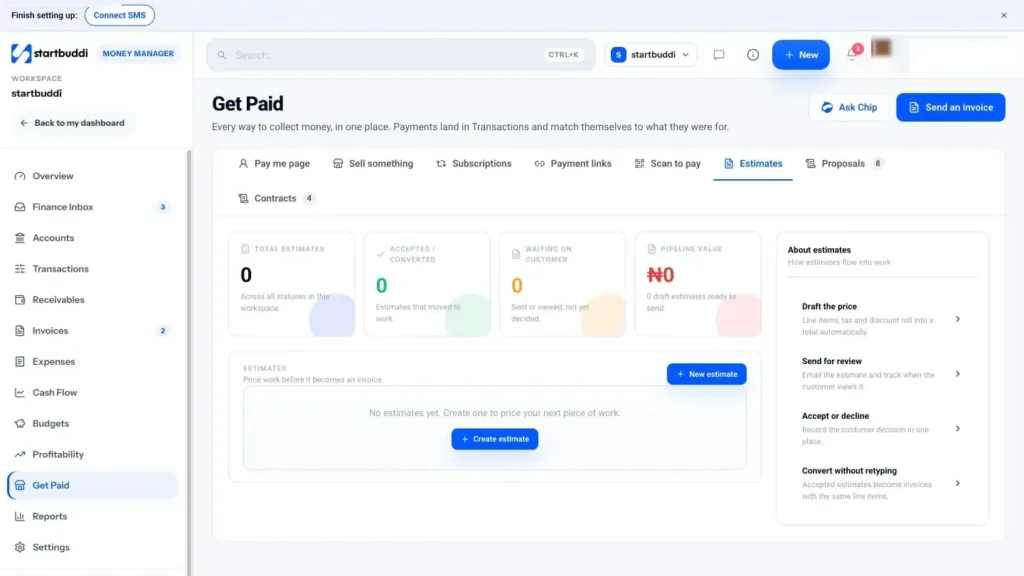
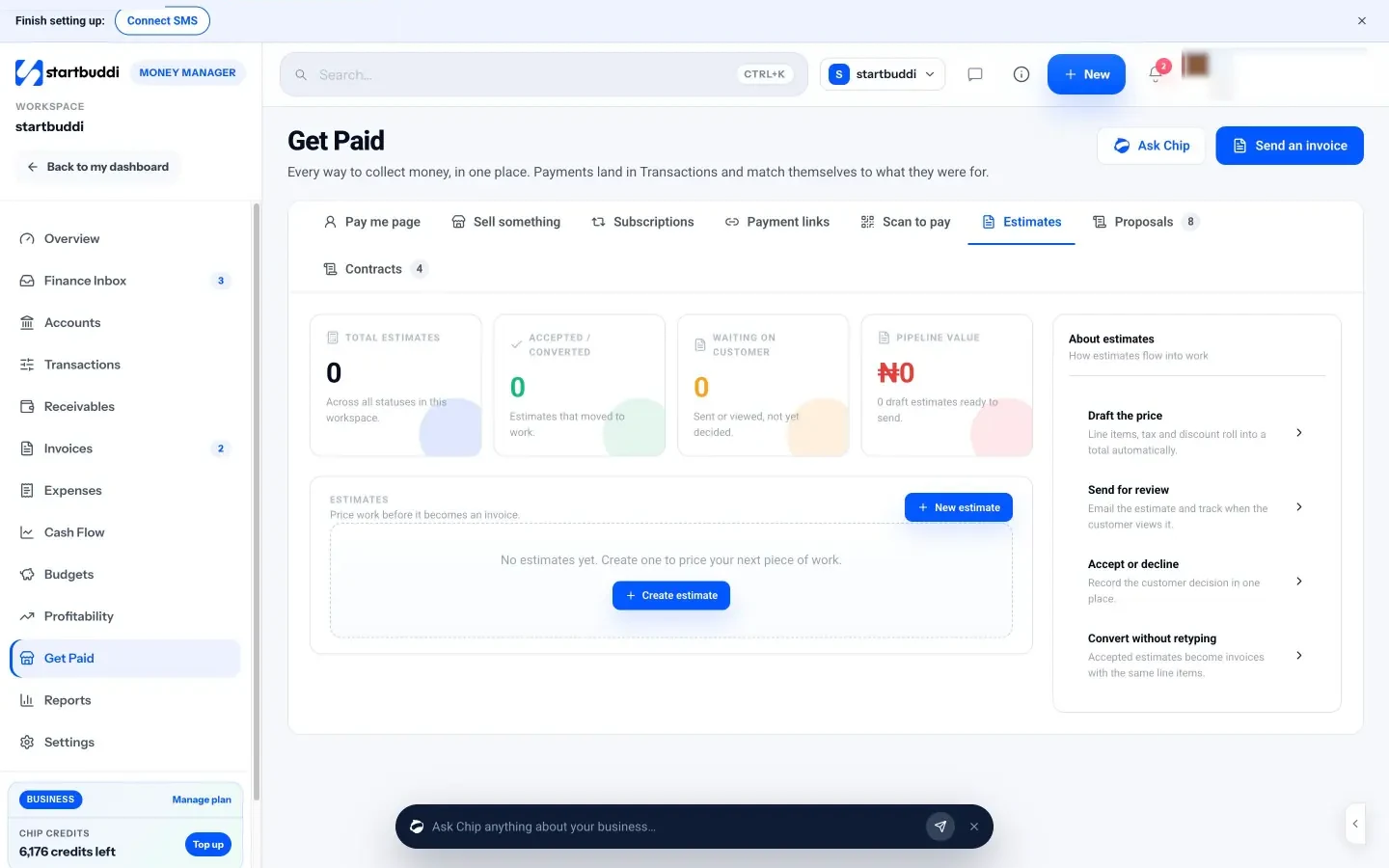
Send an estimate. In Money Manager, open Get Paid, then Estimates, and click New estimate. Choose an existing customer or a one-off recipient (you can save them as a contact), set the currency and add line items for labour and materials, with tax and any discount. The notes box holds your terms, for example "Valid for 30 days. 30% deposit to book. Hidden pipework may change the price; we will agree any change before continuing." Save and send it by email. The customer replies to accept, then you click Mark accepted and Convert to invoice, which creates an invoice with the same line items. See estimates, proposals and contracts.
Invoice before you leave. For repairs, create an invoice from Money Manager on your phone's browser at the end of the job, and send it with a pay link. The customer can pay online by card or bank transfer through your connected Paystack or Stripe account, and the invoice is marked paid automatically. If they pay by transfer or cash, use Record payment. The Free plan includes 5 invoices a month; Starter and above are unlimited. See invoicing.
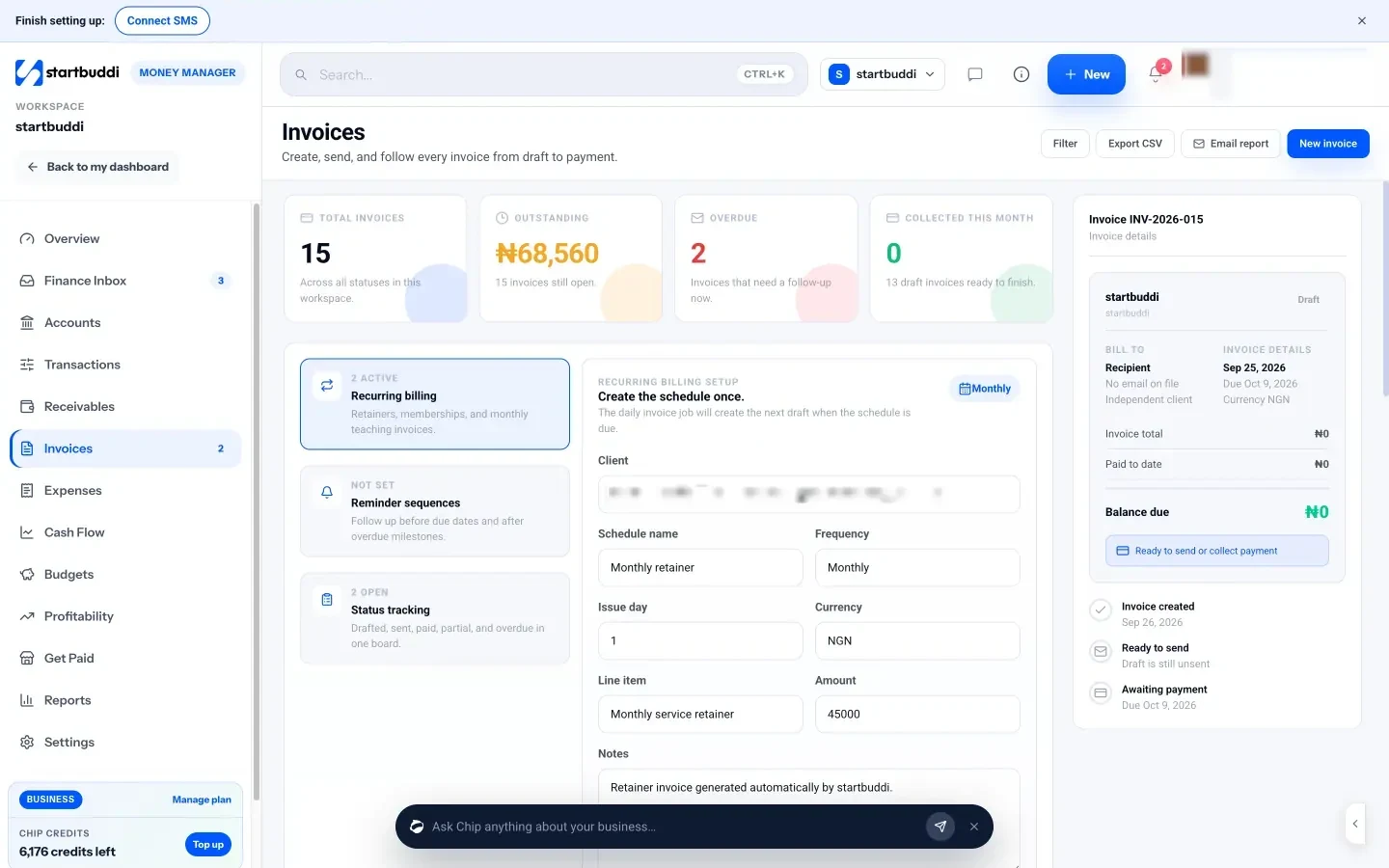
Your details on every invoice. Invoice defaults in Money Manager settings hold your invoice prefix, default due days, tax rate and label, and footer text, so every invoice carries the same terms. Put your bank details in the notes for customers who prefer a transfer. Consistent invoices look professional and cut down on questions from customers and their accountants.
Reminders without the awkward calls. Receivables shows who owes you, what is overdue and your average days to pay, with a Remind button next to each open invoice. You can also set up a reminder sequence that emails customers before the due date, on the day and a few days after.
Job management for plumbers: call to invoice
- Never lose an enquiry
- Plan the day realistically
- Job sheets that protect you
- What job management software for plumbers should do
- When you take on help
- On site: small habits that win trust
- Agree extra work before you do it
- Manage parts and van stock
- Emergencies without chaos
- Communicate at every step
- Close every job properly
- Keep your diary honest
- Working for landlords and letting agents
- Job management mistakes
A plumbing business runs on the phone. Every missed call can be a lost job, and every job that is not written down properly can be a lost payment or an unhappy customer. This chapter covers job management for plumbers: taking enquiries, booking visits, planning the day, recording what you did and handing over cleanly to invoicing. It also explains what job management software for plumbers should do, and where startbuddi fits.
Job management for plumbers: from first call to paid invoice
Every job goes through the same stages. Writing them down and giving each one a clear routine is the quickest way to stop things falling through the cracks.
- Enquiry. A call, message, form or booking arrives.
- Triage. Is it an emergency, a repair, or a planned job that needs a quote?
- Booking or quote visit. A time is agreed and confirmed in writing.
- The job. Arrive, diagnose, agree any changes, do the work, test it, clean up.
- Record. Notes, photos, parts used, time spent, any certificates.
- Invoice and payment. Ideally before you leave.
- Follow-up. A thank-you, a review request and a reminder for the next service.
Never lose an enquiry
Customers with a leak call the next plumber if you do not answer. Make it easy to reach you and hard to lose an enquiry:
- Answer calls when you can, and if you cannot, reply by message within minutes with a short template: "Sorry I missed you, I'm on a job. Is it urgent? Reply with your address and a photo and I'll call you back by 3pm."
- Give customers other ways to reach you: a booking link for non-urgent work, a WhatsApp number and a simple enquiry form on your website.
- Record every enquiry in one place, even if you cannot take the job, so you can follow up or refer it.
- Ask for photos or a short video of the problem. It speeds up triage and helps you bring the right parts.
Plan the day realistically
Booking too many jobs in a day leads to late arrivals and rushed work. Build in:
- travel time between jobs, based on real traffic, not the map's best case;
- time for a trip to the merchant if a job needs parts you do not carry;
- a buffer each day for emergencies or jobs that run long;
- clear arrival windows, such as "8 to 10am", rather than exact times.
Group jobs by area where you can. A day spent in one part of town is far more profitable than zig-zagging across the city.
Job sheets that protect you
For every job, record what you found, what you did, the parts used, the time spent and any advice given, such as "customer advised to replace corroded stopcock; declined for now". Take before and after photos. These records protect you in a dispute, make invoicing accurate and help you remember the property next time. For gas work and some water work, formal records or certificates may be a legal requirement, so use the forms your registration body specifies.
What job management software for plumbers should do
Most plumbers start with a diary, a phone and a notebook, and move to software when those start to fail. When you compare options, check that a tool helps with each stage above:
- customer records with job history, addresses and notes;
- online booking and a calendar of jobs;
- quotes that turn into invoices without retyping;
- job notes, checklists and photos;
- card and online payments, with reminders for unpaid invoices;
- messages to customers by text, WhatsApp or email;
- works on a phone on site.
Field service management tools, such as Jobber, Housecall Pro and Tradify, add features like dispatch boards, GPS tracking of technicians, route optimisation and dedicated technician apps. All-in-one business tools like startbuddi add marketing, a website, team features and a wider view of the business. Check each tool's own site for current features and prices, and choose for the gaps that hurt most. Our post on job management software for plumbers compares the approaches in more depth.
When you take on help
Once you have more work than you can do, the next step is often an apprentice or a second plumber. Job management gets harder with two people: who goes where, who has the parts, who spoke to the customer. Agree a simple rule that every job, note and customer message goes into one shared system, not personal phones. Assign each job to a person, and review the next day's jobs together each evening.
On site: small habits that win trust
Customers judge a plumber on more than the repair. Arrive in your window, or message ahead if you are running late. Introduce yourself, wear shoe covers or lay dust sheets, and explain what you are going to check before you start. Before doing anything beyond the original job, explain the problem, the options and the price, and get a clear yes. Test the work, clean up, show the customer what you did and tell them anything they should watch for. These habits cost minutes and bring reviews, repeat work and referrals.
Agree extra work before you do it
"While you're here, could you look at the shower?" is how many disputes begin. When extra work comes up, stop and agree it: what you will do, the price or rate, and whether it changes the finish time. Confirm it in a quick message or add it to the job sheet and get the customer to acknowledge it. On bigger jobs, write a short change note for any work outside the original quote. It feels formal, but customers appreciate knowing where they stand.
Manage parts and van stock
Trips to the merchant are unpaid time. Keep a standard stock list for the van with minimum quantities of the fittings you use most, and restock at a set time each week. Note parts used on every job sheet, so you can reorder and invoice accurately. For larger jobs, order materials in advance and check deliveries against the order before the job starts. A tidy, well-stocked van means more jobs finished in one visit.
Emergencies without chaos
Emergency work pays well but disrupts the day. Decide your rules in advance: which hours you take emergencies, what counts as an emergency, your call-out charges and how you will rearrange planned jobs if needed. When you move a booked customer, tell them as early as possible and offer a new time straight away. Customers usually accept a change if you are honest and quick to communicate.
Communicate at every step
Most customer frustration comes from silence, not from the work itself. A few short messages make a big difference: a confirmation when the job is booked, a reminder the day before with the arrival window, an "on my way" message with your name, and a summary when the job is done with the invoice and any advice. Keep the tone friendly and short. If something changes, such as a part on order or a delay, say so straight away with a new plan. Customers who feel informed are more patient and more likely to recommend you.
Close every job properly
Before you leave, run through a short closing routine: test the work, check for leaks, clean up, take after photos, explain what you did, hand over any certificates, take payment or send the invoice, and ask if the customer is happy. Then update the job record the same day while it is fresh. A consistent closing routine means fewer callbacks, fewer disputes and better reviews.
Keep your diary honest
Your diary is only useful if it reflects reality. Record every job, quote visit and emergency in one calendar, including the ones that come in by phone while you are on site. Block time for admin, quoting and merchant runs, so you do not keep promising the same hours to different customers. At the end of each day, spend ten minutes checking tomorrow: jobs confirmed, parts ready, route sensible, customers messaged. That small habit prevents most scheduling problems.
Working for landlords and letting agents
Property managers bring regular work but have their own routines. They often need you to contact tenants directly to arrange access, send photos and a short report after each job, quote before any work over a set amount, and invoice with the property address and their reference. Ask for their process at the start, follow it every time, and they will keep calling. Record tenant contact details and access notes against the property so you do not have to ask twice.
Job management mistakes
- Writing jobs on scraps of paper or in personal chats.
- No confirmation message, so customers are not home.
- Booking back-to-back jobs with no travel time.
- Not recording extra work agreed on site.
- Leaving without taking payment or at least sending the invoice.
Run plumbing jobs in startbuddi
Here is how the stages above map to startbuddi, and what it does not do.
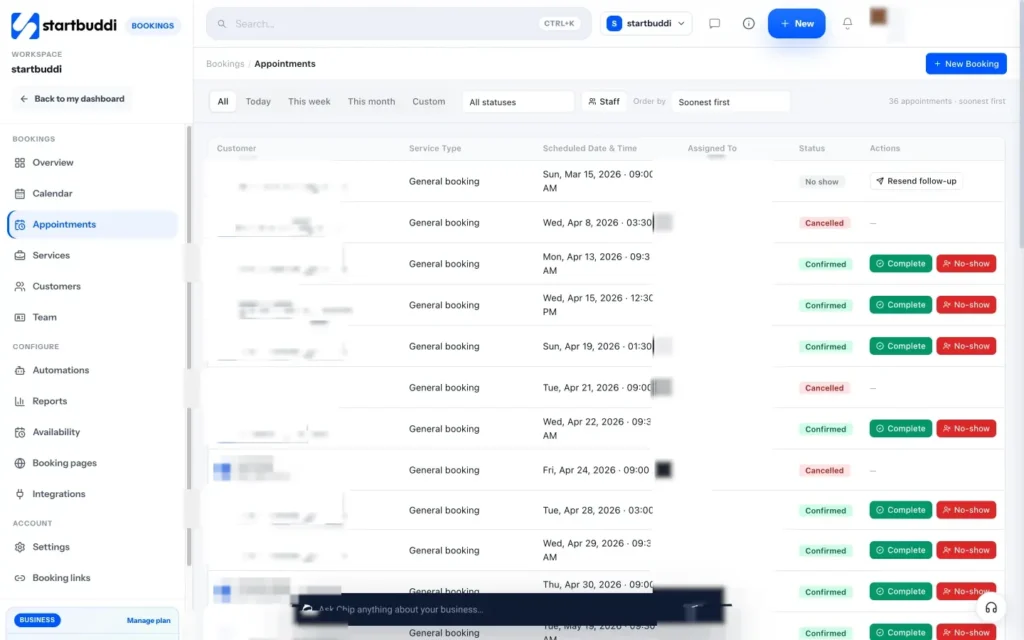
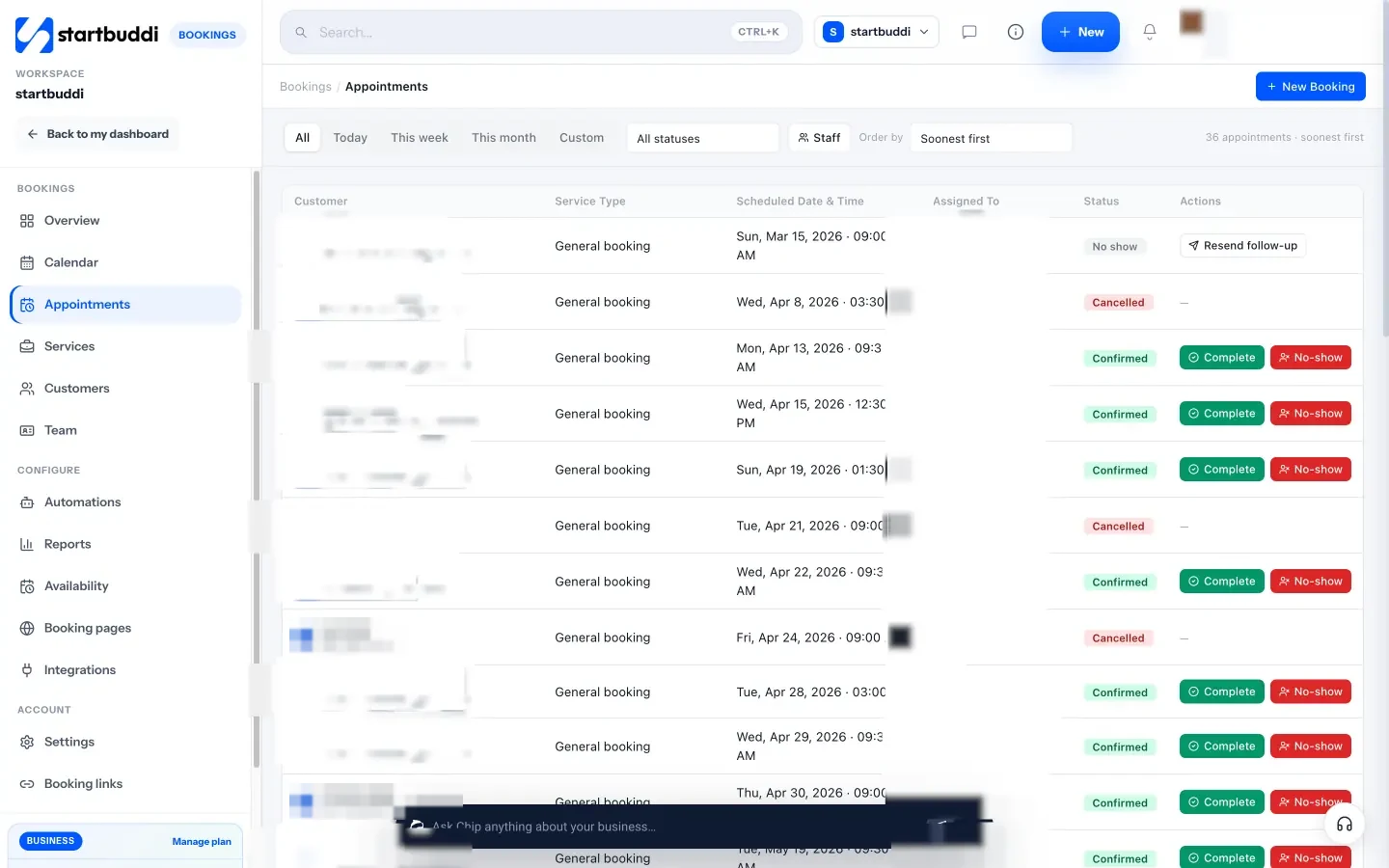
Online booking for planned work. Share your booking link from Bookings on your website, Google profile, WhatsApp status or a QR code on the van. Customers pick a service, a date and a time from your working hours, answer your booking questions and, if you choose, pay a deposit. Availability lets you set working hours and a buffer after each visit for travel, and Block time on the calendar keeps holidays free. Reminder emails go out at the lead time you choose. The Appointments tab lists every booking with its status, and you can mark each one complete or a no-show. See Bookings.
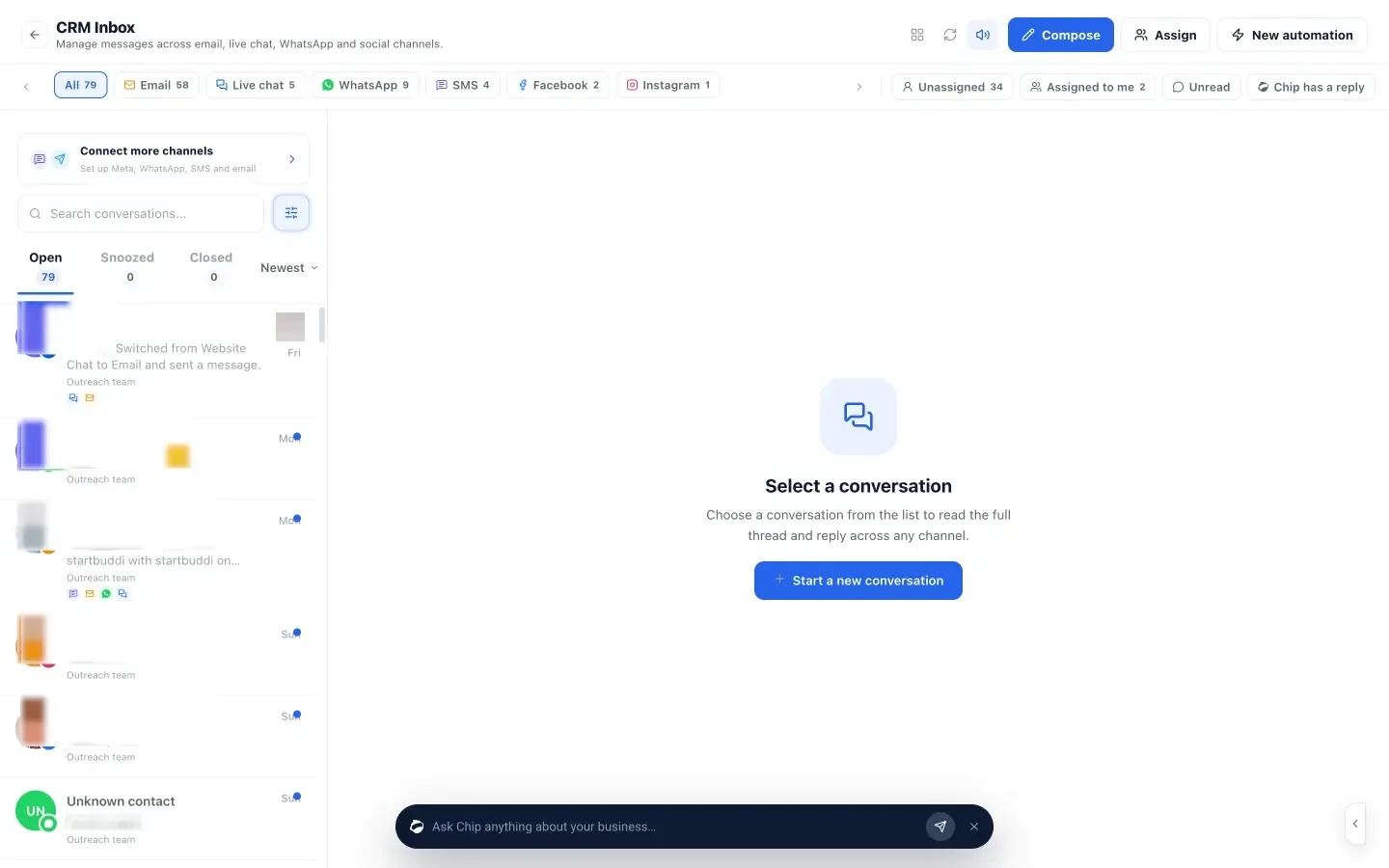
All customer messages in one inbox. The Inbox in Customers brings WhatsApp, SMS, email, website chat, Instagram and Facebook conversations into one list once each channel is connected, with quick replies for common messages and the customer's details alongside. Connecting WhatsApp or SMS needs the Starter plan or above. See the customer inbox.
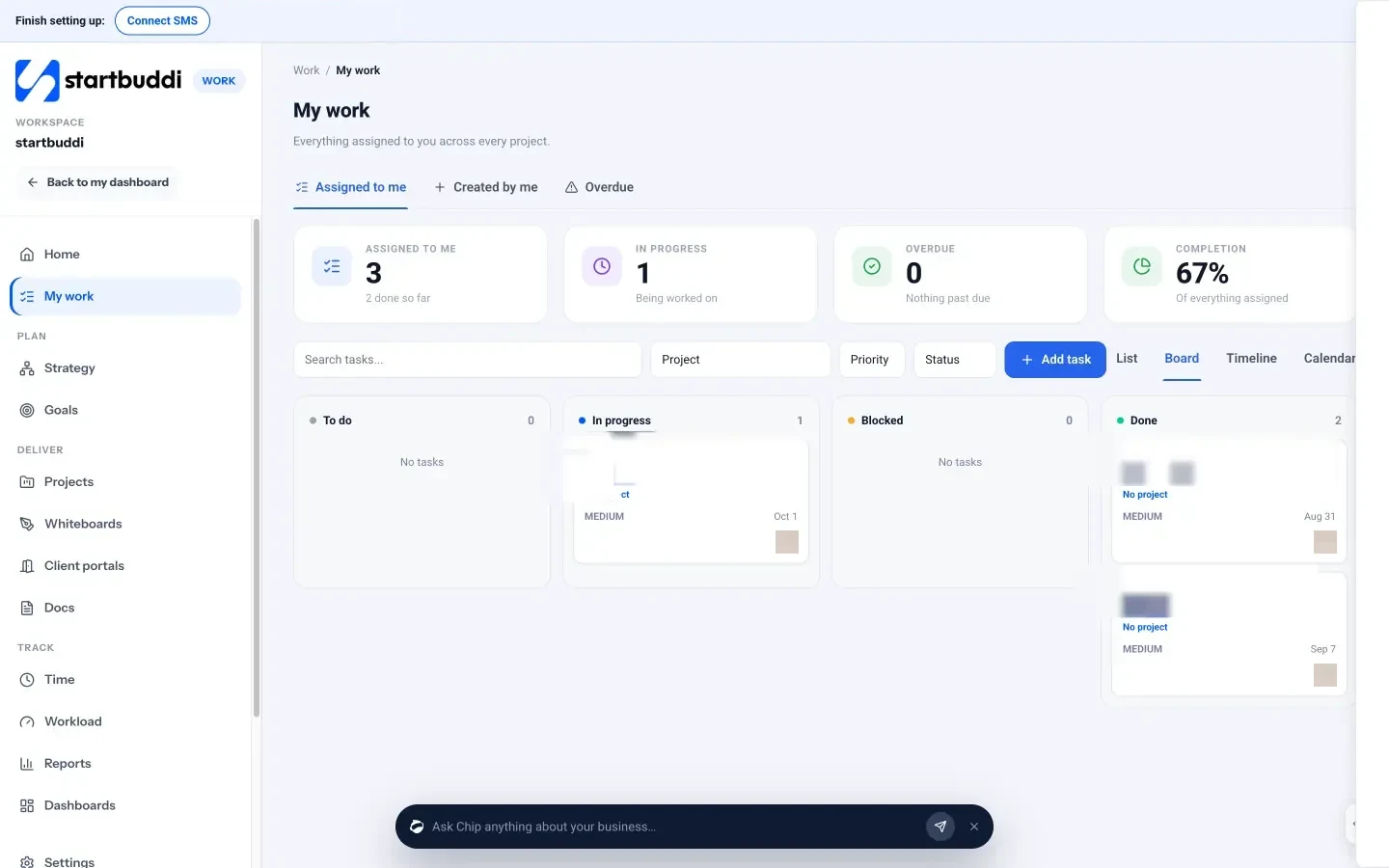
Job sheets as tasks. In Work, add a task for each job with a due date, the customer and the person assigned. Subtasks become your checklist, and you can attach files such as before and after photos. Tasks can repeat, which suits annual servicing. The board view shows jobs moving from To do to In progress to Done, and bigger jobs like a bathroom refit can become a project with milestones. See My work.
Walk-ins and phone bookings. When a customer calls, add the job yourself with New Booking in Bookings: pick the customer or enter their name and phone, choose the service, the person and the time, and add notes. It appears on the calendar alongside online bookings, so your diary stays in one place. Block time for merchant runs, training or holidays so nobody can book those slots. If a customer rings back to move a visit, use Reschedule on the booking to pick the new date and time, so the calendar always shows the real plan. Each booking also has internal notes and an activity timeline, handy for access codes, parking tips or what the customer said on the phone.
What startbuddi does not do. There is no GPS tracking, route optimisation, dispatch map or offline technician app. The app runs in your phone's browser, and some management screens, such as most Bookings tabs, are desktop only. If you run several vans and need live tracking and routing, pair a dedicated field service app with startbuddi for bookings, customers, quotes and invoices, or choose a field service tool that covers everything you need. The guide to running a home service business covers this in more detail.
Find customers and grow the business
- Set up your Google Business Profile properly
- Build a simple website or page
- Other ways plumbers find work
- Turn jobs into repeat customers
- Growing from one van to a team
- Track the numbers that matter
- Lead sites and directories: use with care
- Handling complaints
- Plan your year
- Hiring your first employee: a checklist
- Build referral relationships
- Show your registrations and guarantees
- Offer maintenance plans to landlords and businesses
- Use your quiet time well
- Keep learning
- Know when to add a second van
- Measure your marketing
- Growth mistakes to avoid
- Your next step
Most plumbing customers find a plumber in one of three ways: a recommendation, a search on their phone, or a plumber they have used before. A new plumbing business that works on all three will rarely be short of work. This chapter covers getting found locally, collecting reviews, turning one-off jobs into repeat customers, and growing from a one-person business into a team.
Finding plumbing customers and growing the business
Local search matters enormously for plumbers, because customers with a problem search "plumber near me" and call one of the first few results. Your Google Business Profile is often the first thing they see.
Set up your Google Business Profile properly
Google treats plumbers as service-area businesses: businesses that visit customers rather than serving them at their own address. If customers do not come to your address, Google says to remove it from your profile and list your service areas instead, and you can add up to 20 of them (Google Business Profile Help, service areas). Then:
- choose the most accurate primary category, such as "Plumber";
- list your services with short descriptions;
- add real photos of your van, your team and your work;
- keep your hours accurate, including emergency hours;
- add your booking link and website;
- reply to every review.
Our guide to local SEO for small businesses covers the rest of local search, from directories to your website.
Build a simple website or page
You do not need a large website. You need one clear page that answers what customers want to know: what you do, where you work, your registrations, rough prices or "from" prices for common jobs, reviews and how to book or call. Make the phone number and booking button easy to find on a phone, because that is where most searches happen.
Other ways plumbers find work
- Letting agents and property managers. They need reliable plumbers for repairs and safety checks. Deliver fast, report clearly and invoice on their terms.
- Builders, kitchen fitters and bathroom designers. Other trades need a plumber they can rely on.
- Local businesses. Cafes, salons, gyms and offices need maintenance and fast repairs.
- Your van. Clear signage with your name, services and phone number or QR code works every time you park.
- Neighbours. After a job, a short leaflet or card to nearby houses often brings work from the same street.
Turn jobs into repeat customers
Repeat work is cheaper to win and easier to plan. Build it deliberately:
- Service reminders. Boilers, water heaters and some systems benefit from regular servicing. Offer a reminder when the next service is due.
- Maintenance plans. For landlords, businesses and some homeowners, an annual plan with a service visit and priority call-outs creates steady income.
- Keep good records. Knowing what you installed at a property, and when, makes the next visit faster and impresses customers.
- Stay in touch lightly. A seasonal message before winter, such as tips on protecting pipes from freezing, reminds customers you exist. Only message people who agreed to hear from you, and make opting out easy.
Growing from one van to a team
When you are turning work away regularly, it may be time to grow. Common steps are taking on an apprentice, hiring a second qualified plumber, or partnering with a trusted subcontractor for overflow work. Before you hire:
- make sure your prices include enough margin to pay another wage;
- write down how you do things: quoting, job sheets, customer messages, safety checks;
- check employment rules, insurance and licensing for employees where you are;
- put one shared system in place for jobs, customers and invoices before the new person starts.
Growth also changes your job. You will spend more time quoting, managing and handling customers, and less time on the tools. Plan for that, and price for it.
Track the numbers that matter
| Number | Why it matters |
|---|---|
| Enquiries and where they came from | Shows which marketing works |
| Quote acceptance rate | Low rates point to price, speed or presentation |
| Average job value | Shows whether you are winning the right work |
| Billable hours per week | Checks your pricing assumptions |
| Money owed and days to pay | Protects cash flow |
| Repeat customers and reviews | Shows whether customers come back and recommend you |
Lead sites and directories: use with care
Online lead sites and trade directories can bring enquiries while you build your own reputation. Read the terms carefully: some charge for each lead whether or not you win the job, some charge a monthly fee and some take a commission. Track what each one costs against the jobs and profit it brings. Many plumbers use them in the first months, then reduce or stop as their own reviews, referrals and repeat customers grow.
Handling complaints
Even good plumbers get complaints. Respond quickly and politely, listen to the whole story, and check your job records and photos before replying. If the problem is your workmanship, go back and fix it. If it is not, explain calmly with evidence and offer help if you can. Reply to negative reviews briefly and professionally, without arguing. Future customers read how you handle problems as closely as they read the praise.
Plan your year
Plumbing work has seasons. Cold weather brings frozen and burst pipes and heating breakdowns, while warmer months are often better for planned installations. Use quieter periods for servicing campaigns, training, van maintenance and marketing, and build a cash buffer in busy periods. Send service reminders before the busy season, so regular customers book early and your calendar fills in advance.
Hiring your first employee: a checklist
- Confirm the licence or supervision rules for employees and apprentices where you work.
- Check employment law: contracts, minimum wage, working hours, holidays and payroll.
- Update your insurance to cover employees.
- Write down your standard ways of working and safety procedures.
- Plan the first two weeks: shadowing, then supervised jobs, then independent work.
- Give them access to the same system for jobs, customers and notes.
Build referral relationships
Some of your best work will come from other businesses. Estate and letting agents, property managers, builders, kitchen and bathroom showrooms, electricians and heating engineers all meet customers who need a plumber. Introduce yourself, explain what you do and your service area, and make referrals easy: a card, a booking link and a promise to respond quickly. Refer work back when you can, and thank people who send you jobs. A handful of steady referral partners can keep your diary full through quiet periods.
Show your registrations and guarantees
Trust matters when a stranger is letting you into their home. Show your licences, registrations and insurance on your website, profile, van and quotes, with numbers customers can check. Explain your workmanship guarantee in plain words. Customers often choose the plumber who looks most trustworthy over the cheapest, especially for gas and heating work.
Offer maintenance plans to landlords and businesses
A maintenance plan turns occasional customers into steady income. For example, a landlord with ten properties might pay a fixed annual fee for a yearly check at each one, priority call-outs and a discounted hourly rate. Price the plan so the visits themselves are profitable, and treat the priority call-outs as a benefit, not free work. Put the terms in writing, including what is and is not covered.
Use your quiet time well
Every plumbing business has slow days. Treat them as time to invest in the business rather than lost income. Update your Google profile with new photos, ask recent customers for reviews, contact letting agents and builders, restock and clean the van, review your prices and chase any overdue invoices. A short list of "quiet day jobs" means you never waste a gap in the diary.
Keep learning
New products, regulations and technologies, such as heat pumps, smart controls and water-saving fittings, keep changing the work. Training in growing areas lets you offer services that fewer local plumbers can, often at better rates. Keep a record of courses and certificates, and mention new skills on your website and profile so customers know.
Know when to add a second van
Adding a van and a plumber is a big step. Signs you are ready include a diary booked two or more weeks ahead most of the year, regular emergency calls you cannot take, and enough steady work from maintenance plans and referral partners to keep a second person busy. Run the numbers first: the extra wage, van, insurance and tools against the extra jobs you can realistically win. Start with a trial, such as a subcontractor for busy periods, before committing to a full-time hire.
Whatever size you grow to, keep the basics that brought you here: answer quickly, turn up when you say, explain the price before you start, leave the place clean and follow up afterwards. Those habits are what customers remember and recommend.
Measure your marketing
Ask every new customer how they found you and record it. After three months you will know whether your jobs come from Google, referrals, the van, a lead site or repeat customers, and what each source costs you. Put more time and money into the sources that bring good jobs, and cut the ones that bring price shoppers or no-shows.
Growth mistakes to avoid
- Relying on one source of work, such as a single builder or an online lead site.
- Never asking for reviews.
- Hiring before prices and processes can support another wage.
- Keeping customer history in your head, so a new team member starts from scratch.
- Ignoring servicing and maintenance, which bring steady income.
Win and keep plumbing customers with startbuddi
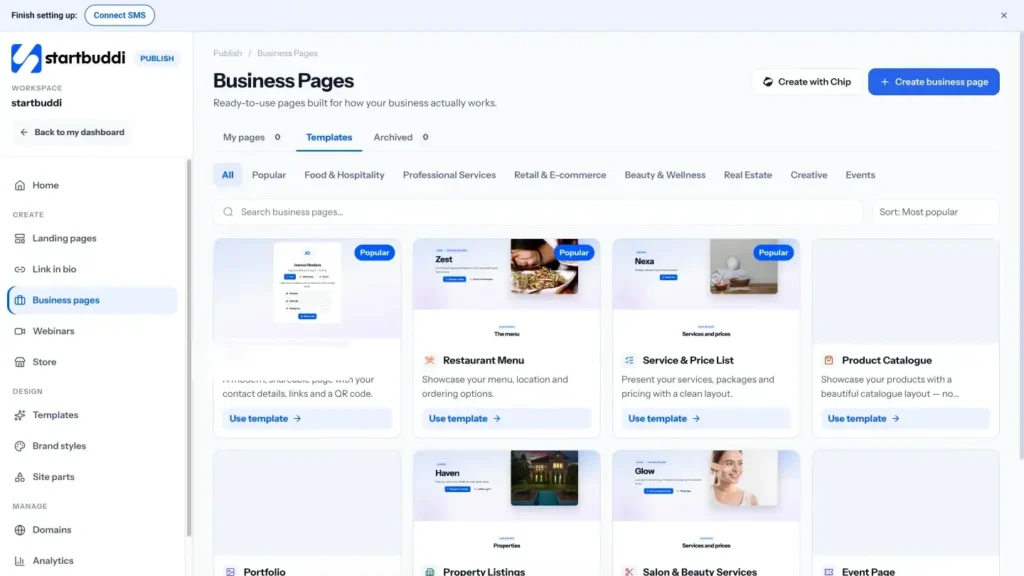
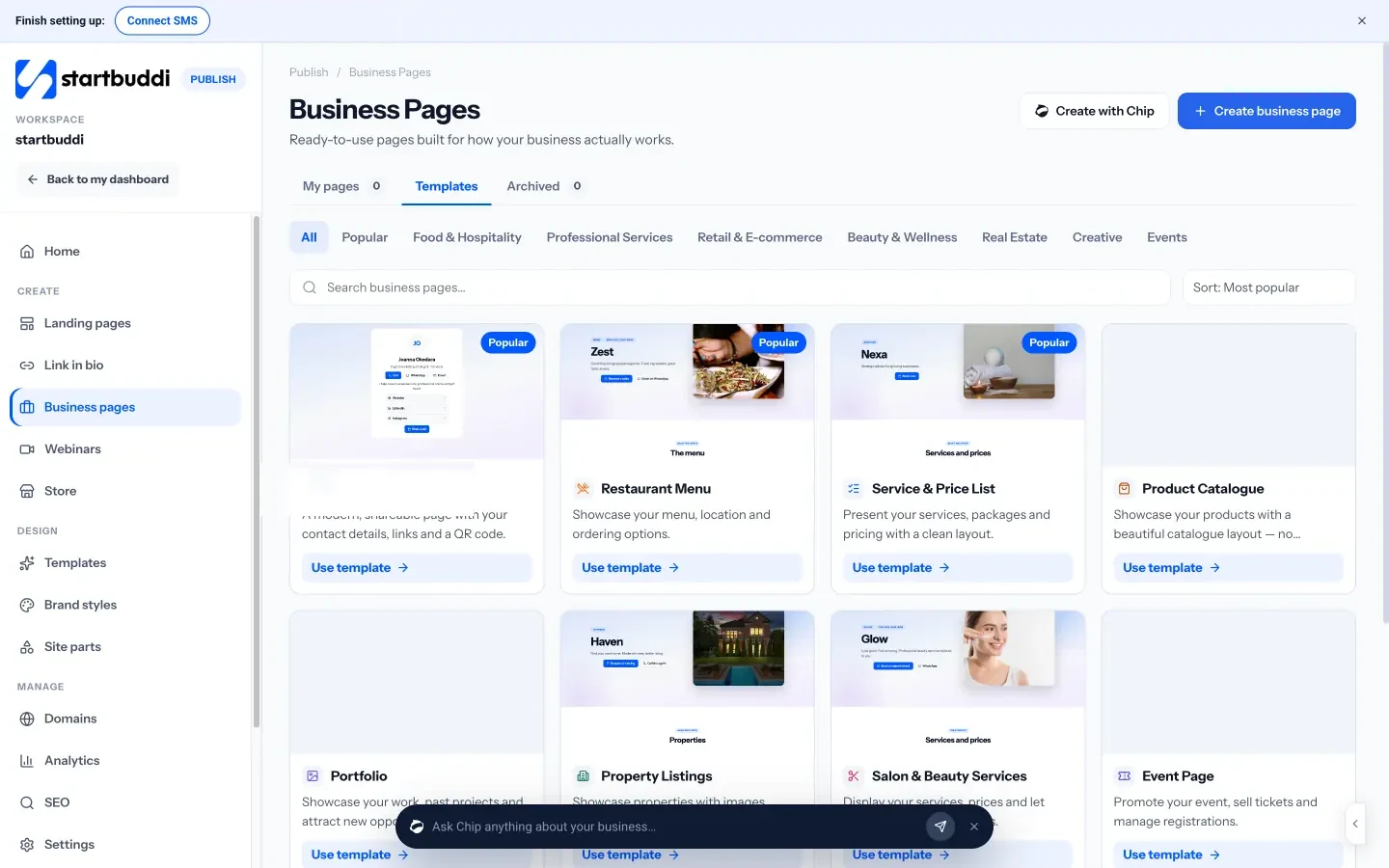
A page customers can book from. In Publish, business pages include a Service & Price List page type with a Book now button, which suits a plumber's list of common jobs and "from" prices. Enquiries from the page are linked to the contact. You can also build a landing page for a specific service, such as boiler servicing. See business pages.
Customer history in one place. Every booking, estimate, invoice and message is linked to the customer's page in Customers, with notes such as "Combi boiler fitted March 2026" or "Stopcock under kitchen sink". When a customer calls again, you see the history in seconds. The plumbing businesses page shows more ways plumbers use this.
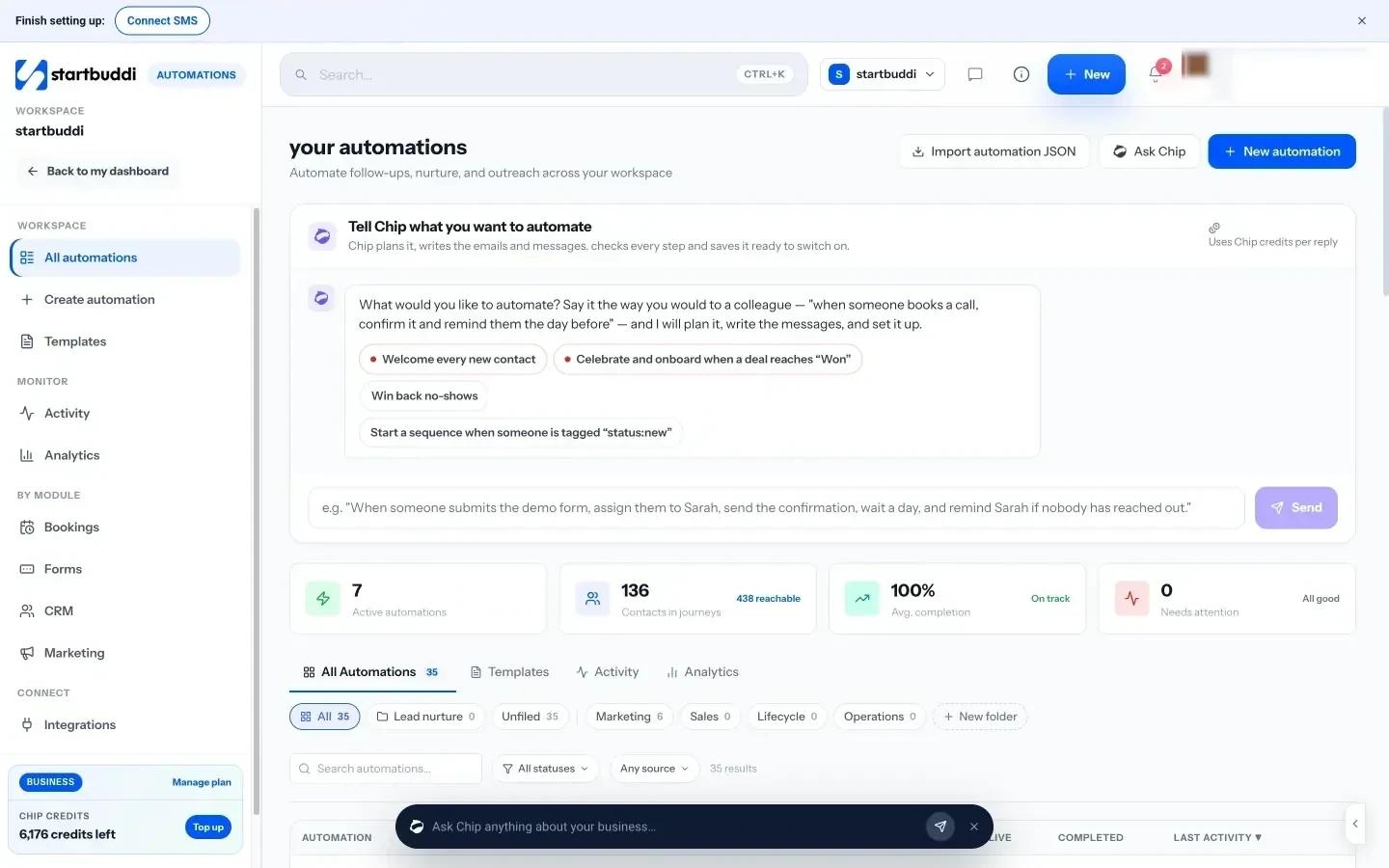
Follow-ups that run on their own. On the Starter plan and above, Automations can send an email, WhatsApp message or SMS when a booking is completed, such as a thank-you with a review link, or add a task for you, such as "Book annual service", after a delay you choose. Email and WhatsApp campaigns can send a seasonal reminder to customers who have agreed to hear from you. See Automations.
See how the business is doing. The Money Manager overview shows money in, money out and what is outstanding, and Receivables shows the average days customers take to pay. Bookings Reports shows total bookings, repeat customers, bookings by service and peak hours, which helps you decide which services to promote and when to schedule extra capacity. Look at these once a month alongside your quote acceptance rate and reviews. Together they show whether your marketing, pricing and service are working, and where to put your effort next.
Repeating servicing tasks. Add a yearly repeating task for each servicing customer in My work, so the reminder comes round automatically.
Your next step
Confirm the licences and registrations you need for the work you want to do, work out your hourly rate from real costs, and set up your services, first estimate and invoice in startbuddi on the Free plan. When you want automations, WhatsApp and SMS, or unlimited invoices, see the pricing page; every paid plan has a 30-day trial.
Tiwalade Joanna Okedara-Kalu is the founder, CEO and CTO of startbuddi, the business system that brings clients, bookings, invoices, projects, marketing and the Chip AI assistant into one place. Tiwalade builds software around how service businesses really work day to day, and writes about client management, getting paid on time and why small businesses outgrow the tools they start with.
Founded startbuddi and leads its product and engineering