How to reduce no-show appointments without damaging client relationships
Why clients miss appointments and how to reduce no-show appointments with better reminders, deposits, easy rescheduling and a kind same-day follow-up. Templates included.


Chinonye wrote this while on the startbuddi team. The product has changed since, so the team updated it on .
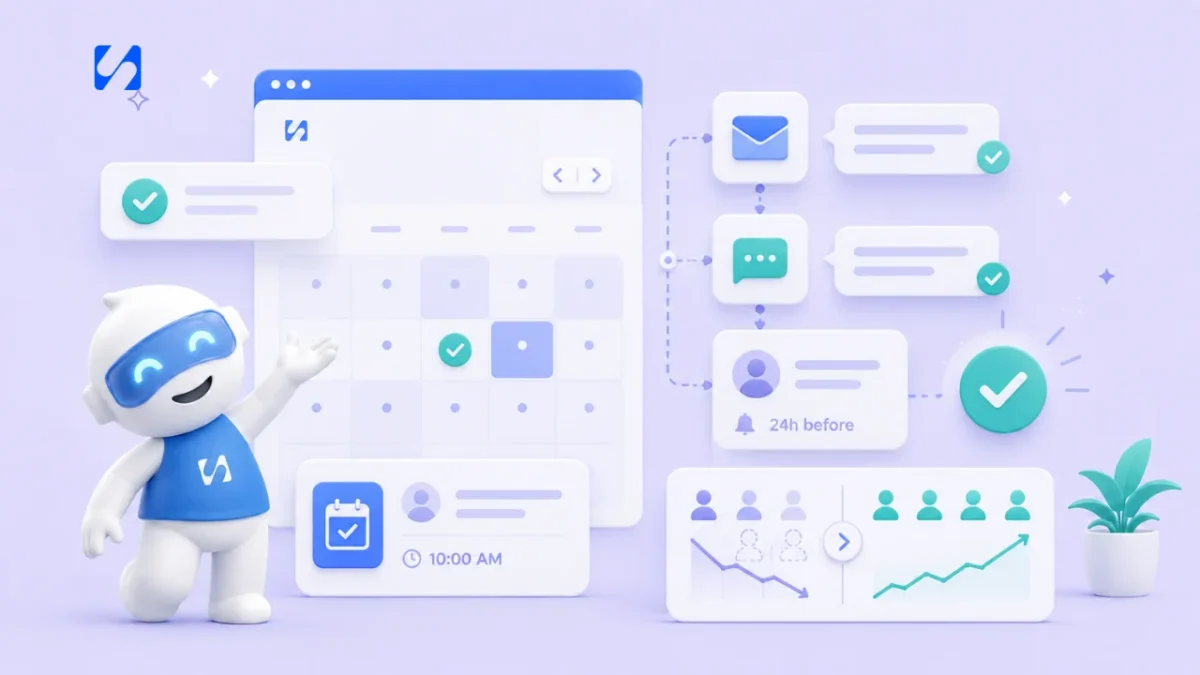
- Most no-shows come from forgetting, awkwardness about cancelling or low commitment. Send a confirmation plus at least one reminder with a reschedule link, take deposits on the slots that cost you most, publish a clear policy and follow up the same day when someone misses.
To reduce no-show appointments without damaging client relationships, do four things: make booking easy to change, remind people more than once, ask for a deposit on the slots that cost you most, and follow up the same day when someone misses. Most no-shows are not rude. People forget, their plans change and cancelling feels awkward, so your system should make turning up the easy option and rescheduling the next easiest.
This guide covers why clients miss appointments, what the research says about reminders, message templates you can copy, how deposits fit in, and what to do after a no-show so you keep the customer instead of just losing the hour.
What a no-show really costs you
A missed appointment is not just one empty slot. For a salon, clinic, tutor, photographer or consultant, it usually means:
- Lost income for the time you had blocked, which you usually cannot resell at short notice.
- Wasted preparation: products mixed, a room booked, a staff member paid, travel to a client’s site.
- A lost chance for someone else who wanted that time and was told you were full.
Work out your own number before you decide how firm to be. Multiply your no-shows per month by your average booking value, then add any costs you paid anyway. Our free no-show cost calculator does the sum for you. If the answer is small, gentle reminders may be enough. If it is a week’s income every month, you need deposits and a clear policy too.
Why clients miss appointments
Knowing the reason tells you which fix to use. In practice, most no-shows fall into four groups.
| Reason | What it looks like | The fix |
|---|---|---|
| They forgot | Booked two weeks ago, never put it in a calendar | Reminders, and a calendar invite at booking |
| Plans changed and cancelling felt awkward | Silent absence, apologetic message a day later | An easy reschedule or cancel link in every message |
| Low commitment | Free consultation booked on impulse | A short booking form, a deposit, or a small fee |
| Confusion | Went to the wrong address, could not find the video link | Clear directions and the join link in every reminder |
Notice that only one of these is really about commitment. The other three are about information and friction, which is good news: they are cheap to fix.
Reminders: the single biggest way to reduce no-show appointments
The strongest evidence comes from healthcare, where missed appointments are measured carefully. A 2020 systematic review in PAMJ One Health looked at 20 randomised controlled trials and found that 95% of them reported a positive effect from reminders, with an average 41% reduction in missed appointments. It also found that sending two or more reminders did better than sending one.
A clinic is not a hair salon, but the behaviour is the same: people forget, and a well-timed nudge helps them remember.
When to send reminders
- At booking: a confirmation with the date, time, place or link, and a calendar invite.
- 24 to 48 hours before: the main reminder, with an easy way to reschedule. This gives you time to fill the slot if they cancel.
- 2 to 4 hours before (or the morning of): a short nudge with directions or the video link.
For appointments booked weeks in advance, add a reminder a week before as well. For same-day bookings, the confirmation is often enough.
What to say in a reminder (with templates)
The wording matters more than you might think. In two randomised trials across NHS outpatient clinics, published in PLOS ONE in 2015, a reminder that stated what the appointment cost the health service cut missed appointments from 11.1% to 8.4% compared with the standard reminder. Making the value of the slot visible changed behaviour, at no extra cost.
You do not need to guilt anyone. You can make the same point kindly by explaining that the time is reserved for them.
Confirmation template
Hi {{first_name}}, you are booked for {{service}} on {{date}} at {{time}}. We have set this time aside just for you. Need to change it? Use this link to reschedule: [link]. See you soon, [your name].
24-hour reminder template
Hi {{first_name}}, a quick reminder that your {{service}} is tomorrow at {{time}}. If you cannot make it, please reschedule here so we can offer the slot to someone on our waiting list: [link]. Directions: [link].
Same-day nudge template
Hi {{first_name}}, see you at {{time}} today. Here is your video link: [link]. Running late? Just reply and let us know.
Keep reminders short, put the time in bold where you can, and always include one way to change the booking. A person who reschedules is a customer you keep; a person who feels trapped simply does not come.
Which channel?
Email works well for detail and calendar invites. SMS and WhatsApp are read faster, which suits the same-day nudge. In the review above, SMS reminders beat phone calls in just over half of the studies that compared the two. Phone calls take staff time, so save them for high-value bookings or first-time clients.
Deposits and upfront payment
Reminders fix forgetting. Deposits fix low commitment. When someone has paid even a small amount, they are far more likely to either turn up or tell you they cannot.
When to ask for a deposit
- Long appointments (an hour or more) that you cannot fill at short notice.
- Services with preparation or materials, such as colour treatments, custom cakes or photoshoots.
- First-time clients, especially from social media, where commitment is lowest.
- Peak slots (evenings, weekends, festive season) that other clients want.
How much to ask for
There are two common ways to set it: a percentage of the price, or a fixed amount that covers what a missed slot costs you. The right number is the one that covers your loss without scaring off new clients. Try our deposit calculator, and our guide to how much deposit to charge clients goes deeper.
Whatever you choose, say clearly at booking whether the deposit comes off the final price, and when it is refundable. That leads to the next point.
A clear cancellation policy
A deposit without a policy causes arguments. Write down three things in plain words:
- The notice period. For example, “Please give us at least 24 hours’ notice to cancel or reschedule.”
- What happens to the deposit. For example, “With 24 hours’ notice, you can move your deposit to a new date. With less notice, the deposit is kept.”
- What happens after a no-show. For example, “If you miss your appointment without notice, we will ask for full payment upfront for your next booking.”
Show the policy on your booking page and in the confirmation, not just on a terms page nobody reads. Our guide on how to write a cancellation policy clients respect has full templates, and the booking policy writer drafts one for you. Consumer law limits what you can keep in some countries, so check the rules where you work.
Make it easy to reschedule instead of disappear
This is the fix people skip. If the only way to cancel is to call during office hours or send an awkward message, many clients will just not show up. Give them:
- A reschedule or cancel link in every confirmation and reminder.
- A booking page that shows real free times, so they can pick a new slot in seconds.
- A friendly tone. “No problem, pick a new time here” works better than a warning.
Also look at how far ahead people can book. A booking made six weeks out is more likely to be forgotten than one made for next week. If your no-shows cluster on bookings made long in advance, shorten the booking window or add an extra reminder.
Fill the gaps when people do cancel
Even with good reminders, some people will cancel. The goal is to hear about it early enough to resell the time.
Keep a simple waiting list
When a popular day is full, take the names and numbers of people who wanted it. A short list in your contacts, tagged “waiting list”, is enough. When a cancellation comes in, message the first two or three people: “A 3pm slot just opened tomorrow. Want it?” A 24-hour reminder with a reschedule link gives you the notice you need to do this.
Be careful with double booking
Some businesses book two clients into one slot and hope one misses. It can work for quick, low-stakes services, but when both turn up, one of them waits or leaves unhappy. For most small businesses, deposits and a waiting list are a safer way to protect the hour.
Treat free consultations differently
Free discovery calls have the highest no-show rates for one simple reason: nothing is at stake. Three small changes help without charging anything:
- Ask one or two questions on the booking form, such as “What would you like help with?” People who write a sentence are more committed than people who click once.
- Send a short, useful message before the call, for example “Here is what we will cover, and one thing to think about beforehand.”
- Keep the booking window short, so the call is days away, not weeks.
What to do after a no-show
Most businesses do nothing, which means the customer is lost as well as the hour. Instead, follow up the same day with a short, warm message that makes it easy to rebook.
No-show follow-up template
Hi {{first_name}}, we missed you today at {{time}}. We hope everything is okay. If you would still like your {{service}}, you can pick a new time here: [link]. As a note, we will ask for a deposit for the next booking.
Run this from one workspaceClients, projects, money and marketing, connected instead of spread across five apps.See how it works
Then keep a simple record. One no-show is life. Two or three from the same person is a pattern, and it is fair to ask that person to pay in full upfront. Track your no-show rate each month (missed appointments ÷ total appointments) so you can see whether your changes are working, and look for patterns: a particular service, a time of day, or bookings made weeks in advance. A pattern points to the fix, such as an extra reminder for bookings made far ahead.
A one-month plan to reduce no-shows
- Week 1: measure your current no-show rate and cost.
- Week 2: switch on a confirmation plus a 24-hour reminder, both with a reschedule link.
- Week 3: write and publish your cancellation policy.
- Week 4: add a deposit on your longest or most-missed service, and start same-day no-show follow-ups.
How startbuddi helps
Bookings in startbuddi gives you a booking page where clients pick a service and a time, and each booking sends a confirmation email and a calendar invite. The Overview shows today’s bookings, pending confirmations and no-shows, with a “Needs attention” list where you can mark someone as came or no-show with one click.
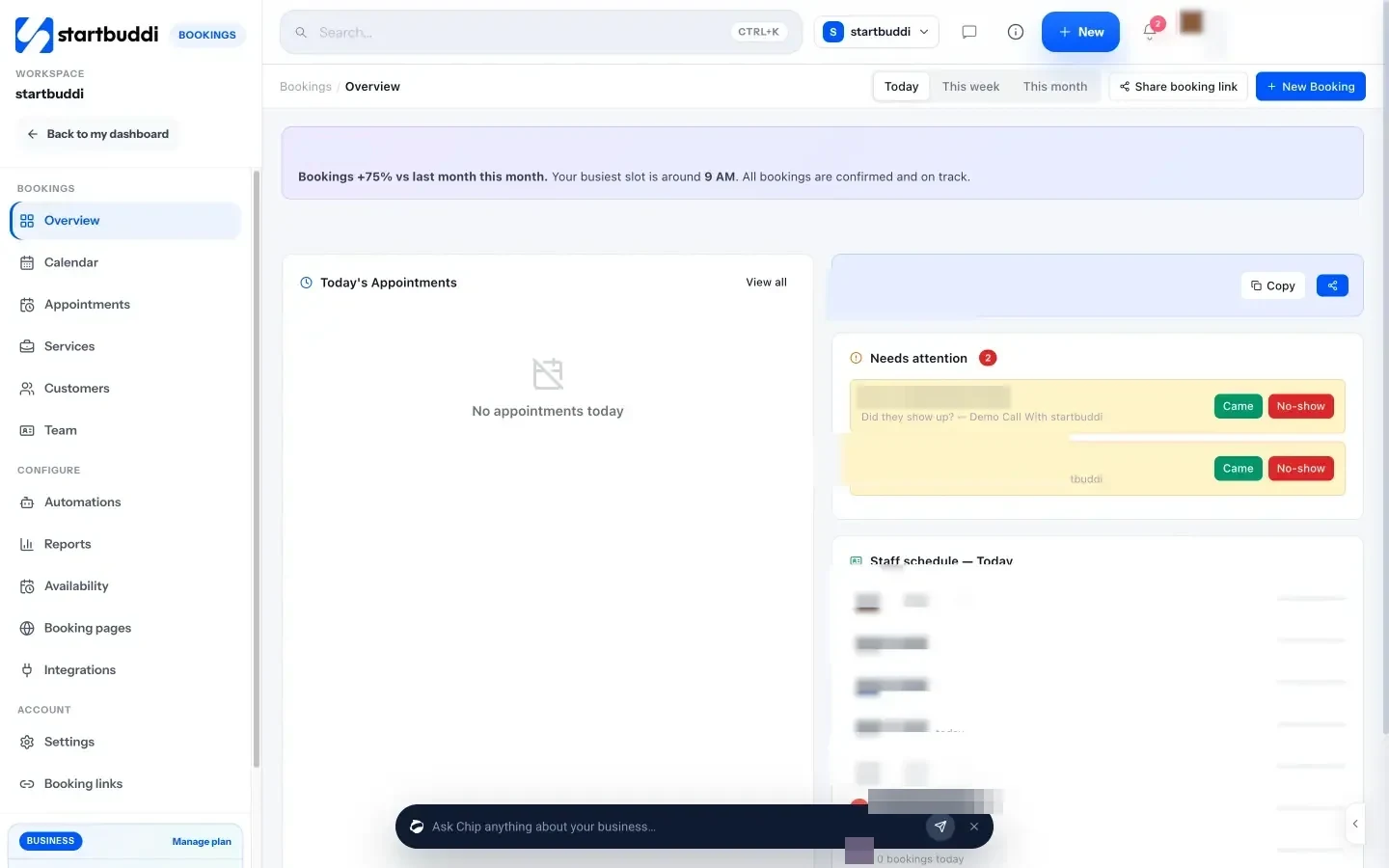
In Availability you set when reminder emails go out: 1, 2, 4, 12, 24 or 48 hours before. You can also set a buffer after each appointment and how far ahead people can book, which helps with bookings made too far out. Every guest gets their own booking page where they can join the video call or cancel, so they are not stuck messaging you.
For deposits, turn on “Require payment to book” on a service and choose the full amount or a deposit. The client pays through Paystack or Stripe checkout, the slot is held for 30 minutes while they pay, and the booking is confirmed when the payment goes through.
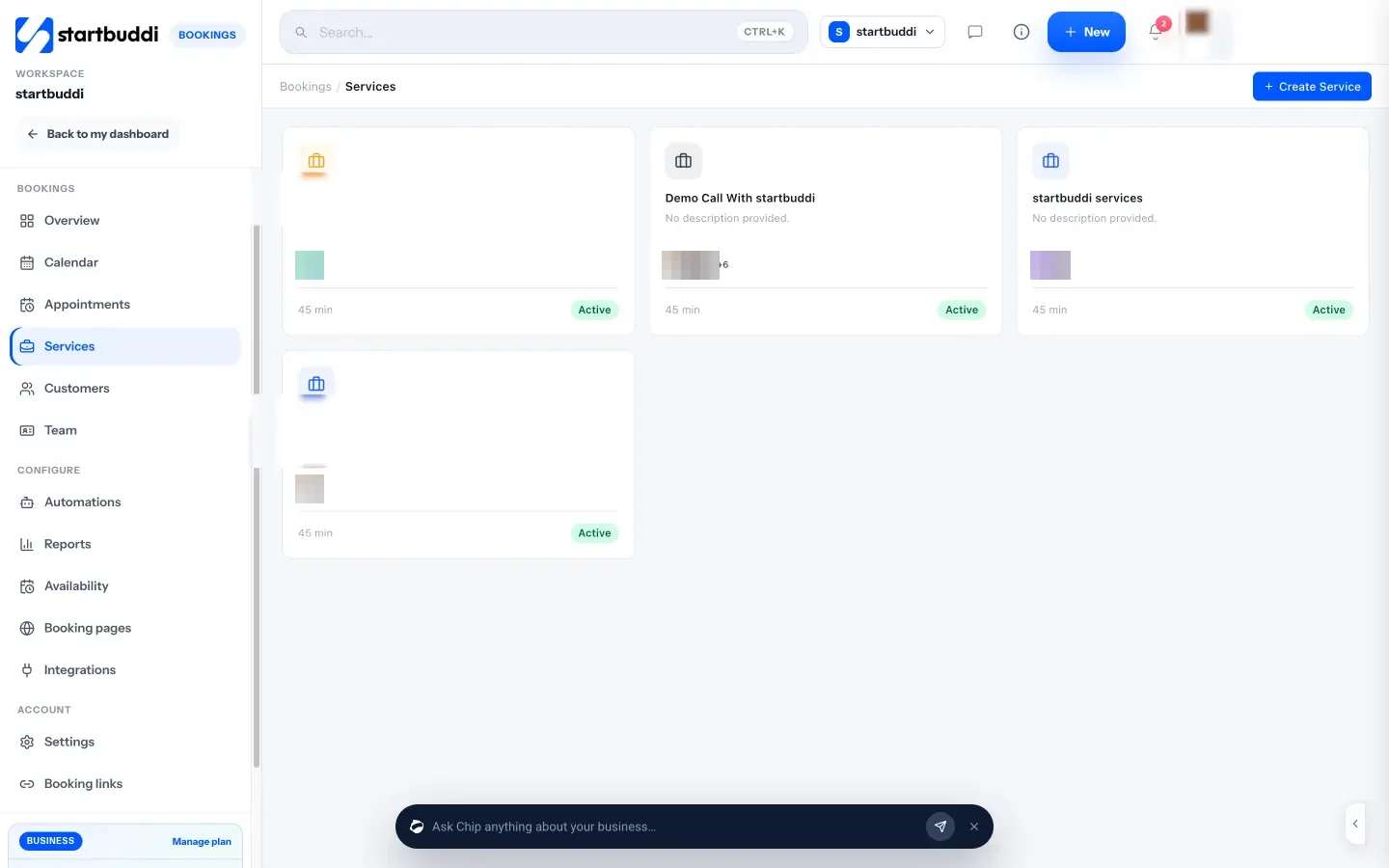
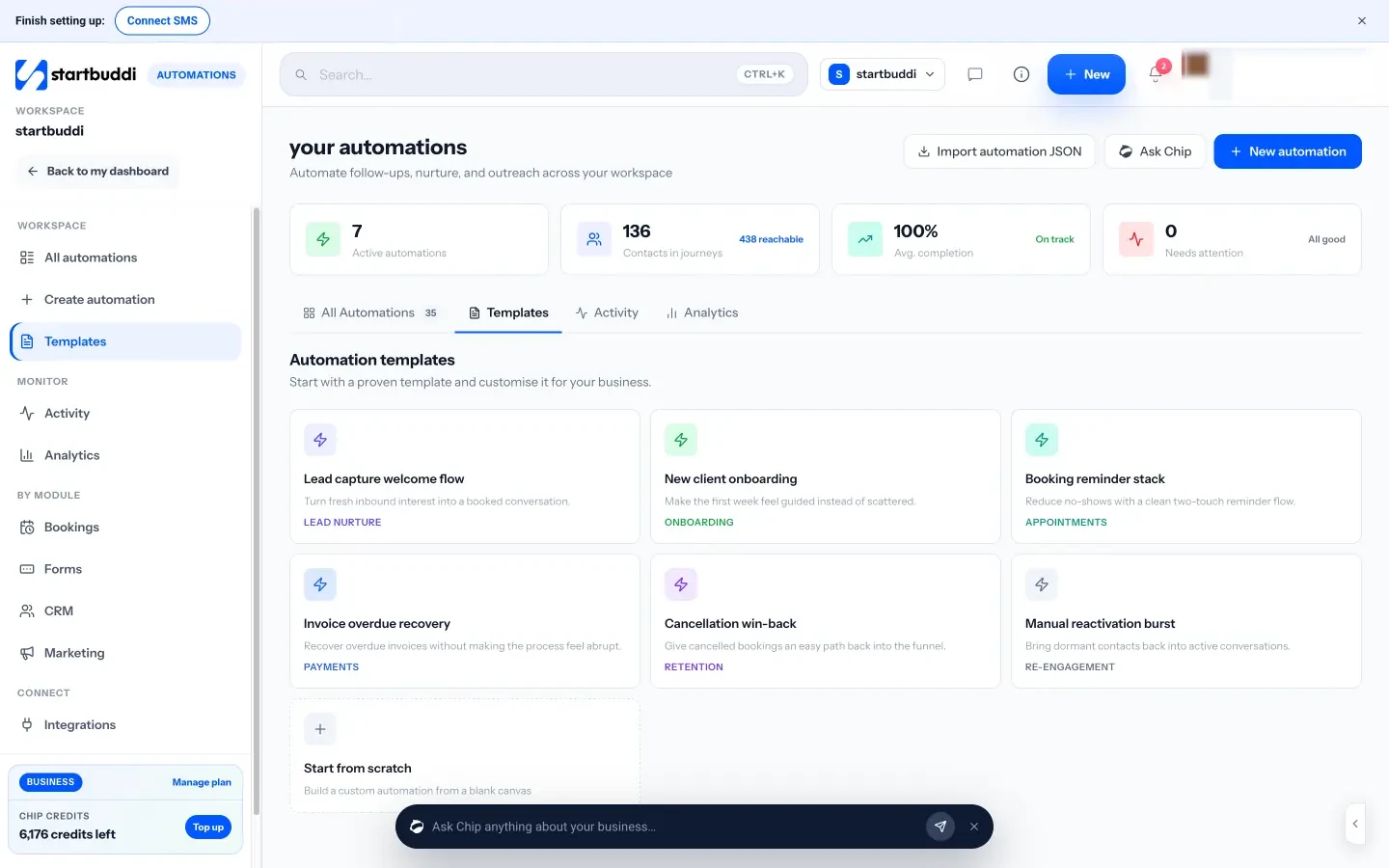
When someone misses, mark them as a no-show and startbuddi sends your “After a no-show” follow-up email, which you can edit in Settings. Reports show your cancellation rate and bookings by service, so you can see which services need a deposit. If you want WhatsApp or SMS nudges as well as email, Automations can start when a booking is made, cancelled or marked as a no-show, and send email, WhatsApp or SMS steps with a delay in between. There is a ready-made “Booking reminder stack” template. WhatsApp and SMS need the Starter plan or above, and Free includes 2 active automations against 10 on Starter.
Your next step
Count last month’s no-shows and put a cost on them. Then set up a confirmation and a 24-hour reminder with a reschedule link this week, and add a deposit to your most-missed service. You can build your booking page and reminders on startbuddi’s Free plan, and compare plans when you want WhatsApp or SMS reminders too. For more ideas, read how to automate client bookings with reminders.
Sources
- Opon, Tenambergen and Njoroge (2020), The effect of patient reminders in reducing missed appointment in medical settings: a systematic review, PAMJ One Health
- Hallsworth et al. (2015), Stating appointment costs in SMS reminders reduces missed hospital appointments, PLOS ONE
Frequently asked questions
What is a normal no-show rate?
It varies a lot by industry and by how people book. Measure your own rate for a month (missed appointments divided by total appointments) and use that as your baseline to improve on.
How many reminders should I send?
A confirmation at booking plus one or two reminders is a good default: one 24 to 48 hours before, and a short nudge on the day. Research on appointment reminders found two or more reminders did better than one.
Will asking for a deposit put clients off?
Some impulse bookers may drop out, but they are often the ones most likely to miss. Start with a small deposit on your longest or most-missed service and see how bookings and no-shows change.
Should I charge clients who do not show up?
Only if your policy said so clearly before they booked. Keeping a deposit you told them about is fair; sending a surprise bill usually costs you the customer.
SEO Copywriter| Email growth Specialist| I help businesses increase revenue with strategic SEO content & high-converting email funnels.