How to write a cancellation policy clients respect
What to put in a cancellation policy, how to set fair notice periods and deposits, the legal basics to check, and three templates for service businesses.



- A good cancellation policy is short, specific and shown before clients book: the notice you need, what happens to their money if they cancel late or miss, how to reschedule and what you will do if you cancel. Keep fees in line with your real loss and back the policy with a deposit.
A good cancellation policy tells clients, in plain words and before they book, how much notice you need, what happens to their money if they cancel late or do not turn up, and how to reschedule. Clients respect a policy that is short, fair to both sides and applied the same way every time. They resent one that is hidden, vague or used as a trap.
This guide explains what to include, how to choose your notice period and fees, the legal limits to be aware of, and where to show the policy so people actually read it. There are three templates at the end that you can adapt for your business.
Why a cancellation policy protects your business
For a service business, your time is your stock. When a client cancels at the last minute, that hour usually cannot be sold again. A written cancellation policy does three jobs:
- It sets expectations early. Most clients will happily give notice if you tell them you need it.
- It gives you a fair, calm answer when someone cancels late. You point to the policy rather than argue case by case.
- It protects your income through deposits or fees that cover your real loss.
It also makes you look established. A clear policy on a booking page says “this business is organised”, which is part of why clients trust you with their money in the first place. If missed appointments are your main headache, pair this guide with our advice on how to reduce no-shows.
What to include in a cancellation policy
Keep it to one short section with these parts. Anything longer and people stop reading.
- Notice period: how far ahead a client must cancel or reschedule without a charge.
- Late cancellation: what happens if they cancel inside that window.
- No-shows: what happens if they do not turn up and do not tell you.
- Deposits: whether you take one, how much, and whether it comes off the final price.
- Rescheduling: how many times they can move a booking, and how.
- Lateness: how long you will wait, and whether a late arrival shortens the session.
- Your side: what you will do if you need to cancel. This is the part most policies forget, and it is the part that makes clients feel the policy is fair.
- How to cancel: the link, number or email to use.
How to choose your notice period
The right notice period is the time you realistically need to fill the slot or stop preparing for it. Longer is not automatically better; a 72-hour rule for a 30-minute consultation feels unreasonable and makes people less likely to book.
| Type of service | Typical notice to consider | Why |
|---|---|---|
| Short appointments (haircut, tutoring, a 30-minute call) | 12 to 24 hours | Easy to refill from a waiting list at short notice |
| Long appointments (colour treatment, massage, a half-day session) | 24 to 48 hours | Harder to refill, and a bigger loss if empty |
| Work with preparation or materials (custom cakes, photoshoots, catering) | Several days to two weeks | You buy materials or turn down other work in advance |
| Events and date-specific bookings | Two weeks or more, often in stages | The date cannot be resold close to the day |
These are starting points, not rules. Look at your own bookings: how quickly can you usually fill a cancelled slot? That gap is your notice period.
Deposits, late fees and refunds: what is fair
Money is where most disputes come from, so be precise.
Deposits
A deposit is money paid upfront to secure a booking. It is the simplest way to back up your policy, because you are not chasing anyone for a fee after the fact. Say clearly:
- How much it is, either a fixed amount or a percentage of the price.
- That it comes off the final bill (clients often assume it is an extra charge).
- When it is refunded, moved to a new date, or kept.
Our deposit calculator helps you work out a number, and our guide on how much deposit to charge clients covers the thinking in more detail.
Late cancellation and no-show fees
The fairest fee reflects what you actually lose. A tiered policy often feels best to clients:
- More than 48 hours’ notice: full refund or free reschedule.
- 24 to 48 hours: deposit moved to a new date once.
- Less than 24 hours, or a no-show: deposit kept.
Avoid charging far more than your loss. In the UK, the Competition and Markets Authority’s guidance on unfair contract terms explains that cancellation charges should not go beyond what a business reasonably loses, and that terms must be clear and brought to the customer’s attention. In Nigeria, section 127 of the Federal Competition and Consumer Protection Act 2018 prohibits contract terms that are unfair, unreasonable or unjust, including terms that are excessively one-sided against the consumer. The practical takeaway in both places is the same: keep fees proportionate and make them visible before the client pays.
Refunds
Decide how refunds are paid and how long they take, and say so. “Refunds are paid back to your original payment method within 5 working days” removes a lot of worried messages.
The legal basics to check
This section is general information, not legal advice. Rules differ by country and by type of service, so check with the consumer protection body where you trade or a local lawyer.
- Consumer cancellation rights. In some countries, consumers who buy online or by phone have a legal right to cancel within a set period. In the UK, the Consumer Contracts Regulations 2013 give a 14-day cancellation period for many distance contracts, but regulation 28 excludes certain services, including catering and leisure services booked for a specific date. Check whether your service is covered.
- Fairness and transparency. Consumer bodies such as the Federal Competition and Consumer Protection Commission in Nigeria and the CMA in the UK expect important terms, like fees, to be clear and shown before the customer commits.
- Business clients. When you sell to other businesses, contract terms are usually more flexible, but a clear written agreement still matters. A freelance agreement or consulting agreement is the right place for detailed cancellation terms.
How to write it so clients actually respect it
The difference between a policy that works and one that causes arguments is mostly tone and clarity.
Explain the reason in one line
“Your appointment time is reserved just for you, and a late cancellation means someone else misses out” lands far better than “Cancellations will be charged.” People accept rules they understand.
Use plain words and real numbers
Say “24 hours before your appointment”, not “a reasonable notice period”. Say “₦5,000 deposit”, not “a booking fee may apply”. Vague terms are the ones clients challenge.
Make rescheduling the easy option
A client who reschedules is still your client. Offer one free reschedule with enough notice and give a link to do it. Many late cancellations happen because moving a booking felt like more hassle than just not turning up.
Keep it short
Aim for under 150 words on the booking page, with a link to the full version if you need one.
Allow for real emergencies
Add one line such as “We understand emergencies happen. Talk to us and we will do our best.” It costs you almost nothing and makes the whole policy feel human. You stay in control of when to use it.
Where to show your cancellation policy
A policy only works if clients saw it before they booked. Put it in four places:
- On your booking page, near the confirm button, not buried at the bottom.
- In the booking flow, with a short line or a tick box such as “I have read the cancellation policy”.
- In the confirmation message, as a two-line summary with a link.
- In the reminder sent a day or two before, with the reschedule link.
If clients book through WhatsApp or DMs rather than a booking page, paste the short version into your first reply and ask them to confirm. That written “okay” is useful if there is a dispute later.
Cancellation policy templates
Adapt these to your business, your prices and the rules where you work. You can also generate a version with our free booking policy writer or start from the cancellation policy template.
Template 1: appointments (salon, spa, tutor, clinic)
Your appointment time is reserved just for you. If you need to cancel or reschedule, please do it at least 24 hours before, using the link in your confirmation. We take a ₦5,000 deposit to secure each booking, which comes off your final bill. With 24 hours’ notice, we will move your deposit to a new date. With less notice, or if you do not arrive, the deposit is kept. If you are more than 15 minutes late, we may need to shorten your session. If we ever need to cancel, you will get a full refund or first pick of a new time.
Template 2: consultations and coaching sessions
Sessions can be moved free of charge with at least 24 hours’ notice. Cancellations with less notice, and missed sessions, count as used. Each package includes one free late reschedule, because life happens. To move a session, use the link in your booking email or reply to it. If I need to reschedule, I will give you as much notice as possible and you can choose any open time.
Template 3: projects, events and custom orders
A 50% deposit confirms your date and lets us plan and buy materials. If you cancel more than 14 days before your date, we will refund the deposit minus any materials already bought, with receipts. Between 14 and 7 days, the deposit can be moved to a new date within three months. With less than 7 days’ notice, the deposit is kept. The balance is due on the day. If we cannot deliver for any reason on our side, you will get a full refund.
Run this from one workspaceClients, projects, money and marketing, connected instead of spread across five apps.See how it works
Replace the amounts and time frames with your own, and keep the structure: notice, what happens to the money, rescheduling, and what you will do if you cancel.
Applying the policy without losing clients
A policy you never use teaches clients to ignore it. A policy you enforce harshly on a loyal client teaches them to leave. A few habits help you find the middle.
- Be consistent. Apply it the same way to everyone, and write down any exceptions you make so you are fair next time.
- Use discretion for first times. For a regular client’s first late cancellation, waiving the fee once and reminding them of the policy often builds loyalty.
- Follow up kindly. After a no-show, send a friendly message with a rebooking link rather than an invoice.
- Review it every six months. If late cancellations keep rising, lengthen the notice period or add a deposit to more services.
How startbuddi helps
With Bookings in startbuddi, you can back your policy up with a deposit at the moment someone books. On any service, turn on “Require payment to book” and choose whether to take the full amount or a deposit. The client pays through Paystack or Stripe before the booking is confirmed, so you are not chasing anyone later.
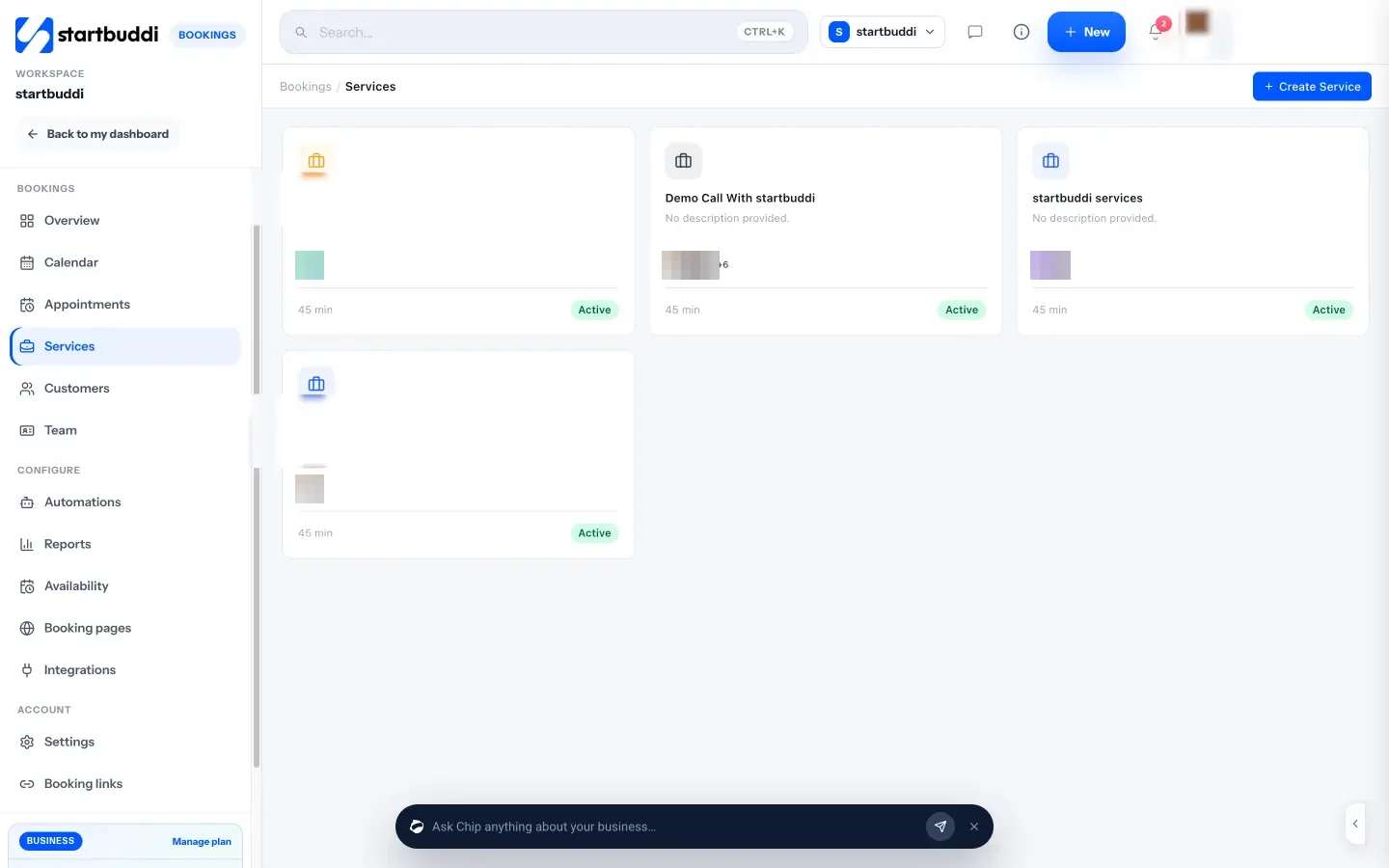
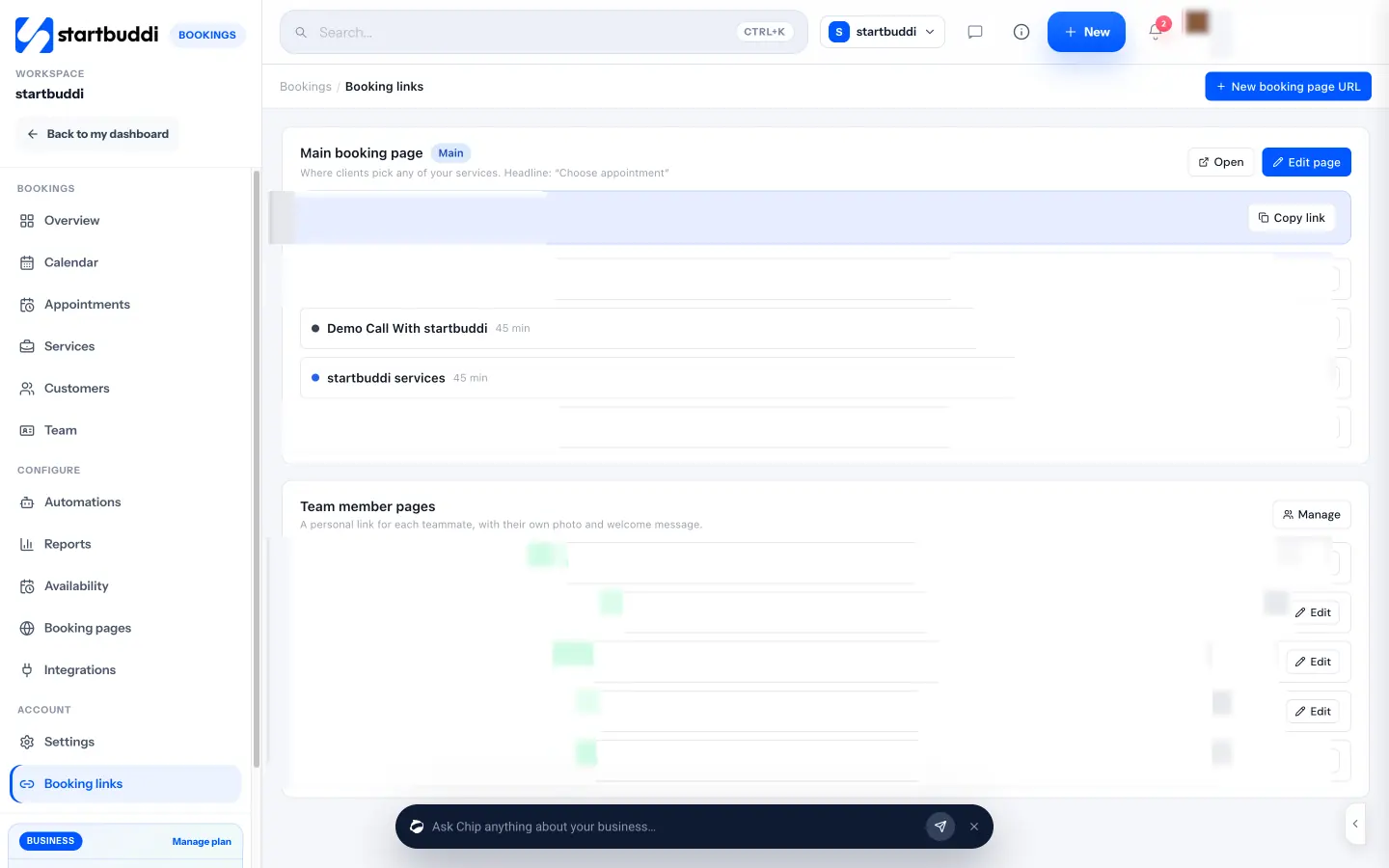
Your policy can sit where clients will see it. Each service has its own intro text and booking questions, so you can add a short summary of the policy and a required single-choice question such as “I have read the cancellation policy”. The booking page settings also include a welcome message and a thank-you message, and every booking page shows your logo, colours and services.
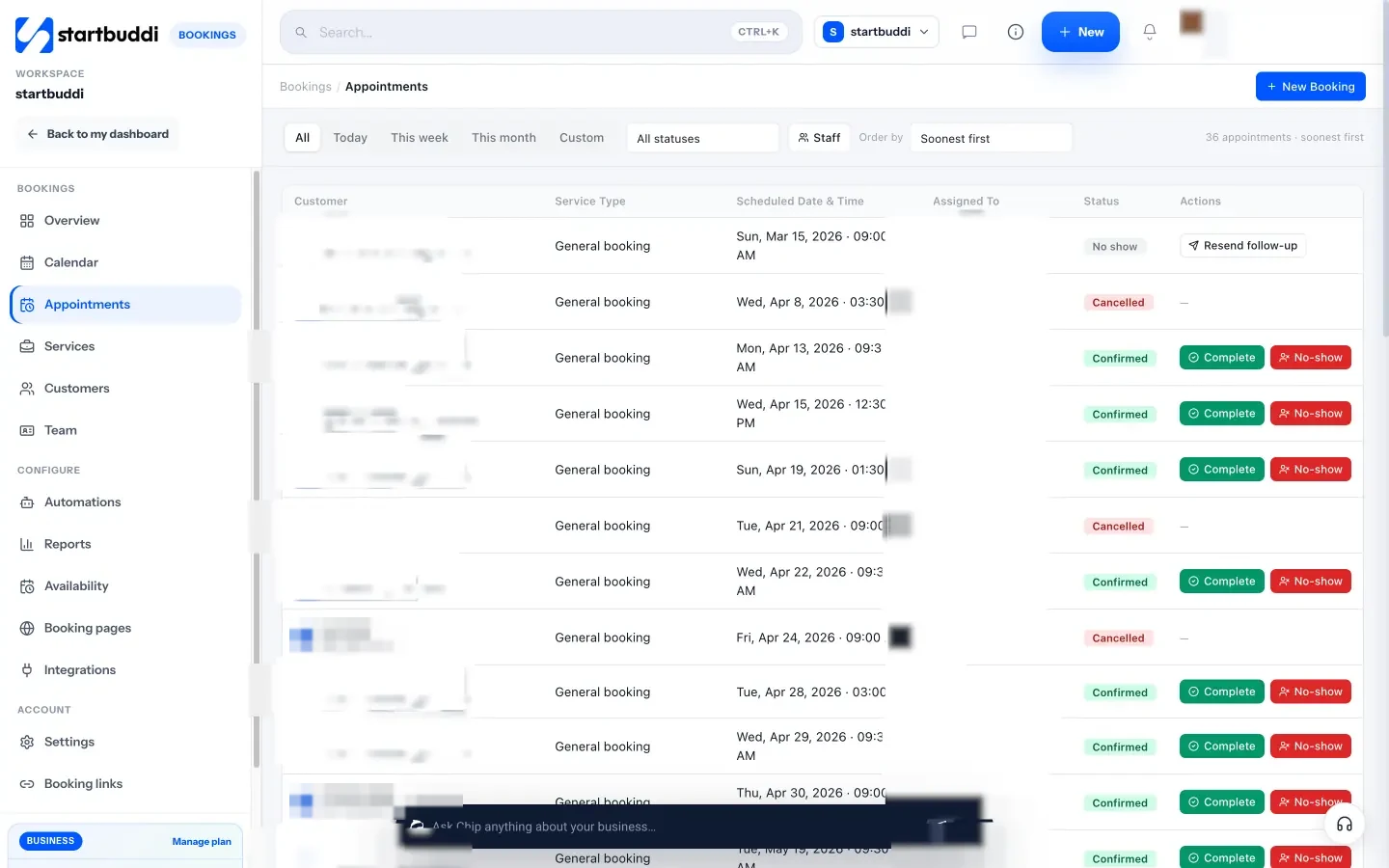
Clients get a confirmation email and reminders at the lead time you choose, and their own booking page where they can cancel instead of simply not turning up. The Appointments view shows every booking by status, including cancelled and no-show, and Reports show your cancellation rate so you can tell whether your policy is working. With Automations on the Starter plan or above, you can switch on the “Cancellation win-back” template to invite people who cancel to rebook. If you prefer to take deposits outside a booking, a payment link in Money Manager works too.
Your next step
Write your policy today using one of the templates above, keep it under 150 words, and add it to your booking page and confirmation message. Then set a deposit on the one service where late cancellations hurt most. You can set up your booking page and deposits on startbuddi’s Free plan; see the plans when you want automations too.
Sources
- Competition and Markets Authority, Unfair contract terms guidance (CMA37)
- The Consumer Contracts (Information, Cancellation and Additional Charges) Regulations 2013, regulation 28
- Federal Competition and Consumer Protection Act 2018 (Nigeria)
- Federal Competition and Consumer Protection Commission
Frequently asked questions
Can I keep a client's deposit if they cancel?
Usually yes, if your policy said so clearly before they paid and the amount is in line with what you lose. Consumer law in some countries limits this, so check the rules where you trade.
What is a reasonable cancellation notice period?
For most short appointments, 24 hours is common and easy for clients to accept. Longer or custom work may need several days or more, because it is harder to refill or you buy materials in advance.
Should I charge regular clients who cancel late?
Apply the policy consistently, but it is sensible to waive the first late cancellation for a loyal client and remind them of the policy. Record any exception so you stay fair.
Do I need a cancellation policy if I only have a few clients?
Yes. A short written policy saves awkward conversations later, and it is easier to set expectations at the start than to introduce rules after a problem.
Omolola Akiyode is the operations and project manager at startbuddi, leading cross-functional projects and the content that helps founders get set up. Omolola writes about projects, websites and getting found online, and turns complex ideas into clear, practical steps.
Runs operations and projects at startbuddi