Talent Acquisition Trends: 9 Practical Ideas That Work for Small Teams
Nine talent acquisition trends that matter to small teams in 2026: skills-based hiring, AI on both sides, candidate fraud, pay transparency and what to do.


The talent acquisition trends that matter most for small teams in 2026 are hiring for skills rather than degrees, AI being used by candidates and employers alike, a rise in candidate fraud, pay transparency rules in the EU, and new rules on automated hiring tools. Each changes how founders write adverts, run interviews and check new hires.
Key takeaways
- Most trend reports are written for large HR teams. The useful parts for a five-person company are cheaper and simpler than they sound.
- Assume every CV and cover letter has had help from AI. Test skills directly with a short, paid task or a work sample.
- Check identity before an offer, especially for remote roles. Interview fraud is no longer rare.
- If you hire anywhere in the EU, put the pay range in the advert or share it before the interview.
- A good first 90 days is part of hiring. People who start badly leave early.
Why talent acquisition trends matter to a small business
A big company that makes a bad hire absorbs it. A team of four can’t. One wrong person in a support role means slower replies, unhappy clients and a founder doing two jobs again. Talent acquisition for a small business is simply the work of finding, choosing and starting the right people, and the trends below change each of those steps.
We’ve kept to trends with a named source or a clear legal change behind them, and turned each into something you can do this month.
1. Skills are replacing degrees as the main filter
Hire for what the person can do, not where they studied.
The World Economic Forum’s Future of Jobs Report 2025 (checked on 1 October 2026), based on data from over 1,000 companies, says nearly 40% of the skills required on the job are set to change by 2030, and 63% of employers name the skills gap as their main barrier. When skills change that fast, a degree from ten years ago says little about whether someone can do the job today.
Example: an IT services firm in Lagos hiring a junior support engineer drops “BSc Computer Science required” and instead asks for two things: a working knowledge of Microsoft 365 administration and the ability to explain a fix to a non-technical client. Applicants who taught themselves are now in the pool.
2. AI is on both sides of the hiring table
Candidates use AI to apply, employers use it to sort, and both trust it less than you might think.
A Gartner survey of 2,918 job candidates in early 2025 (checked on 1 October 2026) found that just over half (52%) believed AI screens their application, but only 26% trusted AI to evaluate them fairly. On the other side, polished cover letters are now cheap to produce, so they tell you less about the writer.
What to do: use AI for the admin (drafting the advert, the scorecard, interview questions), keep the judgement human, and tell candidates where AI is involved. Our explainer on AI in talent acquisition covers the practical uses and the rules by country.
3. Candidate fraud is now a real hiring risk
Check that the person you interview is the person who turns up.
The same Gartner release reports that in a separate survey of 3,000 candidates, 6% admitted to interview fraud: posing as someone else, or having someone else pose as them. Gartner predicts that by 2028, one in four candidate profiles worldwide will be fake. For remote roles with access to client systems, that’s a security problem as well as a hiring one.
Example: a London agency hiring a remote developer adds three small steps: cameras on for every interview, a short live task in the final round, and an ID and right-to-work check before the offer is signed. None of it costs much, and it stops the most common tricks.
4. Pay transparency has become law in the EU
Publish the pay range, or share it before the interview.
The EU Pay Transparency Directive (2023/970) had to be brought into national law by 7 June 2026. The European Commission’s explainer on the new rules (checked on 1 October 2026) says employers must tell job seekers the starting salary or pay range in the vacancy notice or ahead of the interview, and can no longer ask about their pay history. Each country writes its own version, so check the law where the role is based.
Even outside the EU, publishing a range saves time. Candidates who need more than you can pay rule themselves out, and the ones who apply are already comfortable with the number.
Example: a Dublin start-up advertising a customer success role writes “€38,000 to €44,000, depending on experience” in the advert, and removes “current salary” from its application form.
5. Automated hiring tools come with audit and notice rules
If software scores or ranks candidates, find out what the law expects of you.
New York City’s Local Law 144, enforced since 5 July 2023, says employers can’t use an automated employment decision tool unless it has had a bias audit within the past year, the audit summary is public and candidates get notice, according to the city’s guidance page (checked on 1 October 2026). The EU AI Act also treats AI used in recruitment as high-risk, with extra duties for those who build and use it.
What to do: before you switch on automatic ranking in a hiring tool, ask the vendor what audits it has, read your local rules, and keep a person reviewing every rejection.
6. Referrals and communities beat job boards for small teams
Your best first hires often come from people who already know your work.
Large job boards bring volume, and volume is the last thing a founder with no recruiter needs. A referral from a client, a former colleague or a community you belong to comes with context you can’t get from a CV.
Example: a Nairobi software studio posts its role in two developer communities it already takes part in and asks its three engineers who they’d want to work with again. It offers a referral thank-you paid after the new hire’s probation, so the reward goes to good matches, not just introductions.
7. Remote and cross-border hiring is normal, so the paperwork matters
You can hire anywhere, but you still have to employ people properly.
Small teams now regularly hire across borders: an Accra founder with a designer in Cape Town, a Toronto start-up with engineers in Lagos. The hard part isn’t the video call; it’s the contract, tax and labour rules in the hire’s country.
What to do: decide early whether the person will be a contractor or an employee, take local advice on what that means where they live, and put working hours, time zones and response expectations in writing. Misclassifying an employee as a contractor can be costly to fix later.
8. Faster, clearer hiring processes win the best candidates
A two-week process with a clear timeline beats a six-week one with silence.
Good candidates rarely wait. Every extra round and every unanswered email gives them time to accept another offer. Small businesses have an edge here: the founder can decide in a day.
A simple process to copy:
| Stage | What happens | Target time |
|---|---|---|
| Advert live | Clear role, pay range, how to apply | Day 0 |
| Shortlist | Read applications against the scorecard | Within 5 working days |
| First interview | 30 minutes, video, same questions for everyone | Week 2 |
| Work sample | Short, paid task or live exercise | Week 2 to 3 |
| Final conversation and checks | Meet the team, ID and references | Week 3 |
| Offer | Written offer with start date | Within 2 days of the final round |
Tell candidates this timeline in the first message, then stick to it.
9. Upskilling and onboarding are part of hiring
Sometimes the best hire is the person you already have, and every hire needs a good start.
The WEF report found that 77% of employers plan to upskill their workers in response to AI. For a small business, that might mean training your best support person to handle client onboarding rather than hiring a new account manager. When you do hire, a planned first 90 days with clear goals and a named buddy is part of the same job. Employee onboarding that starts before day one makes it far more likely the person stays past probation.
How to act on these talent acquisition trends this quarter
You don’t need new software to use any of the trends above. A practical plan for a founder hiring one to three people:
- Rewrite your job adverts around skills, with a pay range.
- Write one scorecard per role and use the same interview questions for every candidate.
- Add a short, paid work sample to the final round.
- Check identity and the right to work before the offer.
- Write down a 30, 60 and 90 day plan before the person starts.
For the full process from first hire to a team of ten, read our guide on how to build your first team.
Where startbuddi fits in hiring
startbuddi doesn’t include an applicant tracking system, so it won’t post jobs, collect applications or screen candidates. Use a job board or a dedicated hiring tool for that part. startbuddi helps with the steps around it:
- Adverts and scorecards. Ask Chip, startbuddi’s AI assistant, in a normal chat to draft a skills-based advert, a scorecard or interview questions, then edit them yourself.
- Video interviews. With startbuddi Live meetings, a candidate joins by link. From the Starter plan, meetings can be recorded with Chip notes, so ask the candidate’s permission first.
- Offer letters. Write the offer in Documents and send it for e-signature.
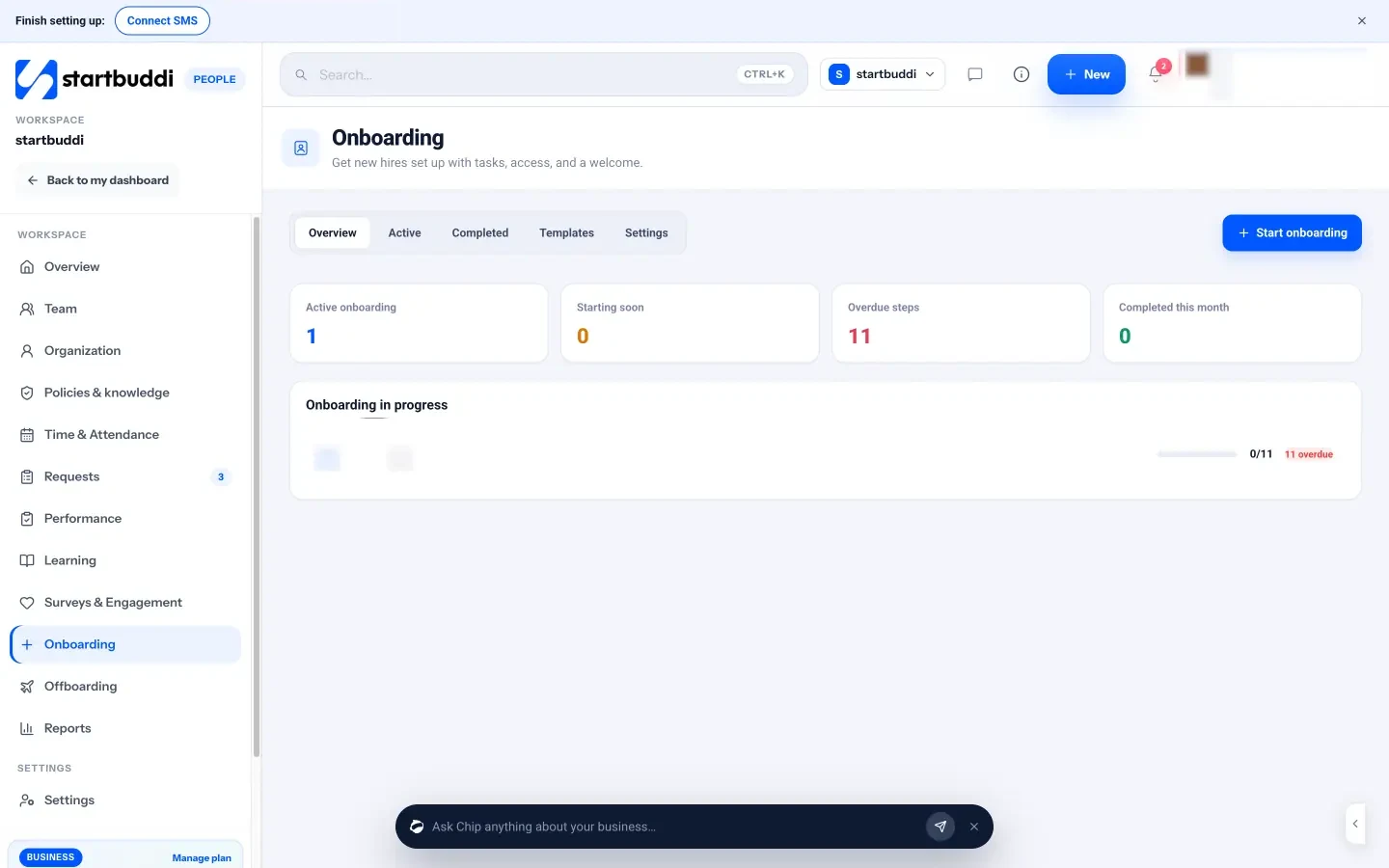
- The first 90 days. Start People onboarding from a checklist template, with an owner for each step and reminders for anything overdue.
If you’re building a young company, see how startbuddi works for startups. A free plan is available; see pricing for what each plan includes.
Hire well, start them well
Pick two of the trends above and change your next job advert this week. When your new hire says yes, start free with startbuddi to run their onboarding, documents and first meetings in one place.
Frequently asked questions
What are the biggest talent acquisition trends in 2026?
The biggest talent acquisition trends in 2026 are skills-based hiring, AI used by both candidates and employers, rising candidate fraud, pay transparency laws in the EU and audit rules for automated hiring tools. Faster processes and stronger onboarding matter too. For small teams, the practical response is clear adverts with pay ranges, work samples and identity checks.
Is skills-based hiring right for a small business?
Yes, for most roles. Testing what someone can do with a short work sample is a better predictor than a degree title, and it widens your pool to self-taught candidates. Keep formal qualifications only where the job or the law requires them, such as regulated trades.
Should I put the salary in my job advert?
If the role is in the EU, the Pay Transparency Directive requires you to share the starting pay or range in the advert or before the interview. Elsewhere it's usually a good idea anyway, because it saves time for you and for candidates. Check your local rules, as some places have their own requirements.
How can a small business spot a fake candidate?
Keep cameras on in interviews, include a short live task, and check ID and the right to work before you make an offer. Call references on numbers you find yourself, not only those the candidate gives you. Be especially careful with remote roles that give access to client data.
Can AI screen job applications fairly?
AI can sort applications quickly, but it can repeat bias in the data it learned from, and candidates trust it less than people. Some places, such as New York City, require bias audits and candidate notice for automated tools. Keep a person reviewing decisions and tell candidates where AI is used.
Does startbuddi have an applicant tracking system?
No. startbuddi doesn't post jobs or manage applications. It helps with the steps around hiring: Chip drafts adverts and interview questions, Live hosts video interviews, Documents handles offer letters with e-signature, and People runs onboarding.
Tiwalade Joanna Okedara-Kalu is the founder, CEO and CTO of startbuddi, the business system that brings clients, bookings, invoices, projects, marketing and the Chip AI assistant into one place. Tiwalade builds software around how service businesses really work day to day, and writes about client management, getting paid on time and why small businesses outgrow the tools they start with.
Founded startbuddi and leads its product and engineering