How to re-engage cold leads with email in a service business
How to re-engage cold leads with email: who to target, how to clean your list, a three-email sequence with examples, subject lines and when to stop.


Chinonye wrote this while on the startbuddi team. The product has changed since, so the team updated it on .
- Pick leads who showed real interest and went quiet 60 to 90 days ago, group them by what they wanted, and send three short, personal emails over two weeks. Stop when they reply, and move non-responders off your active list.
To re-engage cold leads with email, pick the people who showed real interest and then went quiet (usually 60 to 90 days ago), group them by what they wanted, and send a short sequence of two or three personal emails over about two weeks. Each email should give one useful reason to reply and one easy next step. Anyone who still doesn’t respond gets a polite final email and then leaves your active list. Done well, it brings back clients you’d already paid to attract, without spending a penny more on ads.
This guide is for service businesses: consultants, coaches, agencies, trainers, cleaners, clinics, photographers and anyone who sells time and expertise. It covers why leads go cold, which ones to pick, what to write (with examples), how to time it, and what to do with people who never reply. It works the same whether your clients are in Manchester, Melbourne or Lagos.
What is a cold lead?
A cold lead is someone who once showed interest (filled in a form, booked a discovery call, asked for a price, downloaded a guide) but hasn’t engaged for a while. They haven’t said no. They’ve just stopped responding. That’s different from a lost lead, who told you they chose someone else, and from someone who never engaged at all.
Cold leads are worth the effort because they already know who you are. You don’t have to earn their attention from scratch, only give them a reason to pick the conversation back up.
Why leads go cold in service businesses
Service purchases are often considered, personal and easy to postpone. Common reasons someone goes quiet:
- Timing. They wanted help “after the holidays” or “once the funding comes through”.
- An unanswered question. The proposal raised something they didn’t feel like asking.
- Internal changes. A new manager, a budget freeze, a reshuffle.
- Your follow-up stopped. One or two emails, then silence from your side too.
- Life. They meant to reply and it slid down the inbox.
Very few of those mean “never”. Most mean “not then”. A re-engagement email is simply checking whether “now” is different.
Step 1: choose which cold leads to target
Not every old contact deserves the same effort. Start with the people who showed the clearest intent, and work outwards.
| Priority | Who | Why |
|---|---|---|
| 1 | Had a call or received a proposal, then went quiet | Closest to buying; you know their needs |
| 2 | Asked for prices or filled in an enquiry form | Clear interest in a specific service |
| 3 | Past clients who haven’t bought in a year | Already trust you |
| 4 | Downloaded a guide or joined your list, never bought | Interest in the topic, not yet in you |
A good starting window is people whose last meaningful contact was 60 to 90 days ago. Much sooner and it’s still a normal follow-up; much later and memories have faded. For leads that are six months or older, our guide on reviving cold leads six months old covers a slightly different approach.
Step 2: clean your list before you send anything
Re-engagement campaigns go to people who haven’t opened your emails lately, which is exactly the group that can hurt your sender reputation. Mailbox providers pay attention to spam complaints: Google’s sender guidelines ask senders to keep reported spam below 0.1% and never reach 0.3%. Before you send:
- Remove addresses that have bounced.
- Remove anyone who unsubscribed or asked not to be contacted.
- Check you have a valid basis to email them. Rules differ: the US FTC’s CAN-SPAM guide and the UK ICO’s guidance on electronic mail marketing are good starting points. This is general information, not legal advice.
- Leave out people with no history of opening anything, ever. They’re unlikely to start now.
- Send in smaller batches rather than one big blast to an old list.
Step 3: group cold leads by what they wanted
Generic “we miss you” emails get ignored. Group people by the service they asked about or the problem they described, so each email can speak to it. A consultancy might have three groups: “strategy workshop”, “monthly retainer” and “one-off audit”. A cleaning company might split “end of tenancy”, “regular domestic” and “office”. Even two groups beat one. If you want the theory, our glossary covers email segmentation and lead nurturing.
Step 4: write a three-email re-engagement sequence
Three emails over about two weeks is enough for most service businesses. Each has one job.
Email 1 (day 0): reopen the door
Acknowledge the gap without guilt, remind them what they asked about, and offer something useful. Keep it under 100 words.
Subject: Your website refresh
Hi Chidi, back in June you asked about refreshing your firm’s website before the new year. I don’t know if that’s still on the list, but I’ve put together a one-page checklist of the five things that matter most for law firm sites. It’s yours if useful. And if the project is back on, just reply and we can pick a time. Ada
Email 2 (day 5 to 7): show something new
Share what’s changed since you last spoke: a new service, a shorter package, a relevant result you’re allowed to share, or an answer to the question they were probably stuck on. Only use real examples and results you can back up.
Subject: A smaller way to start
Hi Chidi, a few clients told me a full rebuild felt like too big a step, so I now offer a two-week refresh of the five pages that get the most visits. Fixed price, no long project. Worth a 15-minute chat? Here’s my calendar: [link]. Ada
Put this into practiceEverything in this article works inside startbuddi, free to start.Start free
Email 3 (day 12 to 14): the polite close
Often called a “break-up” email. It makes it easy to say no, which takes the pressure off, and people who were simply busy often use it as their cue to reply. Keep it short and genuinely friendly, never passive-aggressive.
Subject: Should I close your file?
Hi Chidi, I haven’t heard back, which is completely fine. I’ll stop emailing about the website so I’m not cluttering your inbox. If it comes back up, just reply to this email and I’ll pick it up from there. All the best, Ada
Subject lines that work for cold leads
Short, specific and human beats clever. Some patterns to adapt:
- Reference their request: “Your quote for the kitchen fit”, “The workshop you asked about”.
- Ask a genuine question: “Still planning the move in March?”
- Offer something small: “A checklist for your hiring plan”.
- The honest close: “Should I close your file?”
Avoid fake urgency, “RE:” on emails that aren’t replies, and anything that sounds like a mass mailing. More ideas are in our post on email subject lines that get opened.
Give them a real reason to respond
The best re-engagement emails make replying easy and worthwhile. Options that suit service businesses:
- A short free call or review, with a direct booking link.
- A useful resource tied to their problem: a checklist, a template, a price guide.
- A smaller starter package that lowers the risk of saying yes.
- A simple question they can answer in one line: “Is this still a priority this quarter?”
Discounts can work, but use them sparingly. Leading with money off teaches people to wait for the next offer.
Timing, frequency and when to stop
- Start 60 to 90 days after the last meaningful contact.
- Space emails five to seven days apart.
- Stop immediately when someone replies, books or unsubscribes. A reply means a human takes over.
- After the sequence, move non-responders to a low-frequency newsletter, or remove them if they’ve never engaged. Keeping unresponsive contacts on active campaigns drags down deliverability for everyone else.
Run a re-engagement pass every quarter for the leads that went cold in the previous three months. That turns a one-off rescue into a habit.
When email isn’t enough: add a personal touch
Email does most of the work, but your warmest cold leads (priority 1 in the table above) deserve more. If someone had a proposal worth a meaningful amount, a two-line WhatsApp message or a quick call after email 2 often gets a response the emails didn’t. Keep it light: “Hi Chidi, Ada here. Just checking whether the website project is still on your radar, no pressure either way.” Log the call or message on their record so the next person knows it happened. Only message people on WhatsApp or by text if they gave you that number for this purpose and the channel’s rules allow it.
A quarterly re-engagement routine
Once your first campaign has run, turn it into a routine that takes about an hour every three months:
- Pull everyone whose last meaningful contact was 60 to 150 days ago and who hasn’t bought.
- Remove bounces, unsubscribes and anyone who said no.
- Split them by the service they asked about.
- Update the three emails with anything new: services, prices, dates, useful resources.
- Send email 1 to the warmest group first, then the others over the following days.
- Hand every reply to a person within one working day.
- After the sequence, tag non-responders so they don’t get the same campaign next quarter.
Over a year, that’s four small, steady recoveries rather than one panicked clear-out when sales are slow.
How to measure a re-engagement campaign
Judge it on conversations and bookings, not opens. Open rates are less reliable than they used to be, because some email apps download messages automatically; Apple’s Mail Privacy Protection is one example. Track:
- Replies (the best signal).
- Clicks on your booking or resource link.
- Calls booked and deals reopened.
- Revenue from re-engaged leads over the next 90 days.
- Unsubscribes and complaints, which should stay low.
Also note the reasons people give when they do reply. “We went with someone else” and “budget’s gone” tell you different things about your offer and follow-up.
Common mistakes when re-engaging cold leads
- Blasting the whole list instead of starting with the warmest group.
- Making it about you (“We’ve launched a new website!”) instead of about their problem.
- Too long. Cold leads skim. Three short paragraphs, maximum.
- No stop rule, so someone who booked still gets “are you still interested?”
- Forgetting the channel they preferred. If they always replied on WhatsApp, a quick message there may work better than a third email.
How startbuddi helps you re-engage cold leads
With startbuddi, your contacts, conversations and email marketing sit together, so finding and emailing cold leads doesn’t mean exporting lists between tools. In Audiences, segments can use real behaviour: last contacted date, lead stage, whether someone filled in a form, whether they opened or clicked a campaign, and their email status. Save “enquired, not contacted in 60 days” once and it stays up to date.
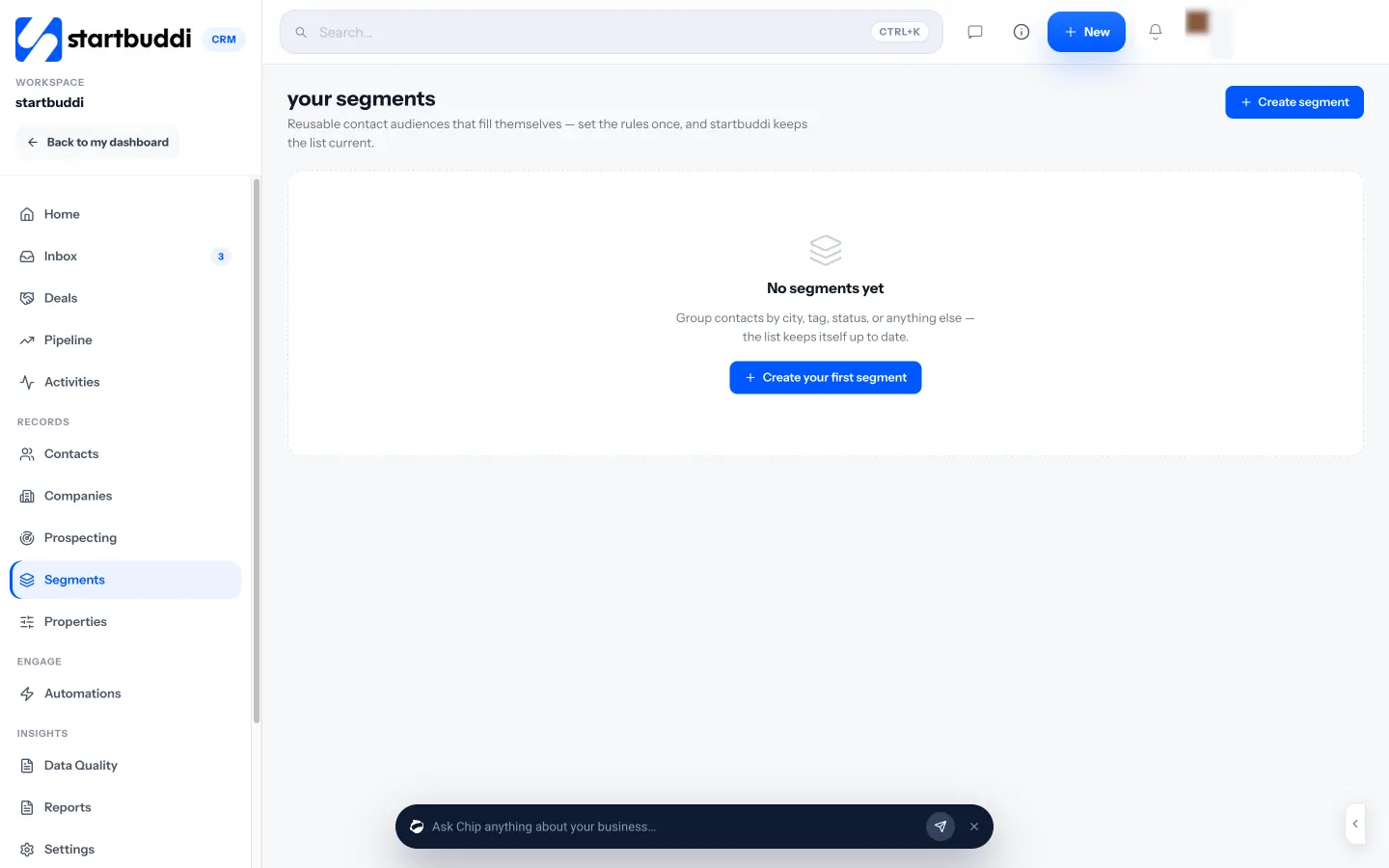
Email Marketing lets you write the email yourself or have Chip draft the subject, preview and copy for you to edit. Unsubscribed and bounced contacts are left out automatically, and every email carries an unsubscribe link and your business address. After sending, you can resend the same email with a new subject to people who didn’t open it, once per campaign.
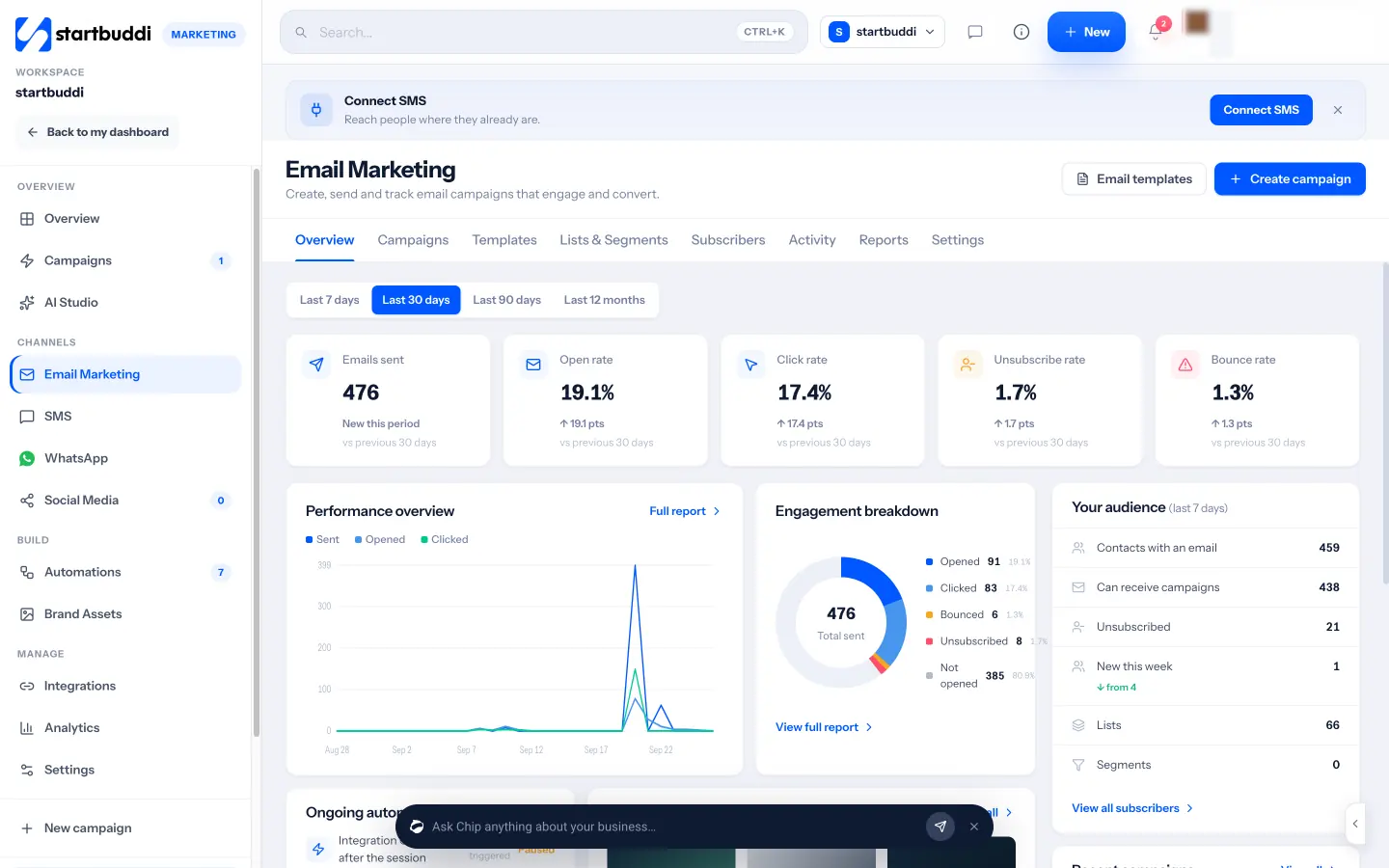
For a sequence that runs by itself, Automations can send an email, wait, check for a reply and stop, or create a task for a teammate to call instead. For a single contact, Nurture with Chip (in beta) drafts a short follow-up sequence from that person’s history for you to edit before enrolling them. Replies land in the shared inbox, labelled with the campaign they answer.
Email Marketing needs the Starter plan or above, which also raises active automations from 2 to 10 (see pricing), and every paid plan has a 30-day trial. See pricing, or read how to segment your email audience.
Your next step
List the ten people who had a call or a proposal from you three months ago and went quiet. Send each a personal version of email 1 today. When the replies start, you’ll know it’s worth turning into a sequence. For the follow-ups that keep new leads from going cold in the first place, see how to build a follow-up sequence.
Sources
- Google: Email sender guidelines
- FTC: CAN-SPAM Act compliance guide for business
- ICO: Electronic mail marketing
- Apple: Protect email privacy in Mail
Frequently asked questions
How long should I wait before re-engaging a cold lead?
Around 60 to 90 days after the last meaningful contact is a good starting point. Sooner is a normal follow-up; much later and they may not remember you.
How many re-engagement emails should I send?
Two or three over about two weeks, ending with a polite final email. Stop as soon as someone replies, books or unsubscribes.
What should a re-engagement email say?
Remind them what they asked about, offer something useful or a smaller way to start, and give one easy next step, such as replying or booking a short call.
Should I remove leads who never respond?
Move them to a low-frequency newsletter or remove them. Emailing unresponsive contacts repeatedly can hurt delivery for the rest of your list.
SEO Copywriter| Email growth Specialist| I help businesses increase revenue with strategic SEO content & high-converting email funnels.