
Starting a Photography Business Checklist: How to Book Consistently
A starting a photography business checklist: pick a niche, price packages, take deposits, use contracts and fill quiet months, with a pricing example.

A starting a photography business checklist has seven parts: choose one kind of client, build three priced packages, register and protect the business, set up a booking page that takes a deposit, use a written contract, deliver on a promised date, and plan for quiet months. Steady bookings come from that system, not from better photos alone.
Key takeaways
- Pick one paying niche first, such as weddings, portraits, products or headshots. Each one books on a different rhythm.
- Sell packages with a clear deliverable list (hours, edited images, delivery date) instead of an hourly rate.
- Take a non-refundable deposit to hold a date. A date held without one is a date you can lose.
- Put usage rights, delivery times and cancellation terms in a written contract before the shoot.
- Track which months are quiet in your first year and sell into them before they arrive.
Why some photographers stay booked and others don’t
Most new photographers spend their first months on gear and portfolio, then wonder why enquiries don’t turn into bookings. The usual leaks are easy to spot once you look for them: prices sent as a long voice note, no deposit so the client “keeps the date open”, a contract nobody signed, and galleries delivered weeks late, which kills referrals.
The photographers who book consistently treat the business side as a system. Every enquiry gets the same reply with the same packages. Every booking gets a deposit and a contract. Every delivery gets a follow-up asking for a review and a referral. This chapter walks through that system, step by step.
The starting a photography business checklist
Copy this list and work through it in order. Most people can finish it in two to four weeks alongside their current work.
1. Niche and offer
- Choose one main niche: weddings and events, family and portraits, products for online sellers, or corporate headshots.
- Write one sentence saying who you shoot for and what they get.
- Choose 20 to 30 of your best images in that niche for a portfolio.
- Look at three local competitors’ packages and prices.
2. Pricing and packages
- Work out your cost per shoot: travel, editing hours, assistant, storage, prints.
- Set three packages with hours, number of edited images and delivery time.
- Decide your deposit and when the balance is due.
- Write what’s not included: extra hours, rush delivery, travel beyond a set distance, albums.
3. Make it official
- Register the business name with your country’s registry.
- Register for tax and note your filing dates.
- Open a separate business bank account.
- Get equipment insurance and, for events, public liability cover.
- Check data protection rules for storing client photos and details.
4. Bookings and payments
- Create a booking page or enquiry form with your packages and prices.
- Connect a way to take card, bank transfer or mobile payments online.
- Write a standard enquiry reply you can send in under a minute.
- Set reminders for shoots and for balance payments.
5. Contracts and rights
- Use a written contract for every paid shoot.
- State who owns the copyright and what the client may do with the images.
- Include cancellation, rescheduling, weather and late-payment terms.
- Use a model release when images of people will be used commercially.
6. Delivery and follow-up
- Set a delivery promise you can keep, then beat it.
- Back up every shoot in two places before you format a card.
- Send a review and referral request with the gallery.
- Book the next session (anniversary, seasonal, quarterly product shoot) where it makes sense.
7. Quiet months
- Mark your busy and quiet months as they happen in year one.
- Plan one offer for each quiet month, such as mini sessions or product bundles.
- Keep a list of past clients to contact before each quiet month.
Step 1: choose a niche that matches how you want to book
Each niche books differently, and your systems should match it.
| Niche | How far ahead clients book | Typical deposit pattern | What drives repeat work |
|---|---|---|---|
| Weddings and events | Months ahead | Large deposit to hold the date | Referrals from couples, planners and venues |
| Family and portraits | Weeks ahead | Smaller deposit or full payment upfront | Seasonal sessions, birthdays, graduations |
| Products for online sellers | Days ahead | Often full payment upfront | Monthly shoots for new stock |
| Corporate headshots | Days to weeks | Invoice to the company | New hires and annual updates |
A photographer in Lagos shooting weddings needs a contract and a deposit system before anything else. One in Toronto shooting products for Shopify stores needs fast turnaround and a simple reorder process. You can add a second niche later; starting with two splits your portfolio and your message.
Step 2: price packages from your costs
Start from what a shoot really costs you, including the editing time most new photographers forget. Our hourly rate calculator helps you set a minimum rate, and the pricing strategy guide explains how to move from cost to value.
Worked example: a portrait package in Abuja
These figures are illustrative. Use your own costs.
| Cost item | Amount |
|---|---|
| Shoot time: 2 hours | (your time) |
| Editing and culling: 4 hours | (your time) |
| Transport, both ways | ₦15,000 |
| Assistant for the shoot | ₦20,000 |
| Online gallery and storage, share per shoot | ₦5,000 |
| Direct costs | ₦40,000 |
If you want to earn ₦12,500 an hour for your six hours, that’s ₦75,000. Add the ₦40,000 of direct costs and the minimum price is ₦115,000. Round it to a package:
- Mini: 1 hour, 15 edited images, delivered in 7 days. ₦85,000.
- Standard: 2 hours, 30 edited images, delivered in 10 days. ₦125,000.
- Full: 3 hours, 50 edited images, two locations, delivered in 14 days. ₦180,000.
Most clients pick the middle option, so make Standard the one you most want to sell. The same method works in dollars or pounds: a portrait photographer in Manchester or Houston adds up hours, editing and costs the same way, just with local rates.
Step 3: take a deposit for every booking
A deposit turns “I’m interested” into a booking. For weddings and events, many photographers ask for a larger share upfront because they turn down other work for that date. For portraits, a smaller deposit with the balance before the session is common. Our guide on how much deposit to charge clients walks through the numbers.
Write your payment terms once and use them everywhere: on the booking page, in the contract and on the invoice. For example: “A deposit of 50% holds your date and is non-refundable. The balance is due seven days before the shoot.”
Step 4: protect your work and your clients’ data
Your contract should say who owns the copyright in the images and what the client may do with them, because the default rules differ by country and change for employees. In the UK, the government’s copyright guidance (checked on 1 October 2026) says you get copyright automatically, without applying or paying a fee. In the US, you can also register photographs with the US Copyright Office (checked on 1 October 2026), which offers group registration options for published and unpublished photos.
Spell out the client’s licence: personal use only, social media, or commercial use for an agreed fee. A free freelance agreement template gives your lawyer a starting point.
Client galleries and contact details are personal data. In the UK, the Information Commissioner’s Office says organisations, including sole traders (checked on 1 October 2026), that use personal information must pay a data protection fee unless they’re exempt. Nigeria, Kenya, Ghana and many other countries have their own data protection laws, so check what applies where you work.
Step 5: make booking easy
Clients book the photographer who makes it easy. A booking page with your packages, prices, available dates and a deposit button does more than a perfect portfolio sent as a PDF.
What a good enquiry flow looks like:
- A client finds you on Instagram, Google or a referral.
- They open one link with your packages and prices.
- They pick a package and a date, answer a few questions (event type, location, number of people) and pay the deposit.
- They get a confirmation and your contract to sign.
- They get a reminder before the shoot and an invoice for the balance.
For weddings, where you need to talk first, use a short call booking instead, then send a quote and the contract after the call.
A reply template for new enquiries
Speed matters more than polish. Save a reply like this and send it within the hour:
Hi {first name}, thanks for getting in touch about your {shoot type} on {date}. That date is free at the moment. My packages are below, with what’s included and delivery times. A 50% deposit holds the date, and you can book and pay here: {booking link}. If you’d like to talk first, pick a 15-minute call on the same page. I’m happy to answer any questions.
Then add three lines: Mini, Standard and Full, each with its price, hours, number of edited images and delivery time. A client who can see the price and book in one tap is far less likely to drift off to the next photographer in their search results. If they haven’t replied in two days, send one short follow-up asking whether they’d like you to hold the date.
Step 6: deliver on time and ask for the next booking
Delivery is where repeat work is won or lost. Promise a date you can beat, then send the gallery a day early. With the gallery, send three things: how to download and share the images, a request for a review, and a simple referral offer, such as a discount on their next session for each friend who books.
Keep a list of every client with the date of their shoot. A family shoot in December can become a birthday shoot in June. A product client who shot their spring range will need summer.
Step 7: plan for quiet months
Every niche has quiet months. Weddings cluster around certain seasons and holidays, and product shoots tend to follow sellers’ busy periods. You won’t know your own pattern until you’ve lived one year of it, so write down bookings by month from day one.
When a quiet month is coming, run one simple offer to past clients: mini sessions on one day, a headshot day for a local company, or a bundle for online sellers.
Mistakes to avoid when starting a photography business
- Spending your budget on lenses before you have paying clients.
- Quoting a different price to every enquiry.
- Holding dates without a deposit.
- Shooting without a signed contract, especially for weddings.
- Keeping your only copy of a shoot on one memory card or one laptop.
- Leaving your portfolio full of niches you don’t want to book.
How to do this in startbuddi
startbuddi doesn’t edit photos or host client galleries. It runs the business side: bookings, deposits, contracts, invoices and client follow-up.
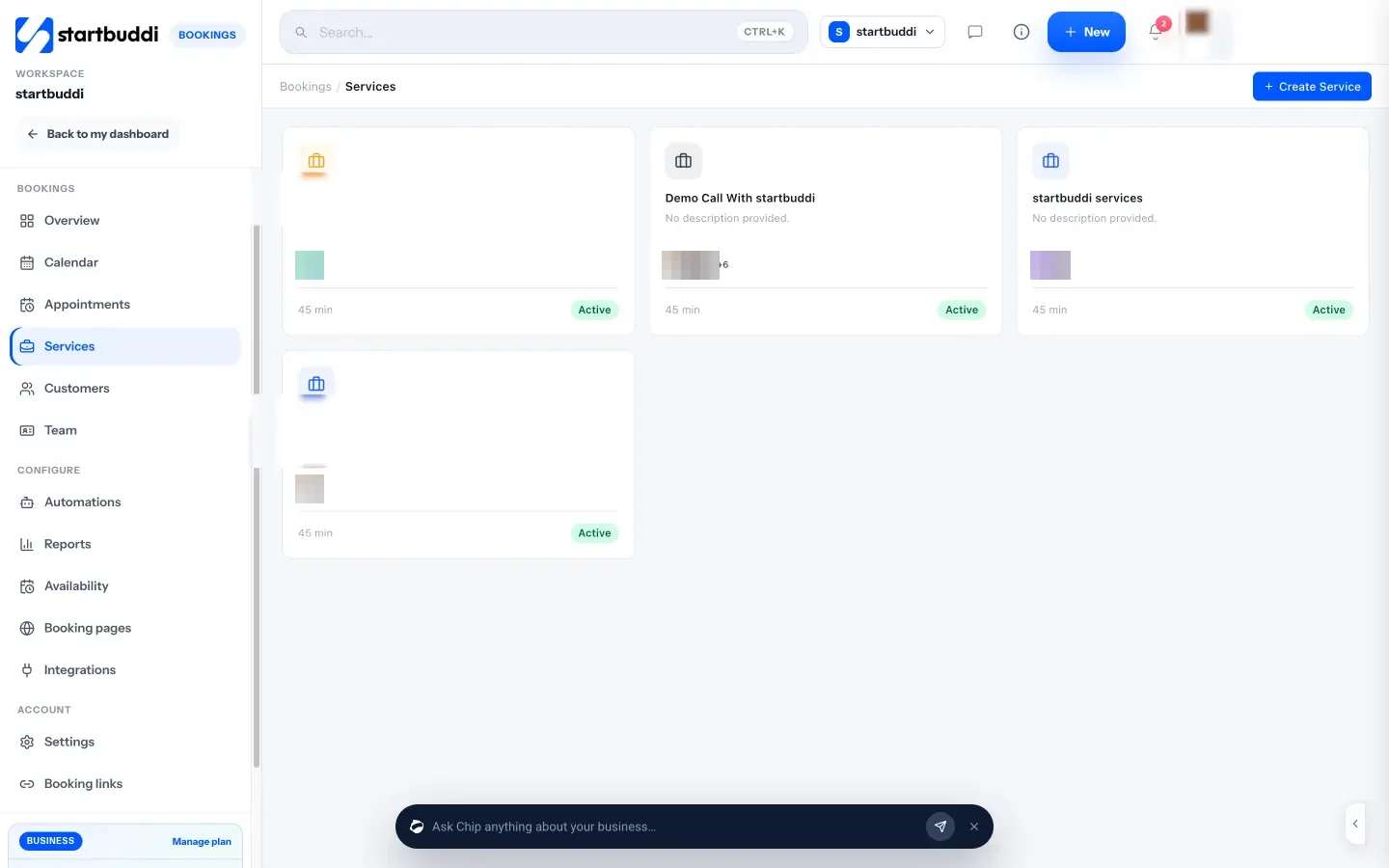
- Turn packages into bookable services. In Bookings, open Services, click Create Service and add each package with its duration and price. Turn on Require payment to book and set the deposit.
- Ask the right questions at booking. Add booking questions such as event type, location and number of people. Answers can be saved to the client’s contact record.
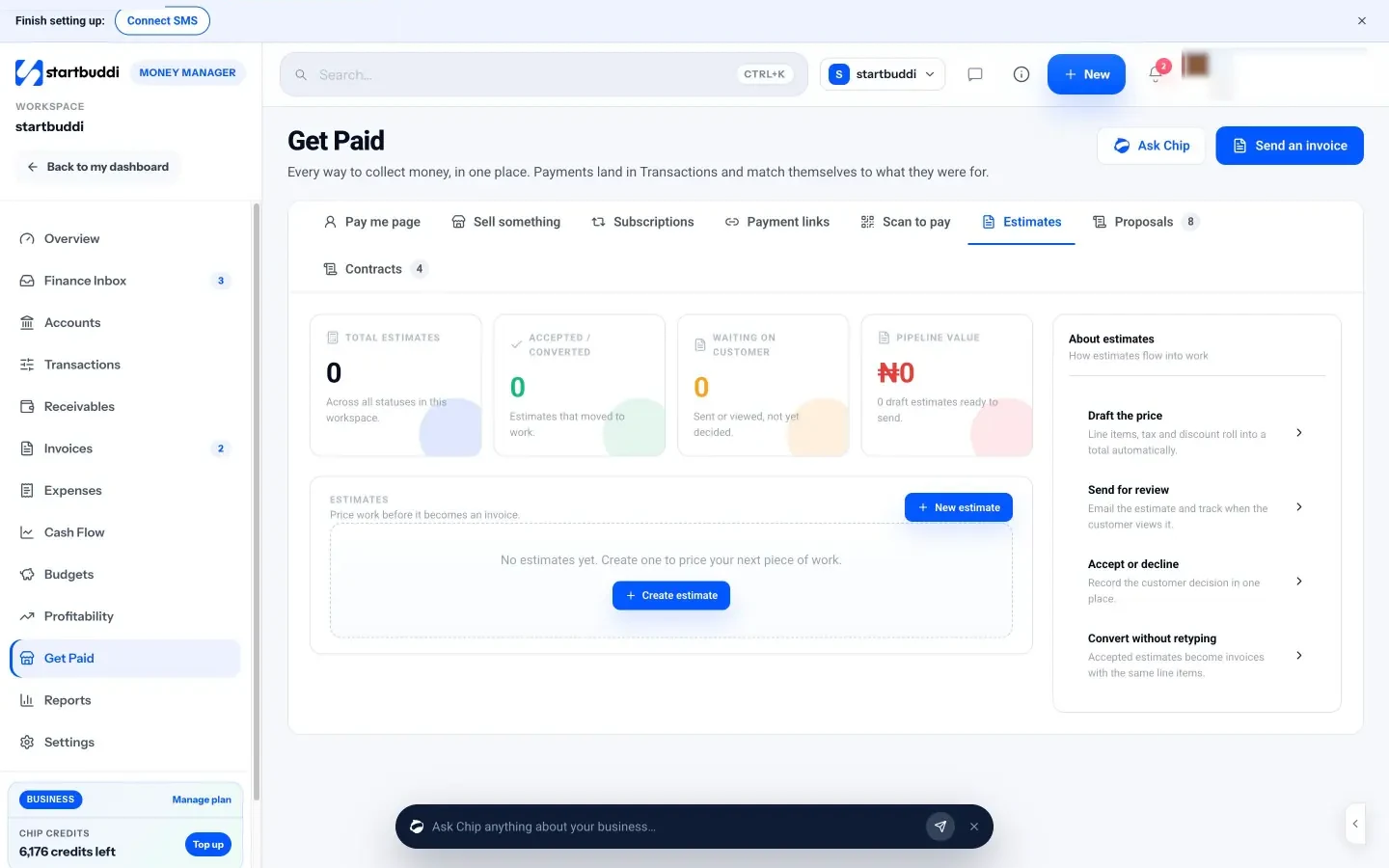
- Quote larger jobs. For weddings and corporate work, create an estimate in Money Manager under Get Paid → Estimates, send it by email and mark it accepted when the client agrees. Accepted estimates convert to invoices with the same line items.
- Send the contract for signature. Under Get Paid → Contracts, start from the Photography Contract template, edit the wording and add the client as a signer.
- Get paid the way clients pay. Clients pay deposits and invoices by card through Stripe, or by card, bank transfer, USSD or mobile money through Paystack.
- Follow up after the shoot. In Bookings settings, edit the follow-up email sent after a completed booking to ask for a review and a referral.
A free plan is available. See pricing for what each plan includes.
FAQs
What do I need to start a photography business?
You need a camera body, one or two lenses that suit your niche, editing software, reliable backup storage and a portfolio of 20 to 30 strong images. On the business side, you need registered business details, a bank account, priced packages, a contract and a way to take deposits. Insurance for your equipment is worth getting before your first paid shoot.
Is there a starting a photography business checklist PDF?
You can copy the checklist on this page into a document and save it as a PDF. It covers niche, pricing, registration, bookings, contracts, delivery and quiet months. Tick each line as you finish it.
How much should I charge as a new photographer?
Charge at least your costs plus a fair rate for every hour you spend, including editing time. Work out the cost of one shoot, add your hourly rate, then round up into two or three packages. Check local competitors so your prices make sense in your market.
Do I need a contract for every photography job?
Yes. A contract sets the deposit, the balance date, what’s delivered and when, cancellation terms and how the client may use the images. It protects both sides and stops arguments before they start.
Who owns the copyright to photos I take for a client?
It depends on your country and your contract. Freelance photographers commonly keep the copyright and give the client a licence to use the images, but the default rules differ by country and for employees. Write ownership and usage terms into your contract so there’s no confusion.
How do photographers get consistent bookings?
They pick a clear niche, publish set packages and prices, make booking and paying a deposit easy, and deliver on time. They also follow up with past clients for reviews, referrals and repeat sessions. Planning offers for quiet months keeps the calendar steadier.
Tiwalade Joanna Okedara-Kalu is the founder, CEO and CTO of startbuddi, the business system that brings clients, bookings, invoices, projects, marketing and the Chip AI assistant into one place. Tiwalade builds software around how service businesses really work day to day, and writes about client management, getting paid on time and why small businesses outgrow the tools they start with.
Founded startbuddi and leads its product and engineering