
Business Plan Checklist: How to Write a Simple Business Plan for a Service Business
Use this business plan checklist to write a simple plan for a service business in one day: 10 sections, a worked example with real numbers and a copy list.

A business plan checklist is the list of sections and checks that make a plan useful: who you serve, what you sell, your price, how customers find you, what it costs to run, your break-even point, the risks and your first 90 days. For a service business, two to five pages that answer those questions are enough.
Key takeaways
- A simple plan for a service business fits on two to five pages. Banks and investors may want more, but you write the short one first.
- The numbers matter more than the prose: price per job, cost per job, fixed monthly costs and how many jobs you need to break even.
- Use the checklist below twice: once to write the plan, once to test it against what actually happens in your first 90 days.
- A plan is only useful if it turns into weekly tasks and goals you can check.
- You can copy the checklist and the worked example straight into a document today.
Why a simple business plan is enough for most service businesses
Most people starting a cleaning company, a salon, a consultancy or a photography studio are not raising money from investors. They need a plan that answers one question: will this pay me, and how soon? A short plan answers that faster than a 40-page document, and you are more likely to keep it up to date.
The US Small Business Administration describes two formats: a traditional business plan and a lean startup plan (checked on 1 October 2026). The traditional one is long and suits lenders. The lean one summarises only the most important points. The UK government’s Write a business plan page (checked on 1 October 2026) says a plan helps you clarify your idea, spot problems, set goals and measure progress, and it links to free templates.
This chapter sits between the two. It gives you the sections a lender would recognise, written at the length a busy owner will actually finish.
What should a business plan checklist include?
A business plan checklist for a service business should cover ten sections. Each one has a question it must answer. If you can’t answer the question in two or three sentences, that is the part of your business you need to think about next, not a part to skip.
| # | Section | The question it answers | Done when |
|---|---|---|---|
| 1 | Summary | What is this business, in five sentences? | Someone outside the business can repeat it back |
| 2 | Your offer | What exactly do you sell, and what is included? | Each service has a name, a scope and a price |
| 3 | Your customer | Who buys, and why now? | You can name the type of customer and their main problem |
| 4 | Market and competitors | Who else do they buy from, and why would they pick you? | You have checked three competitors’ prices |
| 5 | Pricing | What do you charge, and does it cover your costs? | Price per job is above cost per job plus a margin |
| 6 | Getting customers | How will the first 20 customers find you? | Two channels named, with a weekly action for each |
| 7 | Operations | How is a job booked, delivered and paid for? | The steps are written down from enquiry to payment |
| 8 | Money | What does it cost to start and to run each month? | Start-up costs, monthly costs and break-even are worked out |
| 9 | Risks | What could stop this working? | Three risks, each with a plan B |
| 10 | First 90 days | What happens next, week by week? | Goals and tasks have dates and an owner |
How to write a simple business plan, step by step
Work through the sections in this order. The order matters: your customer and offer shape your price, and your price shapes every number after it.
1. Write your offer in one sentence
Start with a sentence in this shape: “I help [customer] get [result] by [how].” For example: “We help busy families in Lekki keep their homes clean with a weekly two-person clean, booked and paid online.” This is your value proposition, and every other section has to support it.
2. Describe the customer you will serve first
Pick one group to start with, even if you will serve others later. Write down where they are, what they currently do instead of hiring you, and what makes them decide. A Lagos home cleaner might start with working couples in estates within one traffic zone, because travel time between jobs eats the day.
3. Check three competitors
Look up three businesses your customer could hire instead. Note their price, what is included and how people book them. You are not trying to undercut them. You are looking for the gap you can fill: faster booking, a clearer price, a guarantee, or a service they don’t offer.
4. Set your price from your costs, not from a guess
Work out what one job costs you to deliver, then add your margin. Our pricing strategy guide covers this in depth. As a rule, if your price only covers the cost of the job, you are paying yourself nothing for running the business.
5. Plan how the first 20 customers will find you
Name two channels and the weekly action for each. “Social media” is not a plan. “Post one before-and-after photo on Instagram every Tuesday and ask every customer for one referral after the job” is a plan.
6. Write down how a job runs
List the steps from first message to money in the bank: enquiry, quote, booking, deposit, the job itself, invoice, payment, follow-up. Each step should say who does it and what tool they use. This is the section most first plans skip, and it is where most early problems show up.
7. Do the money
You need three numbers: start-up costs (one-off), monthly fixed costs (you pay these even with no customers) and contribution per job (price minus the direct cost of that job). Divide fixed costs by contribution per job and you get the number of jobs you need each month to break even. The worked example below shows the sums, and the free break-even calculator does them for you.
8. List three risks and a plan B for each
Be specific. “Competition” is too vague. “A cleaner quits in the first month and I can’t cover Saturday jobs” is a risk you can plan for.
9. Turn the plan into 90 days of goals
End with three goals for the next 90 days, each with a number and a date, and the first tasks for each. If the plan doesn’t change what you do on Monday, it is not finished.
10. Write the summary last
Now go back to the top and write five sentences: what you sell, to whom, at what price, how they find you, and how many jobs a month you need. That is your summary.
Worked example: a home cleaning business in Lagos
The figures below are an illustration to show the sums. They are not market data, so replace every number with your own quotes and prices.
Ada is starting a home cleaning service in Lagos. Her offer is a weekly two-person clean for a three-bedroom flat.
| Item | Amount |
|---|---|
| Price per clean | ₦35,000 |
| Two cleaners’ pay per clean | ₦10,000 |
| Cleaning supplies per clean | ₦3,000 |
| Transport per clean | ₦4,000 |
| Direct cost per clean | ₦17,000 |
| Contribution per clean (price minus direct cost) | ₦18,000 |
Her fixed monthly costs are phone and data (₦15,000), marketing (₦40,000) and repayments on a vacuum and equipment (₦25,000), so ₦80,000 a month.
- Break-even before paying herself: ₦80,000 ÷ ₦18,000 = 4.4, so 5 cleans a month.
- Break-even if she wants to pay herself ₦250,000 a month: (₦80,000 + ₦250,000) ÷ ₦18,000 = 18.3, so 19 cleans a month, or about 5 a week.
That second number is the one that goes in her summary. Five cleans a week is a target she can test in her first 90 days. Her contribution is about 51% of the price, which is her profit margin on each job before fixed costs.
The same sums work in any currency. A solo bookkeeper in Manchester charging £400 a month per client, with £60 of software and direct costs per client and £900 of fixed monthly costs, needs £900 ÷ £340 = 2.6, so 3 clients to cover costs, and more to pay herself.
Your business plan checklist (copy this)
Copy this list into a document, or download the printable version below. Tick each item only when the “done when” test above is true.
Offer and customer
- My offer is written in one sentence: customer, result, how.
- Each service has a name, what’s included and a price.
- I have named the first customer group I will serve.
- I know what they do today instead of hiring me.
- I have checked three competitors’ prices and booking process.
Pricing and money
- I know the direct cost of one job.
- My price covers the direct cost plus a margin.
- I have listed my start-up costs and where the money comes from.
- I have listed my fixed monthly costs.
- I have worked out my break-even number of jobs per month.
- I have worked out how many jobs I need to pay myself.
- I have checked what taxes and registrations apply where I work.
Getting customers
- I have named two channels for my first 20 customers.
- Each channel has a weekly action I can do in under two hours.
- I know how people will contact me and how fast I will reply.
Operations
- The steps from enquiry to payment are written down.
- I know who does each step and which tool they use.
- I know how I will take deposits and send invoices.
- I have a simple agreement or terms for customers.
Risks and next steps
- I have listed three risks with a plan B for each.
- I have three 90-day goals, each with a number and a date.
- Each goal has its first three tasks.
- I have written a five-sentence summary.
- I have booked a date in 90 days to review the plan against real results.
Want it as a file? The free business plan template gives you the full sections to fill in, or print this page and tick the list by hand.
Download the printable version
Download the business plan checklist (PDF, 12 pages). It has the ten sections with the question each one answers, this checklist as tick boxes, a fill-in plan template, a worked break-even example and a sheet to check the plan against reality at 30, 60 and 90 days. Free, no sign-up.
Mistakes to avoid when writing a business plan
- Starting with the logo and name. Naming matters (see the previous chapter on naming your business), but the plan comes first: a name won’t fix a price that loses money.
- Using revenue instead of contribution. ₦35,000 a job sounds good until you see ₦17,000 of it is already spent.
- Leaving yourself out of the costs. If the plan only works when you earn nothing, it doesn’t work.
- Planning for everyone. “Anyone who needs cleaning” is not a customer group, and it makes your marketing vague.
- Writing it once and filing it. A plan you never compare against reality can’t warn you when something is off.
- Ignoring power and travel time in your costs. In Lagos, generator fuel and hours lost in traffic are real costs per job. Count them.
How to do this in startbuddi
You can write the plan anywhere. The advantage of writing it in startbuddi is that the goals, tasks and numbers sit next to the work that tests them.
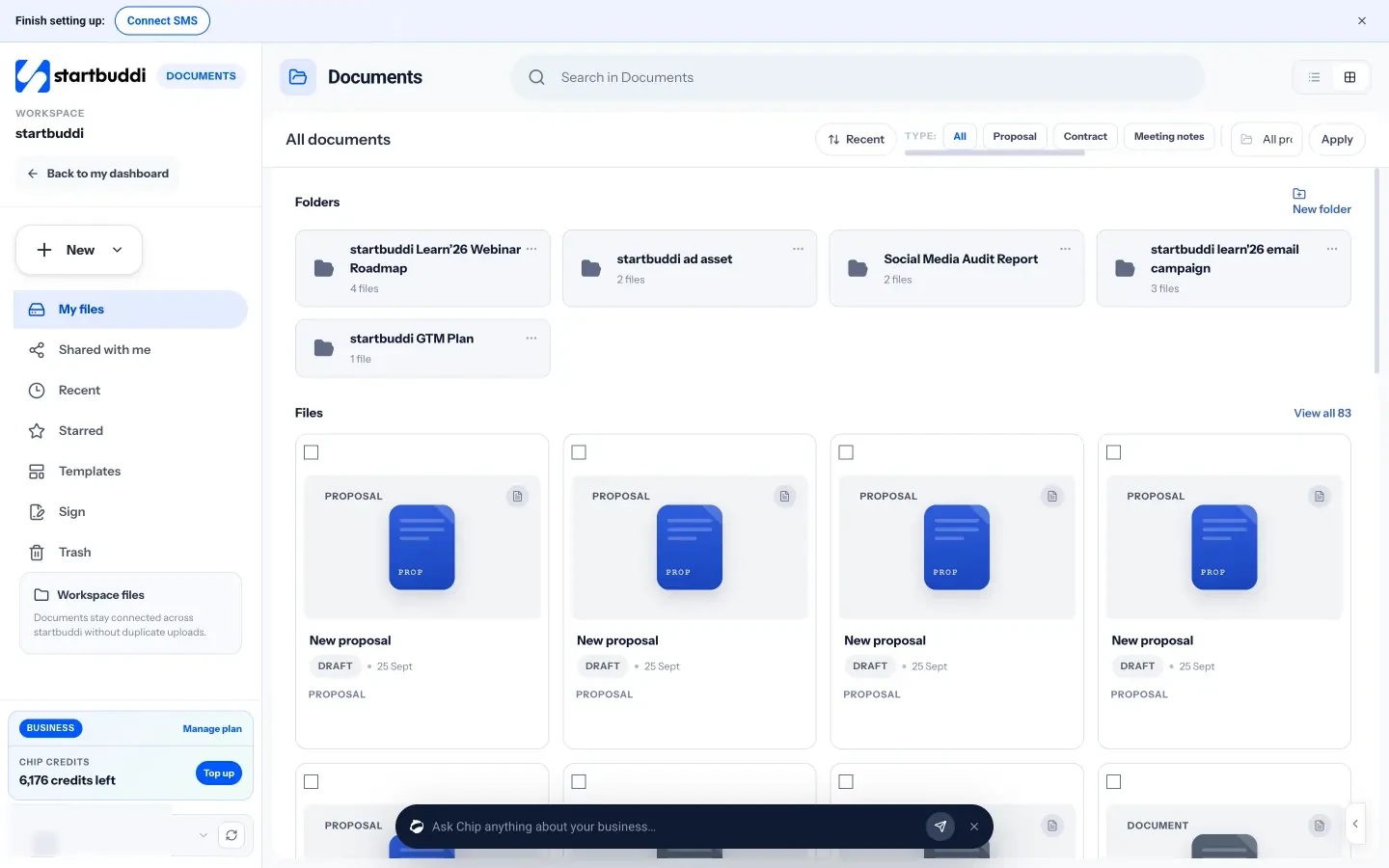
- Write the plan in Documents. Go to Documents, click New and choose startbuddi Doc. Paste the ten sections and the checklist above. Use a startbuddi Sheet for the break-even sums if you prefer a grid.
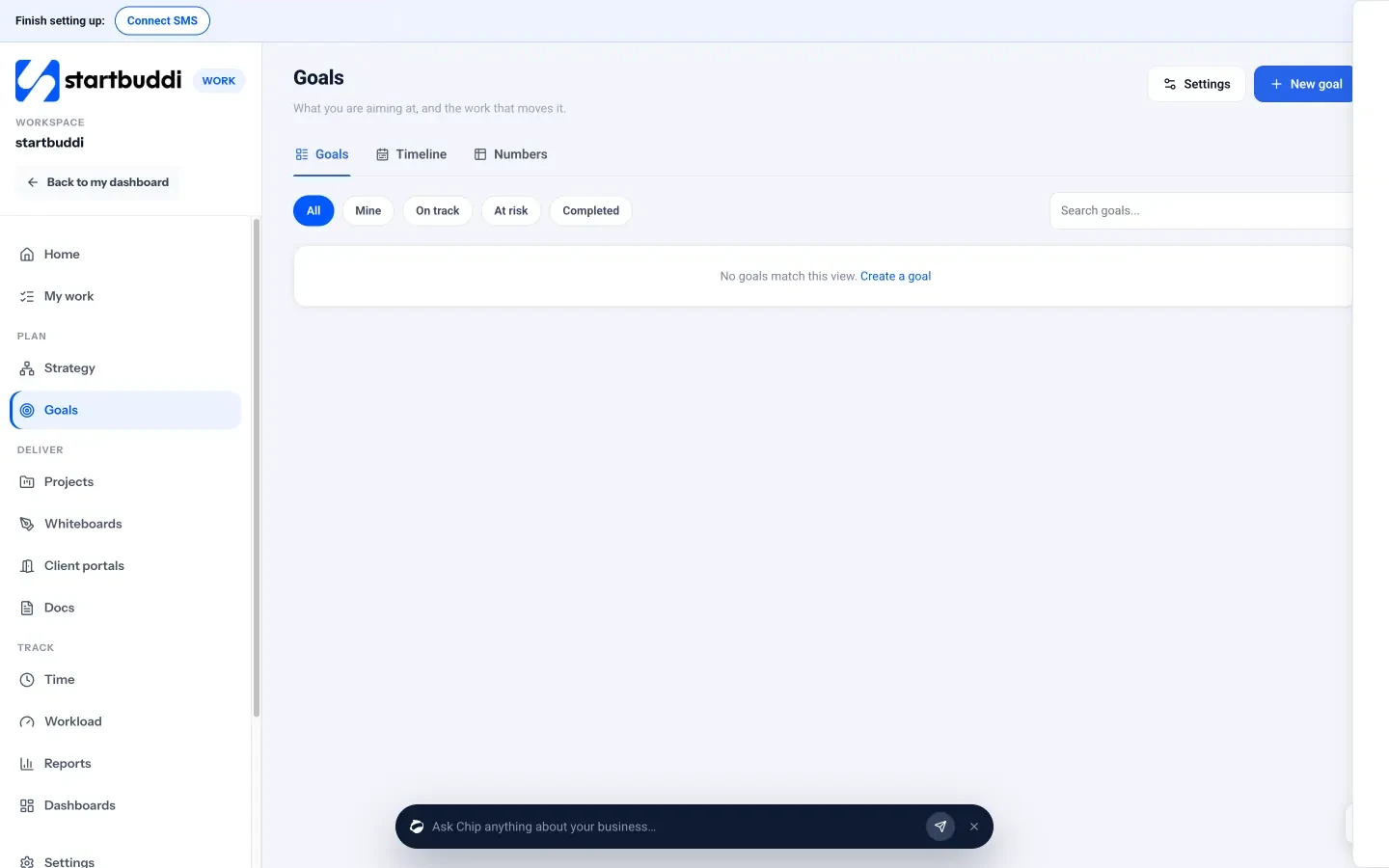
- Turn your 90-day goals into Goals. In Work, open Goals and add each goal with its target number and due date, then link the tasks that move it forward.
- Add the first tasks with due dates. In Work, go to My work, click Add task and add the first three tasks for each goal. Use Repeats for weekly actions such as “Post one before-and-after photo”.
- Set up your budget. In Money Manager, open Budgets to plan your monthly spending against the fixed costs in your plan.
- Check the plan against real numbers. After 30, 60 and 90 days, open Money Manager’s overview to see money in and money out, and compare it with your break-even target.
A free plan is available, so you can try this before you spend anything. See pricing for what each plan includes.
FAQs
What are the 10 things a business plan checklist should cover?
A business plan checklist should cover your summary, your offer, your customer, competitors, pricing, how you will get customers, operations, money, risks and your first 90 days. For a service business, operations and money deserve the most attention. Those are the sections that show whether each job actually makes a profit.
How long should a simple business plan be?
A simple business plan for a small service business can be two to five pages. That is enough to show your offer, customer, price, costs and break-even point. If a bank or investor asks for a full plan later, you expand the short one rather than starting again.
Is there a business plan checklist PDF I can download?
Yes. The free business plan checklist PDF on this page is 12 printable pages: the ten sections and their questions, the tick list, a fill-in plan template, a worked break-even example and a 90-day review sheet. No sign-up needed. Either way, the checklist only helps if you tick items when they are actually done.
What is the most important part of a small business plan checklist?
The money section is the most important part, because it tells you whether the business can pay you. Work out your contribution per job and divide your fixed monthly costs by it to get your break-even number. If that number is far beyond what you can deliver, change the price, the costs or the offer before you launch.
Do I need a business plan to register a business?
In most countries, no. Registering a business with the Corporate Affairs Commission (CAC) in Nigeria, with Companies House in the UK or with your state’s filing office in the US doesn’t require a business plan (checked on 1 October 2026). Banks, lenders, investors and some grant or visa schemes do ask for one, and a short plan written with this checklist is a good starting point for those requests.
How often should I update my business plan?
Review your business plan every 90 days in your first year. Compare your real jobs, prices and costs with the plan and change whatever turned out wrong. After the first year, a review every six months is usually enough unless something big changes.
Start your plan today
Copy the checklist, work out your break-even number, and turn your first 90 days into goals and tasks. You can do all of it in startbuddi on the free plan: create your free account and start with a blank doc.
Chinedu Kalu is the co-founder and chief operating officer of startbuddi, responsible for how the company runs day to day. Chinedu writes about the operational side of a small business: registering and running the company, money, hiring and the routines that keep a team on track.
Co-founded startbuddi and runs its operations