
Market research for small business: a practical guide
Find out whether people want what you sell before you spend: desk research, customer interviews and surveys, competitor research, tools and small tests.

This guide shows you how to do market research for a small business without an agency or a big budget. It is for anyone about to start a business, launch a new product or service, open a new location or change who they sell to, and who wants evidence rather than guesswork before spending money.
The four chapters follow the order that works best. First you decide what you need to know and do free desk research. Then you talk to customers through interviews and customer surveys, research your competitors to find a gap, and finally turn it all into a customer profile, a decision and a small test of real demand. Each chapter ends with how to do it in startbuddi.
What market research for a small business should answer
- Why market research matters for a small business
- The questions good market research answers
- Primary and secondary research: the two kinds of evidence
- Free sources for desk research
- Sizing your market without a spreadsheet degree
- How much research is enough?
- What research looks like for different kinds of business
- Common market research mistakes
- A one-page research plan you can copy
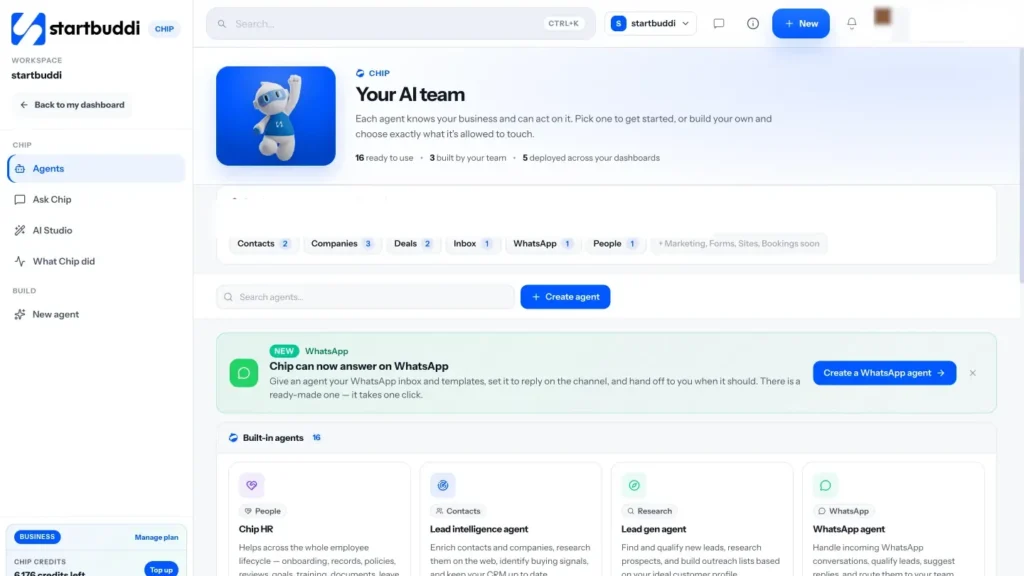
- Doing desk research faster with Chip
Market research for a small business is the work of finding out, before you spend serious money, whether enough of the right people want what you sell, at a price that works, and why they would choose you over the alternatives. It does not need a research agency or a big budget. For most small businesses, it is a few weeks of reading, asking and counting, done carefully.
This chapter explains what market research is for, the questions it should answer, the difference between primary and secondary research, and how to do useful desk research for free. The later chapters cover talking to customers, researching competitors, and the market research tools that help.
Why market research matters for a small business
Big companies research markets because they have a lot to lose. Small businesses have even more reason to, because one wrong bet can use up all their savings. A few weeks of research can stop you opening in the wrong location, building a product nobody asked for, or pricing yourself out of your own market.
The risk is real. CB Insights, which studies why venture-backed startups shut down, found poor product-market fit cited in 43% of the 431 failures it analysed from 2023 onwards (CB Insights, why startups fail). Those were funded tech companies, not corner shops, but the lesson carries over: building something before checking the demand is one of the most common ways to fail.
Market research is not only for new businesses. Established owners use it to decide whether to add a new service, open a second site, target a new type of customer, or change prices. Whenever you are about to make a decision that is expensive to undo, a little research is cheap insurance.
The questions good market research answers
The US Small Business Administration's guide to market research and competitive analysis lists the factors to look at: demand, market size, economic indicators, location, market saturation and pricing. In plain terms, that becomes six questions.
- Demand: do people actually want this, and do they want it enough to pay for it?
- Size: how many potential customers are there within your reach?
- Customers: who exactly are they, what problem are they solving, and how do they buy today?
- Location and reach: where are they, and can you get to them affordably, in person or online?
- Competition: who else serves them, how well, and what gap is left?
- Price: what do customers currently pay for similar things, and what would they pay for yours?
You do not need a perfect answer to all six. You need enough of an answer to make your next decision with your eyes open. Write the decision at the top of a page before you start: "Should I open a second salon in Ikeja?" or "Should I offer monthly bookkeeping packages to cafés?". Every piece of research should help answer that question. If it does not, skip it.
Primary and secondary research: the two kinds of evidence
There are two broad kinds of market research, and most small businesses need a bit of both.
- Secondary research (desk research) uses information that already exists: government statistics, industry reports, trade association data, news, search trends, competitors' websites and online reviews. It is quick and often free, but it is general. It tells you about the market, not about your customers.
- Primary research is information you collect yourself: customer interviews, surveys, observation, test sales, mystery shopping and conversations with suppliers. It takes longer, but it answers your exact question.
A sensible order is secondary first, then primary. Desk research tells you what is already known, so you do not waste customers' time asking questions that a census table could answer. It also helps you write sharper interview and survey questions.
| Secondary research | Primary research | |
|---|---|---|
| Examples | Census data, industry reports, search trends, competitor websites, reviews | Interviews, surveys, test sales, observation, mystery shopping |
| Cost | Usually free or low cost | Mostly your time, sometimes small incentives |
| Speed | Hours to days | Days to weeks |
| Best for | Market size, trends, who the competitors are | Why customers buy, what they would pay, what they dislike about current options |
| Main weakness | General, may be out of date | Small samples, easy to bias with leading questions |
Free sources for desk research
Government statistics offices publish a surprising amount of free data about population, households, incomes and businesses, often down to town or district level. Start with the one for your country.
- United States: the SBA's guide lists free federal sources, and the Census Bureau's Census Business Builder combines population and business statistics by area.
- United Kingdom: the Office for National Statistics publishes population, household spending and business counts.
- Canada: Statistics Canada.
- Nigeria: the National Bureau of Statistics.
- Kenya: the Kenya National Bureau of Statistics.
- South Africa: Statistics South Africa.
Beyond official statistics, useful free sources include trade associations for your industry, your local chamber of commerce, business sections of local newspapers, and search trends. Google Trends shows how interest in a search term changes over time and between regions. Google scales its numbers from 0 to 100 based on a topic's share of all searches (Google Trends help), so it shows relative interest and seasonality rather than exact search volumes.
Sizing your market without a spreadsheet degree
You will often see market size described with three layers. They sound technical, but the idea is simple.
- Total market: everyone, everywhere, who could possibly buy this kind of thing.
- Reachable market: the part of that total you could realistically serve, given your location, language, channels and offer.
- Winnable market: the share of the reachable market you could realistically win in the next year or two, given the competition and your capacity.
Here is a worked example for a mobile car-wash business in Nairobi, using made-up but plausible round numbers to show the method. Replace every number with figures from your own desk research.
- Households in the three neighbourhoods you can reach in under 30 minutes: 40,000 (from census data for those areas).
- Share that own a car: suppose 30%, so 12,000 car-owning households.
- Share who would pay for a wash at home rather than drive to a car wash: your interviews suggest roughly 1 in 10, so 1,200 households.
- Washes per household per month: 2.
- Reachable market: 2,400 washes a month.
- Winnable market: with two existing competitors, winning 15% in year one means about 360 washes a month.
- At KSh 800 a wash: about KSh 288,000 a month in revenue.
Now compare that with your break-even point. If you need KSh 350,000 a month to cover costs and pay yourself, the plan does not work yet in those three neighbourhoods. You might widen the area, add a premium valet service or target office car parks. The value of the exercise is not the exact number: it is seeing which assumption matters most, so you know what to test next. In this example, it is step 3, how many people would pay for a home wash. That is exactly what chapter 2 helps you find out.
How much research is enough?
The right amount of research depends on how much you stand to lose. A useful rule: the more expensive and harder to reverse the decision, the more evidence you need before you make it.
| Decision | Cost of getting it wrong | Sensible research |
|---|---|---|
| Adding a new flavour, product or small service | Low | A few conversations with existing customers, then just try it |
| Changing prices or packages | Medium | Competitor check, your own margin figures, a small test with new customers |
| Starting a new business from your savings | High | Desk research, 15 to 20 interviews, a survey, competitor grid and a demand test |
| Signing a lease or opening a second site | Very high | All of the above, plus footfall counts, local data and advice from your accountant |
What research looks like for different kinds of business
The method is the same everywhere, but the emphasis changes with the kind of business you run.
- Cafés, shops and salons: location matters most. Count passing trade at different times, look at who lives and works nearby, and visit every competitor within walking distance.
- Business-to-business services: the number of potential clients is smaller, so interviews matter more than surveys. Ten conversations with the right decision-makers beat a hundred survey answers.
- Online stores: search trends, marketplace listings and competitor reviews tell you a great deal before you order any stock.
- Trades and home services: local search results, community groups and reviews show both demand and how reliable customers find existing providers.
Common market research mistakes
- Researching to confirm, not to learn. If you have already decided, you will only notice evidence that agrees with you. Write down in advance what result would make you change your plan.
- Asking friends and family. They want to be kind. Their encouragement is lovely, and useless as evidence.
- Confusing interest with intent. "That sounds great" is not the same as "here is my deposit". The strongest evidence is money or a firm commitment.
- Using old data without checking. Markets change quickly. Note the date of every statistic you rely on.
- Never finishing. Research can become a way to avoid starting. Set a deadline and a decision date.
- Forgetting to write it down. Keep your findings in one document with sources, so you can check them later and share them with a partner, lender or investor.
A one-page research plan you can copy
- The decision: what will this research help me decide? ______
- Deadline: when will I decide? ______
- Riskiest assumption: which belief, if wrong, would sink the plan? ______
- Desk research: which sources will I check (statistics office, trends, trade body, competitors)? ______
- Primary research: how many people will I talk to, and how will I find them? ______
- What would change my mind: the result that would make me stop or change course. ______
If you are also writing a business plan, the findings drop straight into its market section. Our business plan template has a place for them.
Doing desk research faster with Chip
Desk research is mostly reading: websites, reports, news and reviews. It is useful, but it takes hours. Chip, the AI assistant built into startbuddi, can do a first pass for you and show its sources, so you can check the facts before you rely on them.
Research from any page. Chip's drawer is available on every screen and has a Research tab with two starting points: Search the web and Research a competitor. You ask a question that needs current information, such as "How many mobile car wash businesses operate in Nairobi, and what do they charge?", and every answer comes with its sources. Treat the answer as a starting point: open the sources, check the dates, and note anything important in your research document.
A research agent in AI Studio. The Agents page in the Chip module lists the built-in agents, including a Web Research Agent (currently in beta) described as searching the web for current information and researching competitors, always with sources. You can also build your own agent and give it web search as one of its allowed capabilities, which is handy if you run the same kind of research regularly. See Chip and AI agents.
Some research questions that work well as a starting point:
- "What official statistics exist for the number of households in [area], and where can I find them?"
- "Which trade associations cover [industry] in [country], and what do they publish?"
- "What are the main trends in [industry] over the last two years, with sources?"
- "What do customers commonly complain about in reviews of [type of business] in [city]?"
Each answer gives you links to follow, which is often the slowest part of desk research done for you.
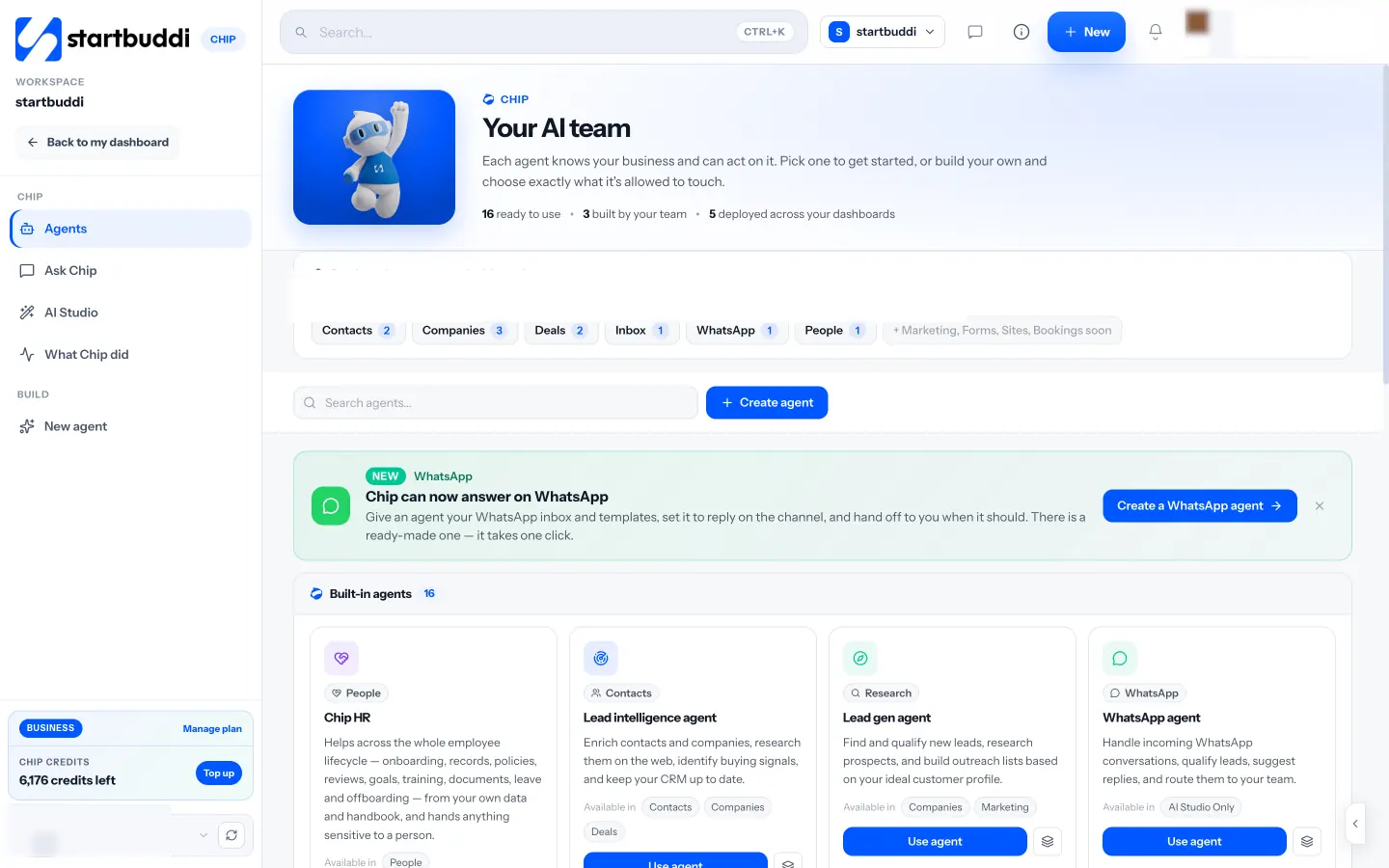
Research uses Chip credits. Every plan includes a monthly allowance (the Free plan includes 50 credits a month), and you can buy more if you need them.
Keep your findings with your business. Write up what you learn in Documents, so your research notes, sources and decisions sit next to your plans rather than in a forgotten browser tab.
Desk research tells you about the market. It cannot tell you what your customers think. For that, you need to talk to them, which is the subject of the next chapter.
Talk to customers: interviews and customer surveys
- Interviews or surveys: which should you use?
- How to run customer interviews
- Questions that produce useful answers
- Questions to avoid
- An interview note template
- How to write customer surveys that tell the truth
- A customer survey template for a small business
- How many answers do you need?
- Getting people to respond
- Recording interviews and handling people's answers properly
- Making sense of what you heard
- Running interviews and surveys with startbuddi
The most valuable market research a small business can do is also the cheapest: talking to the people you want to sell to. Twenty honest conversations will teach you more about your market than a hundred pages of industry reports. This chapter shows how to run customer interviews that produce real insight, how to write customer surveys that do not mislead you, and how to make sense of the answers.
The rule that runs through all of it: ask about what people have actually done, not what they say they would do. Past behaviour is evidence. Predictions about the future are mostly politeness.
Interviews or surveys: which should you use?
Interviews and surveys answer different questions, so most small businesses use both, in that order.
- Interviews are for discovering. You do not yet know the right questions, the words customers use, or the problems that matter most. Open conversations reveal them.
- Surveys are for measuring. Once interviews have shown you the main themes, a survey tells you how common each one is across a larger group.
Starting with a survey is a common mistake. If you write the questions before you understand the customer, you will measure the wrong things very precisely.
How to run customer interviews
Who to talk to. People who have the problem you want to solve, ideally people who have recently tried to solve it. A new café owner who just spent a weekend sorting receipts is a better interviewee for a bookkeeping service than one who has an accountant already. Aim for 10 to 20 conversations. You will usually notice the same themes repeating well before 20.
Where to find them. Your existing customers and enquiries, people who follow competitors on social media, local business groups, online communities and forums for your industry, customers leaving a similar business, and introductions from people you already know (but not the people themselves, if they are close friends).
How to ask. Keep it short and honest: "I'm looking into starting a home car-wash service in Westlands and trying to understand how people look after their cars now. Could I ask you a few questions for 15 minutes? I'm not selling anything." A small thank-you, such as a coffee voucher or a discount on a future service, helps.
Questions that produce useful answers
Good interview questions ask about specific past events. Here is a set you can adapt to almost any business.
- Tell me about the last time you [had this problem / bought this kind of thing].
- What were you trying to get done?
- What did you do about it? What else did you consider?
- How much did that cost you, in money and time?
- What was the most frustrating part?
- How did you find the business or product you used?
- What would have made it easier?
- Who else was involved in the decision?
- Is there anything I should have asked you but didn't?
Then listen. Talk for no more than a fifth of the time. Write down the exact words people use, because those words belong in your marketing later.
Questions to avoid
| Avoid | Why | Ask instead |
|---|---|---|
| "Would you buy this?" | People say yes to be kind. | "What did you buy last time, and why?" |
| "How much would you pay?" | People guess low, or high to please you. | "What do you pay now? What did you pay last time?" |
| "Don't you hate it when...?" | Leading: it tells them the answer you want. | "What's the hardest part of...?" |
| "Do you like my idea?" | It is about you, not them. | "How are you solving this today?" |
| "Would you use an app that...?" | Hypothetical, and assumes the solution. | "Walk me through what you did last week." |
An interview note template
Use the same simple layout for every conversation, so you can compare them later.
- Who: name or initials, type of customer, date.
- Situation: the context in one or two sentences.
- Last time it happened: what they did, step by step.
- Cost: what it cost them in money and time.
- Frustrations: in their exact words.
- Alternatives considered: including doing nothing.
- Surprises: anything you did not expect to hear.
- Next step: would they be happy to hear from you again, or introduce someone else?
Fill it in within an hour of the conversation, while you still remember the details.
How to write customer surveys that tell the truth
Once interviews have shown you the themes, a short survey can tell you how widespread they are. Customer surveys are also useful for existing customers: satisfaction, what to add next, and why people choose you.
Keep it short. Five to ten questions, most of them quick to answer. Every extra question lowers the number of people who finish.
One idea per question. "How satisfied are you with our price and speed?" is two questions. Split it.
Use neutral wording. "How would you rate our delivery?" rather than "How great was our delivery?".
Offer balanced answer scales. If you offer "excellent, very good, good", also offer "poor" and "very poor".
Mix closed and open questions. Closed questions (multiple choice, ratings) are easy to count. One or two open questions ("What almost stopped you from buying?") give you the reasons behind the numbers.
Ask about behaviour, not intentions, just as in interviews. "How many times did you order takeaway last month?" beats "How often do you plan to order?".
Test it first. Send it to three people and watch them fill it in. You will spot confusing questions immediately.
A customer survey template for a small business
- How did you first hear about us? (multiple choice, plus "Other")
- What were you looking for when you found us? (short text)
- What else did you consider before choosing us? (multiple choice, plus "Nothing else")
- How would you rate your experience overall? (1 to 5)
- How likely are you to recommend us to a friend or colleague? (0 to 10)
- What is the one thing we could do better? (long text)
- Which of these would you be most interested in from us next? (multiple choice)
- May we contact you to follow up on your answers? (yes or no, with email)
Question 5 is the standard Net Promoter Score question. Bain & Company, which created the measure, calculates the score as the percentage of promoters (who answer 9 or 10) minus the percentage of detractors (who answer 0 to 6), giving a number from −100 to 100 (Bain & Company, measuring your Net Promoter Score). For a small business, the reasons people give matter more than the score itself, so always pair it with an open question.
How many answers do you need?
This is where many small businesses either give up or over-claim. A rough guide from basic statistics: with a genuinely random sample, the margin of error on a yes-or-no question is about 1 divided by the square root of the number of answers. So 100 answers gives you roughly plus or minus 10 percentage points, and 400 answers roughly plus or minus 5.
Two practical conclusions follow.
- With 30 or 50 answers, look for big patterns, not small differences. If 70% say delivery speed is their main frustration, that is meaningful. If 34% prefer blue and 31% prefer green, that is noise.
- Your sample is probably not random. People who answer surveys are often your happiest or unhappiest customers. Keep this in mind, and do not treat the results as the whole market's view.
If the same survey had shown 22 people preferring morning slots and 19 preferring afternoons, the honest conclusion would be "no clear preference". Resist the urge to read meaning into small gaps.
Getting people to respond
- Ask at the right moment: straight after a purchase, delivery or appointment, while the experience is fresh.
- Say how long it takes ("2 minutes, 6 questions") and keep the promise.
- Explain why: "We're deciding what to add next year and want to get it right."
- Use the channel they use: email for some businesses, a WhatsApp message with a link for others, a QR code at the counter for a shop or café.
- Offer a small thank-you, such as a prize draw or a small discount, but not so large that people answer only for the reward.
- Close the loop. Tell people what you changed because of their answers. It makes them far more willing to help next time.
Recording interviews and handling people's answers properly
Take notes during interviews, or record them if the person agrees. Always ask first, explain what the recording is for, and delete it when you no longer need it. For surveys, say what you will do with the answers and do not collect more personal information than you need. If you plan to add respondents to your mailing list, ask separately and clearly.
Data protection rules differ by country, and this is general information, not legal advice. For the rules where you are, check your regulator, such as the Information Commissioner's Office in the UK or the Nigeria Data Protection Commission.
Making sense of what you heard
After interviews and a survey, you will have a pile of notes and numbers. Turn them into something you can act on.
- List every problem, need or quote on its own line. One idea per line.
- Group similar lines together and give each group a short name, such as "hard to book", "unclear prices" or "want weekend slots".
- Count how often each group came up in interviews, and check the survey results for the same themes.
- Rank the top three by how often they came up and how strongly people felt.
- Write one sentence per theme: "Busy parents want a car wash they do not have to drive to, on a weekend morning, for under KSh 1,000."
Those sentences become the basis of your offer, your pricing and your marketing messages.
Running interviews and surveys with startbuddi
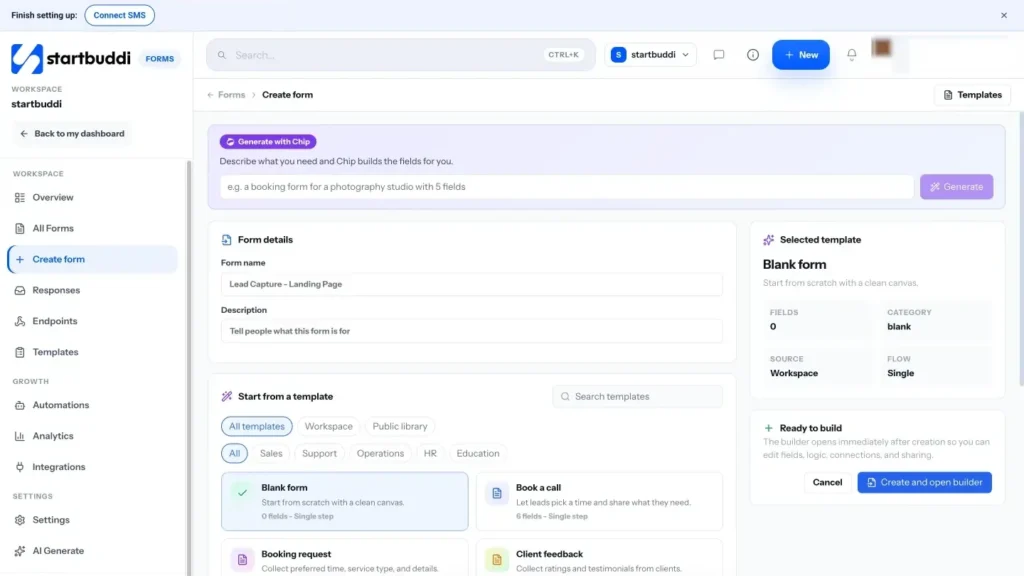
To be clear, startbuddi is not a dedicated survey platform, and it does not offer quiz or survey scoring. What it does well is collect answers through forms and connect each response to a contact you can follow up with, which is exactly what a small business needs for customer research.
Build a questionnaire as a form. In Forms, click Create form and start from a template. The templates include a Discovery Questionnaire and an NPS and Feedback form, which are good starting points for the survey above. Field types include short and long text, dropdowns, multi-select, radio buttons, checkboxes and a Rating field. You can also click Generate with AI, describe the questionnaire you need, and Chip drafts the fields for you to edit.
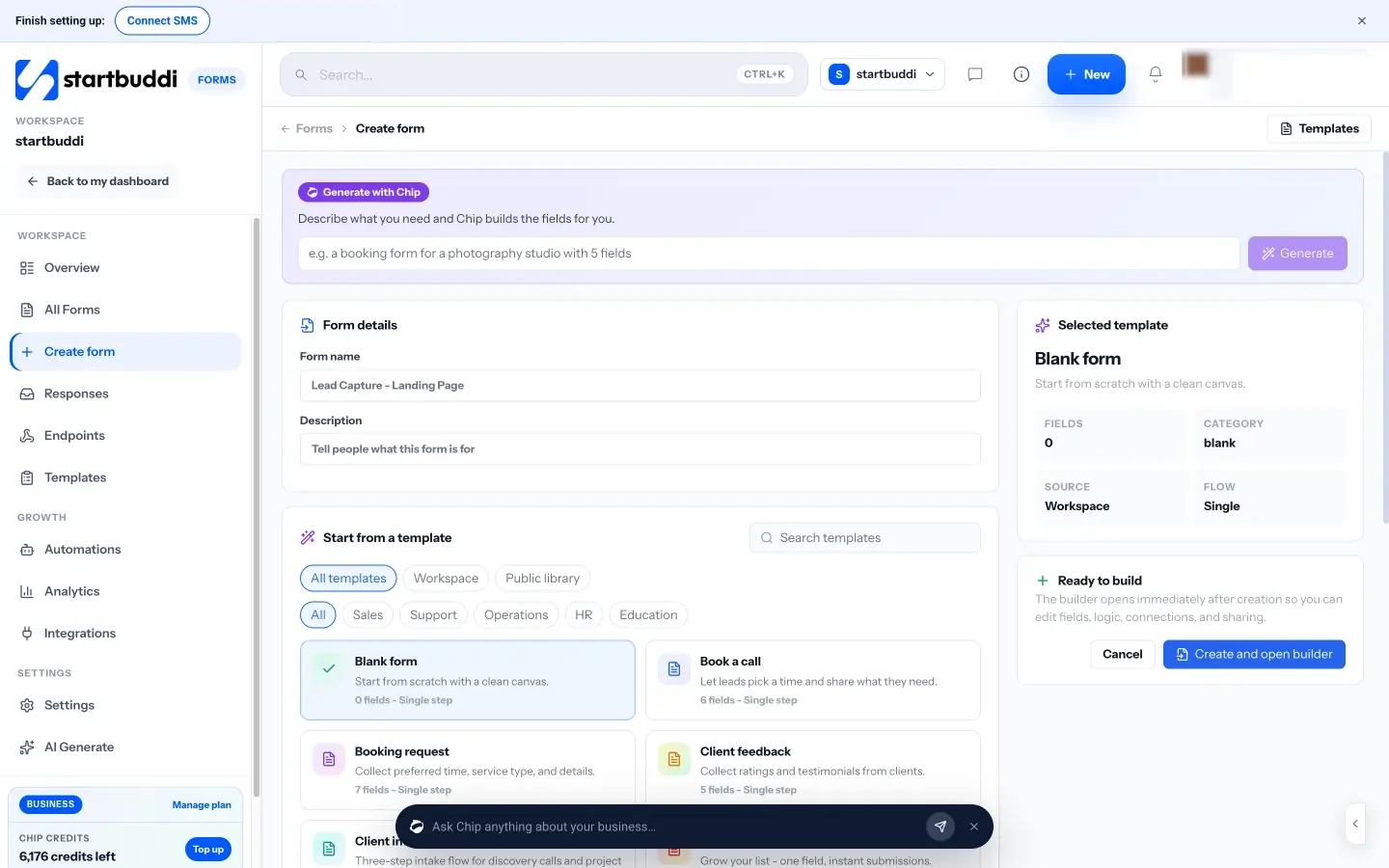
Show only relevant questions. The Logic tab lets you show, hide or skip questions based on earlier answers, so a customer who says they have never used a competitor is not asked what they thought of one. You can switch a form to Multi-step to show one question at a time, which suits longer questionnaires on a phone.
Share it where your customers are. The Share tab gives you a direct link for email or WhatsApp, an embed for your website, a popup button and a QR code for your counter or packaging.
Read the answers. In the builder, the Responses tab shows views, the share of people who filled the form out, and answers by question, so you can see which questions people skip. Every response is saved in Forms, you can export submissions to CSV, and you can choose to add each respondent to your contacts so you can follow up on an interesting answer. Chip can also summarise a form's responses for you: totals, completion rate and the most-skipped question.
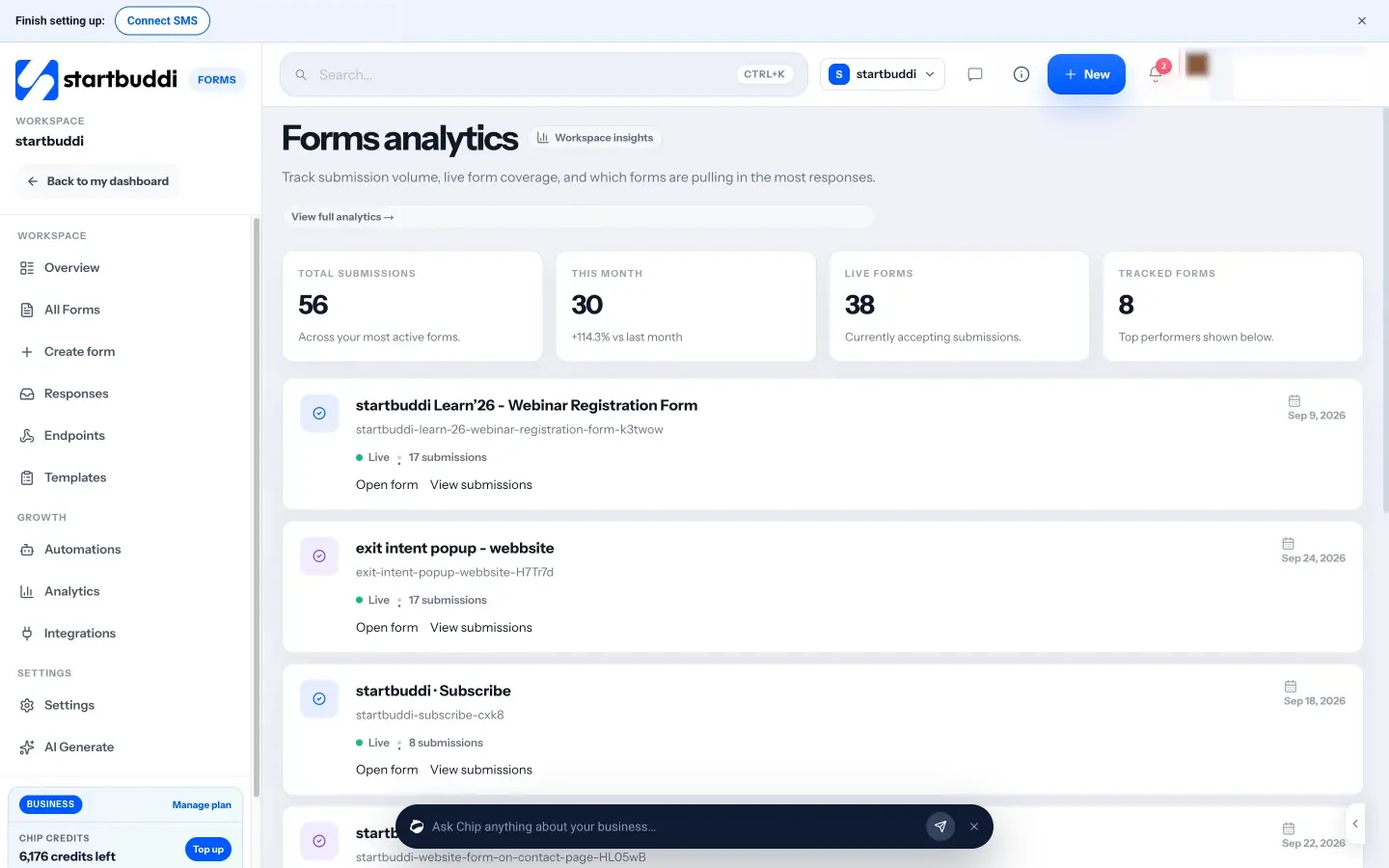
Keep interview notes on the contact. For interviews, add each person as a contact in Contacts and log the conversation as a note or an activity. When you later launch, you already know who to tell first.
The Free plan includes one live form; Starter includes 20, and Growth and above are unlimited. Submissions are not limited on any plan.
Your customers have told you what they need. The next chapter looks at the other side of the market: your competitors, and the gap they leave for you.
Competitor research: find the gap you can own
- Who your competitors really are
- What to find out about each competitor
- Where to find competitor information
- A competitor grid you can copy
- Mining reviews: your competitors' customers, speaking freely
- From research to position: SWOT and your one-line difference
- How competitor research feeds your pricing
- Researching competitor prices properly
- Competitor research when you sell online
- Keep watching: competitor research is not a one-off
- Common competitor research mistakes
- Competitor research with startbuddi
Competitor research is not about copying what others do, or proving you are better at everything. It is about understanding the choices your customers already have, so you can offer something clearly different that enough of them want. Done well, it tells you where the market is crowded, where it is poorly served, and what customers are used to paying.
This chapter covers who counts as a competitor, what to find out about each one, a simple competitor grid you can fill in, how to mine online reviews, and how to turn it all into a position you can own.
Who your competitors really are
Most owners list the two or three businesses that look like them and stop. Customers see a much wider set of choices. Think in three rings.
- Direct competitors: businesses that sell much the same thing to the same customers. Another dog groomer in your town, another bookkeeping firm that serves cafés.
- Indirect competitors: businesses that solve the same problem in a different way. For a home car-wash service, that includes petrol-station car washes and valet services at shopping centres.
- The do-it-yourself option and doing nothing: the bucket and sponge in the driveway, the owner who does their own books in a spreadsheet, or simply putting up with the problem. This is often your biggest competitor, and the one owners forget.
Your customer interviews from chapter 2 are the best source here. When you asked "what else did you consider?", the answers were your real competitor list, in your customers' own words.
What to find out about each competitor
Pick five to eight competitors across the three rings. For each, collect the same information so you can compare like with like.
- What they sell: main products or services, and packages.
- Who they target: the customers their website, photos and wording speak to.
- Prices: published prices, starting prices, or typical quotes. Note what is included.
- Promise: the main message on their home page or social profile. What do they want to be known for?
- Channels: where they find customers. Search, social media, marketplaces, walk-ins, referrals.
- Customer experience: how easy they are to contact, book, pay and get help from.
- Reputation: review ratings, number of reviews, and the themes in what customers say.
- Strengths and weaknesses: your honest view, based on the evidence above.
Where to find competitor information
- Their website: services, prices, about page, team size, blog, booking process.
- Social media: what they post, how often, which posts get engagement, and what people ask in the comments.
- Online reviews: Google reviews, industry directories and marketplaces. The single richest source, covered below.
- Search results: search for what you sell plus your town. Who appears, and who appears on maps?
- Public records: company registries such as Companies House in the UK or the Corporate Affairs Commission in Nigeria show registration details and, in some countries, filed accounts.
- Customers and suppliers: people who have used them, and suppliers who serve the whole industry, often know a great deal.
- Mystery shopping: enquire or buy as a normal customer. Note how quickly they reply, how they quote, and how they follow up.
A competitor grid you can copy
Put your findings in one table. Here is an example for a home car-wash service in Nairobi, with illustrative entries.
| Competitor A (mobile wash) | Competitor B (petrol station) | Competitor C (mall valet) | DIY at home | |
|---|---|---|---|---|
| Price for a standard wash | KSh 1,000 | KSh 400 | KSh 1,500 | Cost of supplies |
| Target customer | Busy professionals | Anyone passing | Shoppers | Price-conscious owners |
| Booking | Phone calls only | Walk in, queue | Walk in | n/a |
| Payment | Cash or mobile money | Cash or mobile money | Card or mobile money | n/a |
| Review themes | Great results, often late, hard to reach | Quick, basic, scratches | Good but pricey | n/a |
| Weekend slots | Rarely available | Yes, long queues | Yes | Yes |
Look along each row for the gaps. In this example, nobody offers easy online booking with reliable arrival times at the customer's home at weekends. That gap lines up with what customers said in interviews, which makes it a strong candidate for your position.
Mining reviews: your competitors' customers, speaking freely
Online reviews are free customer research that someone else collected for you. Read 30 to 50 reviews for each of your main competitors, good and bad, and note the themes.
- Five-star reviews tell you what customers value most. If every happy review of a salon mentions "on time", punctuality matters in that market.
- One- and two-star reviews tell you what goes wrong. Repeated complaints are gaps you can fill.
- Three-star reviews are often the most useful: balanced, specific, and full of "I wish they had...".
- Owner replies tell you how the business handles problems, and how much it cares.
Copy the most useful phrases word for word into your notes, with the source. They show you how customers describe the problem, which is the language your marketing should use.
Reviews also remind you to look after your own. If you want to build a strong review profile of your own from the start, our guide to setting up your Google Business Profile is a good place to begin.
From research to position: SWOT and your one-line difference
A SWOT analysis is a simple way to pull competitor and customer research together. Fill in four boxes, honestly.
- Strengths: what you do better than the alternatives, based on evidence, not hope.
- Weaknesses: where competitors are ahead of you today.
- Opportunities: gaps in the market and changes you can take advantage of (new housing estates, a competitor closing, a new regulation, a rising trend).
- Threats: things that could hurt you (a big chain arriving, rising costs, a competitor cutting prices).
Here is what a short SWOT might look like for the Nairobi car-wash example, built only from the research in this guide.
| Helps you | Hurts you | |
|---|---|---|
| Inside the business | Strengths: online booking and reminders; reliable arrival windows; comes to the customer | Weaknesses: new, no reviews yet; one van limits capacity |
| Outside the business | Opportunities: main mobile competitor is hard to reach and often late; weekend demand not met | Threats: petrol stations are far cheaper; a competitor could copy online booking |
Notice that every box is based on evidence from interviews, reviews or the competitor grid, not on hope. The weaknesses matter as much as the strengths: "no reviews yet" tells you to ask every early customer for one, and "one van" tells you not to promise more weekend slots than you can deliver. Threats tell you what to keep an eye on. If the petrol-station price gap is large, your marketing has to make the time saved obvious, because a customer comparing only prices will never choose you.
Then write one sentence that describes your position:
For [who], who [need or frustration], we offer [what], which unlike [main alternative] [key difference].
For the car-wash example: "For busy Nairobi professionals who want a clean car without losing their Saturday morning, we offer an at-home wash booked online with a guaranteed arrival window, which unlike other mobile washes always turns up when we say we will."
That one sentence guides your pricing, your marketing and your service. It also tells you which competitor research to keep doing: in this case, watching whether others start offering online booking.
How competitor research feeds your pricing
Competitor prices show you what customers are used to paying, which is useful context. They are not your answer. As the pricing strategy guide explains, you set your floor from your own costs, and your ceiling from the value you deliver. Competitor prices tell you where customers will expect you to justify a difference. In the grid above, a price of KSh 1,200 is higher than the main mobile competitor, so the guaranteed arrival window and easy booking need to be obvious in every message.
Researching competitor prices properly
Price is the piece of competitor research people most often get wrong, because the headline number rarely tells the full story. When you collect competitor prices, record these for each one:
- The advertised price and exactly what it includes.
- Extras and fees: call-out charges, delivery, booking fees, materials, VAT or sales tax, card surcharges.
- Minimums: minimum order, minimum hours, or a minimum contract length.
- Packages and discounts: bundles, loyalty cards, first-order offers, and how often they seem to run.
- The real quote: for services without published prices, a genuine enquiry often reveals the typical price and how it is presented.
Then work out a comparable figure, such as the total price for a typical customer order. A cleaner advertising £18 an hour with a three-hour minimum and a £15 travel charge costs a customer at least £69 for a visit, which may be more than a competitor advertising £22 an hour with no extras for a two-hour clean. Customers compare totals, so you should too.
Keep the date next to every price. In markets with high inflation, a price list from last year can already be out of date.
Competitor research when you sell online
If most of your sales happen online, a few extra places are worth checking.
- Search results: search for the words your customers use. Note who ranks, who advertises, and what their pages promise.
- Marketplaces: look at best-selling listings in your category, their prices, photos and the questions buyers ask.
- Social profiles: which posts get comments and shares, not just likes, and what followers ask for.
- Checkout experience: how many steps it takes, which payment methods are offered, and how delivery is priced.
Keep watching: competitor research is not a one-off
Markets move. New competitors arrive, others change prices or close. Set a light routine so you notice.
- Monthly: scan competitors' social media and new reviews for 20 minutes.
- Quarterly: check their prices and offers, and update your grid.
- Every lost sale: note who the customer chose instead, and why.
- Yearly: redo the SWOT and ask whether your one-line position still holds.
Common competitor research mistakes
- Only looking at direct competitors. The DIY option and doing nothing often win more customers than any business does.
- Assuming a competitor is successful because they look busy. You cannot see their costs or margins.
- Copying the market leader. Being a slightly cheaper copy of the biggest player is the weakest position there is.
- Trying to beat everyone at everything. Pick one or two differences that matter to your customers and be clearly better at those.
- Ignoring your own lost deals. The customers who chose someone else are the most honest competitor research you will ever get.
Competitor research with startbuddi
Ask Chip to research a competitor. In Chip's drawer, the Research tab has a Research a competitor option. Give it a competitor's name or website and ask what they sell, who they target and how they present their prices. Answers come with their sources, so you can check each point and add it to your grid. Use it to save reading time, then confirm the important facts yourself.
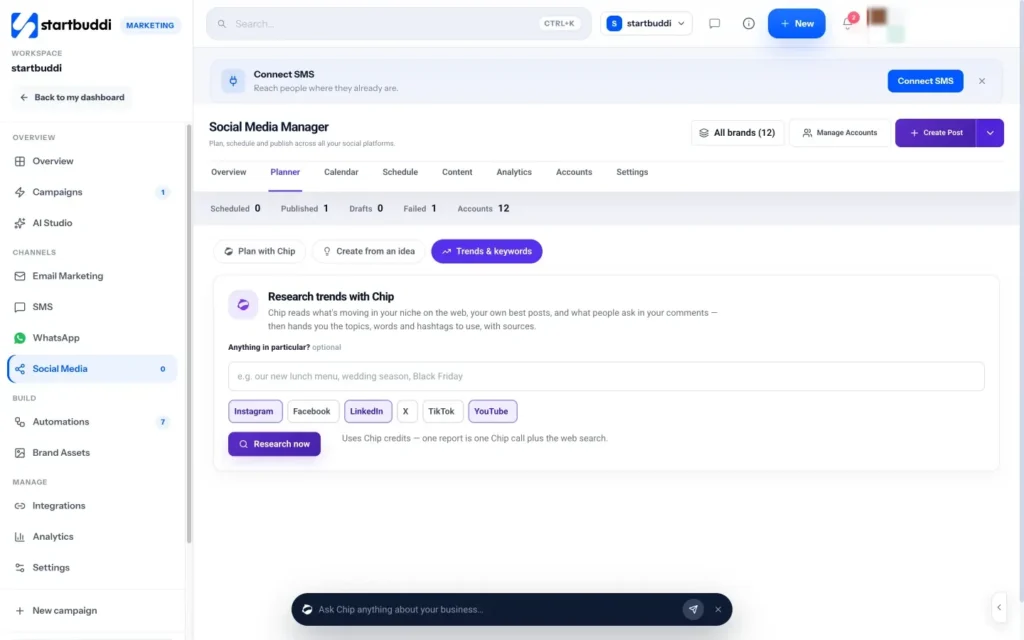
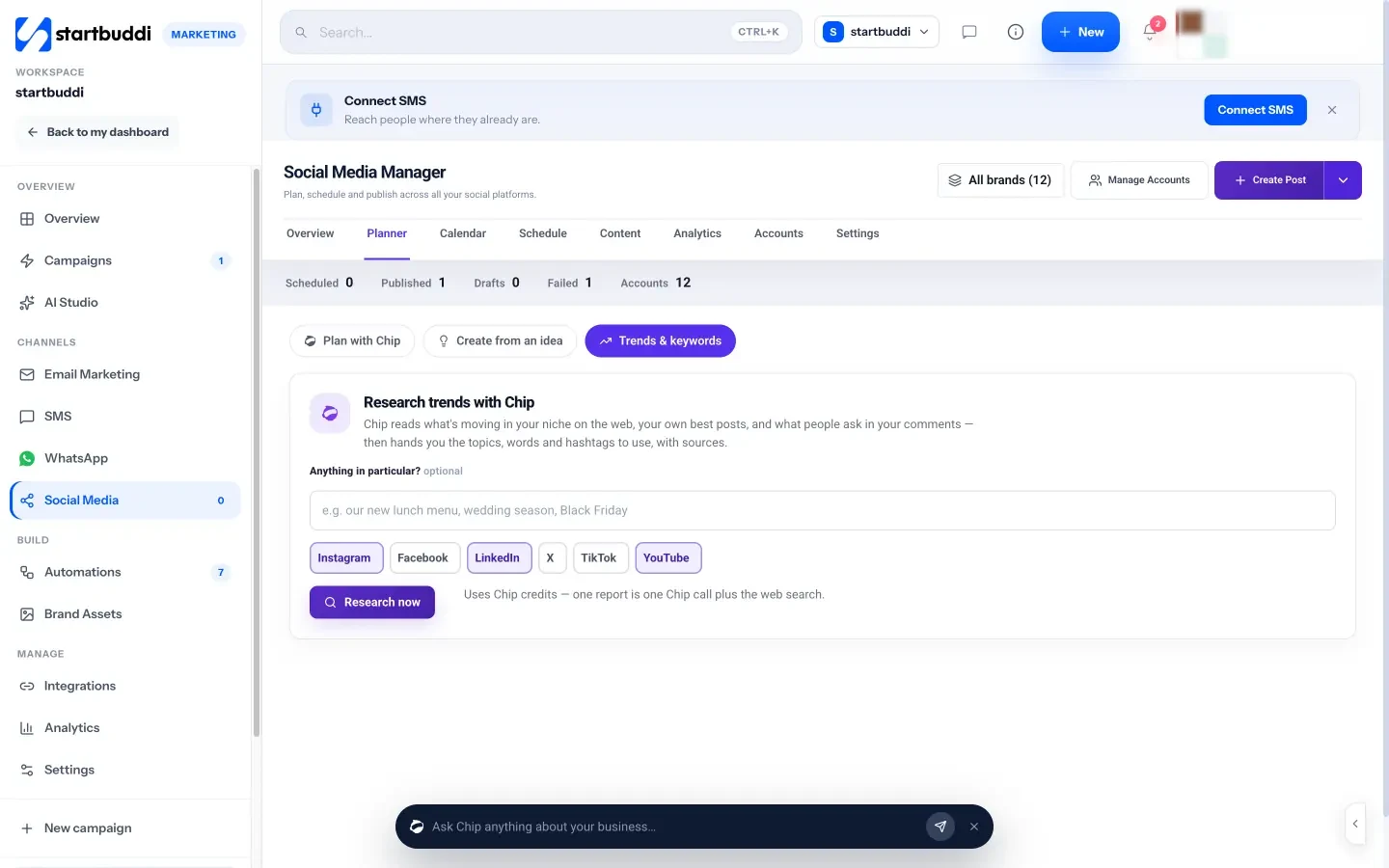
See what is moving in your niche. In the Social Media Manager, the Planner tab has a Trends & keywords option. You add an optional focus (for example "home car wash" or "wedding season"), choose platforms and click Research now. Chip returns what is moving in your niche with source links, words and hashtags to use, and what people are asking, drawing on the web and on the last 90 days of your own posts and comments. It is a quick way to see the conversations your competitors are part of. Each report uses Chip credits, and social media is part of the Marketing module on the Starter plan and above.
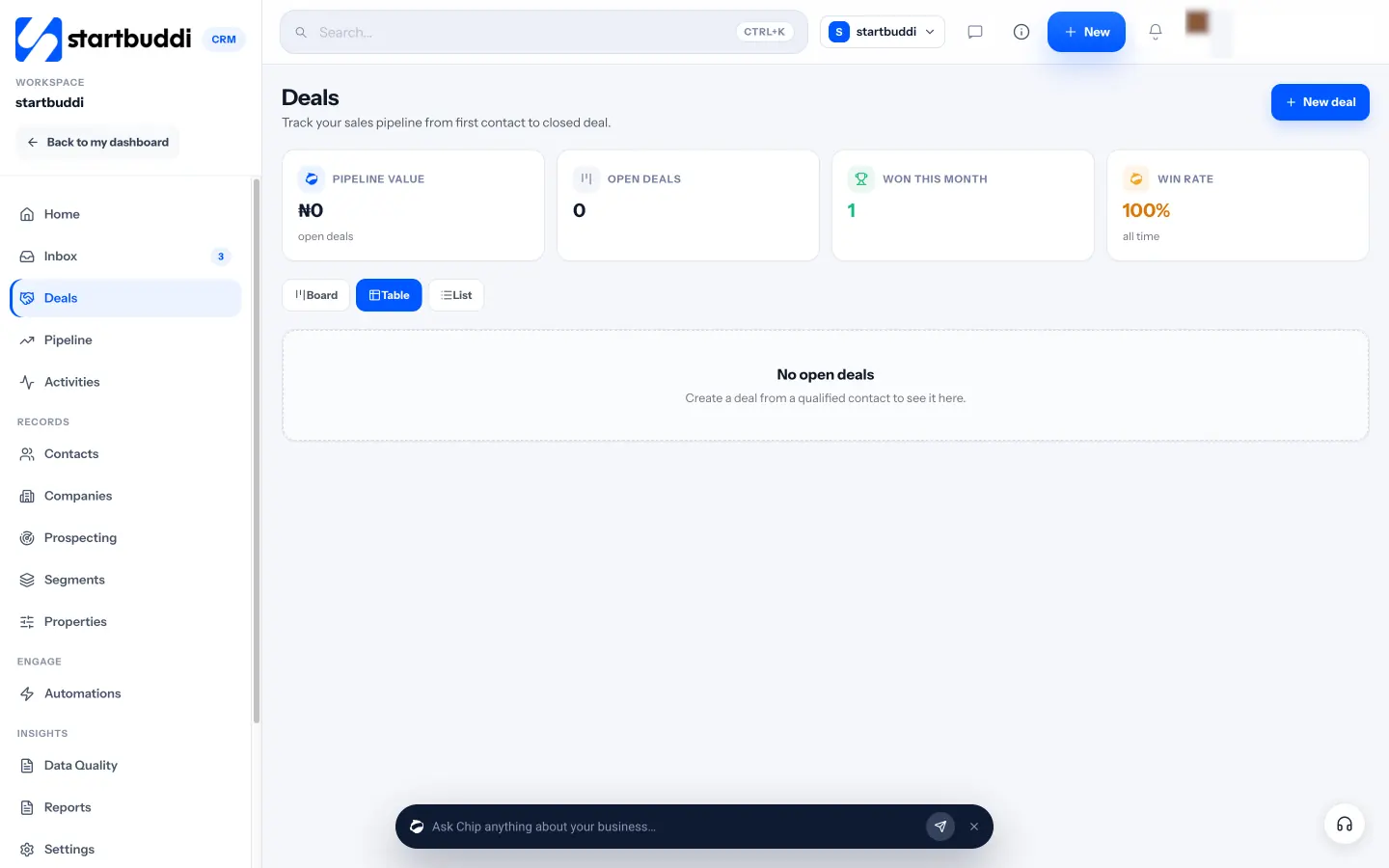
Record why you lose deals. In your sales pipeline, when you mark a deal as lost you can add a reason, such as budget, timing or "went with competitor". Pipeline settings can require a close reason for every lost deal. After a few months, filter your lost deals and read the reasons: it is competitor research gathered automatically, from real decisions.
You now have customer research and competitor research. The final chapter covers the market research tools that make this faster, and how to turn your findings into decisions and small tests.
Market research tools and turning findings into decisions
- Market research tools for small business, by job
- Turn research into a customer profile
- Make the decision
- Before you trust a source: five quick checks
- Use your research in your marketing
- Test demand before you commit
- A four-week market research plan
- Mistakes to avoid when acting on research
- Build research into your routine
- Turning research into action with startbuddi
- Your next step
- Sources
By now you have desk research, customer interviews, a survey and a competitor grid. This last chapter does two things. First, it walks through the market research tools for small business that save time at each stage, including free ones. Second, and more important, it shows how to turn what you learned into a clear customer profile, a decision, and a small, cheap test that proves demand before you commit.
Market research tools for small business, by job
You do not need a large set of tools. Most small businesses can do excellent research with a handful of free or low-cost ones. The useful way to choose is by the job you need done.
| Job | Type of tool | Examples |
|---|---|---|
| Size the market and understand the area | Official statistics | Your national statistics office (see chapter 1), Census Business Builder in the US |
| See interest and seasonality | Search trends | Google Trends |
| Find the words people search for | Keyword research | Google Keyword Planner (inside a Google Ads account) and SEO tools |
| Ask customers questions at scale | Form and survey tools | Google Forms, SurveyMonkey, Typeform, startbuddi Forms |
| Understand competitors' customers | Review sites and maps | Google reviews, industry directories, marketplaces |
| Hear what people say online | Social media research | Platform search, hashtags, comment threads, trend research tools |
| Summarise lots of reading quickly | AI research assistants with sources | Chip's Research tab, other AI tools that cite sources |
| Keep notes and findings together | Documents and a contact list | A shared document, your CRM |
For search-based research, our round-up of SEO tools for small business covers keyword tools in more depth. If you are choosing a form or survey tool, the best form builder comparison and startbuddi vs Google Forms explain the differences.
A word of caution about AI tools: they are excellent at summarising and suggesting where to look, and they can be wrong. Use tools that show their sources, open the sources, and never put an AI-generated statistic in a business plan without checking it yourself.
Turn research into a customer profile
The most useful output of market research is a clear picture of who you are for. You may hear it called a buyer persona or an ideal customer profile. The name does not matter; the content does. Write one page for your main customer type, based on what you actually heard.
- Who they are: for a consumer business, life stage, location and situation. For a business-to-business service, industry, size, location and the role of the person who buys.
- The problem: in their own words from interviews.
- What they do today: the alternatives they use, including doing nothing.
- What triggers a purchase: the moment they start looking. A new baby, a failed inspection, a busy season, a bad experience with a supplier.
- What they value most: the top two or three themes from your research, such as speed, reliability or price.
- Where to reach them: the channels, groups, places and people they trust.
- What they pay today: from interviews and competitor research.
Here is a short example for a bookkeeping service in Leeds:
Independent café and bakery owners in West Yorkshire with one or two sites and 3 to 15 staff. They do their own books in the evenings and dread the tax deadline. They start looking after a stressful year end or when a second site opens. They value someone who understands hospitality, replies quickly and gives them a simple monthly picture. They meet at local business networking events and ask other owners for recommendations. Today they pay an accountant only at year end.
Every marketing message, price and service decision can now be checked against this profile: would this person care? If you serve two quite different groups, write a profile for each, but choose one to focus on first. Trying to speak to everyone at once usually means speaking clearly to no one. Revisit the profile every six months, because the customers you actually win often turn out to be slightly different from the ones you expected, and that difference is valuable research in itself.
Make the decision
Go back to the decision you wrote down in chapter 1 and the result that would change your mind. Then look at the evidence honestly and choose one of three outcomes.
- Go: strong demand, a reachable market large enough to clear your break-even point, and a clear gap in what competitors offer.
- Change course: there is demand, but for something a little different: a different customer, a different offer or a different price. Adjust the plan and test again.
- Stop: no convincing demand, a crowded market with no gap, or numbers that cannot work. Stopping now is a success: you just saved months and money.
Before you trust a source: five quick checks
Whether a figure comes from a report, a news article, a competitor's website or an AI assistant, check it before it goes into a plan.
- Who published it, and do they have a reason to make the number look big or small?
- When was it collected? A market figure from five years ago may be badly out of date.
- Where does it apply? A US statistic may not describe your town in Kenya or Scotland.
- How was it measured? A survey of 50 people is not the same as a national census.
- Can you find the original? If a number is quoted everywhere but you cannot trace where it came from, do not use it.
Use your research in your marketing
Market research does not stop being useful once you have made the decision. It is also the best source of marketing material you will ever have.
- Headlines: use the exact words customers used to describe their problem.
- Your promise: lead with the one difference from your competitor grid.
- Objections: answer the doubts that came up in interviews directly on your page, in an FAQ or in your sales conversations.
- Channels: spend your time and money where your customer profile says they are.
- Proof: as soon as you have real customers, ask for reviews that speak to the themes you found.
Test demand before you commit
Interviews and surveys tell you what people say. A small test tells you what they do. Before you sign a lease, order stock or build a product, run the cheapest test that would convince you. Here are common formats, from cheapest to most involved.
- A waiting list page. A single web page that describes the offer, shows a price and asks people to join a waiting list. Share it with your target customers and count sign-ups against visits.
- A pre-order or deposit. Ask for a small deposit to reserve a place, a launch slot or the first batch. Money is the strongest evidence there is.
- A pilot with a few customers. Deliver the service by hand to five customers at the planned price, and see whether they come back or refer others.
- A pop-up or market stall. For food, retail and crafts, a weekend stall tests prices, products and the reaction of real customers.
- A limited offer to existing customers. If you already run a business, offer the new product or service to your current list first.
Set your success threshold before you start. For example: "If at least 40 of the first 500 visitors join the waiting list, and 10 pay a deposit within two weeks, I'll go ahead." Writing it down in advance stops you moving the goalposts when the results come in.
A four-week market research plan
If you want a simple schedule to follow, here is one that fits around running a business or a day job.
| Week | What to do | Output |
|---|---|---|
| 1 | Write the decision and riskiest assumption. Do desk research: statistics, trends, competitor websites. | One-page research plan and a rough market size |
| 2 | Book and run 10 to 15 customer interviews. Read competitor reviews. | Interview notes and a list of themes |
| 3 | Send a short survey to measure the main themes. Fill in the competitor grid and SWOT. | Survey results, competitor grid, one-line position |
| 4 | Write the customer profile. Run a small demand test, such as a waiting list page or deposits. | Customer profile, test results and a go, change or stop decision |
Four weeks is a guide, not a rule. Some decisions need a weekend; a big investment may need longer. What matters is that each week ends with something written down.
Mistakes to avoid when acting on research
- Cherry-picking. Quoting the three enthusiastic interviews and ignoring the twelve lukewarm ones.
- Averaging different customers together. If two very different groups want different things, an offer for the "average" customer may suit neither. Choose one group to serve first.
- Treating one test as final. A disappointing test may mean the wrong message or the wrong channel, not the wrong idea. Change one thing and try again before you give up.
- Waiting for certainty. You will never have perfect information. When the evidence is good enough for the size of the decision, decide.
- Keeping findings in your head. Write them up, date them and store them where your team can find them.
Build research into your routine
The best small businesses never really stop doing market research. They just make it light and regular.
- Ask every new customer how they found you and what else they considered. Record the answer.
- Send a short feedback form after each job or order, or once a quarter to regular clients.
- Record why you lose deals. Over time, lost reasons are the most honest research you have.
- Review your competitor grid every quarter.
- Hold a yearly research day: repeat a few interviews, rerun your survey, and update your customer profile.
Turning research into action with startbuddi
Everything you learned should end up where you run the business, so it shapes what you do next. Here is how startbuddi helps with each step in this chapter.
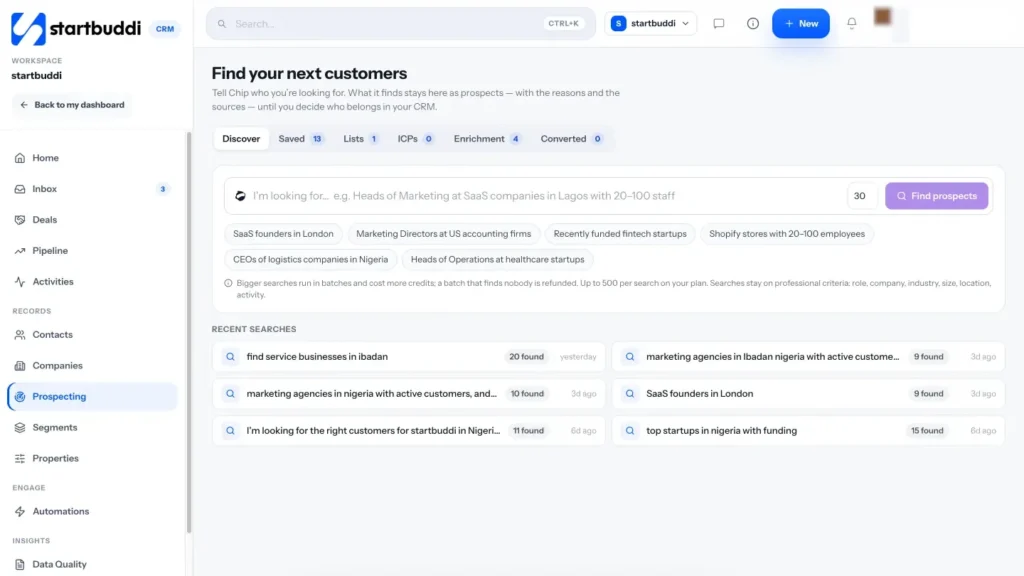
Save your customer profile and find more people like it. In Customers, Prospecting lets you save ideal customer profiles (ICPs) with roles, industries, countries, cities, company size and more. You can describe who you are looking for in a sentence, for example "independent café owners in Leeds with 5 to 15 staff", and Chip searches business listings and the web, then returns real companies and people with the reasons and sources for each match. Nothing goes into your contacts until you choose to convert it. Prospecting uses Chip credits, and it only looks up professional information. See prospecting with Chip.
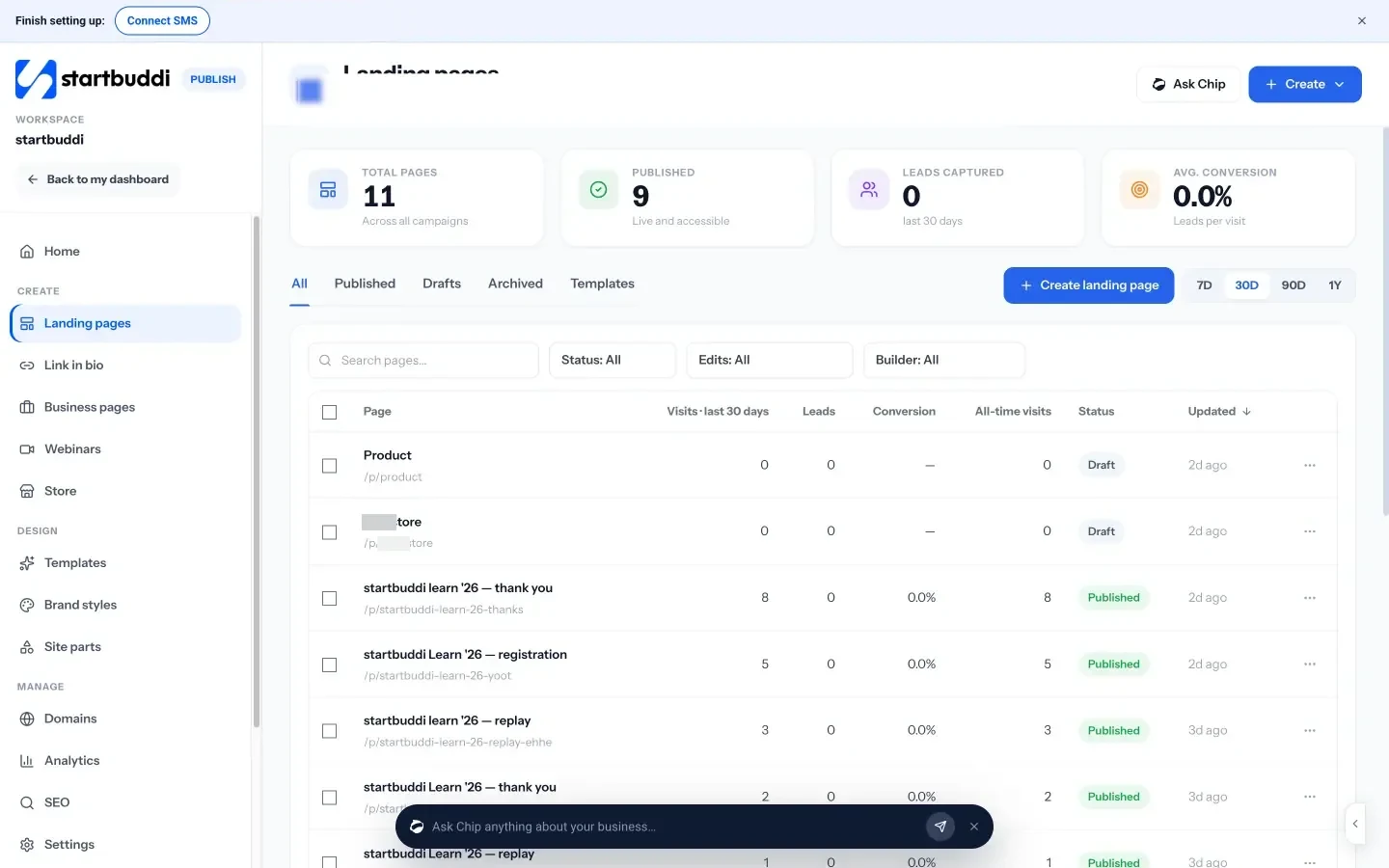
Run a waiting list test. In Publish, a landing page is one page with one job, such as running a waitlist or taking signups. You can build it with Chip from a sentence, from a template or from blank. Each page's Overview shows visits, leads and conversion, and every signup lands in your contacts, which gives you exactly the numbers you need to judge your test.
Take deposits for a pre-order. In Money Manager, a payment link collects a one-off amount, such as a deposit, and you can share it in WhatsApp, by email or as a QR code once Paystack or Stripe is connected.
Keep asking. A feedback form from Forms can run after every job, and Segments in Customers let you group the contacts who match your profile so you can see how many you have and follow up with them together.
Your next step
Write the one-page research plan from chapter 1 today, and book your first three customer conversations this week. When you are ready to turn findings into forms, a waiting list page and your first contacts, you can start on startbuddi's Free plan. When you need more forms, email campaigns and the rest of the Marketing module, see the plans and prices. Once you know your market, our pricing strategy guide helps you set a price that fits it.
Sources
- US Small Business Administration: market research and competitive analysis
- CB Insights: why startups fail
- Google Trends help: how Trends data is adjusted
- Bain & Company: measuring your Net Promoter Score
- US Census Bureau: Census Business Builder
Olabimpe Salami is the email and outreach specialist at startbuddi. Olabimpe writes about the messages that bring customers in and back: email, WhatsApp and SMS campaigns, follow-ups, and turning enquiries into paying clients.
Runs email and outreach at startbuddi