What is Paystack?
Also called: Paystack payment gateway, Paystack checkout
Paystack is a Lagos-founded payment service provider, now owned by Stripe, that lets businesses in Nigeria, Ghana, Kenya and South Africa accept payments online and in person by card, bank transfer, USSD and mobile money.
Paystack is an African payments company that lets businesses accept money online and in person by card, bank transfer, USSD, mobile money and other local methods, then pays the money into the business’s bank account. In its own words, Paystack is “a payment service provider” for African businesses.
It was founded in Lagos in 2015 by Shola Akinlade and Ezra Olubi. In October 2020, Stripe announced it would acquire Paystack, and Paystack continues to operate under its own name as part of Stripe.
Why Paystack matters for a small business
Before payment gateways like Paystack, a small business in Nigeria that wanted to take card payments online faced long bank processes and technical work. Most simply asked customers to “send to my account” and then checked bank alerts by hand.
Paystack made online payments something a small business can switch on in days. For a business owner, that means:
- Customers can pay the way they prefer: card, bank transfer, USSD or, in some countries, mobile money.
- Payments are confirmed automatically, so you don’t have to match bank alerts to orders.
- Money settles to your bank account. Paystack’s help centre says the standard payout for Nigerian businesses is the next working day (T+1).
- You can sell without a website, using Paystack’s hosted payment pages and links.
How Paystack works
A business opens a Paystack account and completes verification with its business and bank details. It then collects payments in one of three ways: no-code tools such as Payment Pages (a shareable payment link), invoices from the Paystack dashboard, or an integration with a website or app, either built by a developer or provided by software the business already uses.
When a customer pays, Paystack’s checkout handles the card or transfer, checks the payment and tells the business it succeeded. The money, minus Paystack’s fee, is queued and paid out to the business’s bank account on the payout schedule.
Here is an example. An online skincare seller in Abuja sends a customer a payment link on WhatsApp. The customer opens it on her phone, chooses bank transfer, and pays ₦18,000. The seller’s order system marks the order as paid straight away, and the money arrives in her bank account the next working day.
Where Paystack works and what it costs
Paystack’s help centre says its services are available to registered businesses in Nigeria, Ghana, South Africa and Kenya, with Côte d’Ivoire and Egypt listed as being in private beta. Payment methods vary by country: for example bank transfer and USSD in Nigeria, M-PESA in Kenya, and mobile money in Ghana.
Fees are charged per successful transaction. At the time of writing, Paystack’s transaction pricing for Nigeria is:
| Nigeria transaction | Paystack fee |
|---|---|
| Local payments | 1.5% + ₦100, capped at ₦2,000. The ₦100 is waived for payments under ₦2,500. |
| International cards | 3.9% + ₦100 |
Other countries have their own rates, and prices can change, so always check Paystack’s pricing page before you set your prices. This is general information, not financial advice.
Key Paystack features
- Checkout for cards, transfers, USSD, mobile money and more, depending on the country.
- Payment Pages for one-time or subscription payments via a link.
- Invoices and recurring billing for subscriptions.
- Split payments: Paystack’s transaction splits send part of each payment to separate bank accounts, called subaccounts.
- Transfers and payouts to bank accounts.
- A dashboard to see transactions, customers, refunds and disputes.
Tips and common mistakes
- Finish verification early. You can’t receive live payouts until your business details are approved.
- Price in the fee. Decide whether you absorb Paystack’s fee or build it into your prices.
- Keep your payout bank account correct. Payouts go to the account in your settings.
- Record every payment against a customer and invoice. Paystack tells you money arrived; your records should say what it was for.
Paystack vs asking for a bank transfer
Many small businesses still share their account number and wait for an alert. That costs nothing per payment, but you have to check every alert, match it to the right customer and chase anyone who “has sent it” when nothing has arrived. With Paystack, the customer can still pay by transfer, but the payment is confirmed and linked to the order automatically. You pay a fee for that convenience, so some businesses offer both: Paystack for speed and cards, and direct transfer, recorded by hand, for customers who prefer it.
Related terms
A payment link is the easiest way to collect money through Paystack without a website. An invoice tells a customer what they owe, and Paystack can be the way they pay it. Recurring invoicing and subscriptions use Paystack to charge the same customer on a schedule.
Paystack in startbuddi
You can connect Paystack in startbuddi’s Money Manager settings, under How you get paid, by entering your business name, bank and account number. A Paystack subaccount is created for you, so payments settle straight to your own bank account. Your money never passes through startbuddi, and there is no startbuddi cut. Paystack’s own fees still apply.
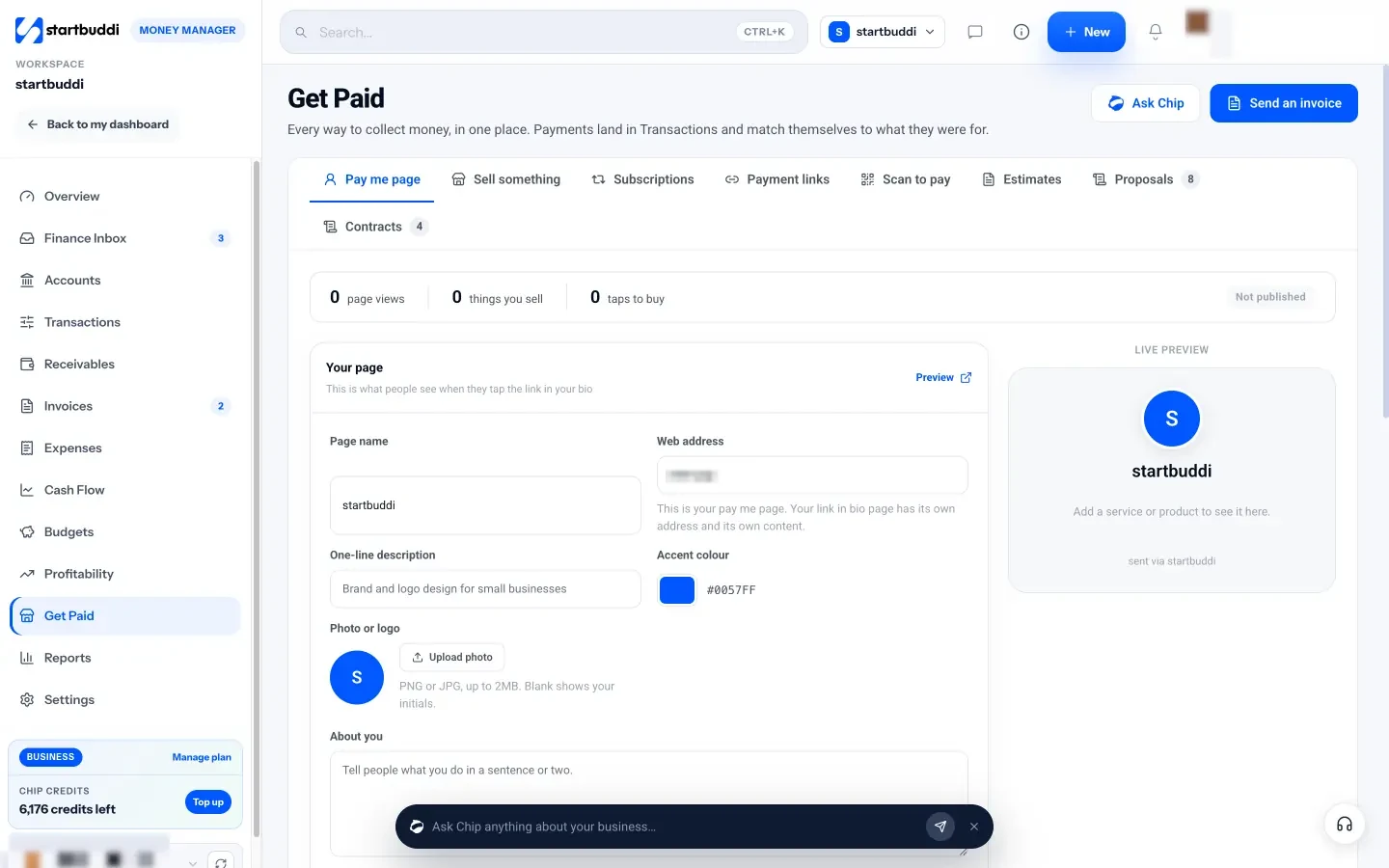
Once connected, Paystack powers the pay buttons across startbuddi: invoices clients can pay online, payment links, a pay me page and scan-to-pay QR codes, subscription plans for your own customers, and deposits when clients book through Bookings. Payments land in Transactions and match themselves to what they were for. Stripe and bank transfer details are available too.
Next step: make sure your Paystack business verification is complete, then connect it in Money Manager and send your next invoice with a pay button.
Related terms
FAQ
Is Paystack owned by Stripe?
Yes. Stripe announced its acquisition of Paystack in October 2020. Paystack still operates under its own brand.
Can I use Paystack without a website?
Yes. Paystack Payment Pages give you a shareable link, and tools that connect to Paystack, such as invoicing apps, add pay buttons for you.
How long does Paystack take to pay me?
Paystack says the standard payout for Nigerian businesses is the next working day. Timings differ in other countries, so check your Paystack dashboard.
Can customers outside Africa pay me through Paystack?
Paystack accepts international cards for eligible businesses, at a higher fee than local payments. Check Paystack's help centre for the eligibility rules in your country.
Tiwalade Joanna Okedara-Kalu is the founder, CEO and CTO of startbuddi, the business system that brings clients, bookings, invoices, projects, marketing and the Chip AI assistant into one place. Tiwalade builds software around how service businesses really work day to day, and writes about client management, getting paid on time and why small businesses outgrow the tools they start with.
Founded startbuddi and leads its product and engineering