What is a lead management system?
Also called: Lead management software, lead tracking system, lead management process, CRM for leads

A lead management system is a process, usually run in software, for capturing every potential customer in one place, qualifying them, following up on time and tracking each one until they become a customer or drop out.
A lead management system is how you handle potential customers from the moment they show interest to the moment they buy, or clearly don’t. It captures every enquiry in one place, helps you decide who is worth pursuing, reminds you to follow up and shows where each lead stands.
A lead is anyone who might become a customer: someone who filled in a form, messaged you on Instagram, called about a price or was referred by a friend. Getting leads is often not the hard part. Keeping track of them all, and replying before they go elsewhere, is.
Why a lead management system matters for a small business
Leads arrive through many doors: WhatsApp, email, your website, social media, phone calls and events. Without a system, they end up scattered across apps and memory, and some quietly disappear.
- No lead slips through. Every enquiry is recorded, whatever channel it came from.
- Faster replies. You can see who is waiting and respond while they are still interested.
- Better use of time. You focus on the leads most likely to buy.
- Clear results. You learn which channels bring leads that turn into paying customers.
The stages of lead management
- Capture: collect the lead’s details from forms, chats, bookings, ads, imports or by hand.
- Record the source: note where they came from, so you can measure your marketing.
- Qualify: decide if they are a good fit. Do they need what you sell, can they afford it, and when do they want it?
- Assign: give each lead an owner, even if that is always you.
- Follow up: reply quickly, then keep in touch on a schedule until you get an answer.
- Convert or close: turn qualified leads into deals and customers, and mark the rest as not a fit, with a reason.
How a lead management system works: an example
Zanele runs a solar installation company near Johannesburg. Leads come from a website form, Facebook ads and WhatsApp. She used to keep them in a notebook and a WhatsApp chat list. Now every lead lands in one contact list with its source. Each morning she filters for new leads, qualifies them with three questions (roof type, monthly electricity spend, timeline) and assigns site visits to her two installers. Leads who aren’t ready get a short follow-up sequence and a reminder to call in a month. At the end of each month she checks which source brought the most signed jobs, not just the most enquiries.
Types of lead management systems
Manual
Notebooks, phone contacts and chat threads. Free and familiar, but leads get lost as volume grows and nobody else can see them.
Spreadsheets
More structure, but every update is manual, reminders don’t happen by themselves and it is easy to end up with several versions.
Lead management software
Usually part of a CRM. Leads are captured automatically, follow-ups are scheduled or automated, and everyone on the team sees the same list.
Best practices and common mistakes
- Reply fast. Aim to respond the same day, ideally within the hour during working hours. Set up an instant automatic reply for evenings and weekends.
- Keep all leads in one place. If leads live in three apps, some will be forgotten.
- Agree what “qualified” means. Write down two or three simple questions that decide whether a lead is a good fit.
- Follow up more than once. Many sales happen after the second or third touch. Plan them rather than hoping to remember.
- Close leads that are not a fit. Marking them as disqualified keeps your list clean and your numbers honest.
- Don’t overcomplicate it. A simple system you use every day beats a detailed one you avoid.
Related terms
Lead nurturing keeps leads warm until they are ready to buy. Once a lead is qualified it usually becomes a deal in your sales pipeline, and pipeline management keeps those deals moving. Follow-up automation sends the routine messages for you. For more on capturing leads, read lead capture automation.
Lead management in startbuddi
In startbuddi, leads arrive in your contact list from forms, bookings, website chat, Facebook and Instagram lead ads, and CSV imports, each with its source. You can filter by lead status (New, Qualified, Disqualified), owner, tag, last contacted and lead score, switch to a board view to drag contacts between lead stages, and save any filter as a segment.
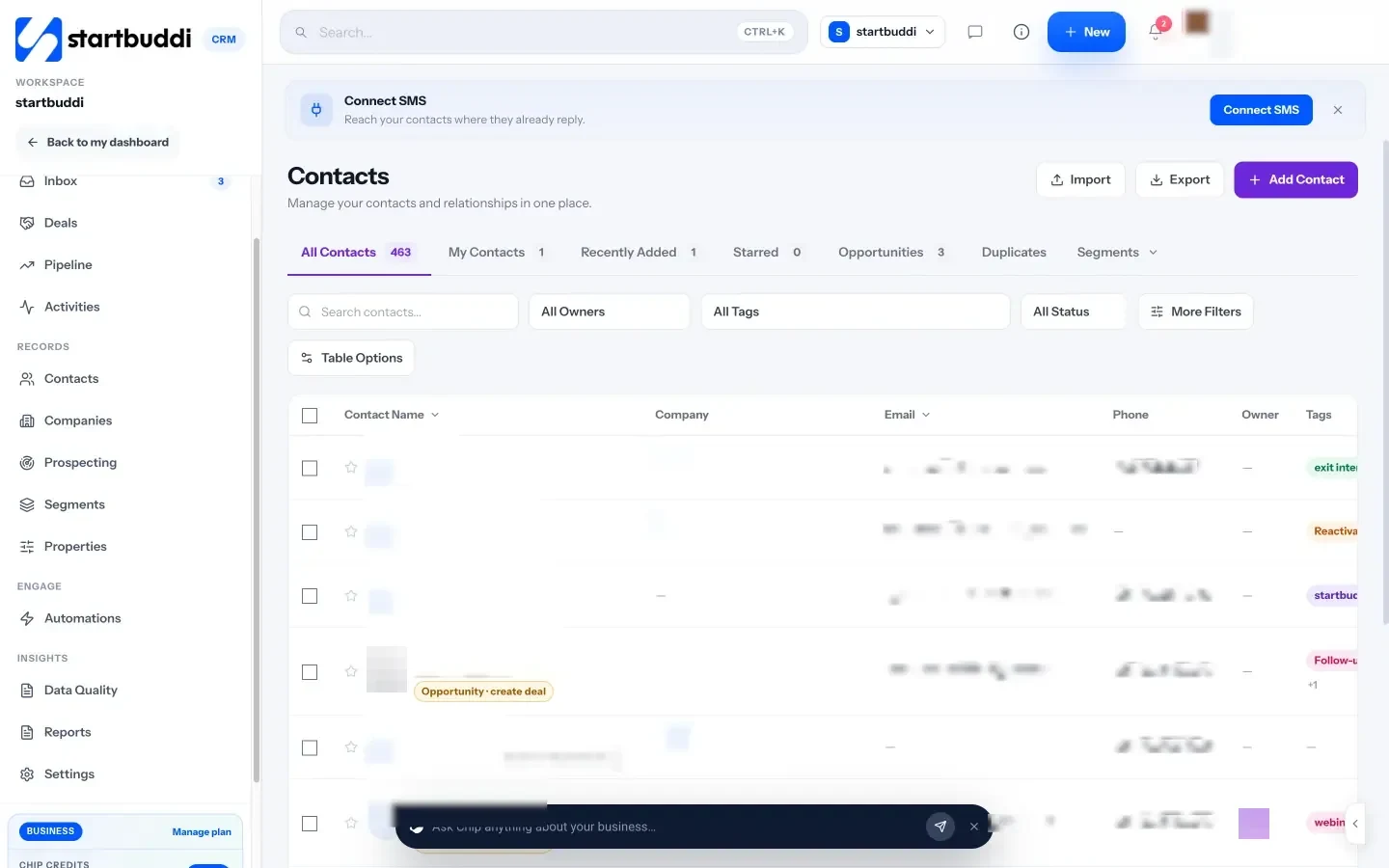
Each contact has a lead score from 0 to 100, worked out from their activity, spend, how recently you were in touch and whether they have a deal. Assign an owner with a follow-up reminder, reply from the shared inbox and create a deal when a lead is ready. Automations can reply to new form leads instantly (Starter plan and above), and Prospecting lets Chip find new companies that match your ideal customer. Your next step: list every place leads reach you today, then connect the busiest one to your contact list. See plans on the pricing page.
Related terms
FAQ
Is a CRM the same as a lead management system?
A CRM usually includes lead management, plus tools for existing customers such as deals, conversations and invoices. Lead management is the part focused on new, unconverted enquiries.
What is lead qualification?
Deciding whether a lead is a good fit before spending much time on them. Simple questions about need, budget and timing are usually enough for a small business.
How quickly should I respond to a new lead?
As soon as you reasonably can, ideally the same day. An automatic reply straight away buys you time to send a personal answer.
Do small businesses need lead management software?
Once leads come from more than one channel, or more than one person handles them, software saves time and stops leads being lost.
Omolola Akiyode is the operations and project manager at startbuddi, leading cross-functional projects and the content that helps founders get set up. Omolola writes about projects, websites and getting found online, and turns complex ideas into clear, practical steps.
Runs operations and projects at startbuddi