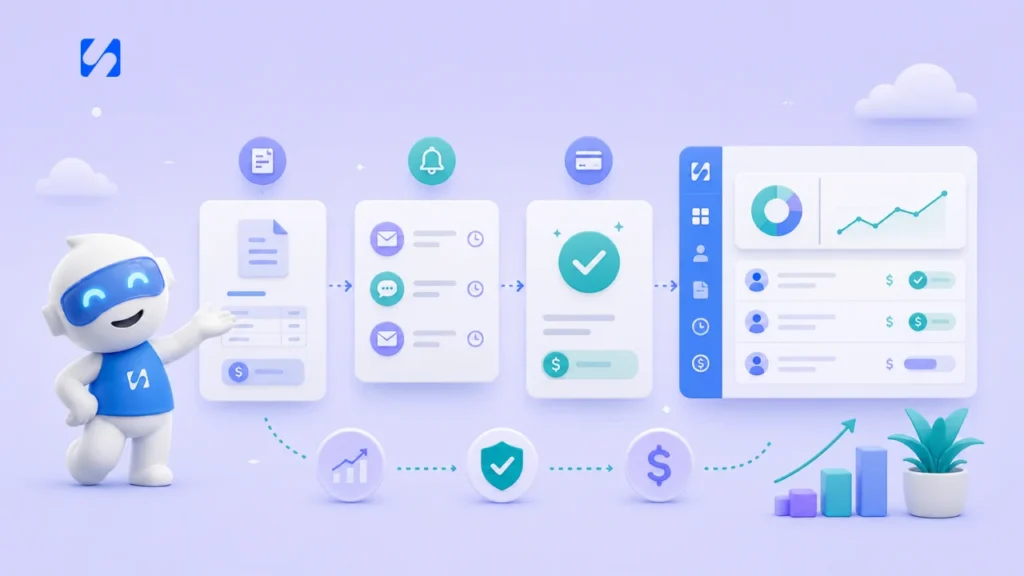
Most service business owners have a CRM they barely touch. Here's why that's costing them, and what to do instead.
- What a CRM Actually Does for You
- The Most Common CRM Mistake
- The 5 Things to Track for Every Client
- The Weekly CRM Habit That Changes Everything
- Segments That Actually Matter
Ask most service business owners if they use a CRM, and many will say yes. Ask them when they last opened it — and the answer gets uncomfortable. A CRM you don’t use isn’t a business tool. It’s digital clutter. Here’s why it matters and how to actually make it work for you.
What a CRM Actually Does for You
A CRM isn’t just a contacts list. It’s a memory for your business. It knows who your clients are, when they last booked, what they’ve bought, what they said in their last message, and whether they owe you anything. When it’s used properly, it means you never have to ask a client to repeat themselves — and you never miss a follow-up.
The Most Common CRM Mistake
Most people treat their CRM as a place to put information after things happen. The CRM should drive what happens next. When you log a client, the CRM should automatically prompt you to follow up, remind you when they haven’t booked in 60 days, and flag unpaid invoices.
The 5 Things to Track for Every Client
| Data Point | Why It Matters |
|---|---|
| Last booking date | Tells you who needs a re-engagement message |
| Total revenue | Identifies your most valuable clients |
| Services booked | Shows what to upsell or cross-sell |
| Payment status | Flags anyone who owes you money |
| Notes from sessions | Makes every client feel remembered |
The Weekly CRM Habit That Changes Everything
Spend 15 minutes every Monday doing one thing: look at who hasn’t booked in 45+ days and send them a personal check-in. Not a newsletter — a short, direct message. “Hey Sarah, just thinking of you — how are things going? Would love to catch up.” This one habit can recover 2–3 clients a month who would otherwise have drifted away.
Segments That Actually Matter
You don’t need complicated segmentation. Three categories are enough: Active clients (booked in the last 30 days), At-risk clients (30–90 days since last booking), and Lapsed clients (90+ days). Your CRM should show you this at a glance.
CRM and Your Revenue
Run this from one workspace
Clients, projects, money and marketing — connected, not scattered across five apps.
See how it worksStudies consistently show that increasing client retention by just 5% increases profit by 25–95%. Your CRM is the tool that drives retention. It’s not an admin task — it’s one of the highest-leverage activities in your business.
The best CRM is the one you actually use. If it’s complicated, you won’t use it. Keep it simple, keep it visible, and let it remind you what to do next.
Put this into practice
Everything in this guide is built into startbuddi — free to start.
Start freeWritten by
Joanna Okedara-Kalu
Joanna Okedara-Kalu is the Founder and CEO of startbuddi, an Africa-first, globally-ready operating system for service businesses — bringing CRM, bookings, invoicing, projects, marketing, and an AI assistant into one connected workspace. Her focus is building software for how service businesses actually work day to day, not the enterprise workflows most business tools are built around. She writes regularly about client management, getting paid on time, and the real reasons small businesses outgrow the tools they start with.
Keep reading
Related playbooks
Stop reading. Start doing.
Free to start. No card needed. Your full workspace is ready in five minutes.