There is a business that hits its target every quarter, and there is one that does not. Look closely at both and one factor stands out more than…
- What Is CRM Implementation and Why Does It Matter for Agencies?
- How Do You Know When Client Data Has Gotten Out of Control?
- Why Do Missed Follow-Ups Signal It Is Time for an Operational CRM?
- What Happens When You Cannot Measure Client and Campaign Performance?
- Why Does Switching Between Five Tools Slow Your Agency Down?
There is a business that hits its target every quarter, and there is one that does not. Look closely at both and one factor stands out more than the rest: CRM implementation. This is not a “maybe later” decision, and it is not something you back into by accident. You have to be intentional about it, on purpose, before the gap between the two businesses gets too wide to close.
For agencies, that gap shows up fast. If three different tools are tracking your client relationships and none of them agree with each other, you are already on the wrong side of it.
This article breaks down the five clearest signs your agency has outgrown its current system, plus what CRM implementation actually involves once you decide to make the switch.
What Is CRM Implementation and Why Does It Matter for Agencies?
CRM implementation is the process of setting up a customer relationship management system so it reflects how your agency actually works, not just installing software and hoping it fixes things on its own. It covers data migration, workflow setup, and team training.
For agencies, this matters because client relationships are the business. You are managing retainers, project handoffs, renewals, and multiple stakeholders per account, not a single sale. Without a system built for that, details slip, and slipped details cost renewals.
How Do You Know When Client Data Has Gotten Out of Control?
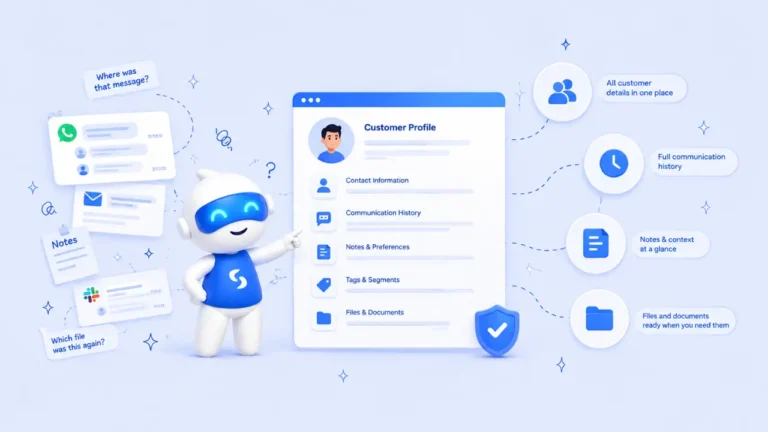
You know client data is out of control when no one can answer a basic question about a client without digging through old emails. This is usually the first sign an agency notices, because it shows up in daily frustration before it shows up in lost revenue.
Common symptoms include:
- Contact details split across spreadsheets, inboxes, and someone’s notes app
- Project history that only lives in one person’s memory
- New hires taking weeks to get up to speed on an account
- Conflicting versions of the same client file
This is exactly where one workspace pays off. Platforms like startbuddi bring client records, follow-ups, project status, and team notes into a single place, so anyone on the account can see what happened last and what needs to happen next without pinging three coworkers.
Why Do Missed Follow-Ups Signal It Is Time for an Operational CRM?
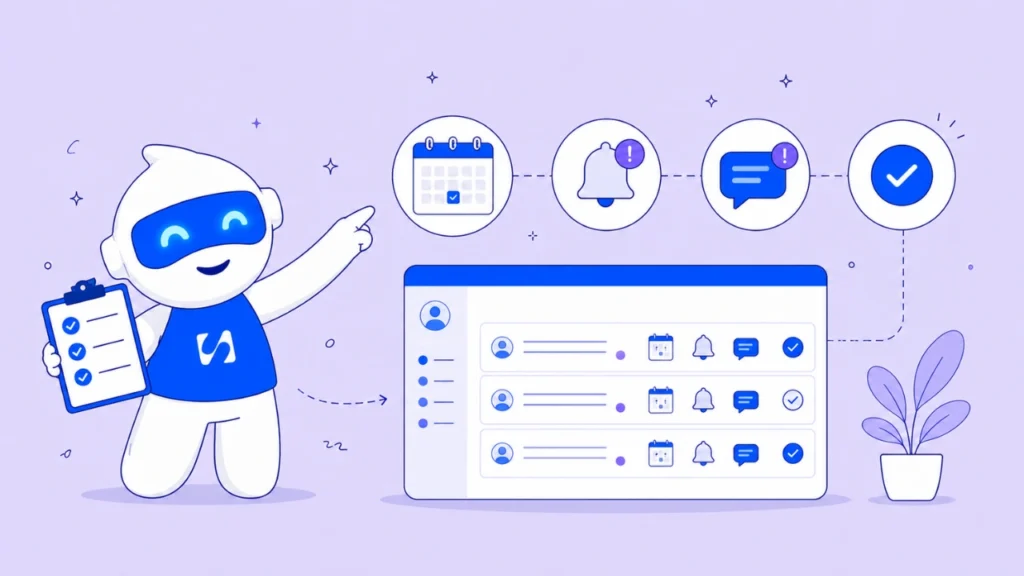
Missed follow-ups are the clearest financial sign of the five, because every unanswered email or forgotten check-in is a client wondering if you still care about the account. An operational CRM automates the reminder so nothing depends on memory.
This is also where collaborative CRM matters. When strategy, design, and account management each keep their own notes, the client repeats themselves or gets mixed messages. A shared system logs every interaction in one thread so the whole team works from the same information.
What Happens When You Cannot Measure Client and Campaign Performance?
Without measurement, you are guessing which clients are profitable and which accounts are quietly at risk. This is fixed by analytical CRM tools that turn raw activity into a clear picture, response times, deal velocity, retention, instead of gut feeling.
Agencies running crm campaign management alongside client accounts get an added benefit here: they can see which outreach is actually converting, not just which feels busy.
Why Does Switching Between Five Tools Slow Your Agency Down?
Every time your team jumps from a spreadsheet to an inbox to a project tool just to answer one client question, you lose time and context. That lag adds up across a team, and it is one of the clearest signs your process is overdue for a change.
The fix is consolidation. An all-in-one platform like startbuddi keeps CRM, projects, communication, and tasks connected in one place, so your team is not rebuilding context every time it opens a new tab. Less switching means fewer dropped details and faster replies to clients who are used to waiting.
What Are the Benefits of CRM Implementation for Agencies?
The core benefit is that scattered client knowledge becomes a shared, searchable system your whole team can rely on. Agencies typically see fewer missed renewals, faster onboarding, and clearer visibility into account health.
Operational CRM handles the daily work of logging interactions and automating follow-ups. Collaborative CRM keeps departments aligned on the same client story. Analytical CRM turns activity into reporting you can act on. Treat this as an ongoing habit, reviewing workflows quarterly, not a one-time task, and the benefits compound instead of fading.
How Do You Choose the Best CRM System for Your Agency?
Choosing the best CRM system starts with matching the tool to your actual workflow, not the longest feature list. A sales-only pipeline tool will frustrate a service agency that also needs project delivery tied to the same client record.
Look for a few things before committing:
- Does it combine client records, tasks, and communication in one place
- Can the whole team access the same client history without extra logins
- Does it support the reporting you actually check weekly
- Can you migrate existing data without losing history
Based on watching agencies move off spreadsheets, the ones that succeed pick a system that fits their current size and grows with them, rather than overbuying software they will not use for years.
Frequently Asked Questions
When should a startup implement CRM best practices?
As soon as it has more than a handful of repeat clients or leads to track, usually before it feels “big enough” to need one. Waiting until data is scattered across five tools makes the switch harder later.
Run this from one workspace
Clients, projects, money and marketing — connected, not scattered across five apps.
See how it worksWhen should a startup implement a CRM system, and what are the pros and cons?
The pro of implementing early is clean data from day one and no painful migration. The con is spending setup time before the workflow is proven. Most startups find an operational CRM pays off once active accounts pass ten to fifteen.
How do you implement a CRM system?
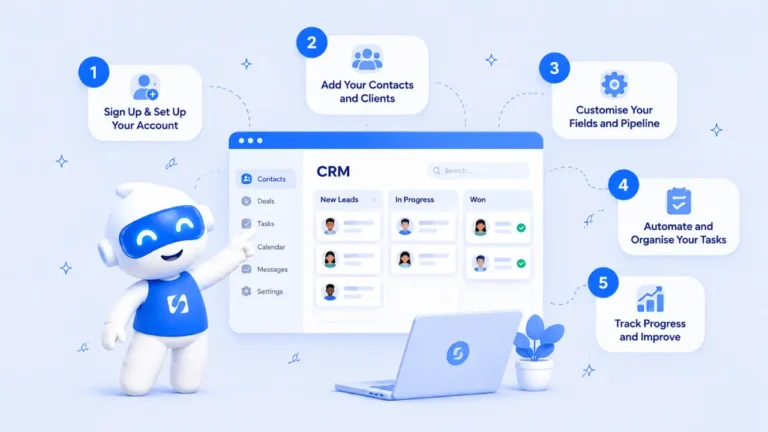
Map your current client workflow, then migrate existing contact and project data. Set up templates for common follow-ups, train the team, and review adoption after thirty days to fix what is not sticking.
What is the difference between operational, analytical, and collaborative CRM?
Operational CRM automates daily tasks like follow-ups and pipelines. Analytical CRM focuses on reporting and patterns. Collaborative CRM centralizes communication so teams stay aligned. Most growing agencies eventually need all three.
Conclusion
If your agency is dealing with scattered client data, missed follow-ups, or a team that cannot agree on what happened with an account last week, these are not small annoyances. They are signs the switch is overdue, and the longer you wait, the more it costs in lost renewals and wasted hours.
You do not need an enterprise budget to fix this. startbuddi lets you get started for less than $10, with client records, follow-ups, and project tracking already connected in one workspace. For a small agency, that is often enough to stop losing clients to disorganization.
Put this into practice
Everything in this guide is built into startbuddi — free to start.
Start freeWritten by
Chinonye Umezinne
SEO Copywriter| Email growth Specialist| I help businesses increase revenue with strategic SEO content & high-converting email funnels.
Keep reading
Related playbooks
Stop reading. Start doing.
Free to start. No card needed. Your full workspace is ready in five minutes.