Sales funnel vs website: what’s the difference, and which do you need first?
A website tells people who you are. A sales funnel walks them to one decision. Here's how the two differ, how they work together, and which to build first for your business.


Chinonye wrote this while on the startbuddi team. The product has changed since, so the team updated it on .
- A website is your business's home online: it explains who you are and serves many kinds of visitor. A sales funnel is a focused path, usually a landing page plus follow-up, that moves one kind of visitor towards one action. Most small businesses need a simple website or business page for trust and a funnel for each important offer. If you need clients fast, start with the funnel.
In the sales funnel vs website question, the short answer is that they do different jobs. A website is your business’s home online: it explains who you are, what you offer and why you can be trusted, to anyone who arrives. A sales funnel is a focused path that takes one kind of visitor towards one decision, such as booking a call, joining a waitlist or buying a starter package. You’ll usually want both, but not necessarily at the same time.
This guide explains each one in plain language, compares them side by side, shows how they work together, and helps you decide which to build first. It’s written for small businesses, freelancers, coaches and service providers anywhere, and doesn’t assume any marketing knowledge.
What is a website, and what is it for?
A website is a set of pages about your business: usually a home page, services, about, contact, and perhaps a blog or portfolio. It serves many kinds of visitor at once: potential customers comparing options, existing clients looking for your phone number, journalists, job seekers and partners.
A good small business website does four things:
- Builds trust. Real photos, reviews, clear prices or starting prices, and a real address or area.
- Answers questions. What you do, who it’s for, how it works, how much it costs.
- Gets found. Search engines index its pages, so people can find you when they search for what you do.
- Makes contact easy. A form, a phone number, a WhatsApp button or a booking link on every page.
Because it serves everyone, a website has menus, several pages and many possible next steps. That’s its strength, and also why it’s rarely the fastest way to turn a specific visitor into a customer.
What is a sales funnel, and how does it work?
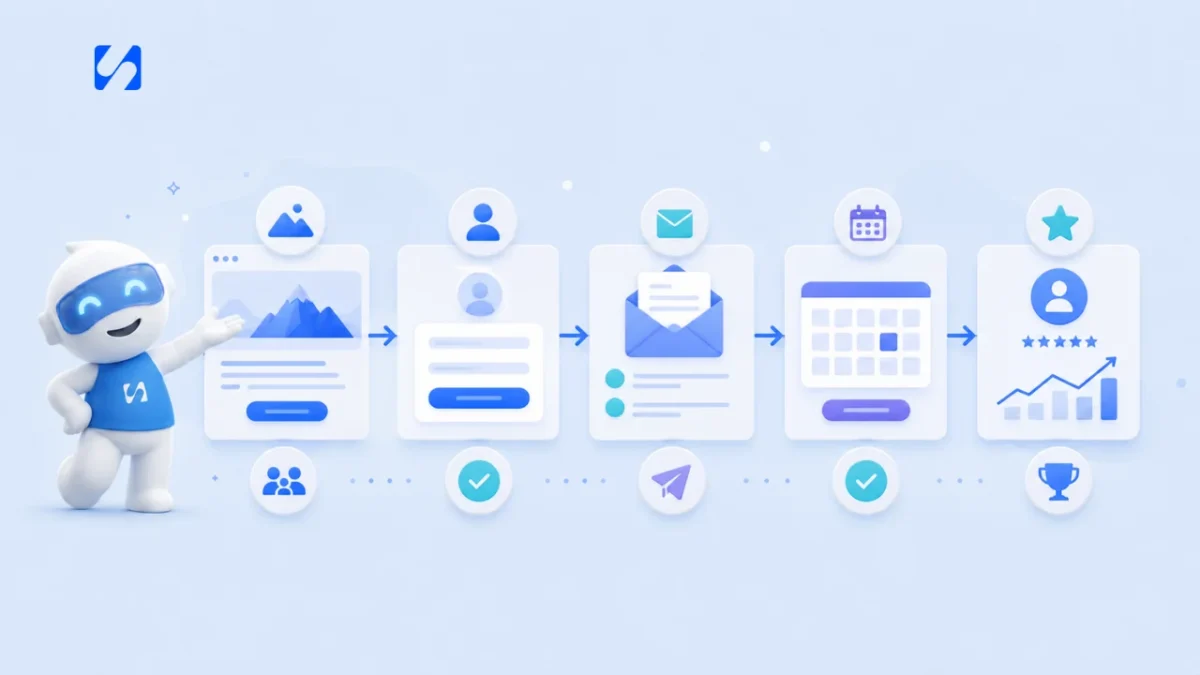
A sales funnel is the path someone takes from first noticing you to becoming a customer. In practice, when people talk about “building a funnel”, they usually mean a small set of connected pieces built around one offer:
- A traffic source: a social post, an ad, an email or a link shared in a WhatsApp group.
- A landing page: one page, one offer, one action, usually with no menu.
- A form or checkout where they share their details or pay.
- A thank-you page that confirms what happens next.
- Follow-up: a short series of emails or messages that builds trust and invites the next step.
Because every piece points in the same direction, a funnel is good at turning one kind of visitor into one kind of lead or sale. For more on the idea itself, see our explainer on what a sales funnel is.
Sales funnel vs website: the key differences
| Website | Sales funnel | |
|---|---|---|
| Main job | Inform and build trust | Move one visitor to one action |
| Audience | Everyone who might visit | One type of customer with one need |
| Structure | Several pages with menus | A short, linked sequence of pages and messages |
| Next steps offered | Many | One |
| Where traffic comes from | Search, referrals, direct visits | Mostly campaigns: social, ads, email |
| Lifespan | Long-term, updated over time | Often per offer or campaign |
| Follow-up | Usually none built in | Built in: emails or messages after signup |
| How you measure it | Visits, enquiries, search rankings | Conversion rate at each step |
A useful way to think about it: your website is your shop, and a funnel is a guided tour for people who came in asking about one particular thing.
How a website and a sales funnel work together
The two aren’t rivals. They support each other:
- The website gives the funnel credibility. Someone who lands on your offer page often checks you out before signing up. A clear website or business page with reviews reassures them.
- The funnel gives the website a job. Put your main offer on the website’s home page and link to the funnel’s landing page, so visitors who are ready have a clear next step.
- Search brings website visitors; campaigns bring funnel visitors. Over time, the website collects people looking for you, and the funnel converts people you went looking for.
- Both feed one contact list. Enquiries from the website and signups from the funnel should land in the same place, with their source, so you can follow up and see what works.
Here’s what that looks like for a small accountancy practice:
- Website: home, services, prices, about, reviews, contact. It ranks for “accountant for sole traders in Leeds” and brings a steady trickle of enquiries.
- Funnel: an Instagram and LinkedIn campaign each January offers a free “Self Assessment deadline checklist”. The landing page collects email addresses, the thank-you page offers a 15-minute call, and four follow-up emails over ten days invite people to book help with their return.
Which do you need first?
It depends on where your customers come from and how quickly you need them.
Start with a funnel if…
- You need clients soon and plan to find them through social media, ads, email or partnerships.
- You sell one main offer, such as a coaching programme, a package or a consultation.
- You’re testing a new idea and want to know if anyone will sign up before you build more.
- Most of your customers come from referrals and just need a place to act on the recommendation.
A single landing page with a form, a thank-you page and three or four follow-up emails can be live in a day.
Start with a website if…
- Customers search for businesses like yours on Google, especially locally.
- You offer several different services to different kinds of customer.
- People need to check you out thoroughly before buying, as with larger projects or regulated services.
- You’re applying for contracts, partnerships or press where a full site is expected.
Even then, a website can start small. One strong page with your services, proof and contact options does most of the work, and you can add pages later.
The middle path most small businesses take
Start with one clear business page (a simple website) and one funnel for your most important offer. Add a second funnel only when the first one is working. Our guide to building an online presence that turns visitors into leads covers the rest of the setup.
Time and effort compared
Money is rarely the main cost for a small business; time is. Roughly, here’s what each takes to get going and keep running:
| Simple website or business page | One sales funnel | |
|---|---|---|
| First version | A day for one page; longer for several pages of written content and photos | A day: landing page, thank-you page and follow-up emails |
| Ongoing work | Update prices, hours, reviews and photos; add pages occasionally | Keep traffic flowing, answer replies, refresh the offer |
| When you see results | Slowly, as search engines and referrals find you | Quickly, once you send people to it |
| What it needs to work | Clear content and good local listings | A specific offer and a steady source of visitors |
The funnel’s weakness is that it needs you to send people to it. Stop posting or advertising, and signups stop. The website’s weakness is that it’s slower and broader. Together they cover each other’s gaps.
Questions to ask before you build either
- Where did my last ten customers first hear about me? If most came from search, invest in the website. If they came from social media or referrals, a funnel will convert them better.
- What’s the one offer I’d most like more of? That’s your first funnel.
- What do people ask before they buy? Those questions belong on the website and in your follow-up emails.
- What happens to an enquiry today? If the honest answer is “it sits in my inbox”, fix the follow-up before building more pages.
- How much time can I give this each week? Be realistic. One page and one funnel kept up to date beat an ambitious setup that goes stale.
What a simple funnel looks like, step by step
- Pick one offer and one audience. “A free 20-minute brand review for new cafés” is better than “marketing help for businesses”.
- Write the landing page. Headline with the benefit, three short points on what they get, a line of proof, and a form asking only for name and email or phone.
- Add a thank-you page. Confirm what happens next and offer one extra step, such as booking a call now.
- Write the follow-up. Three to six short emails or messages over one to two weeks. Our guide to building a sales funnel email sequence gives you a template.
- Send traffic. Share it in your bio, posts, email signature, WhatsApp status and anywhere your audience gathers.
- Measure each step. Visits to the page, signups, replies and customers. If visits are high and signups low, fix the page. If signups are high and customers low, fix the follow-up.
Common mistakes
- Sending campaign traffic to your home page. A visitor from an ad about one offer shouldn’t have to hunt for it. Send them to the landing page.
- Building a big website before you have customers. Months of design work won’t tell you whether anyone wants what you sell. A funnel will, quickly.
- A funnel with no follow-up. Most people don’t act on their first visit. Without follow-up, you’ve built a nice form.
- Too many funnels at once. Each one needs traffic and attention. Get one working first.
- Two separate lists. If website enquiries go to your inbox and funnel signups go to an email tool, leads fall through the gap.
- Mismatched messages. If the post promises a free checklist and the landing page leads with a paid package, people feel tricked and leave. Keep the promise identical from post to page to first email.
- No way back to the website. A landing page shouldn’t have a full menu, but a small link to your main page in the footer helps people who want to check you out first.
- Fake urgency. Countdown timers that reset and “only 2 spots left” claims that aren’t true damage trust. Only use real deadlines.
How startbuddi fits
There’s no separate funnel builder or multi-page website builder in startbuddi. Instead, Publish gives you the pages most small businesses need, all connected to one contact list and to your follow-up automations.
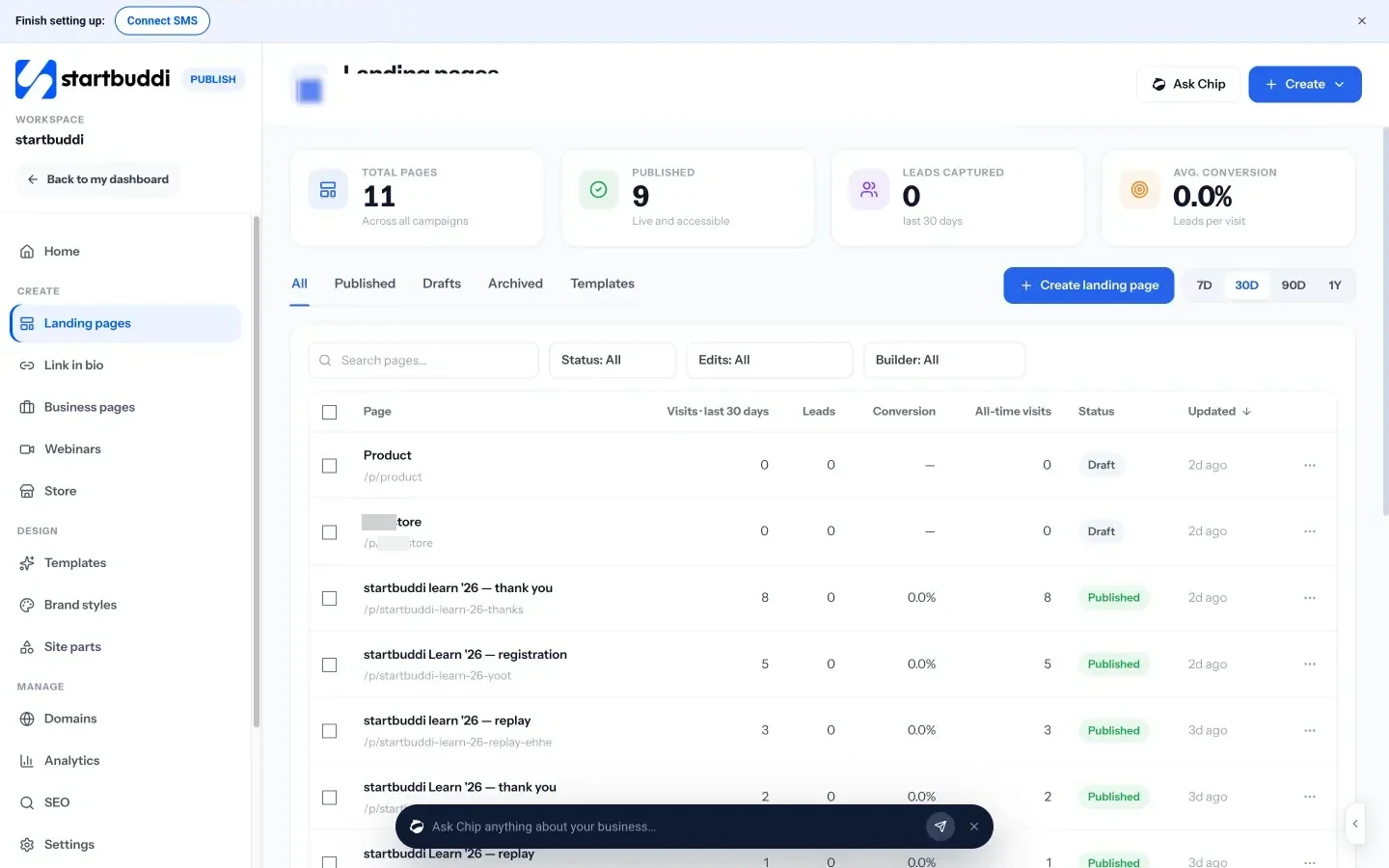
- Landing pages for your offers. One page with one job: collect leads, take bookings, sell something or build a waitlist. Build it with Chip, from a template or blank. In the page builder’s Steps tab you can add a thank-you, checkout, upsell or download page after it, each linked in order. See landing pages.
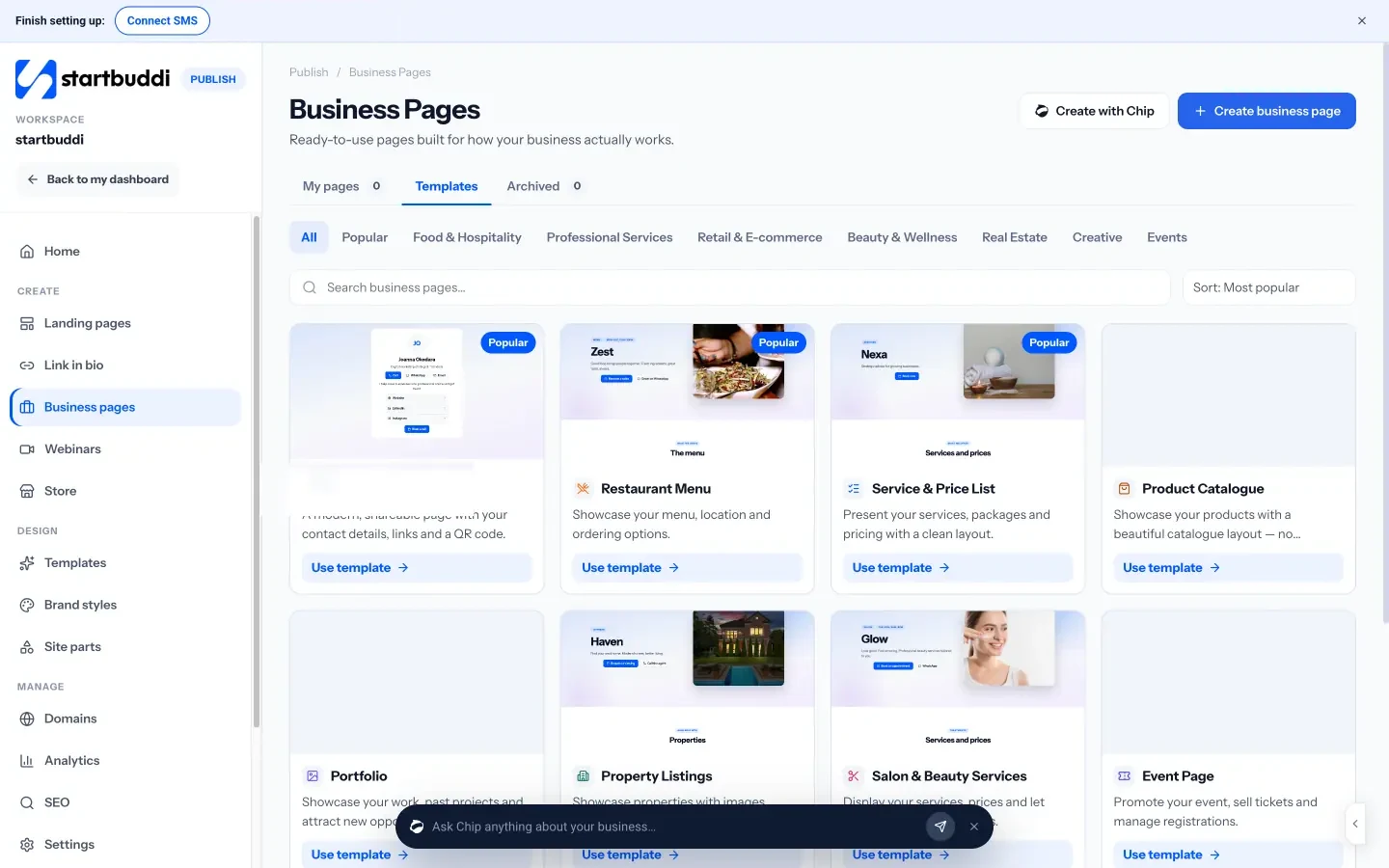
- Business pages for trust. Ready-made page types such as a service and price list, portfolio, digital business card or salon services page, with buttons for booking, WhatsApp or a form. See business pages.
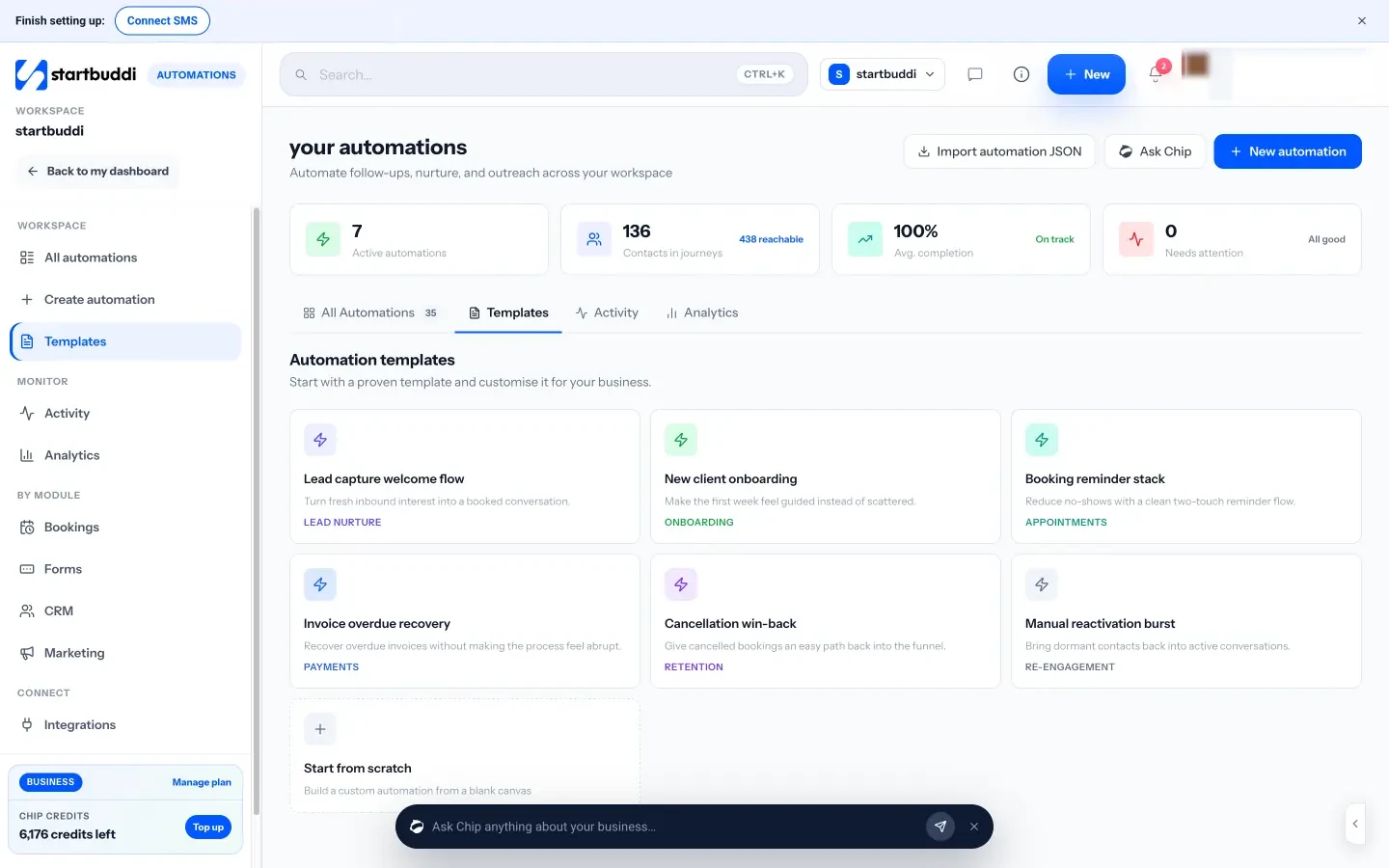
- Follow-up built in. A signup can start an automation that sends emails, SMS or WhatsApp messages over the following days. Each landing page’s Emails tab shows what it sends. Free includes 2 active automations, and Starter allows 10.
- One list. Signups and enquiries land in your contacts with the source page and campaign saved.
- Your own domain and search settings. Connect a domain you own and set each page’s search title and description.
Be aware that startbuddi shows visits and leads for each landing page, but doesn’t yet measure drop-off between individual funnel steps. Landing pages and business pages are available on every plan; Free pages carry a small “Powered by startbuddi” line that any paid plan can remove. Paid plans start at Starter, with a 30-day trial (see pricing). See pricing.
If you’re comparing tools, our lists of landing page builders and website builders, and our glossary entry on landing page builders, cover the wider choice.
Next step
Write down your single most important offer and where the people who want it spend time online. If you don’t yet have a page that explains your business, make one simple business page first. Then build one landing page for that offer, with a thank-you page and three follow-up emails, and share it for two weeks. You can build both for free in startbuddi Publish.
Frequently asked questions
Is a sales funnel better than a website?
Neither is better; they do different jobs. A website builds trust with many kinds of visitor, while a funnel moves one kind of visitor to one action. Most businesses benefit from both.
Can a landing page replace a website?
For a new business with one offer, often yes at first. As you add services or want to be found in search, a fuller website or business page helps.
Do I need special software to build a sales funnel?
No. A landing page, a form, a thank-you page and an email sequence are enough. Many tools can do each part; what matters is that they connect to one contact list.
How do I send website visitors into a funnel?
Feature your main offer on the home page and link it to the funnel's landing page, and add the same link to your menu, blog posts and email signature.
SEO Copywriter| Email growth Specialist| I help businesses increase revenue with strategic SEO content & high-converting email funnels.