Booking Deposit: Definition, Examples and How It Works

A booking deposit is a part-payment a client makes to secure an appointment, visit or event date, which is then taken off the final bill. If the client cancels late or doesn't show, the business can keep some or all of it. So what is booking deposit money for?
A booking deposit is a part-payment a client makes to secure an appointment, visit or event date, which is then taken off the final bill. If the client cancels late or doesn’t show, the business can keep some or all of it. So what is booking deposit money for? It turns a reservation into a commitment.
Key takeaways
- A booking deposit is paid up front and counts towards the total price. It isn’t an extra charge.
- Its main job is to reduce no-shows and late cancellations, and to cover costs you spend before the work starts.
- State clearly when it’s refundable and when it isn’t, before the client pays.
- Keep it proportionate. UK guidance says a deposit kept in full should be “no more than a small percentage of the price”.
- Taking it online at the moment of booking is far easier than chasing it afterwards.
Why a booking deposit matters for a small business
For an IT services firm, a booked visit often costs money before it happens: an engineer’s half day held free, a router or cables bought for the job, a taxi across Lagos. If the client cancels the morning of the visit, those costs don’t disappear.
A deposit protects you in three ways:
- Fewer no-shows. A client who has paid something is far more likely to turn up or give notice.
- Costs covered. Parts bought for one client’s job are paid for even if the job falls through.
- Better cash flow. Part of the money arrives before the work, not 30 days after the invoice.
It also filters enquiries. People who won’t pay a small deposit for a server setup are often the same people who would argue about the final bill.
What is booking deposit payment, and how does it work?
- You set the amount for each service: a fixed sum or a percentage of the price.
- You write the terms: when it’s refundable, how much notice a client must give to get it back, and what happens if they don’t show. These belong in your payment terms.
- The client pays at booking, usually through a payment gateway such as Paystack or Stripe. The slot is only confirmed once payment goes through.
- The deposit is credited on the final invoice, so the client pays the balance after the work.
- If the client cancels in time, you refund it or move it to a new date. If they cancel late or don’t show, you keep it under your terms, and it works as your no-show fee.
Refundable vs non-refundable deposits
| Type | What happens if the client cancels | Best for |
|---|---|---|
| Fully refundable | Refunded if notice is given by a set time | Low-cost, easily refilled slots |
| Partly refundable | Part kept to cover costs already spent | Jobs where you buy parts or materials first |
| Non-refundable | Kept whatever the reason | Small deposits on high-demand dates |
| Transferable | Moved to a new date instead of refunded | Clients who reschedule rather than cancel |
An example with numbers
These figures are illustrative.
Wanjiru runs a small IT firm in Nairobi. A small-office network installation costs KSh 60,000. She takes a 30% booking deposit, KSh 18,000, because she buys the access points and cabling before the visit.
| Amount | |
|---|---|
| Full price | KSh 60,000 |
| Deposit paid at booking (30%) | KSh 18,000 |
| Balance invoiced after the job | KSh 42,000 |
| Parts bought before the visit | KSh 14,000 |
Her terms: full refund with 72 hours’ notice; with less notice, she keeps KSh 14,000 to cover the parts and refunds the rest. If the client simply doesn’t turn up, she keeps the deposit.
The same approach works in Lagos or London. A Lekki IT firm might take ₦50,000 on a ₦200,000 installation, a 25% deposit. Use the free deposit calculator to work out a figure that covers your costs without putting clients off, and see how much deposit to charge clients for guidance by type of service.
Rules to know
This is general information, not legal or tax advice.
- UK consumer rules: government guidance on writing a fair contract for customers says you may keep a deposit in full if it’s “no more than a small percentage of the price” and you make clear when it becomes non-refundable. Larger charges should reflect a genuine estimate of your direct loss (checked on 1 October 2026).
- UK VAT: if you’re VAT-registered, VAT is due on a deposit for future services when you receive it or invoice it, whichever is first, and “VAT remains due” if you keep it after the customer pulls out (GOV.UK, VAT on instalments, deposits and credit sales, checked on 1 October 2026).
- Nigeria: the FCCPC says consumers can cancel advance bookings and are entitled to refunds “subject to reasonable charges”, under section 120 of the FCCPA (FCCPC consumer rights, checked on 1 October 2026).
Related terms
- No-show fee: a charge billed after a missed appointment, often replaced by a kept deposit.
- No-show appointment: the missed booking a deposit helps prevent.
- Payment terms: where deposit and refund rules are written down.
How startbuddi handles booking deposits
In startbuddi Bookings, open a service and turn on Require payment to book (“Customer must pay before the booking is confirmed”), then choose whether to take the full amount or a deposit. When a client books, they pay through Paystack or Stripe; the slot is held as Awaiting payment for 30 minutes while they pay, and the booking is confirmed once the payment goes through.
Paystack lets Nigerian clients pay by card, bank transfer, USSD or mobile money, and Stripe takes card payments. Payments, payment links and invoices for the balance all sit in Money Manager’s Get Paid area.
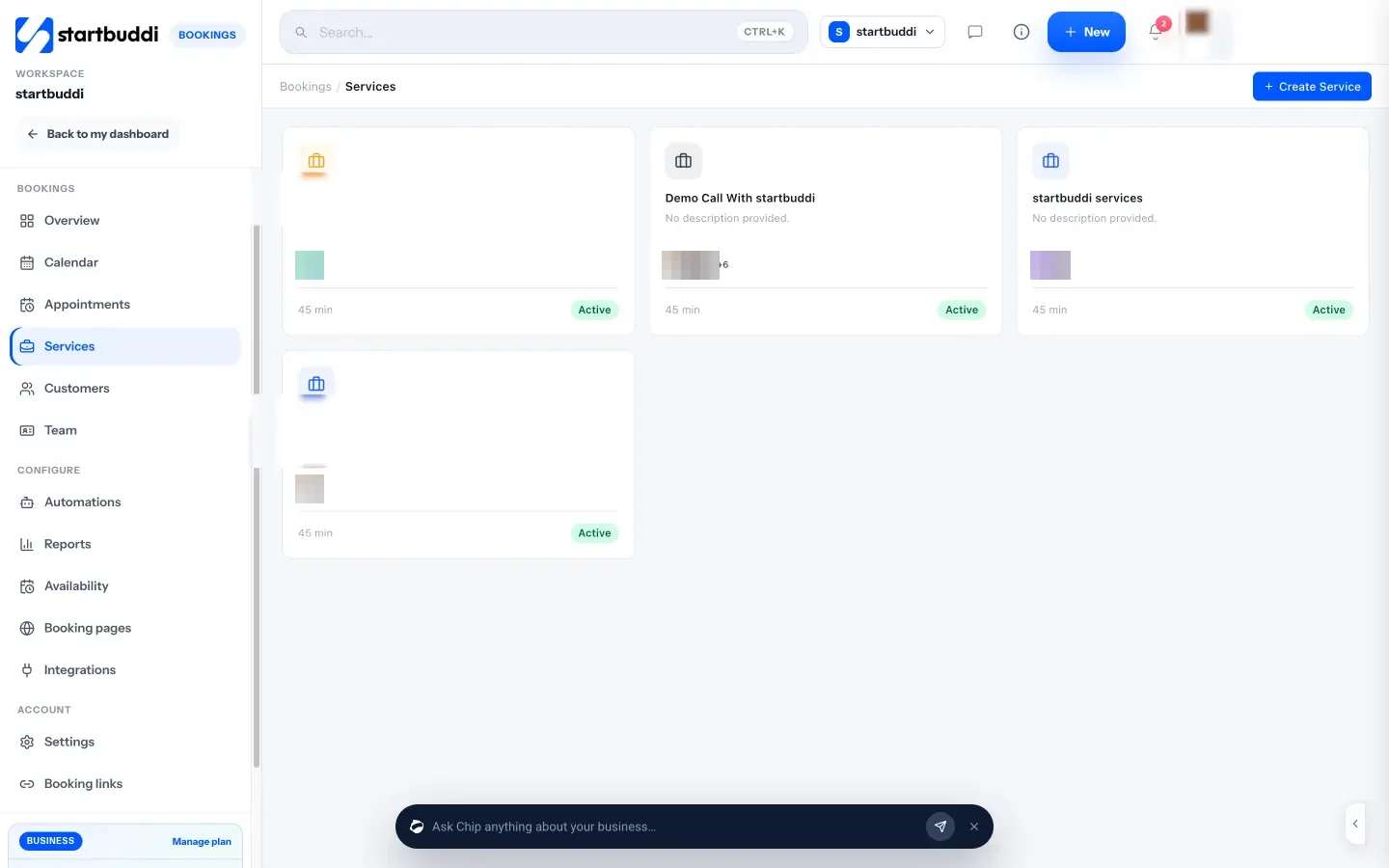
IT firms can see how bookings, invoices and client records fit together on startbuddi for IT teams.
Take the deposit when they book
Set a deposit on any service and let clients pay as they book, with the balance invoiced afterwards. Start free with startbuddi, no card needed.
Booking Deposit is part of Money Manager in startbuddi.
See Money ManagerRelated terms
FAQ
What is a booking deposit?
A booking deposit is a part-payment made to secure an appointment or date, taken off the final price. It shows the client is committed and covers costs if they cancel late. The terms say when it's refunded.
How much should a booking deposit be?
A common starting point is 20% to 50% of the price, or a fixed amount that covers the costs they spend before the work. Keep it proportionate to your real loss if the client cancels. A deposit that's too high can put off good clients.
Is a booking deposit refundable?
It depends on your terms. Many businesses refund it if the client gives enough notice, keep part of it for late cancellations, and keep it all for no-shows. Make the rule clear before the client pays.
What is the difference between a deposit and a no-show fee?
A deposit is paid when the client books; a no-show fee is charged after a missed appointment. Deposits are easier to enforce because the money is already with you. Many businesses use a kept deposit as their no-show fee.
Do I charge VAT on a booking deposit?
In the UK, a VAT-registered business must account for VAT on a deposit for future services when it's received or invoiced, whichever comes first, and VAT stays due if the deposit is kept. Rules differ by country, so check with your tax authority or accountant.
Tiwalade Joanna Okedara-Kalu is the founder, CEO and CTO of startbuddi, the business system that brings clients, bookings, invoices, projects, marketing and the Chip AI assistant into one place. Tiwalade builds software around how service businesses really work day to day, and writes about client management, getting paid on time and why small businesses outgrow the tools they start with.
Founded startbuddi and leads its product and engineering