How to win back customers who stopped buying
Most lapsed customers didn't leave unhappy, they just drifted. How to find them, what to say, and a three-message win-back sequence to copy.



Photo: Qwerqu McBrew / Unsplash
- Decide when a customer counts as lapsed, find them, and work out why they left. Then send two or three friendly, personal messages with a real reason to return, respect permission, and track what worked so fewer customers drift away next time.
To win back customers who stopped buying, find out who has gone quiet, understand why, and reach out personally with a genuine reason to come back. Most lapsed customers didn’t leave because they were unhappy. They got busy, forgot, or found something closer to hand. A short, friendly sequence of two or three messages, sent to the right people at the right time, brings a surprising number of them back, and it costs far less than finding someone new.
This guide shows you how to spot lapsed customers, what to say to them, and how to stop the next group from drifting away.
Why it pays to win back customers
A customer who bought from you before already knows you, trusts you enough to have paid once, and is often in your contact list. That makes them easier to reach than a stranger. Keeping customers also matters a great deal to profit: research by Frederick Reichheld of Bain & Company, summarised in Harvard Business Review, found that increasing customer retention by 5% can increase profits by between 25% and 95%.
You don’t need big numbers to feel it. If a salon has 200 past clients and ten of them come back for one more appointment each, that’s ten bookings with no advertising spend. If they stay, it’s a lot more.
There’s a second benefit. Every win-back conversation teaches you something about why people leave. That’s the cheapest customer research you’ll ever do.
Step 1: decide when a customer counts as “lapsed”
A customer isn’t lost just because they haven’t bought this week. The right line depends on how often people normally buy from you. A useful rule of thumb: a customer is lapsed when they’ve gone roughly twice as long as your normal gap between purchases.
| Business | Normal gap between purchases | Treat as lapsed after |
|---|---|---|
| Café or food delivery | 1 to 2 weeks | About a month |
| Hair or beauty salon | 4 to 6 weeks | About 3 months |
| Fashion or beauty shop | 2 to 3 months | About 6 months |
| Cleaning or maintenance service | Monthly or quarterly | 2 missed cycles |
| Agency or consultant | Project by project | 6 to 12 months with no new work |
If you’re not sure what your normal gap is, look at ten repeat customers and count the days between their orders. The middle value is a good starting point.
Step 2: find the customers who stopped buying
Pull a list of everyone who has bought at least once and hasn’t bought or been in touch since your “lapsed” line. Sources to check:
- Your sales records, invoices or order history
- Your customer list or CRM, sorted by last order or last contact date
- Your booking system, for people with no upcoming or recent appointments
- WhatsApp chats with past buyers, for businesses that sell by chat
Then sort the list into groups, because they deserve different messages:
- Your best lapsed customers: people who bought often or spent a lot. Contact these personally.
- One-time buyers: they tried you once and didn’t return. Find out why.
- Cancelled or no-show customers: they meant to come and didn’t. A gentle, easy rebooking works well.
- Unhappy customers: anyone who complained. Handle these one by one, never with a mass message.
Step 3: understand why they left
The message that brings someone back depends on why they left. You won’t always know, but you can make a good guess, and you can ask.
| Likely reason | What helps |
|---|---|
| They forgot or got busy | A friendly reminder and something new to see |
| Their need ended | A related product or service they might need next |
| Price | A smaller package, a payment plan, or a clear reminder of what’s included |
| A bad experience | A personal apology and a concrete fix, before any offer |
| They found another provider | What’s changed since they left, and an easy way to compare |
| They moved or changed jobs | A way to stay in touch, or a referral request |
The simplest way to find out is to ask. A short message such as “We noticed we haven’t seen you in a while. Was there anything we could have done better?” often gets honest answers, and sometimes a booking in the same reply.
Step 4: send a short win-back sequence
Keep it to two or three messages over about three weeks. Longer sequences start to feel like pressure. Here is a pattern that works for most small businesses, with templates to adapt.
Message 1: the friendly check-in (day 0)
Hi Tolu, it’s been a while since your last visit and we wanted to say hello. We’ve added a few new treatments since March, including the one you asked about. Would you like me to hold a slot for you next week?
Message 2: the reason to return (day 7 to 10)
Hi Tolu, just a quick one: as a past client you can book any treatment this month and we’ll add a free hand massage. Here’s the booking link if you’d like to grab a time: [link]
Message 3: the honest question (day 21)
Hi Tolu, I won’t keep messaging, but I’d really value one line from you: was there anything we could have done better? Either way, you’re always welcome back.
Notice what these messages don’t do. They don’t guilt-trip (“We miss you, why did you leave?”), they don’t shout (“LAST CHANCE!!!”) and they don’t pretend a generic blast is personal. They sound like a person who remembers the customer.
If you need a starting point for your own wording, our AI prompt pack for service businesses includes prompts for friendly customer messages.
Should you offer a discount?
Sometimes, not always. A discount is useful when price was the reason they left or when you need a clear reason to act now. It’s a poor choice for customers who left because of a bad experience, because it can feel like a bribe instead of a fix. Alternatives that protect your margins include a free add-on, priority booking, a loyalty reward, or early access to something new. If you do offer money off, set an end date and keep the offer simple.
Win-back ideas for different kinds of business
The sequence above works almost anywhere, but the “reason to return” should fit what you sell. A few ideas to borrow:
Shops and online sellers
Tell lapsed customers about new stock in the category they bought before, not everything you sell. Someone who bought a gown for a wedding wants to hear about occasion wear, not kitchenware. Restock alerts for items they looked at, and a simple “your size is back” message, feel personal because they are.
Salons, clinics and other booked services
Make rebooking the easiest thing in the message. Include a booking link or two specific time slots. For no-shows and cancellations, keep the tone light: people often feel embarrassed about missing an appointment and avoid getting back in touch. “No problem at all, would you like to pick a new time?” removes that awkwardness.
Cafés, restaurants and caterers
New menus, seasonal dishes and events give you a natural reason to get in touch. For corporate catering clients who used you once, a short note before the next public holiday or year-end season is well timed.
Agencies, consultants and freelancers
Past clients rarely need “the same again”. Share a relevant result from recent work, an idea specific to their business, or a quick check on how the project you delivered is performing. If they’ve moved on to another provider, ask for a referral instead. Many client relationships come back years later through a former contact who changed jobs.
What to do when they reply
A reply is the whole point, so be ready for it. Answer quickly, thank them for getting back to you, and make the next step concrete: a time, a link or a quote. If they share a complaint, don’t defend yourself. Thank them, say what you’ll change, and only then invite them back. If they say they’re not interested, thank them and remove them from your win-back list so they don’t get chased again. Every reply, even a no, is worth recording against the customer so the whole team knows the story.
Choose the right channel, and respect permission
Use the channel your customer actually used with you. If they always booked by WhatsApp, a WhatsApp message will feel natural. If they bought through your online shop, email is usually better. For your most valuable lapsed customers, a phone call can beat any message.
Win-back messages are marketing, so permission matters. WhatsApp’s Business Messaging Policy only allows businesses to message people who have agreed to hear from them. In the UK, the ICO explains the “soft opt-in”, which can let you email or text your own customers about similar products, as long as you gave them a clear chance to opt out when you collected their details and in every message. In Nigeria, the Nigeria Data Protection Act 2023 governs how you use customers’ personal data. This is general information, not legal advice. Whatever the law where you are, always include an easy way to say “no more messages”, and honour it.
Measure what worked
Track a few simple numbers for each win-back push:
- Reply rate: how many people answered at all.
- Win-back rate: how many bought again within 30 days.
- Revenue recovered: what those returning customers spent.
- Reasons given: a tally of why people said they left.
The reasons tally is often the most valuable. If five people say “the booking process was confusing”, fixing that will keep far more customers than any win-back offer.
Stop the next group from drifting away
Winning customers back is good. Not losing them in the first place is better. A few habits make a real difference:
- Follow up after every purchase. A quick “How did it go?” a few days later catches problems early and reminds people you care.
- Remind people before they lapse. If clients usually return every six weeks, message them at week five.
- Give regulars a reason to stay. Priority slots, small thank-yous or early access work well for small businesses.
- Make rebooking or reordering easy. One link, one tap.
- Watch for warning signs. Fewer orders, cancelled appointments or quieter chats are signals to reach out now.
The same habits that help you win back customers also help you convert new leads. Our guide on how to follow up with leads covers the other end of the customer journey.
How startbuddi helps
startbuddi keeps purchase history, conversations and messaging in one place, so finding lapsed customers and reaching them takes minutes instead of an evening with spreadsheets.
Find who’s gone quiet. In Contacts, filter by “Last contacted” (for example, more than 90 days or never) and by tags or status, then save it as a segment. Segments keep themselves up to date, so your “lapsed customers” list is always current. Each contact’s page shows what they’ve been invoiced and paid, so you can spot your most valuable lapsed customers.
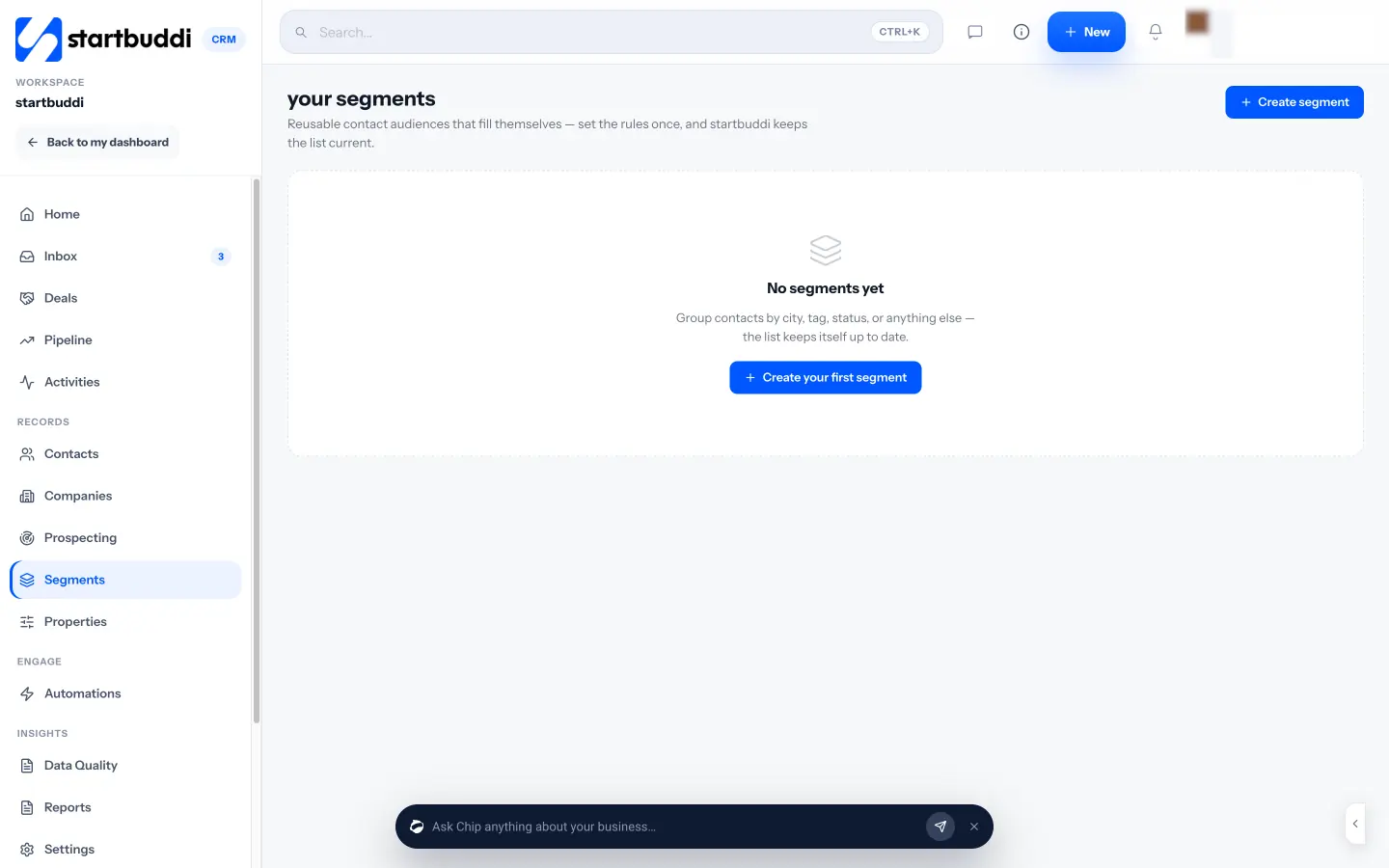
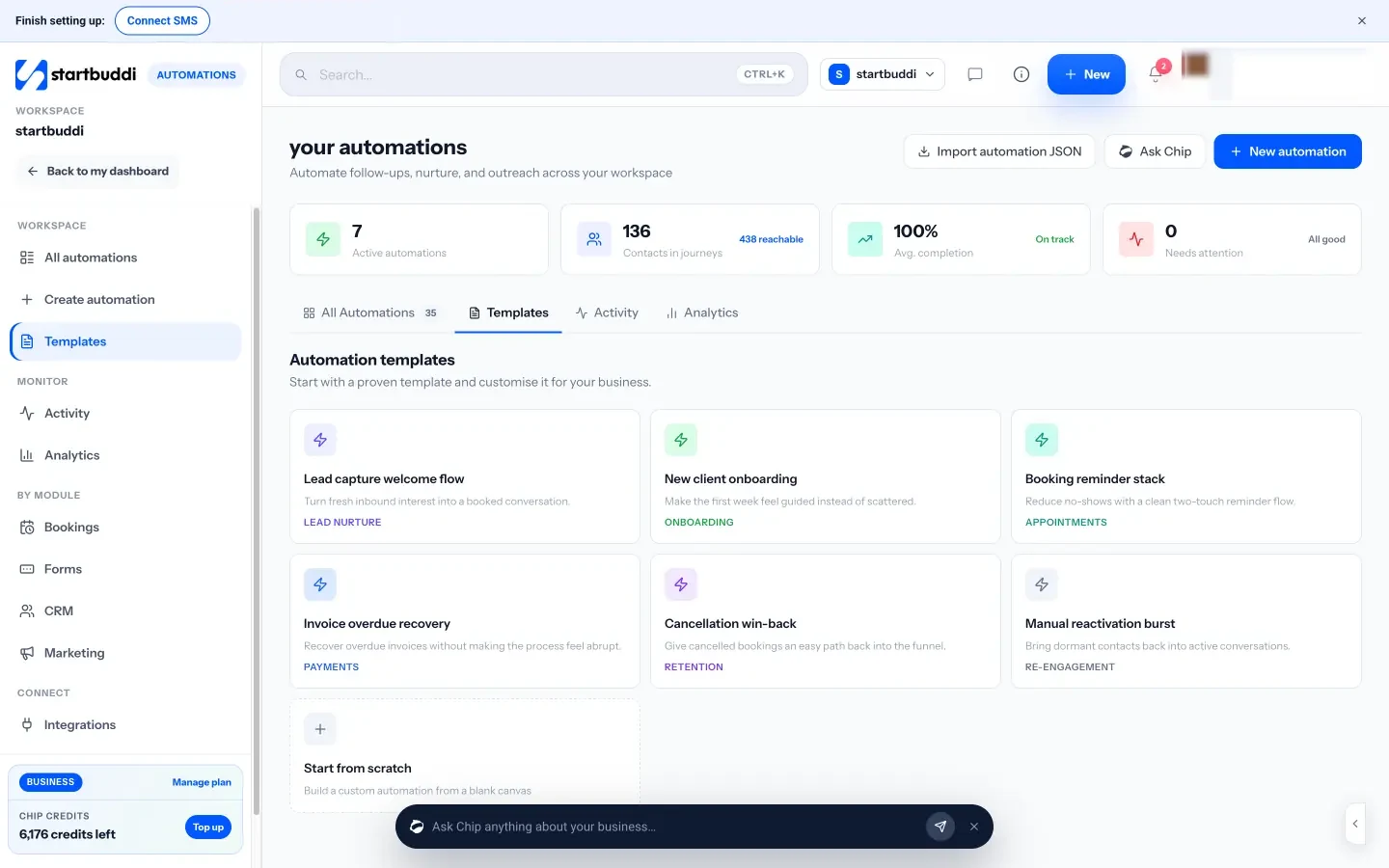
Start from a win-back template. Automations include ready-made templates such as “Manual reactivation burst”, to bring dormant contacts back into conversation, and “Cancellation win-back”, which gives cancelled bookings an easy path back. Chip also suggests rules such as “Win back no-shows”. You can describe what you want in plain words and Chip drafts the flow, which stays switched off until you’ve reviewed it. Free includes 2 active automations, and Starter allows 10.
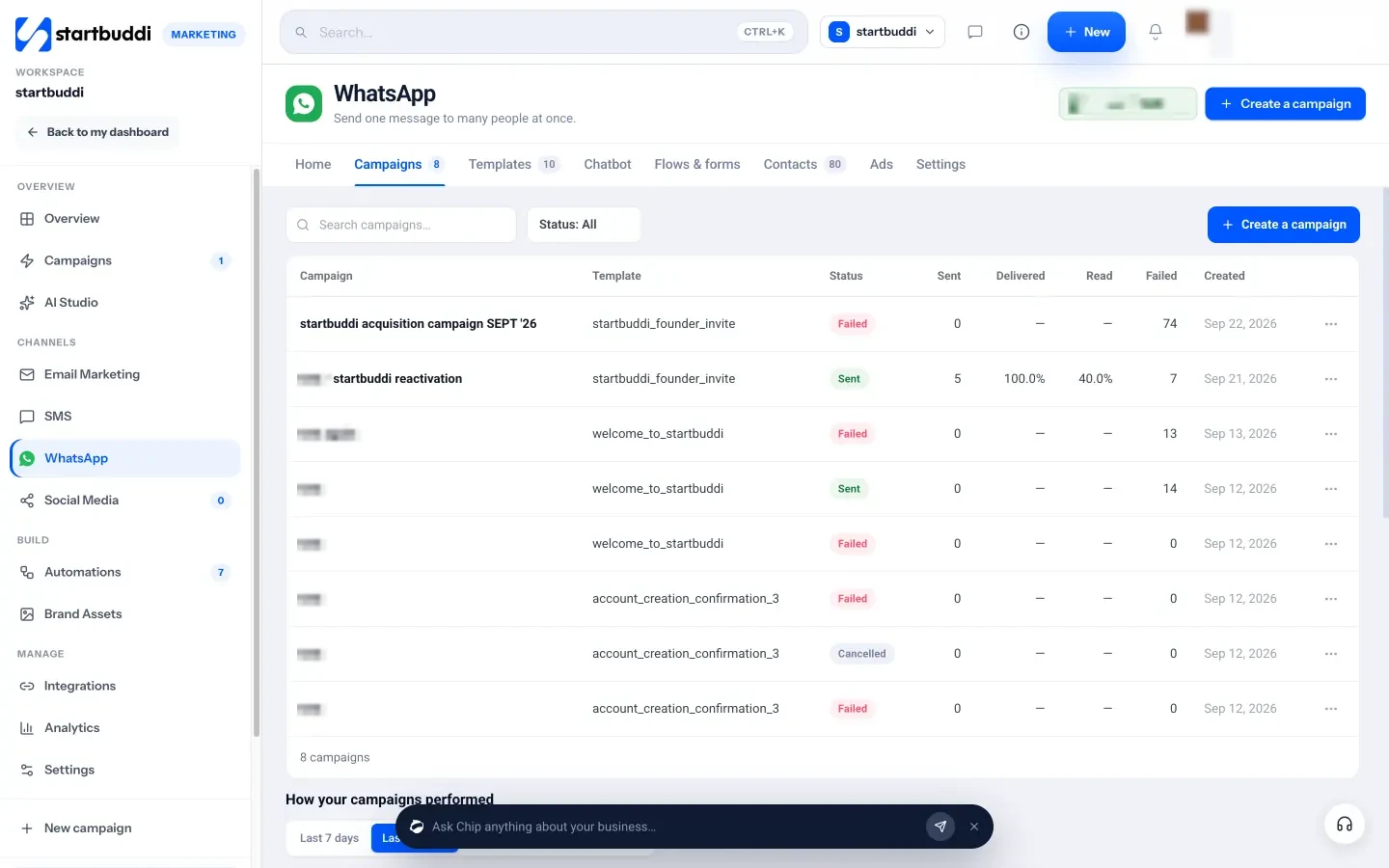
Reach them on the right channel. Send your check-in as an email campaign or a WhatsApp campaign using an approved template. WhatsApp marketing messages only go to contacts who have opted in, and replies land in your shared inbox so you can carry on the conversation. The Marketing module, including email campaigns, WhatsApp and SMS, needs the Starter plan or above.
Your next step
Pull a list of customers who haven’t bought in twice your normal buying gap. Pick your ten most valuable, and send each of them the friendly check-in above, personally, this week. When you’re ready to run it for everyone, compare plans on the pricing page.
Sources
- Harvard Business Review: The Value of Keeping the Right Customers
- WhatsApp Business Messaging Policy
- ICO: Electronic mail marketing
- Nigeria Data Protection Commission: Nigeria Data Protection Act 2023
Frequently asked questions
How long before a customer counts as lost?
A useful rule is about twice your normal gap between purchases. For a salon that might be three months, for an agency closer to a year.
How many win-back messages should I send?
Two or three over about three weeks. After that, move them to your regular newsletter or occasional updates.
Do win-back offers need a discount?
No. A free add-on, priority booking or something new often works as well and protects your margins. Discounts suit customers who left over price.
What if a customer left after a complaint?
Contact them personally, apologise and explain what you've fixed before mentioning any offer. Never include them in a bulk message.
Tiwalade Joanna Okedara-Kalu is the founder, CEO and CTO of startbuddi, the business system that brings clients, bookings, invoices, projects, marketing and the Chip AI assistant into one place. Tiwalade builds software around how service businesses really work day to day, and writes about client management, getting paid on time and why small businesses outgrow the tools they start with.
Founded startbuddi and leads its product and engineering