Email retargeting strategy for home service businesses
An email retargeting strategy for home services: five follow-up sequences, example emails, timing, consent and deliverability rules, and what to measure.

Chinonye wrote this while on the startbuddi team. The product has changed since, so the team updated it on .
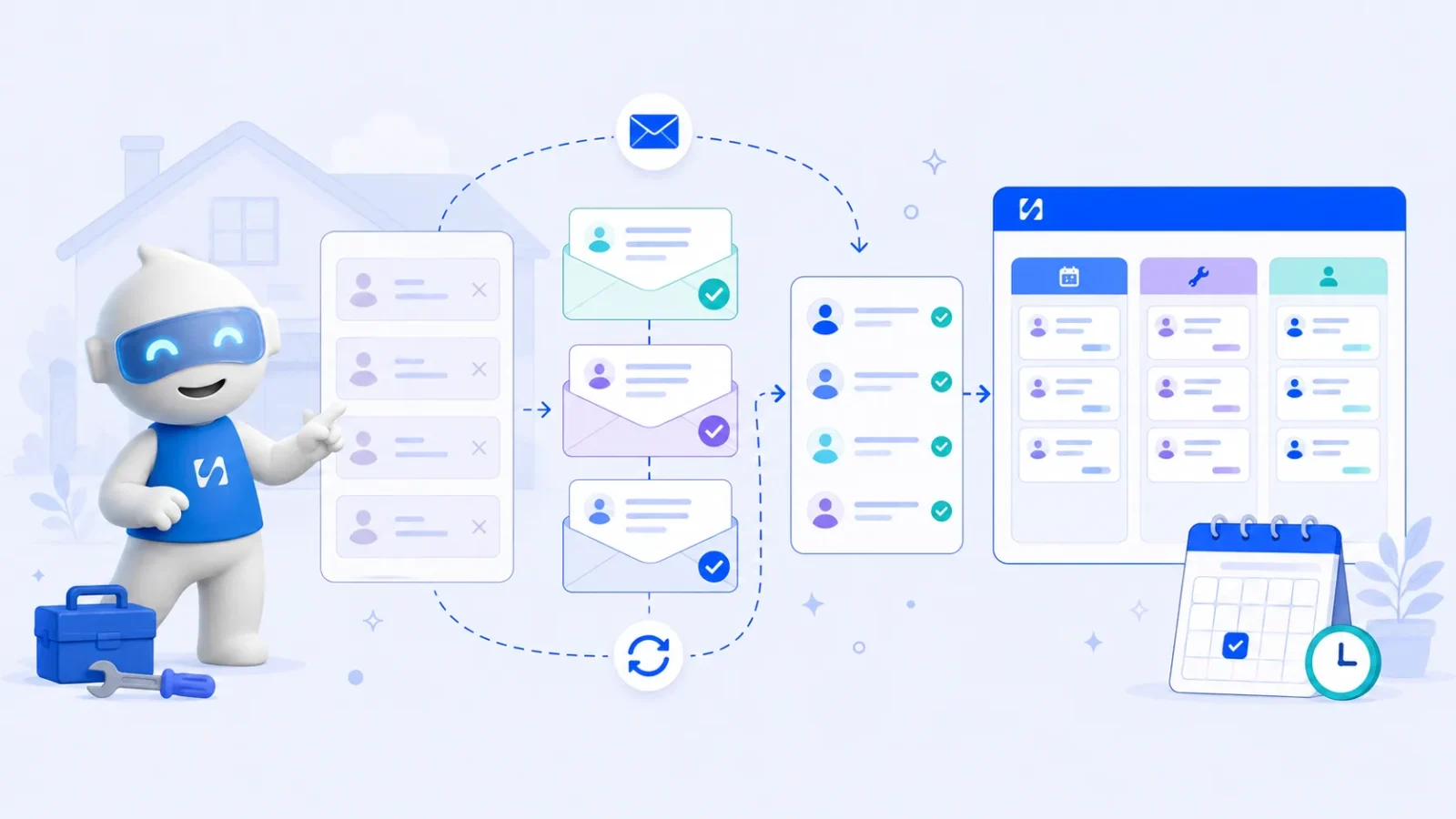
- Email retargeting sends a matching follow-up to people who showed interest but didn't book. For home services, five sequences cover most lost bookings: quote not booked, enquiry with no reply, unfinished booking, repeat service due and past customers gone quiet.
An email retargeting strategy is a plan for sending the right follow-up email to people who showed interest in your business but didn’t book: someone who asked for a quote and went quiet, a customer who hasn’t booked in a year, a visitor who started your booking form. For home service businesses (cleaners, plumbers, electricians, gardeners, pest control, HVAC), it usually comes down to five sequences triggered by what the person did, sent at sensible intervals, with one clear call to action each. Set them up once and they bring back bookings you’d otherwise lose.
This guide explains how email retargeting differs from ad retargeting, the five sequences that matter most for home services, timings and example emails you can adapt, the consent and deliverability rules to respect, and how to measure what’s working. It’s written for home service businesses in any country, from a cleaning company in Birmingham to a solar installer in Abuja.
What email retargeting is (and isn’t)
“Retargeting” usually means ads that follow someone around the web after they visit your site. Email retargeting uses the same idea with a channel you control: when someone takes an action (or doesn’t), they get an email that matches it. The differences matter:
| Ad retargeting | Email retargeting | |
|---|---|---|
| Who you reach | Anonymous visitors, via an ad platform | People who gave you their email |
| Cost | You pay per view or click | Included in your email tool |
| Personal detail | Generic ads | Their name, the service they asked about, their quote |
| Stops when | Your budget runs out | They book, reply or unsubscribe |
For a small home service business, email retargeting usually comes first: it’s cheaper, more personal and aimed at people who already know you.
Why home service leads go quiet before they book
Home services have a particular pattern. People often contact several providers at once, compare quotes on price and availability, and then get distracted: the boiler starts working again, the landlord says they’ll sort it, or the job slips down the list. It’s rarely a firm “no”. Common reasons include:
- You replied after a competitor did.
- The quote raised a question they didn’t ask.
- The timing wasn’t right (they wanted the garden done “in spring”).
- They meant to book and forgot.
Each of those has a different fix, which is why a good email retargeting strategy is built around what the person did, not one generic “just checking in” blast.
Step 1: capture every enquiry with an email address
You can only retarget people you can email. Make sure every route in collects an email address and lands in one list:
- Your quote or contact form (ask for name, email, phone, postcode or area, and the service).
- Your booking page.
- Phone and WhatsApp enquiries, where you ask “What email should I send the quote to?”
- Past customers from your invoices or job records.
Record the service each person asked about. It’s the single most useful detail for personalising follow-ups. Our guide on turning website visitors into leads covers the form side in more depth.
Step 2: check you have permission to email
Retargeting emails are marketing, so the rules for marketing email apply. They differ by country:
- In the US, the FTC’s CAN-SPAM compliance guide requires, among other things, a working opt-out, your physical address and honest subject lines.
- In the UK, the ICO’s guidance on electronic mail marketing explains when you need consent and when the “soft opt-in” lets you email people who enquired about or bought similar services, as long as they had a chance to opt out.
- In Nigeria, the Nigeria Data Protection Commission oversees how personal data is used.
In practice: add a clear marketing opt-in box to your forms, include an unsubscribe link in every email, and honour opt-outs straight away. This is general information, not legal advice; check the rules where you and your customers are.
Step 3: build the five sequences that matter for home services
You don’t need dozens of campaigns. These five cover most lost bookings.
1. Quote sent, not booked
Triggered when a quote or estimate goes out and nothing happens. This is usually the most valuable sequence.
- Day 2: “Any questions about your quote?” Restate what’s included, the price and how to book.
- Day 5: Answer the most common objection for that service (what happens if we find more damage, how long it takes, what products you use).
- Day 10: A short last check: “Should I keep this slot for you?” with a direct booking link.
2. Enquiry, no reply
Triggered when someone fills in your form but doesn’t respond to your first reply.
- Same day: an automatic confirmation that sets expectations (“We’ll call you within two hours”).
- Day 1: “We tried to reach you” with a booking link, so they can pick a time without a call.
- Day 4: one helpful tip about their problem and a soft offer to help.
3. Started booking, didn’t finish
If your booking tool records unfinished bookings or you can see who opened a booking link and didn’t complete it, send one short email within a few hours: “Looks like you didn’t finish booking. Here’s the link again.” Only do this where your system genuinely tracks it; don’t guess.
4. One-off customer, due for a repeat
Many home services are recurring by nature: gutter cleaning, boiler servicing, pest control, deep cleans, garden maintenance. Time an email for when the next job would be sensible.
- Before the season: “It’s nearly a year since we serviced your boiler. Book before the winter rush.”
- Two weeks later: a reminder with available dates.
5. Past customer, gone quiet
For customers who haven’t booked in 12 months or more. Keep it warm and low pressure: a seasonal tip, what’s new, and an easy way to book. If they don’t engage after two or three emails, stop and keep them on a low-frequency newsletter or remove them. Our guide on re-engaging cold leads with email goes deeper on this group.
The five sequences at a glance
| Sequence | Starts when | Emails | Stops when |
|---|---|---|---|
| Quote not booked | A quote is sent | 3 over 10 days | They book, reply or decline |
| Enquiry, no reply | A form is submitted | 3 over 4 days | They reply or book |
| Unfinished booking | A booking is started, not completed | 1 within hours | They book |
| Repeat due | A set time after the last job | 2 over 2 weeks | They book |
| Past customer, quiet | 12 months with no booking | 2 to 3 over a month | They book or don’t engage |
Step 4: write emails that sound like a person
Retargeting emails work best when they read like a note from the business owner, not a brochure. Some rules:
- Short. Three to six sentences.
- Specific. Mention the service they asked about and the area they’re in.
- One call to action. Book, reply or call. Not all three.
- Reply-friendly. Send from a real name and make sure replies reach a real inbox.
- Honest. Only mention reviews, guarantees or limited slots if they’re true.
Here is an example for sequence 1, day 2:
Subject: Your end-of-tenancy clean quote
Hi Sam, thanks for asking us to quote for your two-bedroom flat in Clapham. The price of £240 includes oven and inside windows, and we bring all products. We have two slots left on the 28th. Any questions, just reply to this email. Book here: [link]. Grace, BrightNest Cleaning
And one for sequence 4, a repeat service reminder:
Subject: Time for your gutter clean?
Hi Tolu, we cleared your gutters in Lekki last October, just before the rains. It’s nearly that time again, and our October dates usually fill first. Want me to hold a morning slot for you? Reply with a day that suits, or book here: [link]. Femi, ClearFlow Services
For subject line ideas, see our post on email subject lines that get opened.
Step 5: time it and stop at the right moment
Good timing is about the job, not a formula. An emergency plumber’s follow-up window is hours; a landscaper’s might be weeks. As a starting point:
- Urgent services (locksmith, emergency plumbing): follow up within hours, then stop within two days.
- Planned jobs (cleaning, electrical work, decorating): two to three emails over one to two weeks.
- Seasonal services (garden, gutters, heating): time emails a few weeks before the season.
Always stop a sequence when the person books, replies or unsubscribes. Nothing damages trust faster than a “still interested?” email the day after someone paid you.
Step 6: protect your deliverability
Retargeting only works if emails reach the inbox. Mailbox providers watch how people react to your mail. Google’s email sender guidelines, for example, ask senders to keep spam complaint rates below 0.1% and never reach 0.3%, and require authentication (SPF or DKIM) for all senders, with extra rules for bulk senders. To stay safe:
- Send from your own domain, set up with your email provider’s DNS records.
- Email only people who enquired or bought, and make unsubscribing easy.
- Remove addresses that bounce.
- Stop emailing people who haven’t opened or clicked in a long time.
Step 7: measure what matters
Track bookings, not just opens. Open rates have become less reliable because some email apps load images automatically; Apple’s Mail Privacy Protection, for example, downloads remote content in the background, which can count as an open. Look at:
- Clicks on your booking link.
- Replies.
- Bookings from people in each sequence.
- Unsubscribes and spam complaints (keep these low).
Review each sequence every month and change one thing at a time: the subject, the timing or the call to action. If you change three things at once and bookings go up, you won’t know which change did it, so keep a short log of what you changed and when.
Common email retargeting mistakes
- One sequence for everyone. A person who got a quote and a person who only downloaded a price list need different emails.
- No stop rule. Emails that keep going after someone books make you look careless.
- Discounting by default. Leading with money off trains people to wait. Answer questions and offer availability first.
- Sending from a no-reply address. Replies are the best signal you’ll get. Make them easy.
- Emailing old lists in bulk. A sudden blast to contacts who haven’t heard from you in years invites spam complaints. Start with recent enquiries.
- Never reviewing. Sequences go stale. Prices change, services change, seasons move. Read every email in your sequences once a quarter.
How startbuddi helps with an email retargeting strategy
In startbuddi, your enquiries, bookings, quotes and emails live in one place, which is what makes behaviour-based follow-up possible without stitching tools together. Forms and bookings add people to your contacts, and a form question can be set to count as marketing consent, so you know who agreed to hear from you.
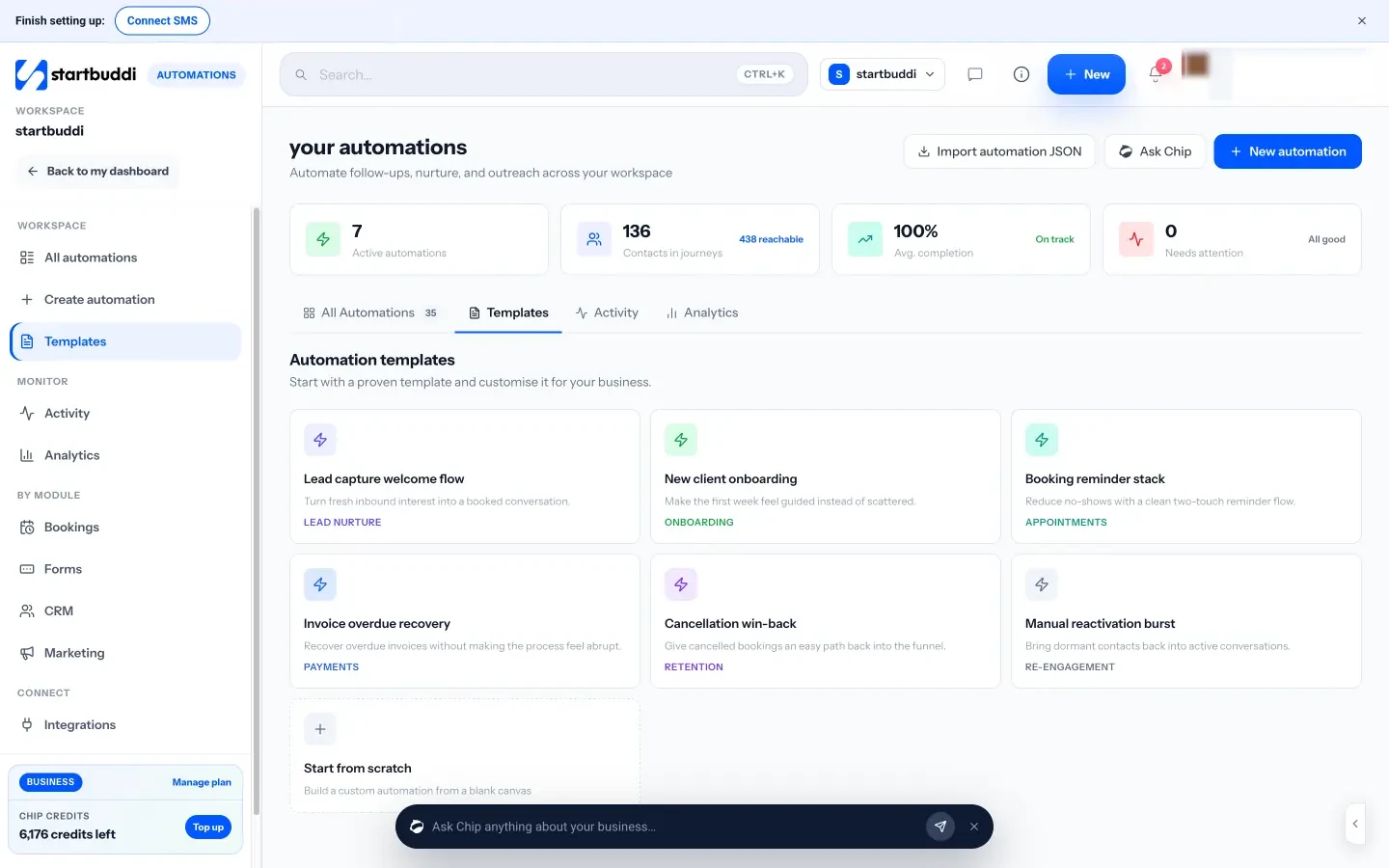
In Automations, a trigger such as a form being submitted or a booking being made can start a sequence of steps: send an email, SMS or WhatsApp message, wait a set time, wait for a reply, check a condition, add a tag or create a task for a teammate. There are starter templates, such as a lead capture welcome flow and a cancellation win-back, to adapt rather than start from scratch.
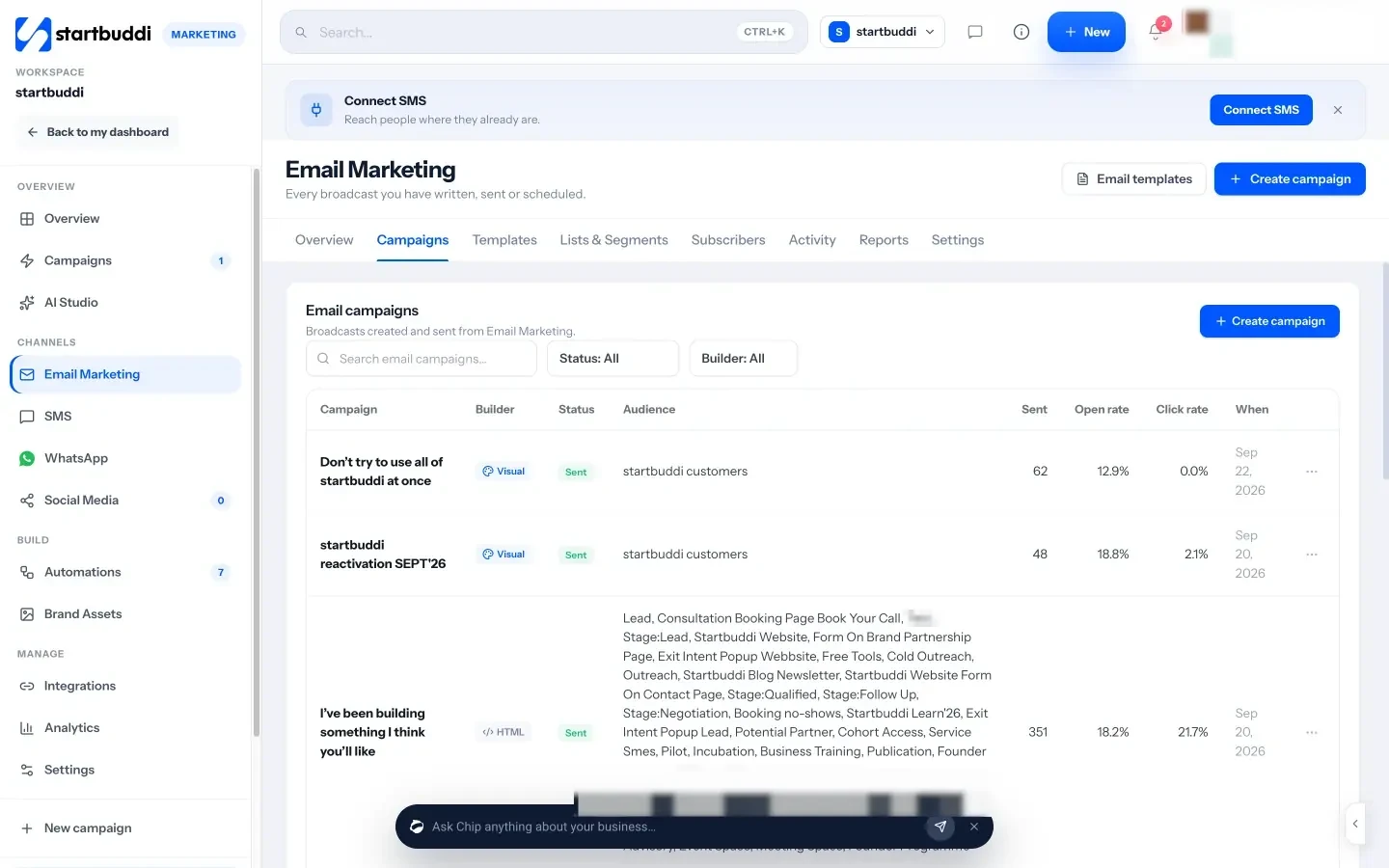
For one-off campaigns, Email Marketing lets you build segments from real behaviour, such as people who filled in a form, made or missed a booking, opened or clicked a campaign, or have an unpaid invoice. After a campaign, you can resend it with a new subject to people who didn’t open it, once per campaign. Every email gets an unsubscribe link and your business address automatically, and you can send from your own verified domain.
Quotes go out from estimates, and accepted estimates convert to invoices without retyping. The Marketing module needs the Starter plan or above, and Free includes 2 active automations against 10 on Starter, with a 30-day trial on every paid plan (see pricing). See pricing, or our step-by-step help article on setting up your first email sequence.
Your next step
Pull a list of everyone who received a quote in the last 60 days and didn’t book. Send each a short, personal note today using the example above. Then turn that note into your first automated sequence, so next month’s quotes get followed up without you.
Sources
- FTC: CAN-SPAM Act compliance guide for business
- ICO: Electronic mail marketing
- Nigeria Data Protection Commission
- Google: Email sender guidelines
- Apple: Protect email privacy in Mail
Frequently asked questions
What is email retargeting?
Sending a follow-up email that matches something a person did, such as requesting a quote or visiting your booking page, to bring them back before they choose someone else.
How many follow-up emails should a home service business send?
Usually two or three per sequence over one to two weeks for planned jobs, and fewer, faster messages for urgent services. Stop as soon as they book or reply.
Is email retargeting legal?
Yes, if you follow marketing email rules where you and your customers are: have permission or a valid basis, include an unsubscribe link and your address, and honour opt-outs.
Should I measure email retargeting by open rate?
Use opens as a rough signal only. Clicks, replies and bookings are more reliable, because some email apps load emails automatically and inflate opens.
SEO Copywriter| Email growth Specialist| I help businesses increase revenue with strategic SEO content & high-converting email funnels.