Waitlist: Definition, Examples and How It Works

A waitlist is an ordered list of people who want something you can't give them yet: a product before launch, a place in a full course, or an appointment slot that's already taken. So what is waitlist management worth to a small business?
A waitlist is an ordered list of people who want something you can’t give them yet: a product before launch, a place in a full course, or an appointment slot that’s already taken. So what is waitlist management worth to a small business? It keeps demand you’d otherwise lose and tells you who to contact first.
Key takeaways
- A waitlist holds interest until you have capacity or a launch date. It isn’t a sale, and most sign-ups won’t buy.
- Small businesses use four kinds: launch, capacity, appointment and walk-in waitlists.
- Collect only what you need (usually a name and an email or phone number) and say what you’ll send.
- Tell people where they stand and when you’ll be in touch. A silent waitlist goes cold fast.
- Measure the waitlist by how many sign-ups become customers, not by how long it gets.
Why a waitlist matters for a small business
Interest is perishable. Someone who wants your managed IT support today will have hired someone else in three weeks if you simply say “we’re full”. A waitlist turns “not now” into a list you own, with names you can contact the moment you hire an engineer or open a new cohort.
It also gives you evidence. Before you build a new service, a few hundred sign-ups from the right kind of client tell you more than a survey. And because each person asked to be told, your first message to them is welcome rather than cold.
What is a waitlist used for? The four kinds
| Kind | What people are waiting for | Typical example |
|---|---|---|
| Launch waitlist | A product or service that doesn’t exist yet | A Nairobi IT firm collecting interest in a new backup service before it goes live |
| Capacity waitlist | A place that’s full right now | A cybersecurity bootcamp in Lagos with 20 seats and 60 applicants |
| Appointment waitlist | An earlier slot if someone cancels | A London dental practice ringing people when a Thursday slot frees up |
| Walk-in waitlist | A table or chair today | A restaurant taking names at the door on a busy Friday |
Big platforms run their own versions. Google Play’s pre-registration (checked on 1 October 2026) is a launch waitlist for apps: campaigns can last up to 90 days, and pre-registered users get a notification when the app goes live. Google Business Profile’s bookings help (checked on 1 October 2026) says its waitlist feature is only available to restaurants, through an eligible third-party provider.
What is waitlist management and how does it work?
- A sign-up page or form. One clear promise (“Be first to get managed backups for your office”), one short form, and a line on what happens next.
- A confirmation. An immediate email or message that says they’re on the list and roughly when they’ll hear from you. A double opt-in (asking them to click a link to confirm) keeps typos and fake addresses off the list.
- Order and priority. First come, first served is the default and the easiest to defend. Some businesses give priority to existing clients or to people who refer friends; if you do, say so on the page.
- Updates while they wait. A short note every few weeks: progress, a date, a useful tip. This is where a waitlist can double as a lead magnet.
- The release. When space opens, contact people in order, give each a deadline to accept (48 hours is common), then move to the next name.
Consent and data
If you’ll send marketing emails to the list later, get consent at sign-up. The UK ICO’s guide to electronic mail marketing (checked on 1 October 2026) says you mustn’t email marketing to individuals unless they’ve specifically consented, with a narrow exception for existing customers. In Nigeria, personal data is governed by the Nigeria Data Protection Act 2023, enforced by the Nigeria Data Protection Commission. A tick box with plain wording (“Email me when it launches, plus occasional updates”) covers both.
Example: a launch waitlist with numbers
An IT support company in Nairobi plans a managed backup service for small offices at KSh 6,000 a month per office. Before buying storage and training staff, it runs a waitlist page for six weeks and shares it with existing clients and on LinkedIn. These figures are illustrative.
| Step | Figure |
|---|---|
| Visitors to the waitlist page | 1,500 |
| Sign-ups (20% of visitors) | 300 |
| Confirmed their email (80% of sign-ups) | 240 |
| Opened the launch email (50% of confirmed) | 120 |
| Became paying clients (25% of those who opened) | 30 |
| Monthly revenue from the waitlist | 30 × KSh 6,000 = KSh 180,000 |
Thirty clients is 10% of the 300 who signed up, which is a healthy result for a launch list. The company knew before launch that demand would cover the storage cost, and it knew which 30 offices to onboard first.
Common mistakes with waitlists
- No date, no updates. People forget why they signed up. Give a rough timeline and keep it.
- Asking for too much. Every extra field costs sign-ups. Ask for the rest when they become a client.
- Treating the list as sales. Plan for most sign-ups not to buy, and don’t hire on the headline number.
- Unclear priority. If some people skip the queue, explain why on the page, or the ones who waited will feel cheated.
- Releasing places all at once. If you have 20 seats and 200 names, email in batches with a deadline, not all 200 at once.
How startbuddi handles waitlists
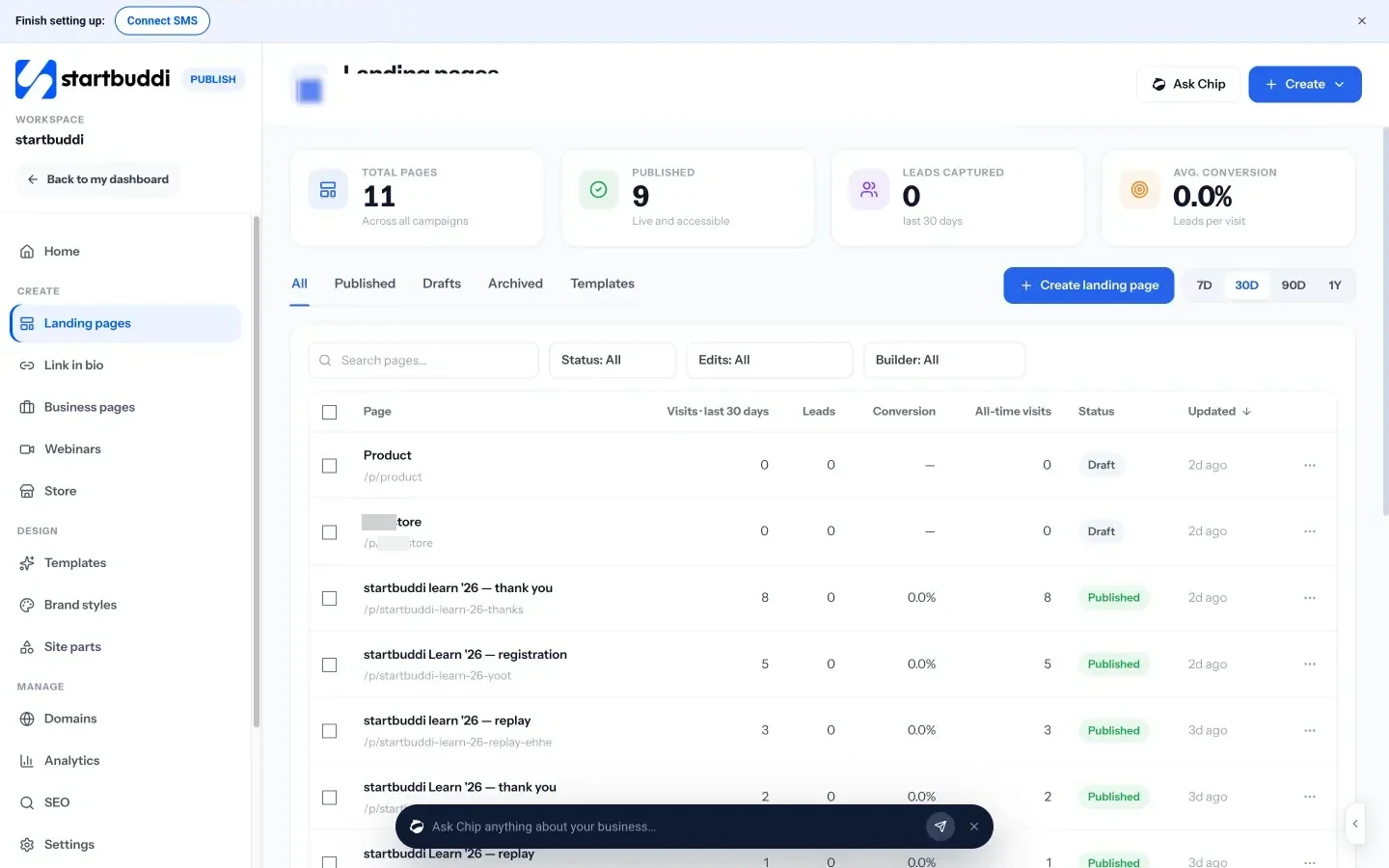
In startbuddi, a launch or capacity waitlist is a landing page with one job. In Publish, choose Create, then Landing page, and set What it is for to Build a waitlist. You can start from a design such as the countdown waitlist page template, which adds a clock counting down to launch day.
Everyone who signs up lands in your contacts, so they aren’t stuck in a separate tool, and the page’s Leads tab lists each sign-up with its answers. On paid plans, you can send a confirmation email automatically with Automations and email the whole list on launch day from Marketing. See landing pages in startbuddi for how it fits together.
startbuddi Bookings doesn’t keep an automatic waitlist for full appointment slots. If you need one, ask clients to message you and contact them yourself when someone cancels; our comparison of salon appointment software shows which booking tools include a built-in waitlist.
A free plan is available. See pricing, how a landing page builder works, or startbuddi for IT teams.
Related terms
FAQ
What is a waitlist?
A waitlist is a list of people waiting for something that isn't available yet, such as a product launch, a place in a full course or an earlier appointment. People join in order and are contacted when space opens. It keeps demand you'd otherwise lose.
What is the difference between a waitlist and a waiting list?
There's no difference in meaning. "Waitlist" is more common in the US and in tech and product launches; "waiting list" is the usual British phrase, used for things like courses, housing or hospital appointments. Both describe an ordered list of people waiting for a place.
Is joining a waitlist a commitment to buy?
No. Joining a waitlist only means the person wants to be told when something is available. Nobody pays or commits until they accept an offer, so expect only a share of the list to become customers.
How long should a waitlist stay open?
As long as you can keep it warm with honest updates. For a launch, four to twelve weeks is common; Google Play limits app pre-registration to 90 days. If the date slips, tell the list rather than going quiet.
How do I make a waitlist fair?
Contact people in the order they joined, state any priority rules on the sign-up page, and give each person a clear deadline to accept before the place goes to the next name. Keep a record of who was offered what and when.
Tiwalade Joanna Okedara-Kalu is the founder, CEO and CTO of startbuddi, the business system that brings clients, bookings, invoices, projects, marketing and the Chip AI assistant into one place. Tiwalade builds software around how service businesses really work day to day, and writes about client management, getting paid on time and why small businesses outgrow the tools they start with.
Founded startbuddi and leads its product and engineering