What is a late payment fee?
Also called: Late fee, late charge, overdue fee, late payment interest, penalty interest
A late payment fee is an extra charge added when a customer pays an invoice after the agreed due date. It can be a flat fee, a percentage of the amount owed or interest, and it should be agreed in your payment terms before the work starts.
A late payment fee is an extra amount you charge when a customer pays after the due date on your invoice. It might be a flat charge (say $25), a percentage of the overdue amount, or interest that builds up each month the invoice stays unpaid. The point is not to make money from late payers. It is to give customers a reason to pay on time and to cover the real cost of chasing.
A late fee only works if the customer agreed to it before the work began. That means it belongs in your payment terms, on your quote or contract, and again on the invoice.
Why businesses charge a late payment fee
- Late payments cost money. You may pay bank charges or borrow to cover wages while you wait.
- Chasing takes time. Every reminder email and call is time not spent on paid work.
- It sets expectations. Customers pay the invoices with consequences first.
Types of late payment fee
| Type | How it works | Example |
|---|---|---|
| Flat fee | One fixed charge once the invoice is late | $30 added after the due date |
| Percentage | A share of the overdue amount | 2% of the balance, once |
| Monthly interest | A percentage for each month it stays unpaid | 1.5% a month on the overdue balance |
| Statutory interest | A rate set by law in some countries | UK business-to-business debts (see below) |
Worked example: a $4,000 invoice with 1.5% monthly interest. One month late adds $60; three months late adds about $180. A flat $30 fee would add $30 no matter how late.
What the law says: examples
Rules on late fees differ a lot between countries, and between business customers and consumers. Two examples:
- UK: for late business-to-business payments you can claim statutory interest of 8 percentage points above the Bank of England base rate, plus fixed debt recovery costs of £40, £70 or £100 depending on the size of the debt, unless your contract sets its own reasonable terms. See GOV.UK: late commercial payments.
- EU: the Late Payment Directive gives businesses a right to interest on late commercial payments and a minimum fixed sum of €40 for recovery costs.
In the US, limits on late fees and interest are largely set by each state, and consumer contracts often have stricter rules than business ones. In Nigeria, Kenya, South Africa and elsewhere, check local law or ask an adviser before adding charges. This is general information, not legal advice.
Example wording
Payment is due within 14 days of the invoice date. Invoices unpaid after the due date will incur a late fee of 2% of the outstanding balance per month, as agreed in our terms of service.
Use the same wording on your quote, your contract and the invoice footer, so no one can say it was a surprise.
Best practices
- Remind before you charge. A friendly reminder a few days before the due date heads off many late payments. See automated payment reminders.
- Be consistent. Either apply the fee every time, or state clearly when you waive it.
- Waive it strategically. For a good client who is late once, waiving the fee as a goodwill gesture can buy loyalty. Say that you are waiving it, so the rule still stands.
- Send a new invoice for the fee. Do not edit the original. Add the fee as a line on a separate invoice that quotes the original number.
- Talk before escalating. A late payer might be struggling. A payment plan may get you paid faster than fees.
Our late payment email writer drafts a polite message that mentions your terms, and our guide to why clients do not pay invoices covers the causes behind late payments.
Late payment fees in startbuddi
Late fees are not added to invoices automatically in startbuddi. You write your late payment policy into the notes and footer of each invoice (or once, in Invoice defaults in Money Manager settings), and if you decide to charge a fee, you create a new invoice for it with a line item that references the original. The Receivables page shows what is overdue, with a one-click Remind button, and Chip can draft a friendly or “firm but friendly” reminder for an overdue invoice.
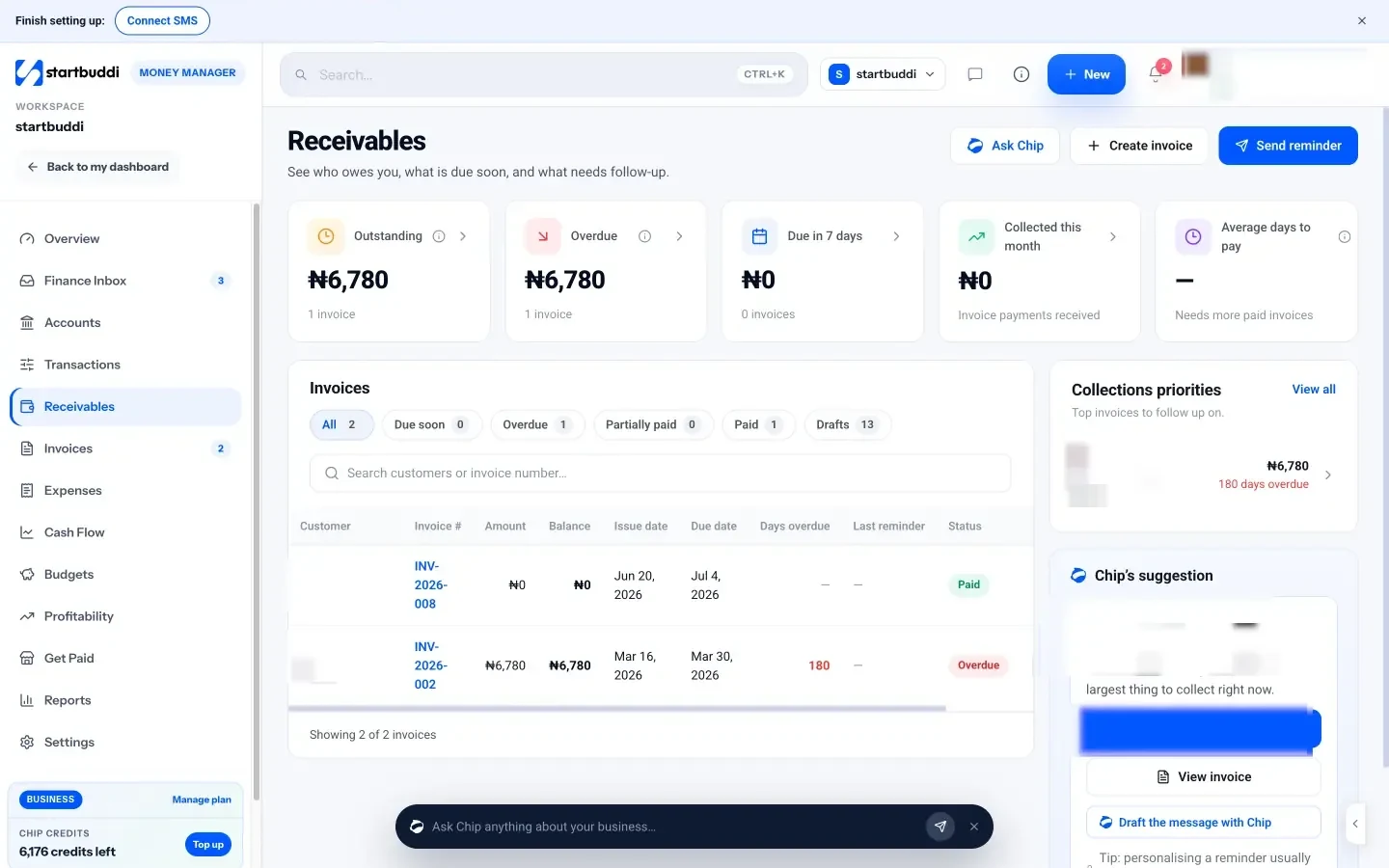
Invoices also have a reminder sequence setting that sends template emails before the due date, on the day and at the overdue intervals you choose, such as 3, 7 and 14 days. See invoicing for how it fits together. Your next step: add one sentence about late payments to your standard terms, then use it on your next quote.
Related terms
FAQ
How much should I charge as a late payment fee?
Many small businesses use a modest flat fee or 1 to 2% a month on the overdue balance. Check local law first, especially for consumer customers, and put the amount in your terms before work starts.
Can I add a late fee if it was not in my terms?
Generally it is hard to enforce a fee the customer never agreed to, although some countries give businesses a statutory right to interest on late business debts. This is general information, not legal advice.
Should I charge a late fee to a good client?
You can waive it once as goodwill, but say so clearly. If the same client is late again, apply your terms.
Is a late fee the same as interest?
Not quite. A late fee is usually a one-off or fixed charge. Interest keeps building for as long as the invoice stays unpaid.
Tiwalade Joanna Okedara-Kalu is the founder, CEO and CTO of startbuddi, the business system that brings clients, bookings, invoices, projects, marketing and the Chip AI assistant into one place. Tiwalade builds software around how service businesses really work day to day, and writes about client management, getting paid on time and why small businesses outgrow the tools they start with.
Founded startbuddi and leads its product and engineering